






The United States has sent envoys and personnel on at least 11 occasions to Lebanon in the last nine months to bring the November 2024 American-mediated Israeli-Lebanese ceasefire agreement to fruition. A Trump administration proposal from the beginning of August now places a December 31 deadline for realizing the agreement — more than 13 months after Israel and Lebanon initially came to terms, and two missed deadlines.
The proposal outlines a step-by-step process for removing and disarming the Lebanese militia Hezbollah, commensurate with an Israeli withdrawal, a reduction in Israeli airstrikes, the demarcation of their shared land border and promises of reconstruction aid for Lebanon.
A difficult process
Realizing the complete ceasefire agreement is tantamount to pulling teeth. No amount of policy gymnastics can identify the right combination of carrots and sticks for fulfilling the agreement. Additional negotiations, extending deadlines, and revisions to stipulations and processes are pointless endeavors while a critical partner to the agreement — Lebanon — retains a perverse sense of entitlement.
Much of Lebanon is afflicted with a debilitating narcissism. The narcissism would not warrant much attention if the Mediterranean country resembled Singapore, but in the last 50 years, Lebanon has begun to rival Somalia in its dysfunctional and dystopian qualities.
On the one hand, Lebanese governments and many of its people demand respect, attention and support as a state, society and governing system historically grounded in “multiculturism,” “tolerance” and “equity.” But on the other hand, when that state, society and governing system goes awry and affects other countries (which it repeatedly does), the Lebanese demand that they remain the master of their domain.
The delusion enables a culture of fecklessness that has enveloped leadership and its supporters over the years. Excuses, half-measures, half-truths, indifference, a lack of urgency, platitudes, political theater, victimhood and window dressing consume how the Lebanese state and society discern and function. Even when an opportunity for improvement presents itself (as it did with the November 2024 US-mediated ceasefire), the self-defeating and self-inflicted behavior and thinking prevail, subjecting the country to a painful future.
On October 8, 2023, the Lebanese militia, Hezbollah, launched an unprovoked attack against Israel. The militia framed their attack as an act of solidarity with Hamas and their Palestinian allies in Gaza. The Lebanese militia, which proclaims itself as a defender of Lebanon, did not notify the Lebanese government or seek the approval of the Lebanese people prior to their “act of solidarity” with another nationality, no less.
Similar to previous acts of aggression by Hezbollah, the Lebanese state and large swathes of the population were expected, at a minimum, to tolerate the group’s unilateralism and accept any fallout.
Crisis after conflict
Thirteen months of deadly and destructive conflict between Israel and Hezbollah ensued before US shuttle diplomacy “persevered.” Amos Hochstein, former US President Joe Biden’s envoy, traveled to and between Israel and Lebanon throughout 2024 to realize the ceasefire.
The Lebanese “tolerance” of Hezbollah’s unilateralism resulted in thousands of Lebanese casualties, hundreds of thousands internally displaced, and billions of dollars in damage to property and infrastructure. The conflict compounded the problems and suffering of an already devastated country and people. A historic economic collapse that witnessed the Lebanese pound lose 98% of its value entered its sixth year in August. One of the largest non-nuclear blasts leveled the port of Beirut, killing over 200 and injuring thousands. Five years later, no one has been held accountable for the egregious case of mismanagement, lack of enforcement and prolific corruption. The events add to a state and society that has not fully recovered from the effects of a 15-year civil war and a 29-year Syrian occupation.
For those unfamiliar with Lebanon, the announcement of a ceasefire on November 26, 2024, provided a glimmer of hope for the ravaged and exhausted country. Biden heralded it as a “new start for Lebanon.” French President Emanuel Macron stated that it created “conditions to restore lasting calm.”
Biden and Macron’s optimism deserved some merit. By the start of the “ceasefire,” Israel had weakened Hezbollah’s leadership and capabilities to a degree that Hezbollah’s Lebanese opponents had only dreamed about. Roughly one week after the announcement, longtime Hezbollah ally Syrian President Bashar al-Assad fled to Russia, disrupting the flow of Iranian weapons to Hezbollah.
Adding to the optimism, one month later, Lebanese Parliamentarians elected Joseph Aoun to the Presidency (the office had been unoccupied for 26 months due to political squabbling). One month later, the Lebanese agreed on the formation of Prime Minister Nawaf Salam’s government (a caretaker government had operated for the previous 33 months because of political disagreement).
However, hope does not spring eternal in Lebanon. One year later, Biden and Macron’s words ring hollow, and the celebration falls on deaf ears. The absence of Assad in Syria has not deterred Hezbollah from attempting to acquire Iranian arms. Aoun and Salam disappoint like their predecessors.
The calm between Lebanon and Israel is a myth. The initiator of the conflict, Hezbollah, remains unequivocal in forsaking its absolutist ideology and arms. Witness the recent words of Hezbollah leader, Naim Qassem: “We will not abandon the weapons that honor us, nor the weapons that protect us from our enemy.” Reports grow about Hezbollah’s gradual rearmament. Israel remains in five positions on Lebanese territory near their shared border and regularly targets Hezbollah personalities and weapons depots with drones and airstrikes.
Lebanon has not moved forward
The president and the prime minister remain ineffective in their duties to uphold Lebanon’s international obligations and their capacity to enforce the law and policy within its borders. Hezbollah fighters remain in South Lebanon. The Lebanese Armed Forces lag in their disarmament of Hezbollah, raising serious doubts about whether it will ever be completed. How can leadership expect investment in their beleaguered country when their words (thus far) are worthless?
The Biden administration’s zeal for a diplomatic “solution” to the Israeli-Hezbollah conflict in 2024 gave little thought to the history and parties responsible for instituting the ceasefire. The Trump administration inherited a portfolio that requires too much oversight and arm-twisting with too little reward for a country that is not a US national security priority. As each day passes since November 26, 2024, Lebanon’s perverse sense of entitlement triumphs over constructive change and genuine improvement.
For years, Lebanese officials have sold a bill of goods that tugs at the heartstrings of the world. Officials present the 82-year-old bankrupt and fractured Mediterranean country with an oversensationalized past as a model of Christian-Muslim coexistence and power sharing — using its 18 recognized religious confessions as a vital example of diversity to the world.
Despite its dystopic and dysfunctional state, the international community is told that Lebanon cannot be abandoned to unscrupulous actors (i.e., Iran) and allowed to dissolve. Lebanon’s complete failure will be a stain on the world and somehow raise questions and concerns about the future of Christian-Muslim coexistence and diversity elsewhere.
International assistance has not made things better
The Lebanese succeeded in promoting their exceptional model and issuing their dire warnings. Since the end of the Lebanese civil war in 1990, the state and society have received tens of billions of dollars in aid and assistance with few strings attached. Europe has hosted at least a half dozen international aid conferences, with more proposed. Evidence of European-backed projects is scattered throughout the country. Qatar rebuilt much of southern Lebanon after the Hezbollah-initiated war with Israel in 2006. At times, the Kingdom of Saudi Arabia filled financial shortfalls and funded projects. The United States regularly arms, pays and trains the Lebanese Armed Forces (LAF).
Western Europe, America and the monarchies of the Gulf enabled Lebanon’s continued failure. Their 35-year gravy train helped maintain the façade of a state and societal divisions while deepening a culture of inflated self-worth. They bolstered attitudes and behaviors found among long-term welfare recipients. Assistance from others is constantly requested and expected. Accountability is largely absent. Blame is pointed elsewhere. The will to change is fleeting. Given the history, the last 13 months of failing to fully employ the stipulations of the Israeli-Lebanese ceasefire are expected.
The Lebanese state and, by extension, the Lebanese Armed Forces (LAF) cannot disarm Hezbollah because it has never matured and rarely been held accountable. Providing basic services like a full day of electricity has been a challenge for decades. Delivering justice remains elusive. Even the family of ex-Prime Minister Rafik el-Hariri could only get a conviction in absentia for his murder on Lebanese soil via an international tribunal in The Hague. In 2017, the LAF required the help of Hezbollah to defeat an ISIS force along its eastern border.
The failings of the state fuel the continued apathy for the Lebanese nation. Lebanon’s much-acclaimed “co-existence” and “diversity” perpetuate an environment in which one’s communal identity competes with or supersedes the national identity. For that reason, the LAF remains a hollow institution. How can it be an effective force when many of its members have a greater affinity for its religious community than the people of Lebanon?
The latest US proposal gives the LAF until December 31 to finish the job it has failed to complete in the last nine months. Are four additional months going to reverse long-term attitudes and deep-seated behaviors in the institution?
To obfuscate the failings and the facades, leadership and its supporters resort to hollow words, half-measures, half-truths, excuses, demands and warnings. Instead of acknowledging that the ceasefire was signed under false pretenses or going back on its word, Lebanese officials seek out opportunities to distract and displace blame. Some measures are insulting, while others manipulate fallacies and fears.
For eight months, President Aoun and Prime Minister Salam have gone through the motions and indulged in platitudes about the sovereignty and supremacy of the Lebanese state. A recent example appeared on the streets of Beirut. A poster with pictures of the two officials proclaimed: “All of us are with you. One army. One weapon. One state. A new era for Lebanon.” Like leadership’s various feckless words, these posters and slogans will eventually be replaced by a new one.
In August (five months after the creation of the government and considerable US pressure), the Salam government finally issued the unprecedented authorization to the LAF to disarm the militia. On September 5, the LAF submitted plans to the government for disarming the militia. Were they not obliged to disarm Hezbollah since the start of the ceasefire? What then exactly was the LAF doing between November 2024 and August 2025 in the absence of authorization?
Noticeably absent from the disarmament plans are deadlines. After 13 months, the LAF is supposed to finish disarming Hezbollah in southern Lebanon (south of the Litani River) by December 31. But no evidence exists of deadlines for the rest of the country. Hezbollah maintains a presence in Beirut, Ba’albek, Jbeil and Hermel. The ceasefire agreement is centered around UN Resolution 1701, which explicitly states that Hezbollah must be disarmed throughout the country. At the current rate, Hezbollah may be disarmed in … five years?
Lebanese officials couple the platitudes and theater with the celebration of issues that are of secondary importance. “Strong words” are directed at Iranian officials. Political posters in urban areas are removed. Palestinians in Lebanon (at least the non-Hamas and non-Marxist ones) are disarmed. The Beirut International Airport and the Lebanese-Syrian border are secured (for now) to prevent cash and weapons transfers to Hezbollah.
While initially encouraging, the endeavors and words can only distract from the elephant in the room — Hezbollah’s retention of weapons — for so long. When distractions no longer suffice, excuses and alternative outcomes are employed and suggested to (re)direct the blame, buy some time and impede outcomes.
Israel is a popular excuse
Antisemitism, disdain for Zionism and conflict with its southern neighbor have produced a cottage industry in Lebanon for identifying Israeli complicity in many, if not most, of Lebanon’s woes. The Beirut Port blast in 2020, a case of gross negligence by government authorities, was initially blamed on an Israeli missile strike by many Lebanese. One can visit Lebanon today and find citizens who still believe Israel played a role in one of the largest non-nuclear explosions or perceive the investigation into the blast as Israeli subterfuge.
Not surprisingly, the same Lebanese leaders and politicians, whose litany of empty promises are many, claim that the Israeli “occupation” and actions are responsible for their dereliction of duties. Nine months after the deadline extension, the Speaker of the Lebanese Parliament for 33 years and Hezbollah ally, Nabih Berri, blames Israel for delaying the complete deployment of the LAF in southern Lebanon.
In the absence of Lebanese agency and execution, Israel is painted as the aggressor. President Aoun and other Lebanese politicians repeatedly tell the world that Israeli actions are counterproductive. If Israel only withdraws from its five remaining positions inside Lebanon and ceases the targeting of Hezbollah members in the south, the Lebanese could disarm the militia and bring calm to the Israeli-Lebanese border.
History tells a different story. In 2006, Lebanon endorsed UN Resolution 1701, which stipulated an Israeli withdrawal from Lebanon and the disarmament of Hezbollah. Israel withdrew only to witness the Lebanese government go back on its word and watch Hezbollah rearm and reembed itself along the border.
Most Lebanese will tell you that they do not trust their government. Why should Israel trust the Lebanese government … again?
Another popular excuse is Lebanon’s “fragility.”
How to move forward?
Lebanese officials assert that Lebanon cannot be pushed to disarm Hezbollah. Previous Lebanese Foreign Minister Abdullah Bou Habib and others claim that immediate disarmament will trigger communal violence. They guilt the world into believing that Lebanon’s Christian-Muslim coexistence equation and diversity hang in the balance if they are pressured.
Therefore, the process is delicate and requires time. The LAF requires more funding and soldiers. A dialogue with Hezbollah must occur. The disarmament is a “classified” operation and progress is kept from the public to not humiliate the militia and its Shia supporters.
All the money in the world and more troops cannot make the LAF an effective fighting force. Money does not generate a love for the nation and the defense of the state. Young Lebanese males who learn to operate sophisticated military equipment do not magically become zealous guardians of a nation they previously had little affinity for.
Aoun’s dialogue strategy to avert conflict with Hezbollah and its Shia supporters is peculiar. What concessions can be given to a party and its supporters that are already political actors, represented in parliament and members of the government? Surrendering weapons is a black and white issue — you either submit to the will of the state or not. Who exactly dictates the actions and interests of the state?
A dialogue also raises temporal issues and further questions. Has this dialogue already begun? How long will it last? Should Israel have to wait for the Lebanese to iron out their issues? What if the dialogue breaks down? Then what? Like its struggles to carry out policy, the Lebanese track record with domestic dialogues is poor.
The “classified” disarmament process is ridiculous and unusual for a Lebanese state prolific in incompetence and a society rooted in spectacles. Can one expect a lid to be maintained on a physical, audible and destructive operation by a state that struggles to maintain any sense of order (just try driving in Lebanon)? With the prevalence of social media, can Hezbollah’s Lebanese enemies be restrained from trying to humiliate the party? Some in the Shia would also welcome the opportunity to portray the operation as the victimization of the community at the hands of the state, colluding with Israel and America.
With the exception of when six soldiers died from the explosion of Hezbollah ordnance, the only footage the world witnesses of Hezbollah’s disarmament is when Israel targets their weapons depots. The absence of proof creates doubt about the sincerity and thoroughness of the LAF’s operations. Is it merely a coincidence that the LAF claimed to run out of explosives needed to destroy Hezbollah armaments and infrastructure in the days before the arrival of US deputy special envoy Morgan Ortagus in October?
History demonstrates that “delicateness” is a ploy to avoid accountability and maintain power. The Taif Agreement, a Lebanese document which helped bring an end to the 15-year Lebanese civil war in 1990, stipulated political reforms. It’s thirty-five years later, and some of the reforms remain unfulfilled. Why? The powers to be in Lebanon deem it not an appropriate time — it would be too disruptive for the fragile nature of Lebanon.
The Lebanese reliance on excuses demonstrates a spectacular exhibition of hubris. Many Lebanese officials and elements of society believe the rules do not apply to them despite their precarious plight and predicament. For Lebanon, the beggar can indeed be the chooser.
Deadlines are made to be broken. The government agreed to institute the ceasefire agreement by January 27, 2025. It then agreed to a 22-day extension. Ten months later, and after considerable arm-twisting, it remains unclear if even one-third of the country will be free of Hezbollah’s weapons. Let’s not forget that the Lebanese agreed to the disarmament process (UN Resolution 1701) almost 20 years ago.
Accountability is for others. After ten months, it remains doubtful that even one-third of the country will be free of Hezbollah’s weapons. Its contempt for accountability is made more outrageous by the bankrupt and broken country’s belief that it can dictate future deadlines for disarmament at its convenience.
The Lebanese understanding of sovereignty is privileged. Sovereignty is contingent on the actions of others — Israel and the United States. It lacks agency while telling others to mind its own business. The Lebanese mindset is: “If the United States could only prevent Israel from protecting itself, then we could get along with our business, and tomorrow we will start disarming Hezbollah.” Does this country and its leadership believe that it can get away with doing next to nothing — making a few concessions — and expect genuine improvement? Is Lebanon the only country where its sovereignty is the job of others?
The Lebanese exceptionalism further manifests in how it dictates future interactions (or lack thereof) with Israel. Often overlooked in the last 13 months is the continued Lebanese refusal to normalize relations with Israel. Lebanese officials believe it can formally deny the existence of the Israeli state while keeping the forces of “resistance” (i.e., Hezbollah and its allies) at bay. It is a delusional belief by a state that is challenged to deter people from criminal activity, let alone disarm the very people who yearn to eliminate Israel.
A recent and maybe the most spectacular example of hubris is the calls by Lebanese officials for additional negotiations with Israel. What is there to (re)negotiate? 13 months ago, Lebanese officials agreed to terms that they failed to fulfill. They have not offered any concessions to reopen negotiations. Why is Lebanon entitled to more negotiations, particularly since it is the weaker of the parties? Do they expect it will simply occur out of compassion?
The arrogance, delays, excuses, half measures and further negotiations are a blessing to Hezbollah. The militia thrives at undermining processes and impeding outcomes, as demonstrated by reports of its rearmament. The organization’s absolutism — rejecting Israel’s existence—compels it to disrupt and “discover” outstanding issues to justify its armament.
Two notable examples
On the eve of Israel’s May 2000 withdrawal from Lebanon, Hezbollah announced that Israel occupied the Shebaa Farms (an area unbeknownst to most Lebanese until then). It attempted to discredit the withdrawal as complete despite the UN declaring the Israeli withdrawal as full (the UN recognizes Shebaa as Syrian territory).
More recently, in 2022, following the demarcation of the Israeli-Lebanese maritime border, Hezbollah declared that some Lebanese waters remained occupied by Israel despite the Lebanese government’s endorsement of the agreement.
Lebanese behavior and thinking are quite perplexing. They enable opportunities to delegitimize the ceasefire agreement or discredit the process. It comes at a costly price. Violence perpetuates. Economic recovery stalls. Poverty deepens. International goodwill and patience erode.
Lebanese narcissism has created an unviable environment for enacting policy and international agreements. Has Lebanon earned some special status in the world because of its demographics and history to act and think in such a manner? Is Lebanon serious about wanting a monopoly on violence in its territory? Is the country sincere about wanting to create a viable future? The excruciating exceptionalism of Lebanon endures.
[Farhang Faraydoon Namdar edited this piece.]
The views expressed in this article are the author’s own and do not necessarily reflect Fair Observer’s editorial policy.
Lebanon’s Future as an Inclusive Democracy in Doubt
The latest violence in Lebanon, coming shortly before the anniversary of protests that brought down the government, does not bode...
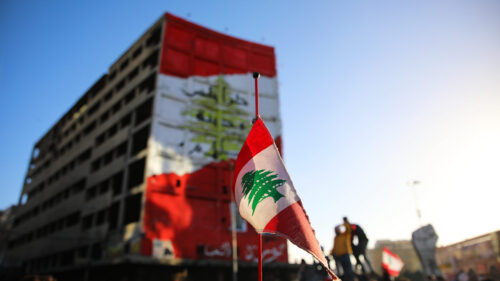
Should Hezbollah Be Disarmed?
For many years, there has been an intense debate over whether or not Lebanon’s Hezbollah group should be disarmed.
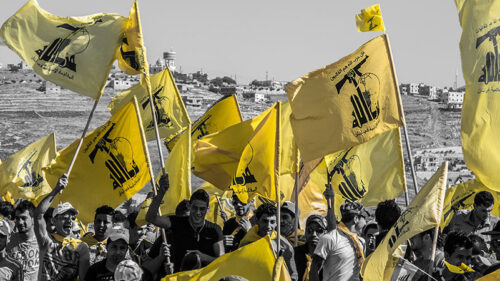

Support Fair Observer
We rely on your support for our independence, diversity and quality.
For more than 10 years, Fair Observer has been free, fair and independent. No billionaire owns us, no advertisers control us. We are a reader-supported nonprofit. Unlike many other publications, we keep our content free for readers regardless of where they live or whether they can afford to pay. We have no paywalls and no ads.
In the post-truth era of fake news, echo chambers and filter bubbles, we publish a plurality of perspectives from around the world. Anyone can publish with us, but everyone goes through a rigorous editorial process. So, you get fact-checked, well-reasoned content instead of noise.
We publish 3,000+ voices from 90+ countries. We also conduct education and training programs
on subjects ranging from digital media and journalism to writing and critical thinking. This
doesn’t come cheap. Servers, editors, trainers and web developers cost
money.
Please consider supporting us on a regular basis as a recurring donor or a
sustaining member.
Will you support FO’s journalism?
We rely on your support for our independence, diversity and quality.
Karol Nawrocki Becomes President in a Divided Poland
Karol Nawrocki narrowly won Poland’s 2025 presidential election after voters turned against Prime Minister Donald Tusk’s government for failing to...

Shifting Geopolitical Winds Post-Election with Atul Singh
Rod Berger interviews Atul Singh, Founder and Editor-in-Chief of Fair Observer, to analyze the global reactions to a significant US...

Moldova’s Defense Against Putin: Strong and Reformed State Institutions
Moldova's President Maia Sandu faces the challenge of reforming the country's corrupt justice system amid increasing Russian influence and hybrid...





Comment