






The current world order is constantly facing upheavals in geopolitics, geostrategy, the world economy and, most importantly, the effectiveness of international organizations, such as the UN and the World Health Organization (WHO), in fulfilling their mandates. These upheavals stem from ongoing frictions and tensions between the West, led by the US, and the Global South, led by major countries such as India, China and Russia.
The rise of the Global South and new institutions
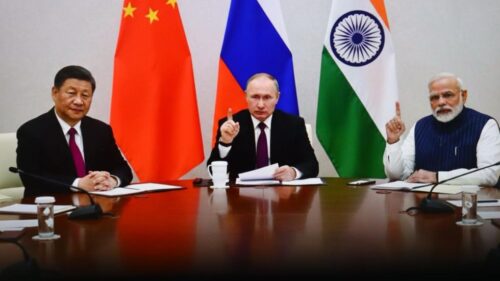
These geopolitical developments produce a constant shifting of the epicenter of world order crafted by the West to the Global South. The recently concluded Shanghai Cooperation Organization (SCO) Summit in Tianjin is a demonstration of this shift in the global order, as Chinese President Xi Jinping announced the establishment of the SCO Development Bank, with $280 million in grants and an additional $ 1.4 billion in loans for SCO members.
China leveraged the SCO Summit to demonstrate its global ambition to lead the new world order, an alternative to the one led by the US. This new world order will, in addition to addressing the development needs of SCO member countries, serve as an antidote to unilateralism, hegemony and coercion of countries in the Global South. For instance, China pledged to deepen cooperation with Central Asian countries to meet their energy needs at the SCO Summit.
The underlying concern of either the SCO Summit or the BRICS Summits is to carve out a new world order that supports multilateralism and a rules-based, transparent order, with new governing institutions such as the SCO Development Bank and the BRICS Development Bank that could perfectly address the particular needs and aspirations of the countries of the Global South. In fact, to reduce the influence of the US Dollar as a means of transaction in the Global Economy, countries like India have proposed the idea of de-dollarization by commencing regional trade among the BRICS nations in their local currencies.
In a nutshell, the fundamental objective of these geopolitical initiatives is to counter the abrasive, threatening and hypocritical attitude of US President Donald Trump. By waging a tariff war against BRICS countries and imposing a 50% tariff on Indian goods recently as a penalty for importing crude oil from Russia, the US under Trump accorded strategic space to countries like China, especially, which has long awaited the opportunity to marginalize the US’s geopolitical and geostrategic influence in order to lead the world as a global superpower.
The decline of US hegemony and its global consequences
In addition to waging tariff wars against numerous countries without a second thought, other factors are contributing to the continuous decline of US hegemony in the world order. World history shows that whenever the US wages war against any country, be it Afghanistan in 2001 to quell Al-Qaeda in the wake of the 9/11 attack on the US, the Vietnam War (1955) or the Bay of Pigs Invasion (1961), it either loses the war or leaves it in the middle without any conclusion.
It is ironic for a country like the US, which claims to be a global superpower, that it lacks the diplomatic and military capabilities to win or conclude a war. Very recently, during the US elections, as part of his election manifesto, Trump claimed that he would end the Russia-Ukraine War, but miserably failed. He also failed to prevent the recent Indo-Pak conflict. Cumulatively, these incidents signal that the list of countries that do not obey, bow down to or recognize the US, which has been the global hegemon to date, is growing.
Additionally, the world’s political history is replete with examples demonstrating that the US has lost the trust of its allies due to its high level of hypocrisy. For instance, on the one hand, the US firmly supported Israel when it launched military action against Gaza. On the other hand, it condemned Russia for its invasion of Ukraine in the name of safeguarding democracy.
Factors such as Trump’s unpredictability, which led to a trade war with its strategic allies such as India, and the withdrawal from international organizations such as the UN Human Rights Council, the UN Educational, Scientific and Cultural Organization (UNESCO), and the Paris Agreement are also accelerating the decline of US hegemony in world politics.
Moreover, sharp criticism of many of its allies, such as France, Germany and even Canada, on issues like green energy and immigration, by the US at the recently concluded United Nations General Assembly (UNGA) session prompted the countries to pursue an independent foreign policy. In fact, dialogues among participating countries at the Munich Security Conference focused on developing their own security policies and defense capabilities independent of the US.
Cumulatively, these strategic and geopolitical developments signal the US’s rapid decline in stature within the current global order and the emergence of a new world order led by the troika, namely, India, Russia and China.
The challenges of forging a new world order
Further geopolitical upheavals must be analyzed to forecast the emergence of a new world order, as geopolitics is a function of continually shifting national interests. More crucially, the effectiveness and potential of any bloc, whether it be BRICS or SCO, depend on the degree of convergence of all national interests of its member countries to a common agenda, which is nothing but transforming the contours of the present global order, a task that is very difficult in the current geopolitics due to its constantly changing nature.
This is the point that the US is watching very patiently and calmly, maneuvering the strategic space that emerged from the long-standing dissensions and contradictions among the SCO or BRICS member countries. Most importantly, it is also watching China’s global power ambitions to lead the new world order by surpassing the US, by hook or by crook.
The views expressed in this article are the author’s own and do not necessarily reflect Fair Observer’s editorial policy.
India’s Current Foreign Policy: Reinforcing Strategic Autonomy in a Rising Multipolar World Order
India’s foreign policy emphasizes a multipolar world, balancing independence with strategic partnerships, particularly through nonalignment and participation in multilateral forums....
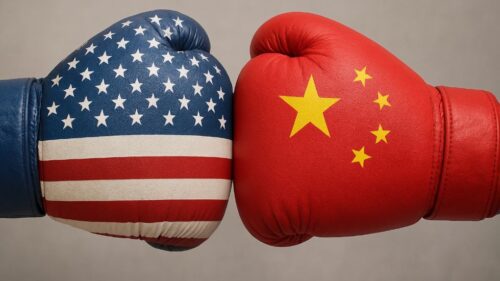
The US and Its Incoming War With China
US defense spending favors aircraft carriers, tanks and fighter jets that China seeks to counter with cheaper missiles, drones and...
The New World Order Is Disorder
US power is declining and an Axis of Disorder is rising to take its place. The world order is becoming...

Support Fair Observer
We rely on your support for our independence, diversity and quality.
For more than 10 years, Fair Observer has been free, fair and independent. No billionaire owns us, no advertisers control us. We are a reader-supported nonprofit. Unlike many other publications, we keep our content free for readers regardless of where they live or whether they can afford to pay. We have no paywalls and no ads.
In the post-truth era of fake news, echo chambers and filter bubbles, we publish a plurality of perspectives from around the world. Anyone can publish with us, but everyone goes through a rigorous editorial process. So, you get fact-checked, well-reasoned content instead of noise.
We publish 3,000+ voices from 90+ countries. We also conduct education and training programs
on subjects ranging from digital media and journalism to writing and critical thinking. This
doesn’t come cheap. Servers, editors, trainers and web developers cost
money.
Please consider supporting us on a regular basis as a recurring donor or a
sustaining member.
Will you support FO’s journalism?
We rely on your support for our independence, diversity and quality.
Can Bangladesh’s Nationalist Party Transform the Country’s Foreign Policy?
Dhaka’s incoming government won elections on a “Bangladesh First” foreign policy platform. To successfully lead the country, the Bangladesh Nationalist...
China-Japan Tensions Rise to Highest Levels Since World War II
Japanese Prime Minister Sanae Takaichi’s comments on Taiwan in response to a parliamentary question have triggered a furious response from...

From Roads to Reform: China and Pakistan’s Expanding Economic Alliance
Pakistan’s Vision 2035, which aims to build a $1 trillion economy, is closely tied to its deepening friendship with China....





Comment
It’s interesting to read about a “a rules-based, transparent order.” That would seem to imply that the former rules-based order that Western leaders have consistently complained is under threat was opaque. In fact it was also transparent, i.e. transparently biased in favor of an extractivist economy built around the dominance of the dollar. What remained opaque was the intentions, which were far less about promoting democracy and all about setting and enforcing rules imposed by the IMF. Let’s hope that as the rulebook is being rewritten it will actually favor the economic autonomy of the world’s nations.
I am not sure that Russia or India have the economic heft to lead a new world order. Russia is a mlitary and energy power but is not terribly important otherwise to global demand or supply. India is still third world and needs major economic reforms to live up to its potential.