

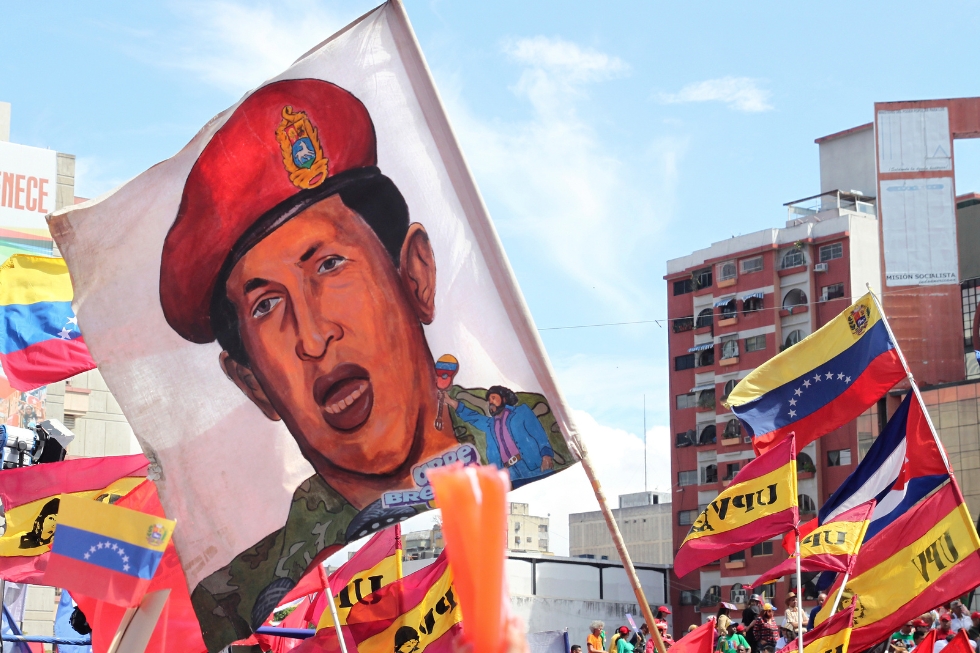



For more than 25 years, Chavismo has demonstrated a remarkable capacity for political adaptation. From Venezuelan President Hugo Chávez’s charismatic leadership to his successor Nicolás Maduro’s authoritarian consolidation and the recent reorganization of power, the movement has repeatedly transformed itself in order to survive. The question now is whether it has reached the limits of that ability to reinvent itself.
Political movements die with their founders. Others survive because they control state institutions. A select few, such as Argentine Peronism, manage to reinvent themselves repeatedly, adapting to changing circumstances and continuously finding new sources of legitimacy. For more than a quarter century, Chavismo has belonged to this last category.
It began with the charismatic leadership of Chávez, who was able to interpret the exhaustion of the political system born in 1958 and present himself as the embodiment of a new historical era. After his death, Maduro managed to prolong the project’s survival through a combination of institutional control, repression, propaganda and increasingly sophisticated use of digital technologies. Finally, the events of January 3, which brought an end to Maduro’s government and led to the creation of a provisional administration headed by Delcy Rodríguez (Venezuela’s vice president and acting president), ushered in a third stage characterized by a reorganization of power and an unexpected understanding with Washington.
Each of these transformations responded to a different logic. Yet all shared the same objective: preserving the continuity of Chavismo. The question is whether that extraordinary capacity for adaptation is now reaching its limits.
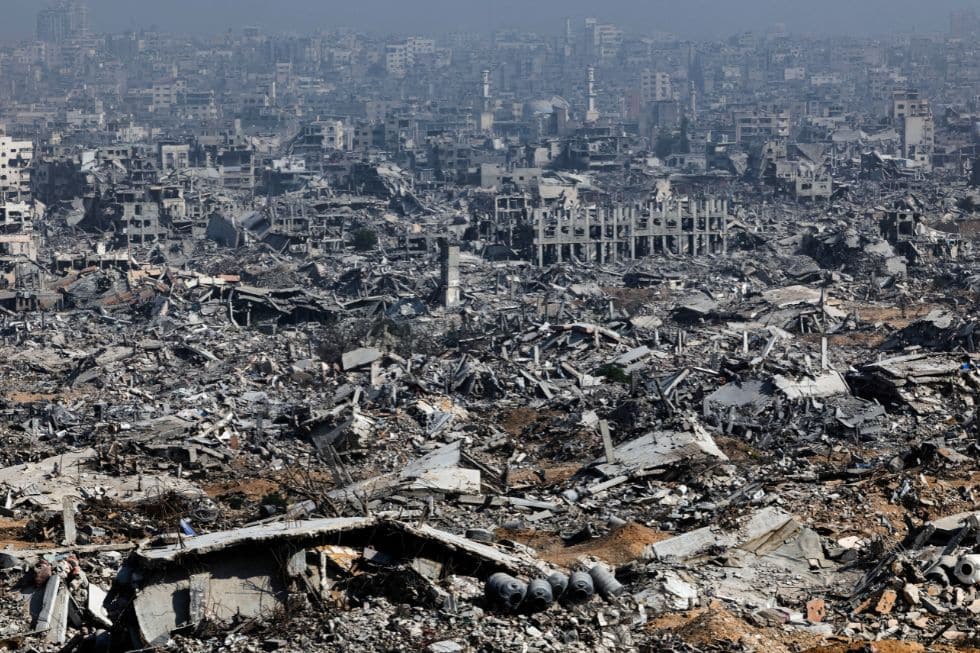
The double earthquake in June represented not only a new tragedy for a country that has accumulated crises for more than two decades — economic collapse, systematic human rights violations, mass migration and the progressive deterioration of its institutions. It may also have exposed the exhaustion of a political project that, for the first time, appears to have lost the narrative that justified its continued hold on power.
This is not merely a crisis of governance. Nor is it simply a decline in popularity. What appears to be at stake is something deeper: Chavismo’s ability to explain itself — and to explain to the country — why it should continue governing.
The rise of a historical project
When Venezuela’s representative democracy — the so-called Fourth Republic — collapsed at the end of the 20th century, numerous analysts sought to understand the reasons behind that outcome. Over time, Chávez came to occupy the place usually reserved for great transformative leaders: He was not only presented as the replacement for an exhausted political establishment, but also as the embodiment of a new historical cycle.
His leadership succeeded in articulating an extraordinarily powerful narrative. It promised to rescue historically excluded sectors of society, denounce traditional elites, reclaim Simón Bolívar (the Venezuelan statesman who liberated South America from the Spanish Empire) as a symbol of sovereignty against great powers, and use oil wealth to promote an alternative model of development and Latin American integration. The spectacular rise in oil prices during much of the first decade of the 21st century provided the resources necessary to transform that narrative into a political reality with enormous mobilizing capacity.
For years, the opposition and many analysts underestimated the depth of that transformation. Every electoral or political defeat was interpreted as a temporary setback, while Chavismo consolidated an imaginary framework that transcended Chávez himself and increasingly became identified with the state itself.
The leader’s death in 2013 appeared to open the possibility that the Bolivarian experiment would come to an end. Many believed then that the movement would not survive without the personal magnetism of its founder. The opposite occurred.
Although Maduro never succeeded in reproducing Chávez’s charisma, Chavismo found a new formula for survival. As the oil boom disappeared and the economic crisis deepened, the regime gradually shifted the foundation of its legitimacy. Where charismatic leadership and oil-funded redistribution had once prevailed, absolute institutional control, the militarization of power, the total subordination of other branches of government, the strengthening of parallel structures such as the communes and — above all — the systematic use of repression as a daily instrument of governance became dominant.
At the same time, official discourse continued to present itself as the Venezuelan expression of a broader Latin American project of social transformation. Even as economic reality eroded that narrative, the government maintained a remarkable ability to manage public perceptions.
As author Alberto Ray has argued in his concept of “liquid authoritarianism” — a form of authoritarian rule that combines traditional mechanisms of control with flexible digital surveillance and information management — new technologies have allowed the development of far more sophisticated mechanisms of monitoring, message segmentation and the construction of apparent consensus.
The objective was no longer simply to censor or persecute. It was also to shape perceptions, manage expectations, and reduce the political cost of institutional decline.
It was this combination of state control, repression, and technological adaptation that allowed Maduro’s version of Chavismo to prolong for 13 years a project that many had considered exhausted. However, every reinvention requires concessions. And the transformation that began after January 3 forced Chavismo to sacrifice something far more fundamental than specific policies: It began to challenge the very tenets and symbols that had defined the movement since its origins.
The third reinvention
Maduro’s departure from power opened an unprecedented stage. For the first time since 1999, Chavismo ceased to revolve around a single personal leader and began operating through collective leadership. The center of power became the triumvirate formed by Delcy Rodríguez, President of the National Assembly Jorge Rodríguez and co-acting Venezuelan President Diosdado Cabello, whose priority was no longer to expand the Bolivarian Revolution but to manage its survival.
Politically, the operation was remarkable. In order to preserve positions of power, Chavismo accepted concessions that only a few years earlier would have seemed unimaginable. Cuban and Russian influence declined significantly; reforms began to be introduced in the management of the oil industry and other strategic sectors towards their liberalization; and, above all, a cooperative relationship was established with the US administration to oversee the stabilization process following January 3.
This was not the first time the movement had modified its strategy. What was truly unprecedented was that, for the first time, adaptation affected the very core of its identity. For more than two decades, Chavismo had built much of its legitimacy on three inseparable pillars: nationalism, anti-imperialism, and the promise of representing ordinary Venezuelans against domestic and international elites. That narrative survived even as the economy collapsed and repression became a permanent feature of the regime.
Many supporters could justify government failures because they continued to believe in the historical project it claimed to embody. The new stage required something entirely different. It was no longer enough to manage power; it was necessary to justify cooperation with the country that for years had been portrayed as the principal enemy of the Bolivarian Revolution. The old anti-imperialist discourse gave way to pragmatic language focused on political stabilization and economic recovery. From the perspective of power management, the shift may have been entirely rational. From an ideological perspective, however, it represented a far greater cost.
All political movements evolve. What makes the Venezuelan case exceptional is the magnitude of the transformation. Chavismo was not merely modifying public policies; it was abandoning much of the narrative that had allowed it to maintain the cohesion of its supporters for a quarter of a century. For that reason, the third reinvention was also the most fragile of all.
The military question: the collapse of a foundational myth
From the beginning of the Bolivarian project, the armed forces occupied a central place in Chavismo’s political imagination. They were not portrayed merely as a professional institution responsible for national defense, but as the historical instrument of a new political order.
The concept of the civil-military union became one of the defining ideas of the Chávez era. According to this vision, the armed forces had broken with the traditional elites of the Fourth Republic and assumed a new historical mission: defending national sovereignty, protecting the excluded sectors of society and safeguarding the social transformation initiated in 1999.
For more than two decades, this narrative provided Chavismo with one of its most powerful sources of legitimacy. The military was presented not only as a guarantor of institutional continuity, but as the ultimate guardian of the revolutionary project itself. Yet recent events have revealed a profound contradiction between that narrative and political reality.
The events of January 3 were particularly significant because they tested the foundations of the civil-military alliance. A movement that had spent years portraying the armed forces as the shield of the revolution confronted a fundamental question: Would the institution mobilize to defend the political project it had supposedly embraced? It did not.
Whatever internal calculations shaped the military’s response, the political meaning was difficult to ignore. The armed forces did not activate any military action to avoid the president’s capture; nor did they mobilize in defense of Maduro’s government. In short, they failed to put into action the role that Chavismo’s founding narrative had assigned to them. For a movement whose identity had been deeply intertwined with the idea of a revolutionary military institution, the symbolism was profound.
The same contradiction became visible after the June earthquakes. The limited and initially insufficient presence of the armed forces during the first stages of the emergency was striking, particularly because the military had historically been portrayed as one of the few Venezuelan institutions capable of rapid national mobilization during moments of crisis.
For decades, the armed forces had been presented as an expression of national unity and as a mechanism through which the state could reach communities during emergencies. Instead, the public perception was one of limited capacity, weak coordination, and reduced effectiveness. The significance of this episode extends beyond disaster management.
The problem was not simply that the government failed to respond adequately to a natural catastrophe. The deeper issue was that an institution central to the political mythology of Chavismo appeared unable — or unwilling — to perform the role that the movement’s own narrative had assigned to it.
This does not mean that the armed forces have ceased to be an important political actor. Their institutional influence, economic interests and internal organization remain significant. Nor does it mean that the military has become politically irrelevant. Rather, it suggests that the relationship between Chavismo and the armed forces has fundamentally changed.
The military increasingly appears less like the ideological instrument of a revolutionary project and more like an autonomous institution concerned with preserving its own interests and position in a rapidly changing political environment. That distinction is crucial.
Political movements can survive policy changes, electoral defeats and even leadership transitions. But when the institutions that embodied their founding mythology no longer operate according to that mythology, the symbolic foundations of the project begin to weaken. The military question therefore mirrors the broader dilemma facing Chavismo itself: The movement still possesses structures of power, but some of the narratives giving those structures historical meaning have begun to erode.
When reality breaks the narrative
Major natural disasters often have political consequences far greater than their immediate impact. Not because they bring down governments by themselves, but because they expose strengths and weaknesses that may have remained partially hidden during periods of normality. Something similar occurred in Venezuela.
The problem was not only the magnitude of the human tragedy. It was also the image projected by a state unable to respond with the speed, coordination and effectiveness demanded by a national emergency of such proportions. The slow pace of rescue operations, the difficulties coordinating assistance for those affected, the persistence of the electricity crisis and the collapse of parts of the housing infrastructure built during the years of the oil boom projected an image profoundly different from the one the provisional government was attempting to convey.
Rather than a state recovering its capabilities, many Venezuelans once again encountered a public apparatus that appeared limited, improvised and unable to manage a complex national crisis. The political timing could not have been worse.
Public perceptions deteriorated precisely when the government needed to consolidate its legitimacy and demonstrate that the post-January 3 order represented not merely a change in leadership, but a restoration of state capacity. This has implications beyond domestic politics.
The strategy promoted from Washington rested on a relatively straightforward assumption: that the provisional government could guide Venezuela through three stages — stabilization, recovery and transition — without provoking a new institutional collapse. The deterioration of governance following the earthquakes inevitably forced a reconsideration of that assumption.
It was therefore not surprising that, while rescue operations were still underway, proposals for broader political dialogue regained prominence, including discussions involving the National Assembly elected in 2015 and the current National Assembly under the auspices of the US government. Rather than representing a complete change of strategy, this appeared to be an effort to expand the available options for managing the transition if the provisional government continued to lose support.
Until that moment, Washington had little incentive to alter the balance established after January 3. The governing triumvirate appeared to offer the most practical mechanism for maintaining stability while pursuing economic recovery. But the question began to change. The issue was no longer simply whether the new leadership could preserve power. The question was whether it remained the most effective instrument for guiding Venezuela toward a new political stage.
The end of a cycle?
It would be a mistake to interpret the difficulties facing the provisional government merely as a temporary political setback. Latin America has experienced, in recent years, a broad erosion of support for governments across the ideological spectrum, driven by economic pressures, political polarization, insecurity, and growing distrust among citizens. In that context, declining support for Chavismo could appear to be simply another example of the changing fortunes of those who govern.
Venezuela, however, presents a fundamental difference. What Chavismo confronts today is not merely a decline in popularity. It is the progressive erosion of the narrative that, for more than 25 years, allowed it to explain and justify its permanence in power. Every political organization requires a source of legitimacy to provide consistency to its political arguments and rhetoric.
In the case of Chavismo, that legitimacy was never fixed. Under Chávez, it rested on charismatic leadership and the promise of profound social transformation. Under Maduro, it shifted toward defending the revolutionary process against internal and external enemies, while institutional control and repression compensated for the collapse of economic performance.
After January 3, it transformed once again. The movement no longer sought primarily to lead a revolution. Instead, it presented itself as the only actor capable of guaranteeing an orderly transition and preventing institutional collapse. Each transformation represented a reinvention. But each reinvention also required abandoning part of the previous identity. The third transformation has been particularly costly because it has affected the very foundations of the Bolivarian narrative.
For decades, anti-imperialism, nationalism, the defense of sovereignty and the civil-military alliance constituted the symbolic pillars of the project. Today, many of those references have been profoundly weakened.
Cooperation with Washington has replaced confrontation. Economic necessity has limited the language of sovereignty. And the military institution that was portrayed as the guardian of the revolution has revealed itself to be a far more autonomous actor than the original narrative suggested.
This does not mean that Chavismo will disappear immediately. Political movements rarely vanish overnight. They preserve networks, leadership cadres, territorial structures and institutional resources. Chavismo may remain an important political force for years, even after losing much of the mobilizing capacity that characterized its earlier decades.
What appears far more difficult is reconstructing the kind of legitimacy that allowed the movement to survive crises that, under different circumstances, would have ended almost any other political project. This is the context in which the negotiations currently underway and the possibility of a new electoral process must be understood.
It is impossible to predict with certainty the timetable or outcome of Venezuela’s transition. Nor would it be prudent to confuse analysis with wishful thinking. Venezuelan politics has repeatedly demonstrated its ability to defy even the most confident predictions. But precisely because of that history, it is necessary to look beyond the immediate circumstances.
Major historical cycles do not end when a government loses an election or when a leader leaves office. They end when the principle that gave coherence to a political project ceases to convince even those who sustained it.
If this interpretation is correct, the double earthquake in June will not be remembered solely for the devastation it caused. It may instead be remembered as the event that revealed a much deeper process: the exhaustion of the historical cycle inaugurated by Hugo Chávez in 1999. And if that cycle has indeed begun to close, the question will no longer be whether Chavismo can reinvent itself once again. The real question will be what kind of Venezuela will emerge when, for the first time in more than a quarter century, the country must learn to define itself beyond Chavismo.
[Leonardo Vivas first published this piece in Spanish on Substack.]
[Kaitlyn Diana edited this piece.]
The views expressed in this article are the author’s own and do not necessarily reflect Fair Observer’s editorial policy.







Join the conversation
Share your perspective
Log in to share your thoughts and take part in the discussion.