





Fair Observer’s Video Producer Rohan Khattar Singh speaks with Dhruv Jatti, a young Congress spokesperson from Karnataka, India, about how Indian democracy functions. The country’s elections are often explained through ideology, religion or social media narratives. Drawing on his experience in both rural and urban politics, Jatti strips away abstraction and focuses on turnout, money, leadership structures and voter behavior. The result is a portrait of Indian politics driven less by ideas than by participation, incentives and power concentration.
Urban apathy vs. rural power
Jatti begins by outlining what he describes as two political realities coexisting within one country. Rural politics, he explains, is shaped by immediate socioeconomic concerns — employment close to home, agriculture, education, water and sanitation. Urban voters, by contrast, focus on infrastructure, crime and cost of living, but participate far less consistently.
Notably, rural India, which makes up roughly two-thirds of the electorate, votes at much higher rates than urban India. As a result, political parties logically prioritize rural demands. He argues that urban frustration often masks a deeper contradiction: City voters complain about governance failures yet frequently opt out of the electoral process.
Rural voters are “more emotionally driven compared to the urban spaces,” Jatti comments, while urban voters display habitual apathy. Indian democracy is not distorted by rural dominance; it simply reflects where participation actually occurs.
Welfare, freebies and accountability
The discussion turns to the contentious issue of welfare schemes, often dismissed in public debate as “freebies.” Jatti rejects the label, framing these programs as socioeconomic policies designed to stabilize vulnerable populations. He notes that similar redistributive mechanisms exist globally and argues that India’s developmental gap makes them unavoidable.
Simultaneously, he acknowledges the legitimacy of urban resentment, particularly among taxpayers who feel excluded from direct benefits. The deeper problem, he argues, is not redistribution itself but the lack of follow-through. Without mechanisms to track how funds are used, governments cannot demonstrate whether welfare actually leads to long-term empowerment.
Jatti stresses that assistance should not “end at the fact that political parties give 2,000 rupees.” For him, accountability, not austerity, is the missing piece that could reconcile welfare politics with urban skepticism.
BJP, Congress and the urban narrative
Khattar Singh presses Jatti on why the conservative Bharatiya Janata Party has dominated urban India for over a decade. Jatti attributes this success to the party’s sustained outreach to upper-middle-class and business communities, supported by a disciplined organizational structure that elevates younger leaders.
Congress has historically focused its messaging on rural and backward communities, leaving urban spaces underdeveloped. Jatti defends that emphasis as morally necessary but argues that it has created a representational gap. Congress, he says, needs to identify younger leaders from urban and upper-middle-class backgrounds and give them visible roles.
Jatti contrasts the BJP’s pipeline for promoting cadre-level figures with Congress’s slower, more fragmented process. Without systematic talent identification, urban constituencies will likely remain politically hollowed out for the party.
Leadership, dynasties and cult politics
The conversation then shifts to leadership concentration within India’s major parties. Addressing the Gāndhī family’s prominence, Jatti explains that at the grassroots level, party workers almost exclusively recognize Rahul Gāndhī and Priyanka Gāndhī Vadra — the Opposition leader and member of the lower house of Indian Parliament, respectively. Leadership reflects internal demand rather than imposed symbolism.
This model cannot endure indefinitely. Without nurturing new leaders over the next decade, Jatti warns, Congress risks stagnating. He calls for a nationwide youth “talent hunt” tied to real organizational power, not symbolic inclusion.
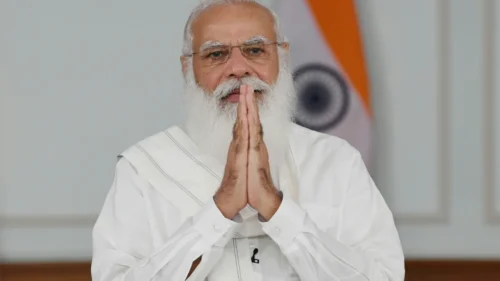
This concern extends to the BJP as well. Jatti argues that Indian Prime Minister Narendra Modi represents a classic “cult personality,” comparable to former Indian Prime Minister Indira Gandhi in her era. Such dominance weakens second-tier leadership and makes succession dangerous. “Your state leaders or the leaders at a lower level become very negligent,” he comments. When power is centralized so completely, transition becomes the system’s greatest vulnerability.
Religion, identity and the limits of electoral change
Jatti insists that Congress has allowed itself to be falsely branded as anti-Hindu despite its historical role in protecting religious communities during independence. He argues that Congress’s outreach to Muslims has been deliberately mischaracterized.
By contrast, he describes the BJP’s appeal as offering Hindu communities a sense of collective security, likening its narrative to Israel’s self-conception as a protective homeland. Unless Congress can articulate its own version of cultural security without abandoning secularism, it may struggle to reclaim lost vote banks.
The conversation closes on electoral reform and voter responsibility. Jatti delivers a stark assessment of money politics, warning that elections are increasingly easy for those who can afford them. Real change, he argues, cannot come from parties alone. Voters must demand cleaner air, education and accountability over caste and religion — otherwise politics will continue to supply exactly what the electorate rewards.
For young Indians considering public life, Jatti’s advice is simple and unromantic: Start small, work locally and resist the lure of money. Democracy, he concludes, reflects what citizens ask for and what they tolerate.
[Lee Thompson-Kolar edited this piece.]
The views expressed in this article/video are the author’s own and do not necessarily reflect Fair Observer’s editorial policy.




























Comment