


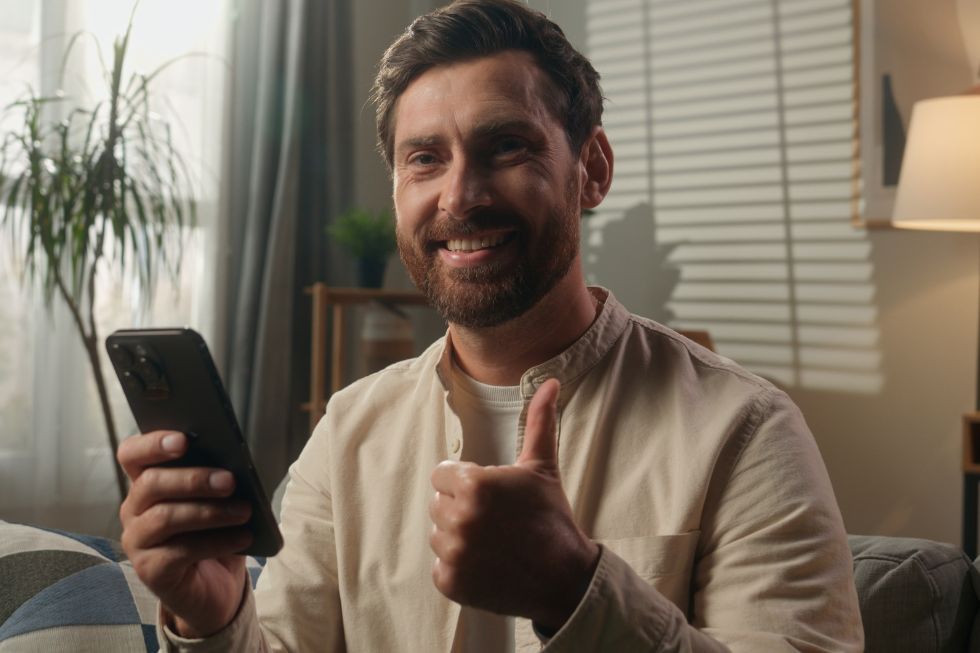


A Los Angeles jury recently held Meta and Google liable in a landmark US legal case, which found that social media platforms such as Instagram and YouTube are designed to be addictive to children. Addictive. What exactly does this mean? That engagement with these platforms produces a form of mental and physical dependence comparable to substance use? Not quite. More often, it appears to mean little more than intense, even habitual, engagement — something closer to enthusiasm than addiction in any strict sense.
Separating dependency from addiction
This distinction is crucial. Over the past three decades, social scientists have increasingly preferred the term dependency to addiction because it implies reliance without necessarily involving the biophysical changes that render an individual unable to function without a substance. A person may be dependent on shopping, sex, gambling or even social media and yet retain the capacity to stop; willpower, however strained, remains in force.
Addiction, by contrast, denotes something altogether more demanding: a condition in which repeated exposure produces physiological changes that diminish or even override volition. At that point, willpower alone is no longer sufficient. A heroin user, for example, doesn’t simply choose to continue using; their body itself has adapted to the drug in ways that make cessation profoundly difficult.
Yet the distinction is usually forgotten. “Addiction” has migrated from the clinic into everyday language, where it’s used to define practically any activity repeated with gusto — even habitually eating chocolate. The conflation of dependency and addiction has consequences: What was once a term reserved for conditions involving physiological dependence and withdrawal has been repurposed to capture patterns of behavior that are, at source, voluntary, even if strongly incentivised.
Medicalization steps in
Not all habitual behavior is suspect. Many recurrent practices, like attending church, for instance, are undertaken routinely and even ritualistically, without fresh deliberation on each occasion. Yet they’re widely regarded as beneficial, meaningful and socially valuable. So, habit, in itself, is not pathology.
This is not merely linguistic drift; it reflects a deeper transformation in how we understand human conduct. As medical sociologist William C. Cockerham argues, health and illness are not simply biological facts but are shaped by social organization and institutional authority, especially that of the medical profession. Over time, behaviors once regarded as routines, preferences or even vices have been reclassified as conditions requiring diagnosis and possibly treatment. The expansion has been incremental, almost imperceptible, but its cumulative cultural effect is immense: Medicine now lays claim to areas of life that would once have been considered far beyond its remit.
Earlier critics such as Ivan Illich and Thomas Szasz warned of precisely this development. Writing in the 1970s, they argued that medicine was extending its jurisdiction beyond disease into the management of everyday behavior. At the time, such concerns appeared overstated. After all, the medicalization of conditions such as alcoholism, depression and anxiety brought undeniable benefits: stigma was reduced, sufferers were encouraged to seek help, and treatments — sometimes pharmacological — became widely available.
Few would wish to reverse these gains. In particular, athletes prone to mental health conditions were emboldened to talk openly about them, feeling no more shame than they would about a cruciate ligament injury.
But success has brought unintended consequences. The more effective medicalization has been in rendering suffering visible and treatable, the more tempting it has become to apply the same model to behaviors that do not share the same underlying characteristics. The analogy between physical and behavioral conditions was initially a useful heuristic; it has since hardened into equivalence. We no longer recognize that certain patterns of behavior resemble addiction; we say they are addictions.
Gambling vs social media “addiction”
Consider gambling. Once understood as a form of risk-taking or recreation, it was always known to become excessive, even ruinous. Today, it is routinely diagnosed as a disorder. Yet close examination of gamblers’ own accounts suggests a more complicated picture. Far from describing themselves as helpless or compelled, many interpret their gambling in terms of anticipation, strategy and reward — both intrinsic and extrinsic. They understand the risks and persist not because they can’t stop but because the activity itself is experienced as meaningful and pleasurable. The label “problem gambler” is applied mostly when losses accumulate; when fortunes reverse, the same behavior attracts admiration, not diagnosis. The barrier between pathology and normality, in other words, is contingent on context.
This reveals a tension at the core of contemporary medicalization. If a pattern of behavior is deemed pathological primarily when it leads to undesirable outcomes, the diagnosis risks becoming retrospective: It’s a way of explaining failure rather than identifying disease. What’s presented as compulsion may, in many cases, be persistence in the face of risk, sustained by the intermittent rewards that make activities such as gambling so thrilling and attractive.
The same logic supports the claim that social media is addictive. Platforms such as Instagram and YouTube are undoubtedly designed to capture attention. They lead users through cycles of anticipation and reward (likes, comments, new content) that encourage repeated engagement.
But repetition, even intense repetition, is not proof of addiction. It’s proof of reinforcement. Users return time and again because the experience is satisfying and because participation is embedded in the social environments they belong to. What seems to outsiders to be solitary behavior is, in reality, social interaction in the 21st century. To disengage is not simply to exercise willpower; it is, in many cases, to withdraw from a network of relationships, information and recognition.
Remember, “social media addiction” doesn’t appear as a formally recognized disorder in standard psychiatric classifications such as the Diagnostic and Statistical Manual of Mental Disorders (DSM-5-TR). That absence reveals a great deal: Courts and those cavalierly using the term “social media addiction” are effectively referencing a medical condition that lacks clinical recognition.
Decisions and diagnoses
Equally striking is how rarely young people themselves are taken seriously in this debate. Parents, clinicians, policymakers and now courts speak with confidence about the harms of social media, often without reference to the experiences of those who use it most. Research, including large-scale studies such as Screen Society, suggests a more shaded reality: Young users are typically aware, reflexive and capable of articulating both the rewards and risks of their online lives. The vast majority do not experience their engagement as detrimental, but as integral to their social life: This is just the way they communicate nowadays.
None of this denies that online harm exists. Some users, particularly younger and more vulnerable ones, may experience anxiety, distress or diminished wellbeing as a result of their online interactions. But harm alone is not a sufficient basis for medical classification. The critical question is whether such patterns of behavior are better understood as disorders of the individual or as features of a social world in which digital interaction has become not only commonplace, but fundamental.
The recent legal judgments against technology companies suggest that the response is increasingly being framed in medical terms. By accepting the language of addiction, courts risk reducing a social phenomenon to a clinical condition, one that implies compulsion where there may instead be choice, habit and human agency. The consequences are not trivial. Once behavior is defined as an addiction, responsibility shifts from user to platform and potentially to government.
[Ellis Cashmore is a co-author of Screen Society.]
[Lee Thompson-Kolar edited this piece.]
The views expressed in this article are the author’s own and do not necessarily reflect Fair Observer’s editorial policy.
Australia’s Idiotic Social Media Ban
Australia’s social media ban for children under 16 is set to take effect on December 10 — becoming the world’s...
Is Gambling Addiction Really an Addiction?
It is easy to classify gambling addiction as a medical condition, but problem gambling is better understood as a behavior...

Social Media Has a Colossal, Horrific Body Count
Two opposite Senate testimonies, by Mark Zuckerberg as Chief Executive and by this author as Chief Algorithm Officer, pit administrative...
Are Addiction-Inducing Algorithms in Social Media Lawful?
Studies have revealed the harmful effects of social media. This is not just a coincidence. Social media companies intentionally craft...
Are We in Denial About Our Digital Consumption Habits?
In a world where attention is a marketable good, are we as free and conscious of our own online choices...

Support Fair Observer
We rely on your support for our independence, diversity and quality.
For more than 10 years, Fair Observer has been free, fair and independent. No billionaire owns us, no advertisers control us. We are a reader-supported nonprofit. Unlike many other publications, we keep our content free for readers regardless of where they live or whether they can afford to pay. We have no paywalls and no ads.
In the post-truth era of fake news, echo chambers and filter bubbles, we publish a plurality of perspectives from around the world. Anyone can publish with us, but everyone goes through a rigorous editorial process. So, you get fact-checked, well-reasoned content instead of noise.
We publish 3,000+ voices from 90+ countries. We also conduct education and training programs
on subjects ranging from digital media and journalism to writing and critical thinking. This
doesn’t come cheap. Servers, editors, trainers and web developers cost
money.
Please consider supporting us on a regular basis as a recurring donor or a
sustaining member.
Will you support FO’s journalism?
We rely on your support for our independence, diversity and quality.





Comment