


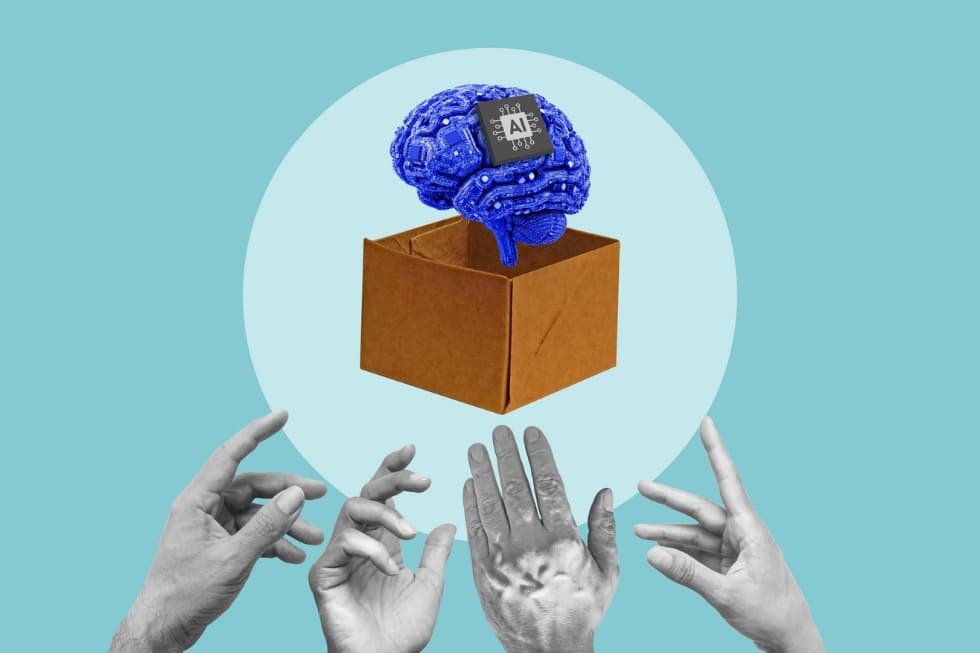



When OpenAI introduced ChatGPT on November 30, 2022, it arrived as a research preview: a conversational system that could answer follow-up questions, draft fluent text and give millions of people their first direct experience of generative AI. The early mood was experimental. People tested it, teased it, challenged it, praised it, feared it and shared screenshots. Three and a half years later, the novelty has become infrastructure. AI now sits inside search engines, office software, customer-service platforms, coding environments, writing tools and corporate workflows.
That shift has created a new managerial problem: agency decay.
Agency decay is the gradual erosion of a person’s ability and willingness to observe carefully, think independently, choose deliberately, and act responsibly. It does not arise because AI is inherently harmful. It arises when convenience becomes the default setting for cognition. A tool that first helps us think can begin to think around us, then for us, then without us noticing what has been weakened.
The four stages of agency decay
The scale of agency decay has four stages: experimenting, integrating, relying and depending. Since the launch of ChatGPT, individuals and organizations have moved along that scale faster than their governance, training, and culture could follow. Each of us is at a different stage on that journey — none of us are immune.
Stage 1: experimenting
The first phase is playful and practical. We ask ChatGPT to draft emails, summarize articles, generate titles, translate text, explain concepts, debug code and produce first versions of documents. The business appeal is immediate.
There is evidence to support the excitement. A large study published in The Quarterly Journal of Economics found that access to a generative AI assistant increased productivity among customer-support agents by 15% on average, with the largest gains among less experienced and lower-skilled workers. AI can help a junior employee sound clearer, a non-native speaker write more fluently or an overwhelmed manager convert scattered notes into usable prose.
At this stage, the human remains in charge. The tool expands reach. The risk is subtle: Early gains encourage a broader assumption that faster output means better work. That assumption becomes fragile once tasks require judgment, context, ethics or accountability.
Stage 2: integrating
The second phase begins when generative AI moves from side experiment to workflow. It stops being a window people open occasionally and becomes a layer inside everyday work. This is where the relationship changes.
A growing body of research shows that this stage is not just about using AI more often but about integrating it into core workflows and decision-making processes. Workers increasingly treat AI systems as collaborators rather than tools, incorporating their outputs directly into drafts, analyses and recommendations. In enterprise settings, AI is now embedded in customer service, coding environments, legal research and financial analysis, often as a first point of contact rather than secondary aid. This shift is accompanied by rising trust: Experiments show that users frequently defer to AI suggestions even when they conflict with their own judgment, especially when the system has performed well in prior tasks. An intriguing related finding shows that lower trust in humans correlates with higher trust in AI.
This is where the transition from cognitive offloading to belief offloading begins. Cognitive offloading, or using AI to handle memory or routine tasks, may appear relatively benign. But as integration deepens, people begin to outsource not just effort but evaluation. Research on automation bias and algorithm appreciation shows that individuals are more likely to accept AI-generated answers as correct, even in the presence of contradictory evidence. The question shifts from “Is this task suitable for AI?” to “What did the AI say?” That shift is subtle, but it changes the locus of judgment.
The consequences are hard to overlook. In Mata v. Avianca Inc., lawyers were sanctioned after submitting legal filings containing fabricated cases generated by ChatGPT. In Canada, the Moffatt v. Air Canada decision held the airline responsible after its chatbot gave a customer misleading information about bereavement fares. These incidents illustrate a broader pattern where integrated systems are trusted beyond their reliability, and where verification is smoothly displaced by acceptance.
Stage 3: relying
Reliance is the stage where AI becomes the default starting point. The person still reviews the output, yet the first move has shifted from human thought to machine generation.
Adoption data shows how quickly this stage has spread. Studies by the Pew Research Center found that 34% of US adults had used ChatGPT by 2025, about double the share in 2023. Among employed adults, 28% had used it for work. Gallup found that 45% of US employees used AI at work at least a few times a year in the third quarter of 2025, with 23% using it at least a few times a week and 10% using it daily.
Usage itself is not the problem. Unexamined reliance is.
A 2025 Microsoft Research study surveyed 319 knowledge workers and collected 936 examples of generative AI use at work. It found that higher confidence in AI was associated with less critical thinking, while higher confidence in one’s own task ability was associated with more critical thinking. The lesson is simple and uncomfortable: The more people trust the tool, the more deliberately they must protect the habit of questioning it.
The cost is now showing up inside organizations. BetterUp Labs, in partnership with Stanford Social Media Lab, has described “workslop” as polished-looking AI-generated work that lacks substance and pushes the burden of thinking onto colleagues. In its survey of 1,150 full-time US desk workers, 40% said they had received workslop in the previous month. Each incident took about two hours to resolve, with an estimated cost of $186 per employee per month. This is agency decay at the team level. One person saves time by outsourcing thought. Another person loses time reconstructing it.
Stage 4: depending
Dependence emerges when individuals or teams struggle to perform, decide or verify without AI. This stage is still reversible, yet the warning signs are visible.
A 2025 study from the Massachusetts Institute of Technology (MIT) Media Lab examined large language model (LLM)-assisted essay writing using electroencephalography (EEG), which measures electrical activity in the brain. Participants who used LLMs showed weaker neural connectivity, reported lower ownership of their essays, and had more difficulty quoting their own work than those who wrote without tools. The study should be read cautiously. A later scholarly comment raised concerns about sample size, reproducibility and aspects of the EEG analysis. Even with that caution, the paper points to a question every business school, employer and leader should ask: What happens to skill formation when the first draft is increasingly outsourced?
At enterprise level, dependence appears as scale without depth. McKinsey’s 2026 global survey on AI found that 88% of organizations were using AI in at least one business function, yet many were still early in scaling AI and capturing enterprise-level value. The same survey reported negative consequences from AI use, with inaccuracy among the leading issues.
Dependence also has a planetary dimension. AI feels immaterial at the point of use. It is not immaterial in the world. The International Energy Agency projects that electricity demand from data centers could more than double by 2030, reaching around 945 terawatt-hours, with AI being a major driver, according to its analysis of energy demand from AI. In its report on generative AI’s environmental and human effects, the US Government Accountability Office similarly notes that generative AI uses significant energy and water resources while companies often do not report enough detail for proper accountability. And thus far, there are no legal obligations forcing them to be transparent about the environmental footprint.
Agency amid AI now means more than protecting our attention. It means linking personal convenience, institutional design, and planetary costs.
How to reverse agency decay while we still can
Agency decay is tangible. For now, it is also reversible. The task is to move from passive adoption to deliberate co-agency: Humans and AI working together in ways that strengthen judgment, skill, responsibility and care for the wider systems on which life depends.
A practical starting point is the A-Frame.
Awareness begins with noticing the moment of delegation. Before using AI, individuals can ask: What exactly am I handing over — drafting, reasoning, judgment, empathy, verification, accountability? Teams can map where AI enters workflows and identify where human review is essential.
Appreciation means using AI where it genuinely expands human capacity. Let it summarize, translate, compare, simulate and reveal blind spots. Preserve the human work of framing the problem, setting the values, understanding the context and deciding what “good” means.
Acceptance requires honesty about limits. AI can sound certain and still be wrong. People can feel productive while becoming less skilled. Organizations can scale tools before they have scaled judgment. Every AI-enabled workflow should include verification standards, escalation paths and moments where people practice the underlying skill without automation.
Accountability turns agency into governance. Personally, keep a “human first draft” habit for important thinking. In teams, require source checks, disclose meaningful AI use, assign human owners for AI-supported decisions, and include energy, water and infrastructure impacts in AI procurement and strategy.
The next phase of AI will reward organizations that treat agency as a business asset. Autonomy, judgment, trust, and planetary responsibility are not soft concerns. They are the infrastructure of sustainable performance. The companies that protect them will use AI with greater discipline, imagination and legitimacy.
[Knowledge@Wharton first published this piece.]
[Kaitlyn Diana edited this piece.]
The views expressed in this article are the author’s own and do not necessarily reflect Fair Observer’s editorial policy.
FO Talks: AI — Expectation vs Reality
In this episode of FO Talks, Cheyenne Torres and Dirk Lueth, PhD, discuss how artificial intelligence is transforming employment, business...
From Rerum Novarum to Magnifica Humanitas: The Vatican’s Warning Against Technological Determinism
In this time of technological uncertainty, Pope Leo XIV’s Magnifica Humanitas is a welcome reflection on how humanity should approach...

Beyond the Code: Reclaiming Human Agency in an AI-First World
Artificial Intelligence has shifted from a technological novelty to a global force reshaping economies and human agency. While offering immense...

Support Fair Observer
We rely on your support for our independence, diversity and quality.
For more than 10 years, Fair Observer has been free, fair and independent. No billionaire owns us, no advertisers control us. We are a reader-supported nonprofit. Unlike many other publications, we keep our content free for readers regardless of where they live or whether they can afford to pay. We have no paywalls and no ads.
In the post-truth era of fake news, echo chambers and filter bubbles, we publish a plurality of perspectives from around the world. Anyone can publish with us, but everyone goes through a rigorous editorial process. So, you get fact-checked, well-reasoned content instead of noise.
We publish 3,000+ voices from 90+ countries. We also conduct education and training programs
on subjects ranging from digital media and journalism to writing and critical thinking. This
doesn’t come cheap. Servers, editors, trainers and web developers cost
money.
Please consider supporting us on a regular basis as a recurring donor or a
sustaining member.
Will you support FO’s journalism?
We rely on your support for our independence, diversity and quality.





Comment