






Recent headlines in the US have been dominated by reports of foodborne and waterborne illnesses. From the widespread reach of Cyclospora to the intense, localized flare-ups of Legionnaires’ disease in New York, these recent health crises underscore just how delicate the balance of the American public health infrastructure has become.
How recent outbreaks spread across the US
Cyclospora infections are caused by a microscopic parasite that inhabits human feces. The infection occurs when people consume food or water that is contaminated with fecal matter from an infected person. When the parasite gets ingested, it causes severe gastrointestinal upset, which then leads to explosive, watery diarrhea, fatigue and loss of appetite.
Federal officials in the US have pointed to lettuce harvested in Mexico and served at Taco Bell restaurants across five US states as the main source of the outbreak. Dr. William Shaffner, Professor of Infectious Diseases at Vanderbilt University School of Medicine in Tennessee, told CNBC: “Cyclosporiasis occasionally pops up in late spring or early summer. But this is different. This is a huge outbreak; it’s geographically widely distributed, and many, many people have been made ill.”
A Legionnaire’s disease outbreak is ongoing in New York City (NYC) this summer. The disease is a severe, potentially life-threatening form of pneumonia caused by Legionella bacteria. It is often transmitted through water systems: plumbing networks, cooling towers and recreational water systems (hot tubs, pools). It spreads when people inhale microscopic, aerosolized water particles, and it causes high fever, chills, muscle aches, dry cough, shortness of breath and chest pain.
According to data from New York public health officials, this year’s outbreak comes after more than 250 cooling towers in the city were cited for violations related to Legionella testing. “We will continue inspecting every cooling tower that tested positive and will hold accountable any owner who fails to comply with our public health laws,” NYC Health Commissioner Dr. Alister F. Martin stated in a press conference.
Why outbreaks are becoming more common
When we witness multiple outbreaks across the US, many people wonder why this keeps happening. Is something new occurring or are we just paying closer attention to it? The reason is somewhere in between, and there isn’t one single root cause. A combination of factors makes these outbreaks more likely and more visible.
When it comes to Cyclosporiasis outbreaks, one potential cause is the centralized food system. In the US, the food supply is very efficient, but that streamlining comes with a potential trade-off. When food production is centralized, a single contamination event at a farm or processing facility can distribute contaminated products across many states in under a week. What used to be a local issue is now a national concern. Another possible cause is an expanding consumer preference for fresh, raw and minimally processed foods. In an attempt to reduce processing, these types of foods may skip steps that would eliminate parasites and bacteria.
When it comes to a Legionnaires’ outbreak, aging urban infrastructure may be a direct cause. The bacteria thrives in water systems like the cooling towers that are utilized directly in air conditioning networks. Maintaining these complex systems is an ongoing challenge in cities, especially as the population increases.
Better detection and simple prevention can limit the risk
While it might seem bad that the number of cases is increasing quickly, the rapid visibility of both outbreaks is actually a good thing. Thanks to technological advances, public health agencies are detecting outbreaks faster and more often. For example, modern networks run by the Centers for Disease Control and Prevention (CDC) and the Food and Drug Administration (FDA) scan centralized databases for genetic sequencing. When a handful of people upload a specific bacterial fingerprint, the outbreak gets immediately noted. Many assume that the food supply is becoming less safe or that outbreaks are on a steep rise. But in reality, the contaminated products have always been there; we just didn’t have the tools to connect a sick person in Maryland to one in Oregon.
Outbreaks are always unnerving, but it’s important to remember they are manageable through heightened awareness. “In general, I think it is good advice to wash everything that comes into the house, your produce and your fruit. The adage is to wash it, peel it, or cook it,” says Shaffner. It’s also vital to stay informed by monitoring any communication from local health departments about outbreaks that may affect your area. If you live in an apartment complex, check with management about proper water safety protocols for individuals and the building as a whole. According to the CDC, hot water heaters should be set to 140°F (60°C) and cold water to below 77°F (25°C) to prevent bacterial growth.
[Kaitlyn Diana edited this piece.]
The views expressed in this article are the author’s own and do not necessarily reflect Fair Observer’s editorial policy.
Learning From the Disabled: Creativity and Resilience in Emergency Preparedness
Rather than viewing disabled individuals solely as vulnerable, emergency preparedness should recognize them as experts whose lived experiences foster unique...

The Hidden Tsunami: A Public Health Crisis That’s Already Here
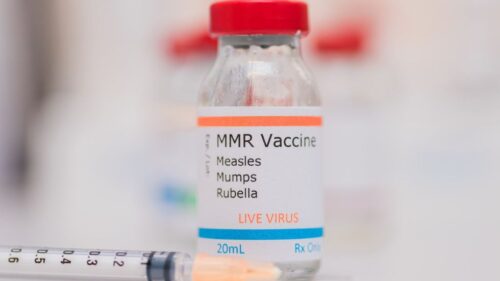
Declining vaccination levels have sparked a new outbreak of measles in the US. Lower vaccination rates, alongside climate change and...
America the Unwell: The Corporate Greed Threatening Our Stability
The US health insurance industry is a bureaucratic nightmare due to excessive layers of companies and intermediaries that create confusion...
Support Fair Observer
We rely on your support for our independence, diversity and quality.
For more than 10 years, Fair Observer has been free, fair and independent. No billionaire owns us, no advertisers control us. We are a reader-supported nonprofit. Unlike many other publications, we keep our content free for readers regardless of where they live or whether they can afford to pay. We have no paywalls and no ads.
In the post-truth era of fake news, echo chambers and filter bubbles, we publish a plurality of perspectives from around the world. Anyone can publish with us, but everyone goes through a rigorous editorial process. So, you get fact-checked, well-reasoned content instead of noise.
We publish 3,000+ voices from 90+ countries. We also conduct education and training programs
on subjects ranging from digital media and journalism to writing and critical thinking. This
doesn’t come cheap. Servers, editors, trainers and web developers cost
money.
Please consider supporting us on a regular basis as a recurring donor or a
sustaining member.
Will you support FO’s journalism?
We rely on your support for our independence, diversity and quality.





Comment