

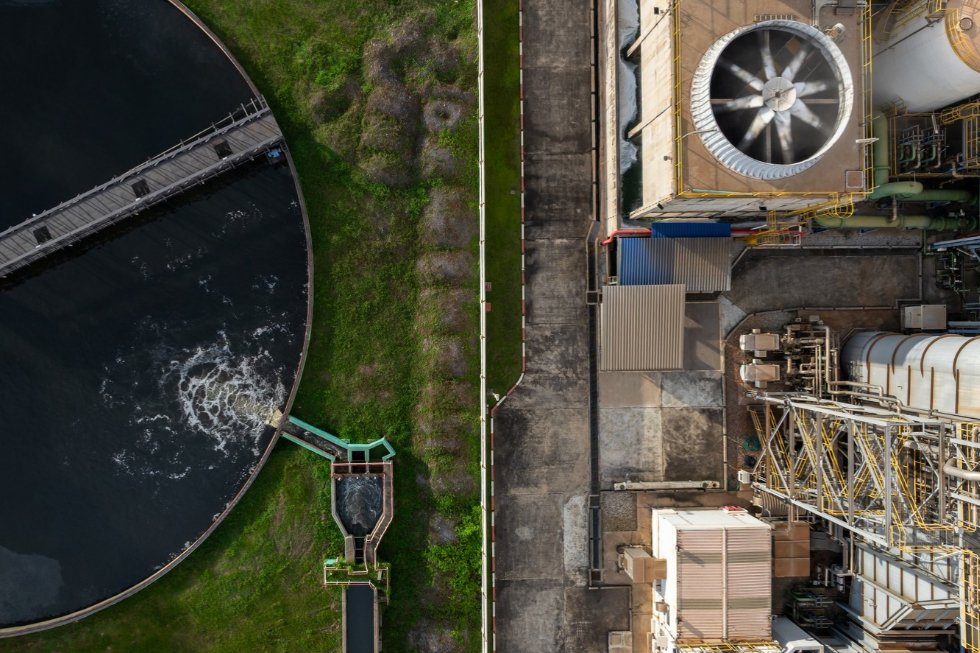


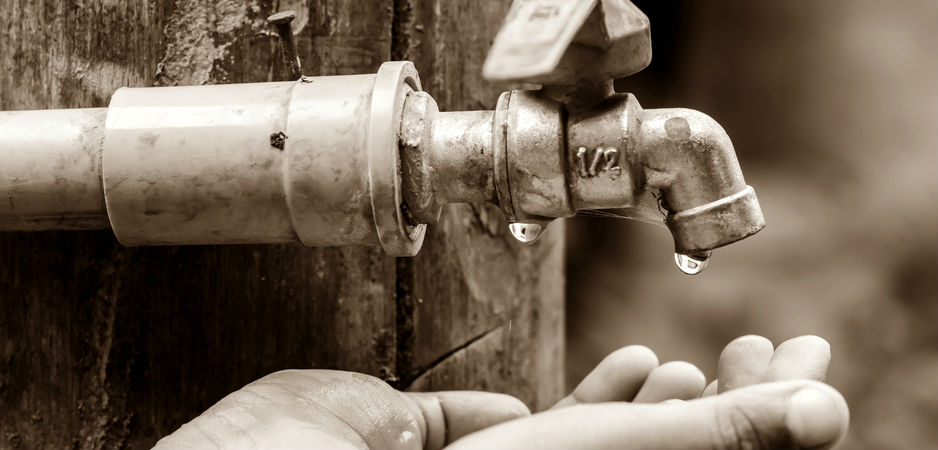
Imagine filling a glass from your kitchen tap. The water is clear, cold and seemingly ordinary. Now imagine being told that, only hours earlier, that same water had been sewage.
Would you drink it?
For most, the instinctive answer is no. Yet as climate change, population growth and pollution increase pressure on freshwater supplies, converting wastewater into drinking water is becoming a policy consideration. The question is no longer whether we can treat wastewater; we largely can. The greater challenge is ensuring the water is safe, sustainable and acceptable to those who will consume it.
That debate has become particularly urgent in the UK. In August, testing connected to Thames Water’s proposed £350 million ($470 million) water-recycling scheme found levels of perfluorooctane sulfonate (PFOS), a toxic “forever chemical,” as high as 13 times the UK surface-water limit during pilot trials. PFOS is a synthetic chemical used in products such as firefighting foams and stain-resistant coatings. It belongs to the Per- and polyfluoroalkyl substances, or PFAS, family, known as “forever chemicals” because they persist in the environment for decades.
The project is designed to address future water shortages by taking water from the River Thames and replacing it with highly treated wastewater during droughts. Thames Water, the UK’s largest private water and wastewater services company, has said the pilot was designed to test different technologies and does not represent the final system, while the UK’s Environment Agency is reviewing the results.
This controversy reveals a broader issue: The future water crisis may involve defining acceptable water quality and determining the level of investment required to achieve it. When recycling trials of the Teddington Direct River Abstraction (TDRA) revealed toxic chemical breakthroughs, engineers had to integrate highly expensive advanced filtration systems. Eventually, these small-scale tests serve as financial gatekeepers, forcing projected project budgets to increase to meet strict quality demands.
From waste to resource
The UN’s 2026 World Water Development Report estimates that 2.1 billion people still lack safely managed drinking water. Climate change and water scarcity are intensifying existing inequalities in access to water and sanitation.
For centuries, wastewater has been treated as waste to be removed and discharged. After treatment, water is typically released into rivers, lakes or oceans. Climate change is now challenging this linear approach. Freshwater is therefore becoming too valuable to use once and discard. Meanwhile, wastewater is constantly being produced. Every shower, washing machine, industrial process and toilet creates a potential source of water. With sufficiently advanced treatment, that water can be used again — for agriculture, industrial processes, landscaping, groundwater recharge and, in some cases, drinking.
This represents a fundamental shift in how we think about water. Wastewater doesn’t have to be the end of the water cycle. It can actually be the start of a new cycle. The UN also recognizes wastewater treatment, recycling and reuse among the technologies necessary to achieve universal access to water under Sustainable Development Goal 6.
Singapore: a pioneer in water recycling
Singapore is perhaps the world’s best-known example of a country at the forefront of water recycling. Its NEWater system takes treated used water and subjects it to a multi-stage purification process, including advanced filtration and disinfection. Singapore presently has four NEWater plants in operation, and the system has become an important component of the country’s strategy for water resilience.
Singapore’s experience is significant because it highlights that the biggest barrier to wastewater reuse is psychological and not necessarily technological. People are not comfortable with the idea of drinking sewage, even when the sewage has undergone sophisticated treatment, and the resulting water is chemically and biologically safe. Singapore recognized this early. In 2002, then Prime Minister Goh Chok Tong publicly drank NEWater to demonstrate trust in the system. This act highlighted an important point: Even scientifically sound technologies can fail without public trust.
Water is particularly sensitive because people consume it directly. Consumers can’t see bacteria, PFAS or pharmaceutical residues. They have to trust laboratories, regulators, engineers and governments. And trust is becoming harder to maintain.
The problem with “clean”
The term “clean water” appears straightforward, but scientifically it is complex. Traditional wastewater treatment removes many pollutants and pathogens, yet modern society introduces thousands of chemicals that existing systems were not designed to tackle. Pharmaceuticals, pesticides, personal-care products, industrial chemicals, microplastics and PFAS can enter wastewater through everyday human activity. PFAS are particularly concerning because many of them are extremely persistent. They resist natural degradation and can stay in environmental systems for long periods.
That is why the Thames Water controversy is significant. The proposed recycling system aims to address water supply issues, but the pilot results reveal that solving one environmental problem can create another. If wastewater is to become part of the drinking supply, treatment systems must address the broader chemical footprint of modern society.
The US is confronting the same question. In April, the US Environmental Protection Agency’s draft Contaminant Candidate List included PFAS, microplastics and pharmaceuticals among groups that may require greater attention in drinking-water regulation and research.
Europe is moving in a similar direction. The new EU water-protection directive that entered into force in May specifically targets pollutants including PFAS and pesticides, reflecting growing recognition that water quality cannot be measured only by whether water looks clean or is free of obvious pathogens. The definition of clean water is therefore changing. It is no longer enough for water to be clear. It must be chemically understood.
Technology can clean water. Can it keep up with us?
As societies advance, wastewater becomes more complex, requiring increasingly sophisticated treatment systems. Modern wastewater contains the chemical fingerprints of modern life. Every medication we take, every cleaning product we use, every industrial chemical we manufacture and every synthetic material that enters our homes can eventually become part of the water cycle. Treatment plants are consequently being asked to perform an almost impossible task of removing the effects of decades of chemical production after those chemicals have already entered the environment.
Researchers are developing new technologies to address this challenge. In January 2026, researchers at Rice University reported filtration technology capable of removing certain PFAS compounds at dramatically higher rates than some existing approaches, although large-scale deployment remains a challenge.
But technology alone cannot solve the problem. If society continues producing persistent chemicals faster than regulators can study them, wastewater treatment will always be playing catch-up. The more sustainable solution may therefore lie upstream. Rather than asking only, “How do we remove this chemical from water?”, governments and industries may need to consider: “Why are we introducing this chemical into the water supply?” This is a more difficult question, as it challenges established industries and consumption habits.
The water we waste may become more valuable than the water we find
Another reason for wastewater reuse is that traditional responses to water scarcity often focus on increasing supply through reservoirs, groundwater extraction, water transfers or desalination. Although useful, these methods can be environmentally intensive and expensive.
Wastewater reuse offers a different philosophy. Instead of seeking new water sources, cities can close the loop. Singapore’s NEWater model exemplifies this circular approach. Instead of viewing used water as a disposable byproduct, the country treats it as part of a renewable resource system. This concept may become more vital as water scarcity increases. The world may not need to create more water, but rather to conserve existing supplies.
A future where clean water is a luxury
Advanced wastewater treatment is expensive, which raises another question: Who will be able to afford it? Sophisticated filtration, reverse osmosis, ultraviolet treatment, monitoring and chemical analysis require significant infrastructure, energy and skilled personnel. This could lead to a highly imbalanced water future.
Wealthier cities may afford advanced systems that recycle wastewater into high-quality water, while poorer ones may continue to rely on contaminated rivers, failing sewage infrastructure or depleted groundwater. This would create an unsettling contradiction: The global water crisis is not only about scarcity, but also about inequality.
The UN’s 2026 water report sheds light precisely on this point: Unequal access to water and sanitation affects health, education, livelihoods and safety. A sustainable water future therefore cannot simply be one in which wealthy societies learn to recycle every drop. It must also be one in which safe water technologies become accessible beyond affluent cities and countries. Otherwise, water recycling may follow a broader pattern: Advanced environmental solutions benefit the wealthy who can afford them, while others who can’t face the consequences of environmental degradation.
So, would you drink it?
If treated wastewater meets higher safety standards than many conventional sources, rejecting it solely based on its origin may be irrational. However, unquestioning reliance on technology is also risky. The recent Thames Water project findings illustrate this point. The future of water recycling requires transparent testing, independent regulation, continuous monitoring, and readiness to halt or redesign systems when issues arise, rather than simply reassuring the public.
Ultimately, the goal is not to persuade people to drink sewage, but to make the term “sewage” irrelevant. Water does not retain its history. Nature operates in cycles — evaporation, rainfall, runoff, absorption and reuse — while human systems have often treated water as a one-way commodity, extracted, consumed and discarded.
Climate change is prompting a reassessment of this model. The water coming out of our taps tomorrow may have previously passed through showers, washing machines or toilets. That is not necessarily a sign of environmental failure. It could be a sign that humanity has finally learned to close the water cycle.
Achieving this will require more than improved filtration. It will demand better chemistry, stronger regulation, transparent governance, responsible industry, and public trust. Most importantly, it will require redefining waste. Because in a world running short of freshwater, the greatest waste may not be using water. It may be using it only once.
[Sangeeta Mohanty edited this piece]
The views expressed in this article are the author’s own and do not necessarily reflect Fair Observer’s editorial policy.
The Solution to Water Scarcity Lies With Corporate Leaders
Executives have the most financial power and influence over their industries, so they have access to the information and resources...

Support Fair Observer
We rely on your support for our independence, diversity and quality.
For more than 10 years, Fair Observer has been free, fair and independent. No billionaire owns us, no advertisers control us. We are a reader-supported nonprofit. Unlike many other publications, we keep our content free for readers regardless of where they live or whether they can afford to pay. We have no paywalls and no ads.
In the post-truth era of fake news, echo chambers and filter bubbles, we publish a plurality of perspectives from around the world. Anyone can publish with us, but everyone goes through a rigorous editorial process. So, you get fact-checked, well-reasoned content instead of noise.
We publish 3,000+ voices from 90+ countries. We also conduct education and training programs
on subjects ranging from digital media and journalism to writing and critical thinking. This
doesn’t come cheap. Servers, editors, trainers and web developers cost
money.
Please consider supporting us on a regular basis as a recurring donor or a
sustaining member.
Will you support FO’s journalism?
We rely on your support for our independence, diversity and quality.




Comment