


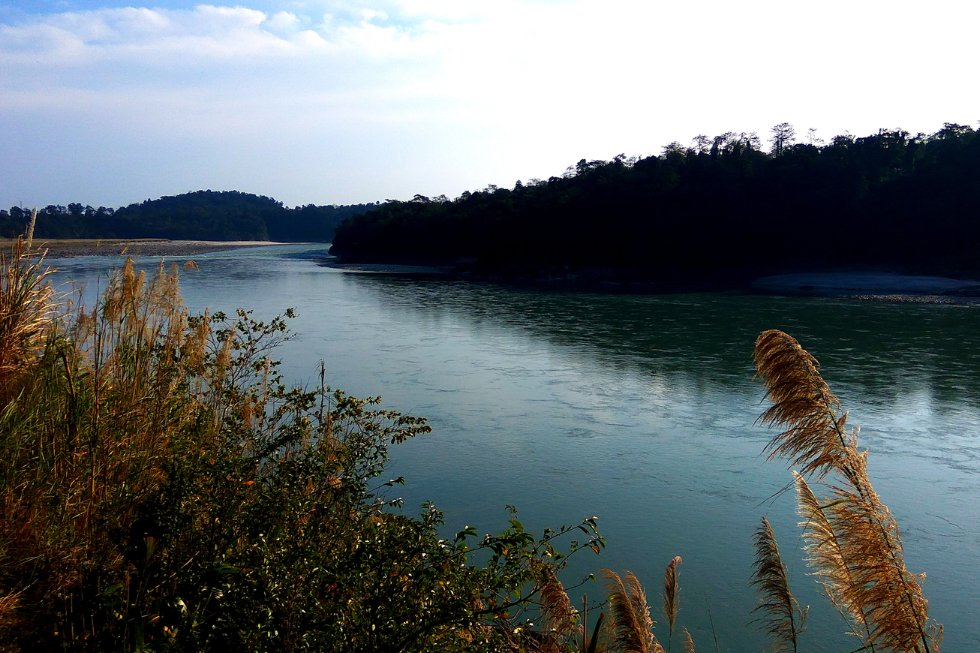


For the Adi people of Arunachal Pradesh, a state in the North-East region of India, the Siang river is a central part of culture. Not only do many depend on the river as a source of water, but they also consider the river to be sacred. The river is now at the center of one of the most contested infrastructure fights in India.
Last year, China began building a dam over the Yarlung Tsangpo river. The project, named the Motuo Hydropower Station, would be the world’s largest dam. At about 60,000 MW, it would produce roughly three times the power of the Three Gorges Dam, which displaced 1.3 million people. China has released few details about this project, including how many people will be displaced.
Since the project’s announcement, many are concerned that the project will negatively affect those downriver in India and Bangladesh, particularly because the Yarlung Tsangpo feeds into the Siang, Brahmaputra and Jamuna rivers.
In order to combat the potentially adverse effects, NITI Aayog, the Indian government’s premier think tank, proposed its own dam project in 2017. Called the Siang Upper Multipurpose Project (SUMP), the dam has a reported capacity of 11,000 megawatts or more.
The Indian government claims that the Dam is necessary to counter China’s dam in Yarlung Tsangpo, Experts, however, argue that the “dam-for-dam” approach is “short-sighted”. Not only would it entail significant ecological damage, but it is also unlikely to “offset the negative impacts of the Chinese dam project”, contrary to the government’s claims.
It is also unlikely to even counter the impacts of China’s dam project, according to transboundary water governance expert Anamika Barua. Instead of “reactive infrastructure building,” India must take into account the indigenous communities who look after and depend on river ecosystems.
The Chittagong Hill Tracts
Dams in Asia have a very long history of causing displacement of Indigenous communities. The Kaptai Dam was one of the most notable ones in the region. In the early 1960s, the Kaptai Dam on the Karnaphuli River was built in Bangladesh, then East Pakistan. Its reservoir flooded a large share of the Chittagong Hill Tracts’ limited farmland. An estimated 100,000 people, mostly Indigenous Chakma, lost their homes. Compensation and resettlement were inadequate, and thousands crossed into India. The grievance fed decades of conflict between the Hill peoples and the state. Their land rights remain unsettled.
The current Motuo Hydropower Station will have a similar effect, and many Tibetans in the region have protested the project. However, Tibetans who object have little room to do so. Tibet remains one of the most suppressed regions in the world, with little to no press freedom or freedom of speech. Information about protests, opposition, or discontent in the region remains hard to access because of the censorship imposed by the Chinese authorities. More than 1,000 Tibetan protesters were arrested.
Experts have warned that any dam in the region could have huge ecological consequences downstream. This is nothing new, China’s dams had already exacerbated extreme drought in the lower Mekong, affecting many Southeast Asian countries. However, this does not mean that India’s response should be another dam.
The Siang Indigenous Farmers’ Forum (SIFF) says the SUMP could similarly displace more than 150,000 people, mostly Adi, and even submerge several villages. Activists say the reservoir would flood ancestral Adi land, including the Upper Siang district headquarters at Yingkiong. The basin also contains the Dihang-Dibang Biosphere Reserve, which is recognized for its biodiversity.
Protest and arrests
Opposition against the SUMP has been met with policing. Land rights lawyer Ebo Mili was arrested at a protest in August 2023. In July 2024 he was detained again, without a warrant, before a visit by the Union power minister. He and another activist had wanted only to hand over a memorandum. Recently, he was arrested on October 25 for providing legal aid to anti-dam activists, and went on a hunger strike in jail.
Last month the Upper Siang administration ordered the preventive detention of four activists. The pressure extends to Delhi. Bhanu Tatak, an Adi woman and legal adviser to SIFF, was stopped at Indira Gandhi International Airport in September 2025 and barred from flying to a program in Ireland. Arunachal police had issued a lookout circular against her. They cited 10 to 12 cases linked to the protests. Critics said the aim was to keep her from international audiences.
Independent journalists on social media have also documented how Indigenous Student protestors from Arunachal were subjected to police repression while protesting against the Dam in Delhi. Hundreds of these protestors were arrested by the police. One of the journalists who was documenting the protests in Delhi had her Instagram account restricted in India.
Three States, One pattern
The dam projects in East Pakistan (Bangladesh), India and China differ in their creation and output, but the pattern is the same. Indigenous communities live on land that planners treat as available for energy and strategic use. The costs fall on those with the least political power. Consent is treated as a formality or ignored, and dissent is handled as a security problem.
The treatment of those who object is just as troubling. Protests and dissent are essential elements in any democracy, yet activists and student protesters faced police action, and a journalist who recorded it saw her account restricted. In Tibet, the silence is even heavier, and the world does not know how many have been punished for speaking. A state that is confident in its case does not need to stop people from being heard. When protest is treated as a crime, the public loses more than the protesters do. It loses the people who know the river best and are the first to see when something is going wrong.
The ecological risks make this silence more dangerous. A river does not stop at a border or an administrative line. People downstream, who were never consulted, can lose fish, fertile soil and predictable seasons. The Himalayas are also prone to earthquakes, which makes building enormous reservoirs there a risk to everyone below them. The drought along the Mekong shows that these effects are not theoretical, and the Kaptai dam shows how horrific the consequences can be for Indigenous communities.
The Adi, the Tibetans and the Chakma are asking for the same thing: to be consulted before a river is dammed, and for protest not to be treated as a crime. These are not extreme demands. They are what each government has already promised on paper. Releasing the full plans, letting independent experts study the risks, listening to the people who live along the river and letting them speak without fear would cost far less than another Kaptai. Indigenous communities have looked after these rivers and forests for generations. They should be treated as partners in deciding what happens to them, and not as obstacles standing in the way.
[Cheyenne Torres edited this piece.]
The views expressed in this article are the author’s own and do not necessarily reflect Fair Observer’s editorial policy.
Disaster-Prone Indonesia, Reckless Fiscal Policy
Indonesia’s recurring disasters are predictable risks worsened by inadequate funding. The National Disaster Management Agency’s 2026 budget has plummeted 75%...

China Should Stop Funding Biofuel Projects Linked to Indonesia’s Deforestation
Indonesia and China stand at a crossroads in their economic partnership, and the decision they make on palm oil could...
Beyond the Flow: The Fight for Survival in the Harirud Basin
The Harirud River Basin faces “water bankruptcy” driven by a 50% discharge collapse and rising temperatures. Infrastructure imbalances exist between...
Support Fair Observer
We rely on your support for our independence, diversity and quality.
For more than 10 years, Fair Observer has been free, fair and independent. No billionaire owns us, no advertisers control us. We are a reader-supported nonprofit. Unlike many other publications, we keep our content free for readers regardless of where they live or whether they can afford to pay. We have no paywalls and no ads.
In the post-truth era of fake news, echo chambers and filter bubbles, we publish a plurality of perspectives from around the world. Anyone can publish with us, but everyone goes through a rigorous editorial process. So, you get fact-checked, well-reasoned content instead of noise.
We publish 3,000+ voices from 90+ countries. We also conduct education and training programs
on subjects ranging from digital media and journalism to writing and critical thinking. This
doesn’t come cheap. Servers, editors, trainers and web developers cost
money.
Please consider supporting us on a regular basis as a recurring donor or a
sustaining member.
Will you support FO’s journalism?
We rely on your support for our independence, diversity and quality.




Comment