




[This is the sixth part of a nine-part series. To read more, see Parts 1, 2, 3, 4 and 5 here.]
After the Hay’at Tahrir al-Sham (HTS) Sunni militant group toppled Syrian President Bashar al-Assad’s regime in December 2024, all eyes have been on the Middle East. Other nations have been vying for influence during this period of instability, in particular the United States and Turkey. Former US President Joe Biden removed the bounty on Abu Muhammad al-Julani (now Ahmed al-Sharaa), interim president and leader of HTS. Turkish President Recep Tayyip Erdoğan visited Syria in order to help with the political transition. Since HTS is a Turkish proxy, Turkey is looking to replace Iran’s leadership position in Syria.
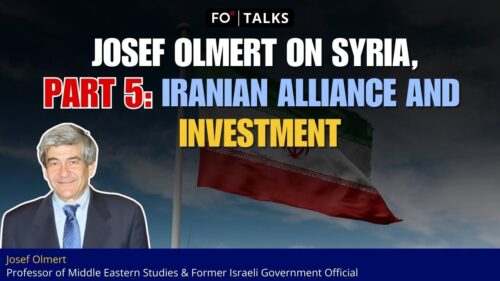
However, not much attention is placed on Israel in regards to Syria’s future. While there are Israeli military movements in southern Syria, offense isn’t in Israel’s interest, only defense. Their stake in the region comes from two things: one, Iran’s past influence on Syria as the proclaimed number one enemy of Israel; and two, Israel’s history with Syria, especially regarding the 1991 Madrid Peace Conference.
The Madrid Peace Conference was the US’s hope for a stable region
Almost exactly eight months after the first Gulf War ended, the US intended to facilitate peace between their ally Israel and Jordan, Palestine, Lebanon and Syria. The Conference comprised three big meetings, all of which involved Israel and another Middle Eastern country. The third meeting, between Israel and Syria, was the most anticipated. Relations between Syria and Israel were strained at best.
The only reason Syria agreed to attend was to give a gesture of goodwill to the US. During the first Gulf War, then-Syrian President Hafez al-Assad cooperated with the Coalition spearheaded by the US, the United Kingdom and Saudi Arabia. This came as a shock, as Syria had previously opposed US involvement during the 1980 Iran–Iraq War. Their sudden alignment with the US was done to make up for their involvement in the Iranian coalition against the Arab world during that war. As such, they had agreed to come to the peace talks.
The peace talks were fruitless
The first thing Israel requested was the release of the 4,000 Jews still living in Syria. In their situation, their travel, emigration and human rights were restricted. Syria was unprepared for this request and denied allegations. Eventually, US pressure forced Syria to meet the demand.
The talks yielded no results beyond the release of Syrian Jews. Neither side had any interest in achieving peace. Assad only agreed because he sensed the changing environment of the Middle East due to the collapsing Soviet Union, and to show goodwill toward the US. Additionally, the Israeli government was not ready to make territorial concessions. Both of these reasons doomed the talks from the very beginning.
However, this does not mean the peace talks were for naught. The readiness of Syria to enter the talks, despite having positioned itself as Israel’s primary enemy, marked a shift in regional relations. The Madrid Peace Conference can still be considered a turning point even if the results were not immediately felt.
[Cheyenne Torres and Lee Thompson-Kolar edited this piece.]
The views expressed in this article/video are the author’s own and do not necessarily reflect Fair Observer’s editorial policy.








































Comment