




 | ||
| ||
| ||
Dear FO° Reader, A well-known Italian journalist — Michele Serra — asked a question in Rome last year: Why do people vote for scoundrels? (Perché la gente vota per i mascalzoni?). He also said whoever answers it will save the world. Serra is a well-established journalist; he has been writing for 40 years. I’ve read his pieces for decades. I read this particular question on my phone. Even though I already knew that Serra asks “the questions that irritate,” I felt an itch. Then I felt something else, a feeble wrong note barely noticeable. Like someone who cut his hair but didn’t change the hairstyle, maybe. Subtle. The question assumes that we all agree on what a scoundrel is. But we don’t. Serra is wrong about the question. When you ask why people vote for scoundrels, you have already decided they are scoundrels. The people who vote for them have not decided this. They have decided something else entirely. They were formed by different experiences. They have different fears. Different ideas about what a father should be, what a border means, what fairness looks like. Let me tell you a story so you can better understand where my reasoning comes from.
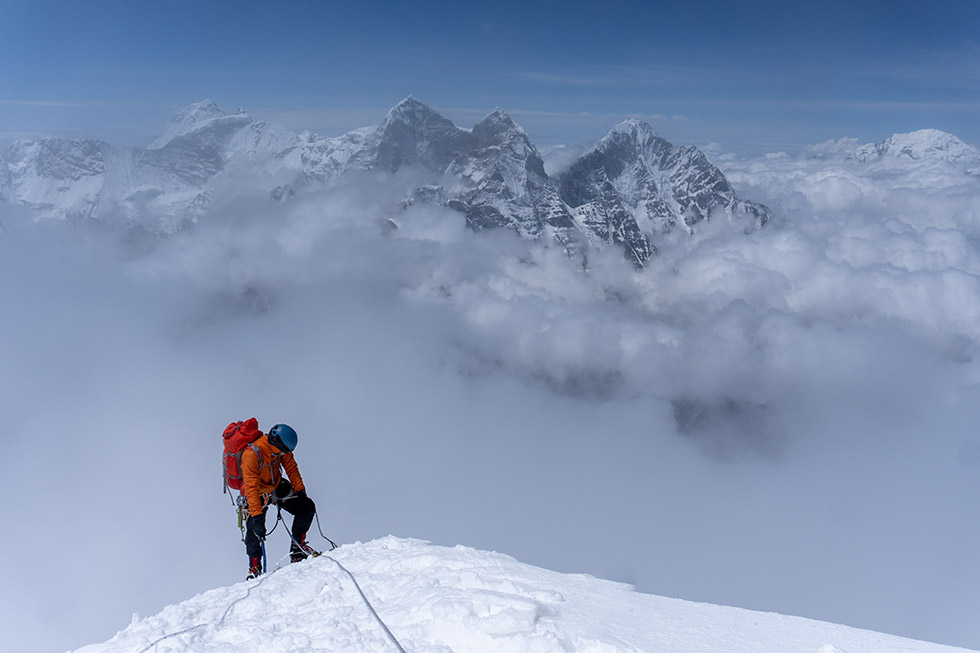
via shutterstock On the mountain, you don’t vote on safety measures I grew up in an Alpine village. Everyone knew everyone in detail, even if it looked like nobody spoke much. In summer and winter, trucks came through with young men going to boot camp. Remember that Switzerland has a militia — every man above 18 must participate unless they have a recognized condition or if they prove they are nonviolent. Then they usually serve a longer period of civil service for the good of the collective. They train at 2,000 meters, sometimes even higher. They learned to take care of each other. Nobody asked who anyone voted for. You don’t ask that on a mountain. In my late twenties, I joined the Alpine Club in Lausanne. We met every Friday evening in a collective space. We’d look for an itinerary, pull together a group of people depending on the difficulty of the itinerary and then set a time for a hike or a mountaineering outing either the next or the following day. In that group, there could be a mechanic, a farmer, someone from far away and maybe even a judge, or some other “fancy” profession. The latter wore an interesting orange and purple anorak, discolored in some places, that screamed 80s. But I’d only find out what his job was months later when I saw him on television in a suit. It definitely took me a moment to place him back in his anorak with the mountaineering helmet while cursing at an ice screw. On the mountain, the rule was simple: the weakest sets the pace. When we went on a glacier or in the snow, we could all borrow safety transceivers (also known as Appareil de Recherche de Victimes d’Avalanches [ARVA]), as the club owned most of them. You could buy one or borrow it if you didn’t need one all the time. And someone else would borrow it the following weekend. Nobody called it anything, and nobody voted on these safety measures. Such measures kept people alive, and that was enough. Yet, off the mountain, outlooks like this one may not apply. There is no such thing as universal morals A psychologist named Jonathan Haidt spent years on this concept. He found that people navigate politics through different moral foundations. Care. Loyalty. Authority. Sanctity. Fairness. Liberty. Progressives run mostly on the first and last. Conservatives use all of them. Neither is wrong. They are — let’s try an analogy — different instruments playing different music. And I, myself, don’t have the same opinion or reading of care and liberty as my also-progressive neighbor. So, politics is complicated, especially if you want to do it respectfully. To go back to the instrument analogy: You cannot hear the other’s music from inside your own song. But we can perform a thought experiment and position ourselves differently. We can train ourselves in holding space for the other person’s song and melody. A couple of years ago, an author at FO° marked my memory when he titled a piece calling out that mass democracy is a suicide cult. I admit he is not entirely wrong; there is some corruption and other flaws. In his example, he imagined 500 people having to choose between option A and option B. Two hundred and fifty-one of those people voted against 249. Such a system does not offer the stability a government needs to govern. The winner takes it all, but the losing side does not disappear. It waits, it broods and it gets ready for the next round while trying to undermine whatever the winners try to undertake. To solve this problem, the author says, we need a “strongman” type of leader. But the author’s conclusion is, in my honest opinion, wrong inasmuch as it doesn’t address the true issue. He sees the disease correctly, but he only prescribes more of it. That is why recognizing the disease (i.e., knowing the mountain is dangerous) isn’t enough. That is why my answer to the dangers of democracy is not the strongman as he suggests. My answer is not that force or majority wins. My answer is architecture — structure baked into systems. Stay with me. Compromise should be structural, not moral Back to my home country, Switzerland, seven people run the country as representatives. They are not bosses on their own, and there’s no prime minister. They must be from four different political parties. The presidency rotates every year, and it’s a representative role meant to welcome and interact with foreign state authorities. Most Swiss cannot name the current president. This is not a failure. This is the design. We actively avoid the charisma and personality trap. The country has direct democracy, which means most of the discontent and incomprehension is played out at the village or city level where people know each other in person, they might have a beer at the same bar, or a coffee and croissant at the same bakery every Sunday morning; then at the Canton level and then, only then at the Federal level through representatives. Referendums and popular initiatives are there to give voice to the 249 who didn’t get their way, this time. The losing side always has a next move. Nothing is total. Nothing is final. The binary does not exist at the federal level. It has never existed. There are always more than two options. There’s never a winner-takes-it-all. For example, the conservative Swiss People’s Party (SVP/UDC) sits at the table just like the other, more liberal parties, despite sometimes making Swiss “liberals” furious. It has sat there since 2003. They have to govern, they have to deliver, they have to negotiate (in three languages), just like all the other included parties. Inclusion is not a virtue here; it is a structural constraint. Compromise is not weakness; it’s a structural feature. You cannot defect from a table you are already sitting at. This is why Serra’s question cannot be asked in Bern the way it is asked in Rome or Washington. The architecture and political infrastructures do not permit it. Let’s now go for another ride. Two old ladies can explain, in part, how the world gets some votes. Whether you believe they are right or wrong. Uncle Sam’s grandmother shows that discourse is not enough Somewhere in America, there is a grandmother. She lives in a county where everyone has guns. She has guns. Her son has guns. She does not think of herself as a political person, but she still has strong opinions about keeping guns out of the hands of people who might abuse such weapons. She has thought about gun control in this regard for years, but she has not said anything about the topic. The social cost of saying it first is too high. She does not need to have an argument with someone about this topic. She needs permission. She needs language. She needs a different structure that allows her to speak out without the social cost. The grandmother is not waiting to be convinced. She is waiting for the room to be ready to hear her out. Three and a half percent of any population moving together has never failed to change the course of events. This is not sentiment; a political scientist named Erica Chenoweth proved it across a century of data. And the best part is that the movements that succeed in fostering change are largely nonviolent. The old lady at the park demonstrates that morals are not universal There’s an old lady who always sits in the park. She’s very much disturbed and disgusted by the dogs walking by because they’re always sniffing around her feet. She’s never understood dogs, but one day she asks what the use of them is. If you’re a dog lover, you tell her they teach us about unconditional love. Hearing that, she cannot keep it together. She’s now foaming with contempt and indignation: What does unconditional love have to do with anything! Her whole life was about earning the right to a smile. To a new dress. To some consideration. For her, everything is transactional. Many people see unconditional love as a universal moral. But for many others, unconditional love is either meaningless or offensive, especially if they have never received it. This is merely an example; far be it from me to even consider the thought of offering a psychological diagnosis. Moving away from the moral to the structural These are the kinds of people that Serra and many progressives cannot understand, even though they were formed by real experiences in real places. But the thing is, so was Serra; so was I and so were you, dear reader. Our real-life experiences were just different. While hiking and mountaineering, you realize that the mountain does not care about any of this — politics, indignation and rage-bait. The Alpine Club culture requires only that you bring everyone home, even if you have to change the itinerary or give up the summit. The ARVA is on the shelf. It belongs to everyone. It works the same for the mechanic who maybe had an alcoholic father or rather very loving parents, and the judge, whether he was an orphan or a spoiled child. Nobody called it anything as long as it kept people alive. Societies care about our politics, not the mountain. If we want to survive the climb, go for an expedition together, we need more than moral certainty. Instead, we should ask why the current structures force us into binary choices where the only way to be heard is to pick a side that feels like a betrayal of the other. The solution isn’t better leaders; it’s better architecture that makes compromise a structural necessity, not a moral concession. Greetings, Roberta Campani Communications and Outreach | ||
We are an independent nonprofit organization. We do not have a paywall or ads. We believe news
must
be free for everyone from Detroit to Dakar. Yet servers, images, newsletters, web developers and
editors cost money.
So, please become a recurring donor to keep Fair Observer free, fair and independent. 
| ||
| ||
| About Publish with FO° FAQ Privacy Policy Terms of Use Contact |





Support Fair Observer
We rely on your support for our independence, diversity and quality.
For more than 10 years, Fair Observer has been free, fair and independent. No billionaire owns us, no advertisers control us. We are a reader-supported nonprofit. Unlike many other publications, we keep our content free for readers regardless of where they live or whether they can afford to pay. We have no paywalls and no ads.
In the post-truth era of fake news, echo chambers and filter bubbles, we publish a plurality of perspectives from around the world. Anyone can publish with us, but everyone goes through a rigorous editorial process. So, you get fact-checked, well-reasoned content instead of noise.
We publish 3,000+ voices from 90+ countries. We also conduct education and training programs
on subjects ranging from digital media and journalism to writing and critical thinking. This
doesn’t come cheap. Servers, editors, trainers and web developers cost
money.
Please consider supporting us on a regular basis as a recurring donor or a
sustaining member.
Will you support FO’s journalism?
We rely on your support for our independence, diversity and quality.





Comment