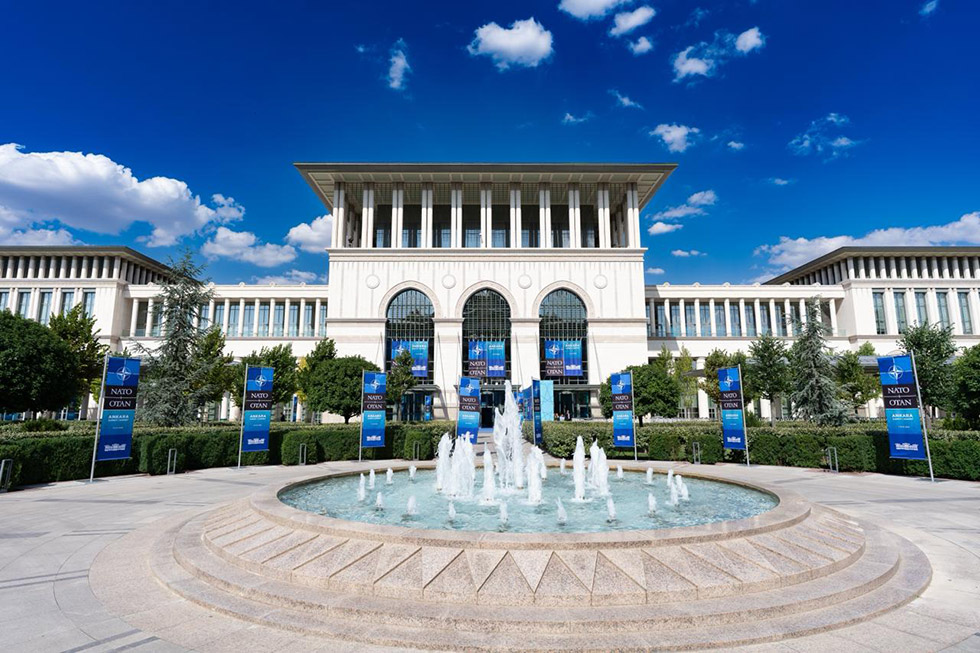
Global media outlets covered the NATO Summit by examining the shifting relationships among member states in light of recent geopolitical events. States that have endured the economic costs of trade disputes and diplomatic friction with the US entered the meetings wary of further conflicts. These internal divisions became the primary focus of coverage, as reporters assessed how the Summit’s outcomes might affect their home countries.
Sources:
Overview – 2026 NATO Summit in Ankara | NATO
US Policy Shifts and the Future of the Transatlantic Alliance | Rice University’s Baker Institute for Public Policy
US reception of Trump’s transatlantic strain
After more than a year of eroding bureaucratic relations and withdrawing from transnational agreements, the US had left NATO members fearing that President Donald Trump would follow through on his earlier threats to leave the alliance. Instead of worst fears materializing, Trump’s friendship with summit host Recep Tayyip Erdoğan, Türkiye’s President, had put him in a good mood, and he repeatedly cited their relationship as the reason for his attendance.
CNN journalists reporting on this emphasized that flattery from NATO Secretary General Mark Rutte also had a significant effect on the US President — though at the cost of the EU’s dignity. While Trump’s personal relationships with Erdoğan and Rutte may have eased immediate fears of a US withdrawal, his public conduct before and during the summit quickly became the dominant story for American media.
Left-wing media focused heavily on Trump’s blunders throughout the summit. Over the two days, he made numerous mistakes, from calling Iran the “Islamic Republic of Japan” to referring to Ukrainian President Volodymyr Zelenskyy as “President Putin.”
Trump also voiced displeasure with several NATO allies, namely Italy, Spain and Denmark. He casually reignited his feud with Denmark over Greenland and commanded that the US halt all trade with Spain after Spain refused to allow the US access to its bases during the US/Israel–Iran War. Italy received contempt before the summit even began when Trump posted a photo of conservative Italian Prime Minister Giorgia Meloni captioned “RESTRAINING ORDER NEEDED.” By the summit’s conclusion, Trump abandoned these grievances and praised the love he felt from fellow leaders, though it is unlikely the affection was genuine.
Sources:
Trump complains NATO ‘wasn’t there when we needed them’ after talks with Rutte | PBS News
Why Trump left NATO summit on a positive note after seething about Iran, Spain and Greenland | CNN
‘Islamic Republic of Japan’: Trump’s verbal flubs are piling up | CNN
The left–right divide
Yet left-wing publications offered a more critical interpretation. Rather than viewing the “love” as sincere, they framed the flattery and affection directed at Trump as a calculated effort to placate an unpredictable president. Outlets like The New York Times emphasized that Rutte “downplayed Trump’s criticism of member countries,” suggesting that alliance leaders were more focused on surviving Trump’s volatility than on addressing substantive policy disagreements.
Some right-wing media outlets ignored this undercurrent, instead focusing on the fact that allied leaders did not mind the conviction that Trump presented. Platforms like Fox News reported favourably on the US President, highlighting that even some Democrats believe Trump’s harsh attitude is wise. They framed his comments at the summit as a justifiable bid to pressure allies to spend their own money to protect themselves.
Other conservative platforms like The National News Desk framed the polarizing disunity with greater impartiality, debunking Trump’s outrage against Spain and clarifying that the US–Spain trade surplus means that the “American economy benefits from the trade relationship more than Spain does.” Ultimately, the NATO Summit showed a profound partisan divide in how Americans interpret fractures in the transatlantic alliance.
Sources:
Trump Assails NATO Allies Over Iran and Greenland | The New York Times
Top Dem admits Trump ‘wisely’ made critical demand to NATO allies: ‘Love and hate relationship’ | Fox News
Trump leaves NATO summit pleased with allies, except one country | The National News Desk
The Middle East’s response: Türkiye, Iran and others
As the host nation, Türkiye is projecting the event as a success. President Erdoğan described the summit as a historic moment and said he planned to continue supporting the NATO alliance. He also made a point of commenting on his friendly relations with Trump.
Notably, while Trump continued to posture against many historic allies, he received Erdoğan warmly. While reflecting Türkiye’s extremely significant geopolitical location and role in NATO, especially with the US at war with Iran, this continues Trump’s stance of rejecting allies with more democratic leanings, while embracing strongmen, a role many experts say Erdoğan comfortably fits into after 23 years of increasingly authoritarian actions as the leader of Türkiye.
It is also noticeable that Türkiye has had positive economic benefits from the US/Israel–Iran War. Trade routes are being forced to reroute over land and the nation’s defense industry expanded thanks in part to distrust in the US among Gulf countries. Still, Türkiye is seeking an end to the conflict, as a collapsed Iran would be disastrous for its own national security.
As a fitting bit of symbolism to wrap this all in a bow, Erdoğan gifted visiting NATO leaders with engraved revolvers, as a showcase of Türkiye’s growing weapons manufacturing industry. Several leaders were forced to leave the gift behind in Ankara due to their nations’ laws against firearms.
Sources:
President Erdogan says NATO summit ‘successfully’ concluded, highlights Türkiye’s defense capabilities | Anadolu Ajansı
As Iran war reshapes the Middle East, Turkey’s regional role looks set to expand | Chatham House
NATO leaders came to Turkey to discuss security. Erdogan gave them each an engraved revolver | The Hill
From Greenland to Spain: Trump Threatens Allies While Embracing Turkey at NATO Summit | Foreign Policy Research Institute
Recep Tayyip Erdogan | Britannica
Iran reacted negatively to the summit, as both the undercurrent and one of the main topics of discussion at the summit. NATO members all confirmed their commitments to keep Iran from building nuclear weapons. Iran continued to reiterate that those allegations were baseless and that it only plans to use nuclear enrichment for peaceful purposes. Shortly after the conference ended, Trump declared that the latest ceasefire with Iran was over, and bombings against the nation resumed.
Other Middle Eastern countries made quieter moves, working to shore up their defences in the wake of the wars in Israel and Iran. While everyone seemed cordial, there was a clear undercurrent amongst everyone: no one was happy with the US’s actions in the region over the past few years.
Sources:
Iranian Embassy Condemns NATO Ankara Summit Statement | Iran Wire
Iranian Embassy reacts to NATO statement | ADDR
U.S. military completes latest strikes on Iran after Trump says ceasefire is ‘over’ | NBC
The Ankara summit previewed the Gulf’s new security equation | Atlantic Council
Nato summit: How a fractured alliance is fuelling a permanent war economy | Middle East Eye
Ukraine’s place amid NATO family drama
Ukrainian President Volodymyr Zelensky attended the summit as one of the only non-NATO guests. For Ukraine, the meeting carried significant implications for its ongoing war with Russia. As a country bordering multiple NATO members and Russia itself, Ukraine continues to rely on allied support to sustain its military defense. Under the Trump administration, however, US backing had been uncertain until recently. The issue was a top concern for NATO allies, and the summit explicitly addressed countering the perceived threat that Russia poses to North Atlantic security.
As a result of these talks, the US granted Ukraine a license to produce Patriot interceptor missiles, though building a production line and launching manufacturing will take at least a year. NATO also committed over €70 billion ($80 billion) in military assistance for Ukraine this year and next. Journalists at Kyiv Post described the package as providing medium-term security and confidence in continued allied backing.
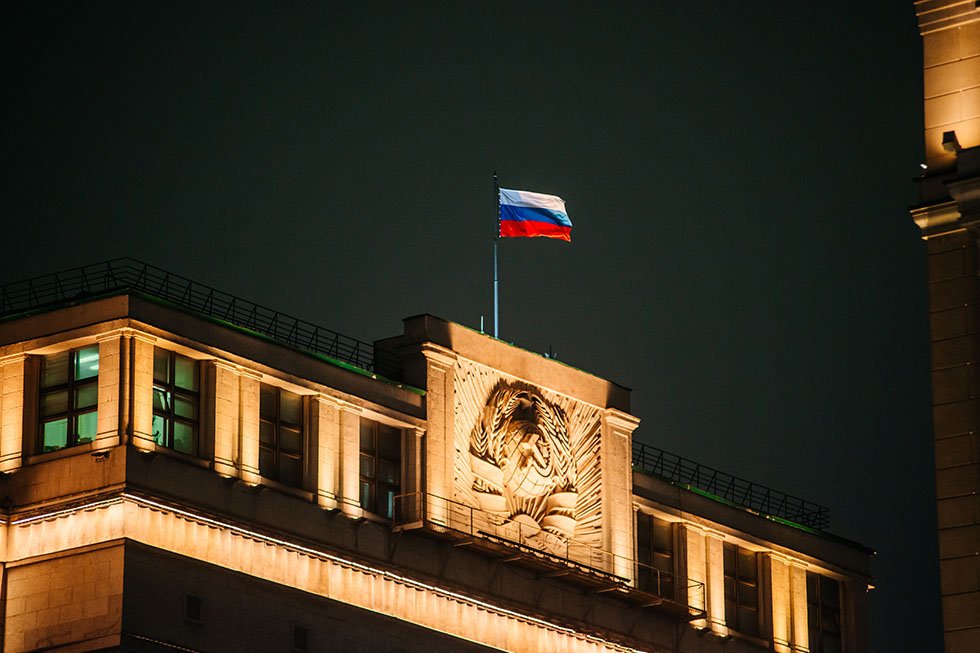
Russia, however, condemned these defense agreements as a mistake. Russian Foreign Ministry spokesperson Maria Zakharova stated that it was unfortunate NATO members made such “irresponsible decisions that could lead to a catastrophe not just for the alliance, but for the whole world.” The Russian diplomat pointed out cracks in NATO unity — a critique that echoed observations made by American left-wing media outlets.
RT journalists covered other Russian officials, including Kremlin spokesperson Dmitry Peskov, who dismissed European involvement in Ukraine as a “dead end.” Peskov argued that Europe cannot play a meaningful role in resolving the conflict while trying to exclude Russia from the process. Russia maintains that any lasting peace settlement must address what it considers the root causes of the conflict, including Ukraine’s neutrality, demilitarization, protection of Russian speakers and recognition of territorial realities on the ground.
Certainly, while media outlets struggle to make sense of Trump’s fluctuating attitude and the responses of NATO leaders, Moscow views internal fractures over defense spending, strategic priorities and military support for Ukraine as an opportunity to weaken the alliance from within.
Sources:
NATO on the Map | NATO
Russia denounces NATO summit decisions on aid for Ukraine, defence | Reuters
OPINION: Turkiye Helps Secure the NATO Loose Cannon | Kyiv Post
Europe’s position on Ukraine is a ‘dead end’ – Kremlin | RT
Europe’s military future is starting to take shape | RT
The China in the room
However, Zelensky was one of the few leaders to mention another key figure in modern global affairs: China. The Ukrainian leader publicly said China had urged Russia not to use nuclear weapons in response to Ukraine’s recent attacks on Moscow and other cities within Russia’s borders. While analysts of the Ukraine War can speculate about the full meaning of that statement, it does highlight China’s growing soft power.
China loomed over the talks as yet another boogeyman to the NATO alliance. Many European countries and the US have long been moving to try and counter China’s influence and increasing economic power around the globe, especially in military matters for years now.
China has not made many open moves. Instead, it has been patiently securing alliances and economic ties across the globe with its Belt and Road Initiative, and trying to keep itself out of any direct conflicts, though it seems quite happy to profit off of wars, notably supplying many drones to both Russia and Ukraine. As an increasingly erratic America continues to alienate its allies, China moves to try to court the rest of the world with the promise of stability.
The only public comment Chinese officials made in regard to the NATO summit was to say that “NATO should discard [its] Cold War mentality,” and that the democratic republic continues to sue for peace across the globe.
Zelenskyy: China urged Putin not to use nuclear weapons in Ukraine | POLITICO
Foreign Ministry Spokesperson Mao Ning’s Regular Press Conference on July 9, 2026 | Ministry of Foreign Affairs of the People’s Republic of China
As America Is Losing Friends, China Is Courting Them | The Bulwark
The NATO Summit and the Long Shadow of Beijing | China Observers
China’s Drone War in Ukraine | The Diplomat
Views on American power across the world
As we have mentioned throughout this piece, US President Trump’s actions have put many leaders on edge. His continued bullying and aggrandizing of old allies in Europe are a point of frustration. The Iran War has upended the Middle East, and the Strait of Hormuz’s closure is still impacting global trade. Ukraine has had to play a balancing game with what used to be a staunch ally under the Biden administration.
Simply put, while none of the attendees outright stated it, no one is happy with the US’s conduct, including at least half of the US. Many parties are actively moving away from old US guarantees and diversifying their own alliances because they cannot rely on such an unstable partner.
Casey Herrmann and Aliyah A. Omar
Assistant Editors













Comment