




 | ||||||
| ||||||
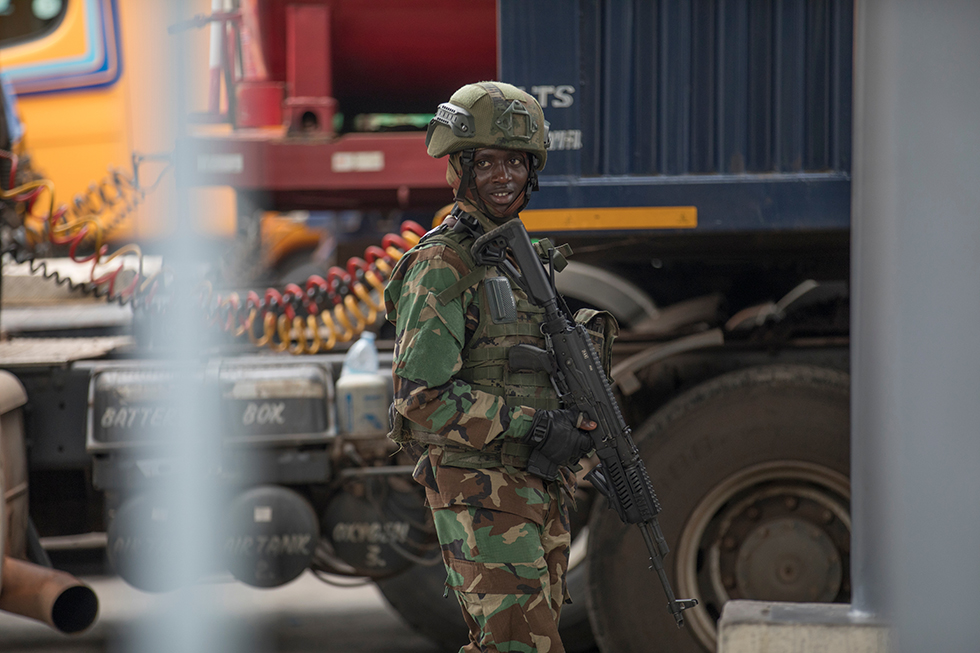
Dear FO° Reader, In the Democratic Republic of Congo (DRC), trouble has been brewing between the central government and the March 23 Movement (M23), a Congolese Rwandan-backed militia. In 2025, M23 seized control of the city of Goma among other territories. The militia continues to launch offensives in the DRC, leading to destabilization in the region. People are scrambling to respond, including international actors such as the US and the UN. Of course, militias do not suddenly appear out of nowhere. This conflict is a result of a much larger chain of events, cutting back nearly 150 years. In this week’s edition of Fair Observer’s weekly newsletter, we will be discussing the long, tragic history of one of the most important regions on the globe, and discussing why so few people talk about the Congo. A history of often-ignored genocide To say the Congo’s modern history has been defined by tragedy and violence is an understatement. Beginning in the 1880s, what we now know as the Democratic Republic of Congo fell under the control of the Belgians, and in particular King Leopold II. Leopold told the world that he was going to “civilize” the people of the region by converting them to Christianity and introducing industrial technologies. Like every other European colonial project in Africa, this was largely an excuse for wealth extraction and exploiting the native people. What made Leopold’s Congo state notable was the fact that, legally, the state was his personal property. This was reflected in the sheer brutality his reign brought to the region.
via shutterstock The Congo Free State, as it was ironically called, was synonymous with cruelty during the two decades Leopold oversaw it. To give only one example, Congo was rich in a number of resources, notably rubber. Leopold instituted harsh, unreachable quotas, and failure to meet them was punished by mutilation, usually by chopping off one of the victim’s hands. His brutality did not exclude captive children. Leopold, who never visited the Congo and only ruled through decrees, used a military force known as the Force Publique to enforce his laws. This group started as a European force, but quickly began integrating Africans into their ranks, both local men and foreign mercenaries. It should be noted that the Congo region, much like the Amazon in South America, is a dense rainforest with a wide collection of peoples and ethnicities. There was no pre-colonial Congo kingdom uniting them all. More immediately, however, the Force Publique’s cruelty has been estimated to have caused the region’s population to shrink from 20 million to 8 million people in two short decades. When the news of the atrocities broke to the wider world in the 1900s, the shock was bad enough to force Leopold to turn over control of the Congo to the Belgian parliament. While the new state did put a stop to the most extreme acts of cruelty, they still ran the colony as a repressive colonial holding. Many of the worst memories are seared into the Congolese consciousness. The trauma and institutional weakness left by the Free State set the stage for the chaotic scramble for power after 1960. Sources: The repetition of history Eventually, Congo did gain independence from Belgium in the 1960s. Independence was followed immediately by upheaval, both domestic and international. The Force Publique, now rebranded as the Congolese National Army, mutinied. Multiple regions within the DRC tried to secede. Belgium moved in to support the separatists and placed its military within the Congo’s borders. Finally and tragically, Patrice Lumumba, one of the leading voices in independence and the first Prime Minister of the DRC, was assassinated in a joint Belgian–US operation after asking the Soviets for aid after he felt that the western powers were not aiding the DRC meaningfully. This marks the point where the Congo seemed to free-fall into anarchy — it became a dictatorship and was renamed to Zaire from the 1970s to the 90s. The turmoil created an opening for the army officer who would become Mobutu Sese Seko, the first and only president of Zaire. Sources: This is not to say things became simpler. Zaire’s history saw the nation involved with multiple wars, both civil and proxy as part of the ongoing Cold War. Mobutu oversaw brutal human rights violations as a tool for control, usually along ethnic lines. This bred resentment and fear among many Congolese. Importantly, in neighboring Uganda, trouble was also brewing. Tension came to a head in 1994 when genocide in neighboring Rwanda led to scores of refugees and armed insurgents, creating greater instability in a weakening Mobutu’s rule. When Rwanda invaded in 1996 to attack the insurgent groups, this sparked a chain of events that led to the First Congo War. The following two conflicts are sometimes called Africa’s World War, due to just how many actors and countries got involved. Suffice to say, the conflict was bloody. After the first war ended in 1997 — after over 200,000 deaths — a second conflict arose almost immediately, officially raging until 2003. A century of ethnic tension and hatred exploded outward. The entire central African region, already unstable due to colonial and Cold War conflict, intervened again. Disaster still struck, with horrific results. The war raged through the basin, bringing death and destruction everywhere. Congo’s rich mineral resources, from the always-profitable gold to newly desired resources such as cobalt and germanium, which are important resources for electronics and batteries, only exacerbated the conflict. Over five years, an estimated three million people were killed. Mass rapes were widely reported, and child soldiers were common. All of this was not covered much by international media for a host of reasons. The war eventually ended in 2003, though many smaller conflicts still remained. This war also featured many militias forming to take up arms to defend their local communities and attack others for past and present wrongs. The M23 Movement, though it formed after the end of the war, is one such group. Sources: Rwanda genocide of 1994 | Britannica Congolese Civil Wars | Wikipedia Democratic Republic of the Congo – Resources, Power, Economy | Britannica A guide to the decades-long conflict in DR Congo | Conflict News | Al Jazeera Ongoing challenges and the situation in eastern DRC The March 23 Movement is a rebel group based in North Kivu, a mineral-rich province in eastern DRC. The rebel group’s name comes from the March 23, 2009, peace agreement signed between its predecessor, the National Congress for the Defense of the People. Concerns over the implementation of the 2009 agreement prompted the establishment of M23 in 2012, which remained active until its defeat in late 2013. The rebel group reemerged in 2021 and has been active since defending the interests of Tutsis, an ethnic group primarily from Rwanda. Although the Rwandan government denies it, reports suggest that the Tutsis are training and supplying arms to M23, with Rwandan troops fighting alongside them. The reason Rwandan troops are fighting alongside a militia is that both the government and M23 are mostly comprised of the Tutsi ethnic group. Rwanda’s broader security concerns and economic interests in eastern Congo also play a role in the relationship. Since its resurgence, M23 has gained significant momentum on the battlefield. In late January 2025, the group captured Goma, a major commercial hub on the Rwandan border and a strategic gateway for regional trade and humanitarian aid. Shortly afterwards, M23 rebels also captured the major city of Bukavu, the capital of South Kivu. One year after the capture of Goma, the city is no longer in open war, but the scars remain. Security has improved, yet the economic situation has been a struggle for many, with jobs disappearing and the city remaining under rebel control. In December 2025, US President Donald Trump helped broker a peace treaty between the Democratic Republic of the Congo and Rwanda, calling it a breakthrough. Yet the deal amounted to little more than an endorsement of a June 2025 agreement. The peace agreement signed in early December failed a week later, when the M23 group seized the city of Uvira. The US places the blame firmly on Rwanda. The US isn’t the only actor with a history of extensive meddling in the region. The United Nations has a long history of interventions in the DRC. The UN’s first major intervention in the DRC occurred a few weeks after the state gained independence from Belgium in June 1960. Over the decades, the UN has had to adapt to the evolving conflict and shifting dynamics. The UN’s efforts have been directed toward protecting civilians, supporting government stability and addressing armed groups that exploit the country’s vast mineral wealth. Despite these efforts, the M23 group has kept UN peacekeepers engaged in the east along the DRC’s border with Rwanda. While the UN remains a stabilizing presence, the situation in eastern Congo underscores that lasting peace will ultimately depend on political agreements and regional cooperation that extends beyond the battlefield. Without sustained enforcement mechanisms and diplomatic channels, ceasefires remain stopgaps to the violence that has persisted between the two states for decades, leaving the region in a cycle of fragile truces and renewed conflict. In sum, the tragedy of the Congo is not a series of isolated eruptions but a continuum shaped by centuries of external extraction, internal power struggles, and regional entanglements. From Leopold II’s brutal rubber quotas to Mobutu’s kleptocratic rule, from the spill‑over of the Rwandan genocide to the emergence of the M23 movement, each phase has amplified the next, leaving a landscape where mineral wealth fuels both hope and bloodshed. The UN’s decades‑long peacekeeping presence illustrates the international community’s recognition that a purely military solution is insufficient. Lasting stability will require a comprehensive political framework that addresses governance deficits, equitable resource sharing, and the grievances of the many ethnic groups that call the eastern DRC home. Only through sustained diplomatic engagement, robust accountability mechanisms and inclusive development initiatives can the cycle of fragile truces be broken and the Congolese people finally move toward a peaceful future. Sources: Conflict in the Democratic Republic of Congo — Council on Foreign Relations Trump hails ‘historic’ peace deal between DR Congo and Rwanda — BBC News March 23 Movement — Britannica M23 rebels, Congo riches and war in the DRC | Explained — Channel 4 News Trump’s ‘historic’ peace deal for DR Congo shattered after rebels seize key city — BBC News Goma under rebel control: Life in the shadow of violence — Deutsche Welle (DW) Liam Roman and Casey Herrmann Assistant Editor Related readings
| ||||||
We are an independent nonprofit organization. We do not have a paywall or ads. We believe news
must
be free for everyone from Detroit to Dakar. Yet servers, images, newsletters, web developers and
editors cost money.
So, please become a recurring donor to keep Fair Observer free, fair and independent. 
| ||||||
| ||||||
| About Publish with FO° FAQ Privacy Policy Terms of Use Contact |





Support Fair Observer
We rely on your support for our independence, diversity and quality.
For more than 10 years, Fair Observer has been free, fair and independent. No billionaire owns us, no advertisers control us. We are a reader-supported nonprofit. Unlike many other publications, we keep our content free for readers regardless of where they live or whether they can afford to pay. We have no paywalls and no ads.
In the post-truth era of fake news, echo chambers and filter bubbles, we publish a plurality of perspectives from around the world. Anyone can publish with us, but everyone goes through a rigorous editorial process. So, you get fact-checked, well-reasoned content instead of noise.
We publish 3,000+ voices from 90+ countries. We also conduct education and training programs
on subjects ranging from digital media and journalism to writing and critical thinking. This
doesn’t come cheap. Servers, editors, trainers and web developers cost
money.
Please consider supporting us on a regular basis as a recurring donor or a
sustaining member.
Will you support FO’s journalism?
We rely on your support for our independence, diversity and quality.





Comment