


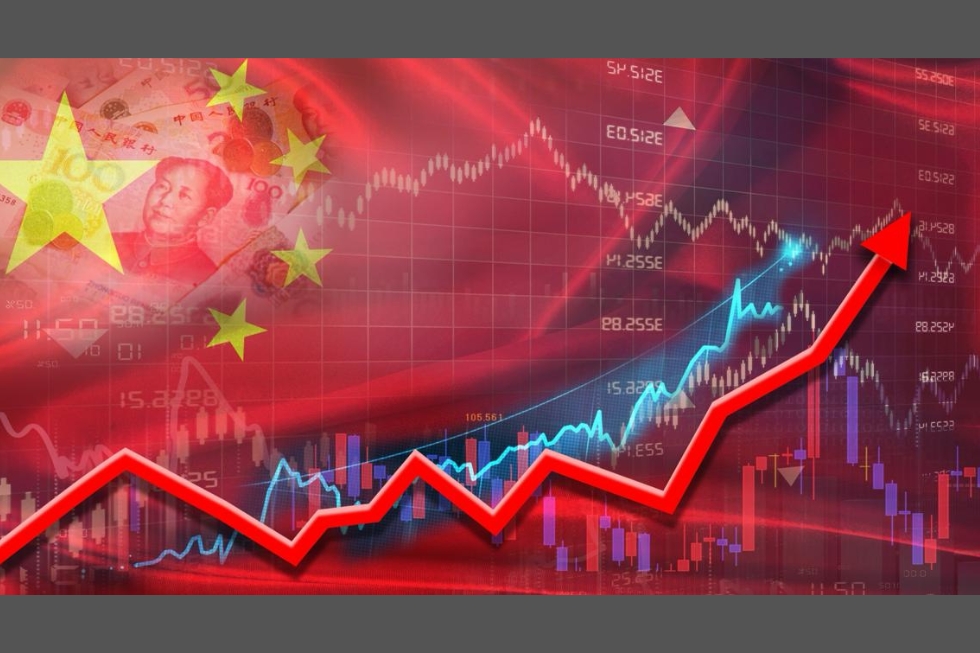



The momentum of China’s uneven 2025 recovery continued into the first six months of this year, but amid a decline in many sectors. Fixed asset investment fell 2.6% year-on-year by the end of 2025, and continued to fall into the first two quarters of 2026. Accurate data has yet to be collated. Private investment dropped 5.3%, and tertiary-sector (services) investment declined 7.4%, with investment in research and development (R&D) and technical services down 15%.
Aggregate profits for industrial firms with revenues over ¥20 million ($6.7 million) rose 18.8% year-on-year to ¥3.14 trillion from January to May. Despite a significant loss of trade with the US, exports rose 5.5%, led by expanding trade with the EU, Southeast Asia, Africa and Latin America.
The uneven growth highlights China’s economic disparities across regions, sectors and demographic groups. The Chinese government understands that these contrasts need not be the causes of social discontent, as long as people trust that hard work will be rewarded in a meritocracy with few impediments to geographic and social mobility.
Cities in the south and particularly the southeast, with their emphasis on technological innovation and investment, are growing faster than most other regions. The Yangtze River Delta is a vital engine, accounting for 25% of Chinese domestic and 4% of global GDP. The region’s GDP grew 5.5% last year, and Shanghai, Hangzhou, Ningbo, Suzhou and Hefei exemplified a consolidating trend of investment and a recovery in small and medium enterprises (SMEs) profits in the region.
Foreign companies still prefer to register in the major centers that are more foreign-friendly in their minds, or, in Shanghai’s case, basically international. Secondary cities often deliver stronger growth, are less expensive, and local officials will pay foreign enterprises more attention. I know some foreign enterprises are diversifying into lower-tier cities, but they would benefit from working and living in these places so that they can understand their commercial and social cultures.
— Zhejiang banker
Hefei city in Anhui Province — one and a half hours by bullet train (450 kilometers) from Shanghai — will be unknown to many foreigners, but it is the outstanding success story not just of the Yangtze River Delta, but of all of China.
Hefei’s GDP grew by 6.1% in 2025, and over the last 20 years its economy has expanded fourteenfold, while its population increased by 34% between 2015 and 2025 to 10 million people. It leads the country in new energy vehicles, photovoltaics and advanced manufacturing. Computer and electronic equipment production surged 60.6% in 2025.
China’s economic modernization began, resonantly, in Anhui’s Fengyang county. Eighteen impoverished farmers secretly signed a contract in 1978 to divide collective land among individual households, allowing them to sell their products outside the state agricultural system for profit. In doing so, they risked imprisonment and even execution as counterrevolutionary saboteurs. Then-Chinese leader Deng Xiaoping later endorsed their model and dubbed it the household responsibility system, making it a key principle of his economic reforms.
300 million migrants from within
Urbanization was once a critical factor in the Yangtze River Delta cities’ success. But as wealth consolidated and the regional middle classes matured into their second and third generations, these economies no longer needed cheap labor to drive business profits and productivity. Urbanization remains vital to China’s future national growth, and despite many residents of China’s most successful cities being unwilling to share social benefits and resisting reforms, the government has set increasingly aggressive targets to extend urban status to all.
I know it sounds hypocritical, but my parents came from the Fujian mountains and made their fortune here when migrant workers expected little from the local welfare system. Having taken over the family business and automated much of our production, I confess to not liking the idea of more poor migrants drawing down the municipal welfare budget.
— Appliance factory CEO, Zhejiang
In the recently announced 15th Five-Year Plan, Beijing set an objective to elevate tens of millions of rural residents to urban status. Cities of three to five million inhabitants will have to abolish their “hukou” (residency) hierarchies.
Urban-rural chasm
In 1958, the Chinese Government classified the population as either rural or non-rural. Those from rural areas had to apply for permits to enter cities. Conceived in part to ensure that farmers maintained maximum food production under state plans, and in part to avoid the random formation of urban slums that blighted much of Asia at the time, the policy had unforeseen and catastrophic consequences.
The following year, famine swept through rural China, largely due to draconian agricultural procurement policies and local officials’ fear of being judged as counterrevolutionaries for failing to meet quotas. Many cadres fabricated data and exaggerated harvests.
Often ignoring irrefutable evidence of peasant farmers’ suffering and asserting that they were achieving radical increases in yields, the Chinese government exported grain to Russia throughout the late 1950s. China’s leadership was determined to prove its Soviet-inspired economic policies were working, but also wanted to ensure continued Soviet Union support. By the summer of 1959, the first deaths from starvation were being recorded.
Urban Chinese citizens received grain rations that were denied to farmers, who were prevented from moving to cities or even neighboring counties and communes for famine relief because of their demographic classification. Tens of millions died in the Great Famine of 1959–1961, which to this day informs China’s obsession with food security and agricultural efficiency. It also drives farming families’ aspirations that they, or at least their children, will find better lives in towns and cities.
Class echoes
Today, those registered as rural workers still do not enjoy the same privileges in major cities as those born there. They may contribute to insurance, health and pension schemes as do their more established fellow citizens, but receive lower welfare payments. Most of these contributions cannot be transferred when migrant workers move to other cities. The main deficit is education, as migrant workers often cannot attend good local schools, which reserve places for locally born families.
Migrant workers favoring second- and third-tier cities, which offer more comprehensive benefits, are leading to shrinking populations in some larger cities. Shanghai’s population has lost almost one million migrant workers to other cities over the last five years. Lower-tier cities and towns across China are continuing to reform their residency systems, balancing them to achieve more egalitarian outcomes. These trends must accelerate if the vital economic dynamic of rural migration, which has driven Chinese development and poverty alleviation over the last three decades, is to continue.
Multiple priorities
The government has discontinued its consumer subsidies of the last three years, having observed that their stimulus effects were diminishing. Many households have traded in and upgraded what they need — appliances, vehicles and general household items — and, in some cases, for years in advance.
Household food and beverage consumption is increasing for the second successive year, and food services demand and pricing are strong. Growth in health, beauty and personal care, fashion, apparel and sportswear is exceeding historical norms. New real estate projects sell well in first-tier and major coastal cities (and some provincial capitals); anecdotal evidence suggests that values of existing properties have stopped declining or have plateaued in wealthier cities.
Real estate as a speculative investment asset class has not recovered, however, largely due to government disincentives against owning multiple dwellings, such as higher second-home deposit and mortgage interest rate requirements. The government does not want the supply imbalances and asset inflation of the past to return. Broadly across the economy, AI tools are having a stimulating effect, enhancing brands’ ability to market more accurately to customers while enabling customers to access low-fee payment and consumer credit tools to purchase items on their smartphones.
Wages grew by an aggregate rate of 4.5% over the past year, but the increases were higher in the state sector than in the private sector. This may be due to government attempts to stimulate household consumption through state employees, while private firms remain cautious. Technology manufacturing and other high-skilled sector wages are growing faster, while growth for low-skilled service and construction jobs is weaker. Aggregate statistics tend to mask concentrations of newly unemployed people, such as skilled middle managers fired by foreign-owned enterprises cutting costs in Shenzhen, Shanghai and Beijing due to pressures in their home economies.
Chinese policymakers and business leaders face clusters of economic and geopolitical contradictions in the coming 18 to 24 months. China is caught in a weak recovery from the real estate crisis while transitioning from a low- to medium-level industrial state to one based on high technology and the widespread application of AI. It is also dealing with rising US tariff barriers, accelerating protectionism among trade partners, and external supply chain shocks.
Planning in Beijing is generally sound, and the government is improving the public messaging from its core meetings, even beginning to rebuild public confidence. But the state’s influence in the market is mixed, sometimes heavy-handed and, at other times, belated and vague. Domestic oversupply will continue into the foreseeable future, as will trade surpluses abroad. Consumption recovery will be concentrated in the upper-middle class, but anemic elsewhere.
The Chinese government does want to increase consumption, but does not subscribe to the idea that household consumption is the singular or key arbiter of a healthy economy to the same degree as Western economists. It still balances consumption with long-term economic and industrial planning, global competitiveness, self-sufficiency and poverty alleviation.
The government continues to struggle with imbalances in social welfare and critical reforms in sectors such as education, and has yet to demonstrate to the population that it fully understands these complex issues. As a result, Chinese people remain cautious savers and intrinsically frugal, resulting in a solvent, stable household sector. Household savings reached an historic high of ¥160 trillion ($22 trillion) as of late 2025, which is equal to the entire GDP of the United States that year.
Our social and economic priorities have changed in the last five years. We are still expected to assist economic growth, but must now also prioritize the application of technology and AI tools to improve industrial efficiency, while maintaining employment. We expect both state-owned and large private enterprises to forego some profit to support reasonable employment. No one knows how AI will ultimately impact employment, but at least we are not leaving its impact to be resolved by the market alone.
Zhejiang Government official
Deng Xiaoping described development as crossing a river while feeling the stones. China is still crossing that same river, and while the objectives on the far bank remain clear, the water level is now higher, the current stronger, and the stones beneath harder to locate.
Washington-led disorder
The flux of false ceasefires — seemingly for the US and Israel to mean “you cease while we fire” — and spikes of extreme violence around the Strait of Hormuz continue to unsettle both Chinese exporters and importers, but not as dramatically as in the West. While Western societies are conditioned by generations of economic stability, developing countries have adapted over generations of constant volatility.
In China’s case, this has been due to dynamic and often disruptive growth. Citizens in Western societies tend to react swiftly and fearfully to external crises, having been conditioned by their leaders and journalists to adopt a false sense of stability and exceptionalism. Chinese citizens — shielded to a degree by the government’s muffling of freedom of expression — are usually more sanguine in the face of adversity, and retain more confidence in their leaders’ ability to deal with external and existential crises.
For China, that sanguinity may turn to anxiety the longer America wages war on Iran, and NATO seeks victory rather than a ceasefire in Ukraine, all while Western economies exhaust themselves competing with China for primacy. China needs a strong, productive global economy because it is a substantial net importer of food. It buys 60% of globally traded soybeans and is a net importer of corn, wheat and rice. Despite intense investment, improved farming methods and the growth of advanced technology, domestic production of pork and dairy remains insufficient to keep pace with the expanding middle class’ increasingly sophisticated demands.
All companies now have to consider geopolitics in a world where economic common sense and self-interest are invariably secondary to ideology and clumsy political struggles between great powers. With the paucity of clarity from political leaders, especially in the West, this is difficult, but increasingly necessary.
China still has adequate domestic oil reserves and is processing environmentally costly synthetic diesel, gasoline, jet fuel and chemical feedstocks from its plentiful coal resources. This has yet to reach double digits as a percentage of the country’s fuel supply, but it will do so if disruption to Middle East oil flows continues. As the world’s largest fertilizer producer — accounting for roughly 30% of global supply — China does not face fertilizer shortages yet. More serious than resource constraints is China’s deteriorating relationships with most Western countries and a few of its near neighbors, a further drag on trade. These will hinder future economic growth and foreign investor confidence.
Partnerships of expedience
As the prospects of a direct war between China and the United States in Asia recede somewhat, prospects of proxy conflicts are increasing. Depleted by conducting a war with Russia through its Ukrainian proxy, and another war alongside its political donor Israel against Iran, Washington is providing the world with a vivid and brutal example of imperial collapse. China, shocked and perplexed, is attempting to work out the ramifications for international stability and free trade. It is watching its major geopolitical adversary weaken itself with some relief, but also with mounting concern over the short- to medium-term regional instability that US decline is creating. As America retreats from the region, it is pushing its allies toward conflicts with China that it cannot itself afford and would be unlikely to support militarily.
Japan is remilitarizing while trying to form alliances with Taiwan, the Philippines, Australia, South Korea, India and the United Kingdom; it is also the first Asian nation to open a diplomatic mission to NATO. Japan is accommodating Washington’s desire to contain and challenge China by proxy, while reducing its dependence on an increasingly unreliable US for its security.
I studied classics. It shaped my view of Asia for years. I felt entitled — a representative of a better Western civilization. We were Greece and Rome, and developing Asians were backward tribes on the edges of the civilized world. My view changed over time and at some point reversed. Now, as I watch the arbitrary killing of Venezuelan sailors in the Caribbean and the slaughter of schoolgirls in Minab, Iran, as well as the tacit US support for the genocide in Gaza, I realize we are the barbarians.
— Western banker in Shanghai
Australia and New Zealand, on the other hand, have marginalized their sovereignty by joining US rehearsals for conflict with China in the form of elaborate war games at the edges of disputed Chinese territorial waters. At the same time, they expect China, their critical trade partner and the dominant force underpinning their economic security, to treat this aggression with the acquiescence of a weak, impoverished nation of the colonial era.
Foreign investment is still very much welcome in China, and there are no current directives to punish foreign companies that are committed to the domestic market, even from countries opposed to China or engaged in its containment. China is too preoccupied with managing growing diplomatic and trade volatility to respond to every perceived slight or betrayal. As China adjusts to the new global norm of volatility and unpredictability and continues to strengthen economically and militarily, its current apparent tolerance will give way to a harder-headed requirement that countries end military posturing or face trade consequences. Australia and South Korea underestimated China in the past and experienced its retaliation to their great cost.
Trust is as hard to build between nations as it is between people. China will be guided by its economic and commercial needs as it redefines its relationships, but its partners should understand that it is trust and consistency that underpin everything.
[Mahon China first published this piece as a business report.]
[Kaitlyn Diana edited this piece.]
The views expressed in this article are the author’s own and do not necessarily reflect Fair Observer’s editorial policy.
China Watch: China’s Rise and the New Multipolar Global Order
China’s rise is reshaping the global economic order, fostering new regional alliances like BRICS and the Shanghai Cooperation Organisation while...
China Turns Tariff War Into Strategic Opportunity Against United States
US President Donald Trump raised tariffs on Chinese goods to cut the US trade deficit and push firms to leave...
The Enigma of China’s Debt Crisis — Explained
China's economy is grappling with a mounting debt crisis, particularly at the local government level, driven by fiscal deficits, shrinking...

Support Fair Observer
We rely on your support for our independence, diversity and quality.
For more than 10 years, Fair Observer has been free, fair and independent. No billionaire owns us, no advertisers control us. We are a reader-supported nonprofit. Unlike many other publications, we keep our content free for readers regardless of where they live or whether they can afford to pay. We have no paywalls and no ads.
In the post-truth era of fake news, echo chambers and filter bubbles, we publish a plurality of perspectives from around the world. Anyone can publish with us, but everyone goes through a rigorous editorial process. So, you get fact-checked, well-reasoned content instead of noise.
We publish 3,000+ voices from 90+ countries. We also conduct education and training programs
on subjects ranging from digital media and journalism to writing and critical thinking. This
doesn’t come cheap. Servers, editors, trainers and web developers cost
money.
Please consider supporting us on a regular basis as a recurring donor or a
sustaining member.
Will you support FO’s journalism?
We rely on your support for our independence, diversity and quality.





Comment