


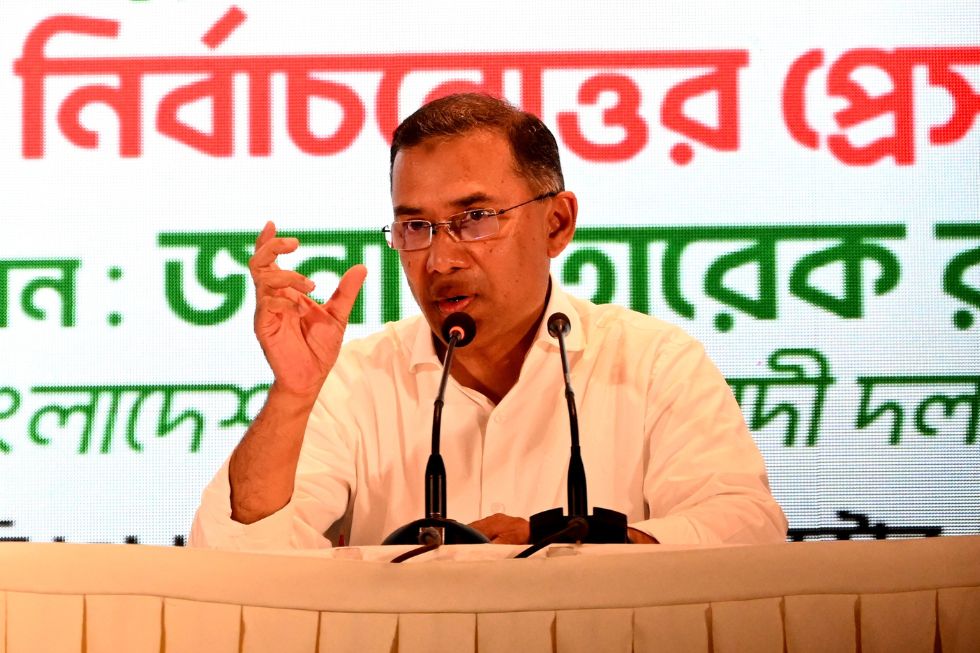



On February 12, Bangladesh held its 13th general elections, a pivotal moment that reshaped the nation’s political landscape. The 11-party alliance led by Jamat-e-Islami (JIB) and the Students Party (NCP) suffered a landslide loss, while the Bangladesh Nationalist Party (BNP) secured a victory. This win came with a historically moderate voter turnout of 60%, signaling a renewed but cautious engagement with the electorate compared to previous elections.
Deluge of drought
The elections initially appeared to be a breath of fresh air for Bangladesh’s politics, driven by the Gen Z revolution — also dubbed the “monsoon uprising”. However, the momentum this revolution brought quickly faltered.
A dehydrated mandate, with heavyweight student coordinators who had held key positions, has shattered; it seems the fresh polish and the shine have both come off. The student-led National Citizen Party performed dismally in the recent elections, securing victory in only 6 of the 30 contested seats (20%). The defeat was exacerbated by the NCP’s alliance with JIB, which proved suicidal due to the party’s checkered past — particularly its role during Bangladesh’s 1971 Liberation War.
On top of this history, JIB has drawn a lot of criticism for making derogatory and extremely vulgar comments against women. They have also faced grave allegations of violence, intimidation, financial irregularities and a failure to provide safety, especially among minorities. These failures alienated many voters, shaped public perception and ultimately eroded the revolution’s initial promise.
Alongside the general election, voters also cast their ballots in a national referendum on the July National Charter, which was proposed following the ousting of former Prime Minister Sheikh Hasina in July 2024. The charter was approved with 60.26% of the vote.
However, the modest turnout was a historic dwarf compared to the two previous referendums held in Bangladesh. In an interesting turn of events, the overwhelming majority of the freshly elected BNP Members of Parliament (MPs) boycotted the second parliamentary oath. This action followed their earlier signing of a note of dissent against the referendum’s ratification, signaling deep divisions within the political elite. While the JIB and the NCP vowed to implement the reforms, they lack the clout in parliament to pass them.
A major bone of contention remains the constitution amendment, as the council that will oversee this reform will have a significant vacuum from the ruling dispensation, who may overturn it, resulting in a predicament.
Balancing the banker’s book
The political turbulence intertwines with economic challenges. Nobel laureate Dr Muhammad Yunus, who was the epicenter of the previous 18-month interim government, faced criticism from the sitting president, Mohammed Shahabuddin, for the grim state of affairs that prevailed during Dr Yunus’s tenure. The president accused Yunus of being uninformed and deliberately obstructing key decisions, such as the trade tariff negotiations with the US — decisions carrying deep and significant ramifications for Bangladesh.
Bangladesh’s ready-made garments industry, the backbone of its dollar cash crop, provides not only employment but empowerment, especially for women who play an active role in the vibrant Bengali social fabric. Any political formation aiming to alter and possibly marginalize this very significant section takes an enormous risk.
JIB also drew phenomenal criticism as they made misogynistic remarks about working women, which included comparing them to sex workers, proposing reduced working hours and hinting at the enactment of harsh Islamic laws if voted into power. JIB’s blunder in not embracing gender equality directly antagonized students’ aspirations.
With the Awami League (AL) suspended from political participation, an inclusive void prevailed, and JIP expected a monstrous verdict. However, the electorate did not play ball. Not only was the AL suspended from political participation, but the sitting Bangladeshi president also alleged that, on the occasion of a royal invitation by the state of Qatar, his participation was blocked by design. Bangladesh had descended into a violent spiral of violence, arson, attacks targeting minorities, and an almost omnipresent law and order in the last 18 months following Sheikh Hasina’s departure.
The role of the interim caretaker, in association with student minister designates, must be examined impartially, and the whole timeline needs a holistic, overarching inspection. If these acquisitions hold, then the “banker of the poor” has much to disclose as to what transpired in the corridors of power in Dhaka.
Collage of challenges
Prime Minister Tariq Rahman, returning after 17 years of self-imposed exile in London, faces a mammoth task if he wants to restore stability and usher in a new golden era for Bangladesh. He must also keep extremist elements at bay and avoid squandering the trust and faith his party has earned and paid for with blood.
The BNP election manifesto pledges to double the current decelerating economy to a trillion by 2030. Achieving this goal requires regional security, economic solidity and the restoration of peace in society. Tariq must leap onto an almost insolvent economic baton and propel it at lightning speed. International partnerships, with people-to-people contact as a core strategy, will be pivotal in this novel journey.
Circumspection may prove a boon when expanding engagement with other neighbors and perceived friendly nations such as Pakistan and Turkey. It remains to be revealed which country Tariq will visit first after taking the oath, but for the moment, there seems to be a glimmer of optimism between the known ditch and the unknown deep blue bay.
[Kaitlyn Diana edited this piece.]
The views expressed in this article are the author’s own and do not necessarily reflect Fair Observer’s editorial policy.
Mandate for Reform, Battle for Identity: Bangladesh After the Election
The Bangladesh Nationalist Party’s (BNP) recent election victory ushers in a complex era of reform, identity politics, and foreign policy...
Can Bangladesh’s Nationalist Party Transform the Country’s Foreign Policy?
Dhaka’s incoming government won elections on a “Bangladesh First” foreign policy platform. To successfully lead the country, the Bangladesh Nationalist...
Bangladesh Heads to the Polls as Minorities Face an Uncertain Future
Between December 2025 and January 2026, Bangladesh witnessed renewed violence targeting religious minorities, especially Hindus, amid political unrest following Prime...
Support Fair Observer
We rely on your support for our independence, diversity and quality.
For more than 10 years, Fair Observer has been free, fair and independent. No billionaire owns us, no advertisers control us. We are a reader-supported nonprofit. Unlike many other publications, we keep our content free for readers regardless of where they live or whether they can afford to pay. We have no paywalls and no ads.
In the post-truth era of fake news, echo chambers and filter bubbles, we publish a plurality of perspectives from around the world. Anyone can publish with us, but everyone goes through a rigorous editorial process. So, you get fact-checked, well-reasoned content instead of noise.
We publish 3,000+ voices from 90+ countries. We also conduct education and training programs
on subjects ranging from digital media and journalism to writing and critical thinking. This
doesn’t come cheap. Servers, editors, trainers and web developers cost
money.
Please consider supporting us on a regular basis as a recurring donor or a
sustaining member.
Will you support FO’s journalism?
We rely on your support for our independence, diversity and quality.





Comment