






There are words in the English language that designate things that once existed but have since disappeared. In some cases, the words themselves never disappear; we recognize them as common words but have lost any substantial association with the object or idea they formerly referred to. How many people have even an idea of what a ruff looks like or what the tuffet nursery rhyme’s Little Miss Muffet sat on might be, to say nothing of the curds and whey she was feasting on?
Alongside these concrete words that evoke in us no visual association there are idea-words that have equally vanished. We have to thank novelist James Joyce for resuscitating “agenbite” (associated with moral conscience, literally “the again-biting of the inner mind”) and “inwit” (consciousness or constructed knowledge within the mind). Despite the repeated occurrence of the phrase “agenbite of inwit” in Joyce’s Ulysses, neither word has entered into common usage, though this Devil’s Advocate recommends that both would be extremely useful in today’s superficial, hyperreal culture.
Many people skilled in assertiveness excel at “outwitting” others but in so doing let their inwit atrophy. As for agenbite, reference to the law or artificial sets of behavioral rules — such as wokeism’s essentially neo-Puritanical codes — have removed agenbite from our society’s moral compass. How many Catholics still confess other than perfunctorily? As for non-Catholic Christians, though they tend to respect the law of the land, many secretly endorse US President Donald Trump’s recent confession quoted by The New York Times: “Yeah, there is one thing. My own morality. My own mind. It’s the only thing that can stop me.”
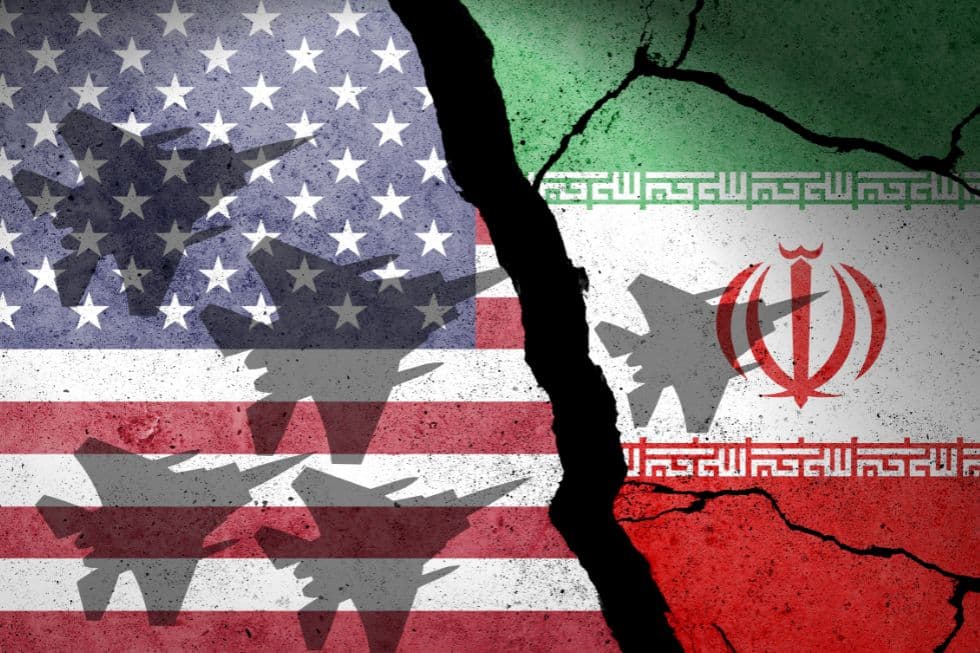
Trump added an important qualifier: “I don’t need international law. I’m not looking to hurt people.” That helps explain his alacrity to carry out the bombing of elementary schools, the assassination of military, political and spiritual leaders and the wanton destruction of civilian infrastructure across Iran. When he subsequently promises that “we’re going to bring them back to the Stone Ages [sic], where they belong,” we must understand that even though bombing tends to hurt people, we shouldn’t assume that hurting anyone played any part in his intention. Trump’s inwit has no agenbite.
To bring his point home, Trump made it clear that this was all about reasonable people sitting down to work out complex problems: “In the meantime, discussions are ongoing.” The passive voice tells at least half of Trump’s story. We don’t know who is discussing or what is being discussed. Discussions are the agent here, but we know the act of discussing has neither agenbite nor inwit. Only people do. So who are the people and do they possess inwit?
The other half of the story is the idea of “discussions.” There’s an ancient term in English that in former times might have been used: negotiations. Trump may have no clear idea of the meaning of that word, as his behavior seems to demonstrate. When negotiations were officially announced and supposedly taking place back in June of 2025 and again in late February 2026, without warning or even “discussing,” Trump chose to interrupt them with spectacular bombing campaigns.
The fact that he seems to find “discussions” more meaningful than negotiations may have more to do with the fact that at the core of the word itself is another word: “cuss.” In contrast, the word “negotiation” contains at its core the Latin word, otia, the plural of otium, which means leisure time or rest. The Romans saw otium as the occasion to reflect and think, perhaps even to cultivate their inwit. A character in the Roman poet Virgil’s Eclogues expressed his gratitude in these words: “Deus nobis hæc otia fecit” (“A god gave us this leisure”). In Roman culture, otium contrasted with busyness. The Romans valued studious leisure as a moment favoring philosophy or the arts. They did not think of it as mere idleness. Inwit may have come later as a specific innovation of Christian culture, thanks in part to the Roman citizen, Augustine of Hippo, the author of Confessions. But even for the pagan Romans, otium served at the very least to cultivate one’s wits.
This isn’t just about playing with words!
Trump’s moral system privileges acts over words, which is why he allows himself to be so negligent in his use of language. He seems to favor two types of act, which reflect two essential sources of value, neither of which bothers with the distraction of ethical reasoning. The first is transactions (money, and specifically the accumulation of wealth). The second is violence in the form of police action and war: domination, humiliation, acquisition and consolidation of power.
Thanks to his abuse of language, Trump epitomizes the hidden driving forces of the US imperial culture he presides over in ways that former presidents, conscious of the danger, deliberately and often craftily sought to conceal. Trump takes delight in highlighting the fundamental brutality of a system that measures value purely by monetary standards: any increase in personal wealth or stock market cap is deemed virtuous. He privileges provocative, disparaging rhetoric and shows of force to the exclusion of any expression that might imply the existence of ethical criteria, the foundation of which is always the notion of respect and the guiding force, empathy.
Trump puts on a maximalist show, but he does so in the continuity of the fundamental behavior of the imperial state, a state he inherited and did not create. His recent behavior is nevertheless innovative. If he accepts to use the tool traditionally associated with diplomacy, negotiations, he does so merely to create the opportunity to prepare and then deploy maximum force. In that sense, it’s wise on his part to call what’s now taking place “discussions” rather than “negotiations.” No one — except possibly the cowardly European leaders (who, alas, failed to fulfill my April 1 fantasy of declaring their independence) — would now admit to trusting a US negotiation team sent by Washington to resolve an overseas conflict. Cuss or discuss are the only remaining options.
But how different is this from what we have seen in previous Democratic administrations? It was under Barack Obama that the Minsk agreements were hammered out under the sponsorship of France and Germany following US diplomat Victoria Nuland’s successfully crafted coup d’état in Kyiv back in February 2014. Then-Vice President Joe Biden was actively involved, as Nuland’s infamous intercepted phone call revealed. Both former French President François Hollande and former German Chancellor Angela Merkel belatedly admitted that the negotiation was little more than a hoax, designed to gain time as Ukraine became integrated as a de facto member of NATO.
In December 2021, in response to an ongoing state of civil war in Ukraine directed against the Russian-speaking population, Russian President Vladimir Putin positioned approximately 100,000 troops on the Ukrainian border, clearly threatening an invasion. He formally proposed to engage talks according to the principle of “indivisible security” that applied during the Cold War. It stated that no country should strengthen its security at the expense of its neighbor’s. There may have been good reasons to suspect once engaged, negotiations would break down, but the only certain way of knowing that is to begin the negotiations. Instead, the Biden administration, in the name of both the United States and NATO, called the request a “non-starter.” The pretext was that NATO had an “open-door” policy. With hindsight, can any rational observer believe that refusing negotiations was a wise decision or that engaging in negotiations at that time would have produced a worse result than what we see today?
History seems to be sending a message. The underlying meaning of negotiations — using a nation’s inwit to prevent the worst from happening — has been dismissed as a relic of history. We have reached a point at which the leaders in the West appear to have redefined the term — and even its more general framework, diplomacy — to signify the phase of a deliberately ambiguous relationship that provides time to prepare for the use of massive destructive force. Biden’s team had already exhausted the technique with the regularly violated Minsk accords. Trump innovated by accepting the negotiations as the platform from which to attack.
Trump’s Secretary of War Pete Hegseth at least gets straight to the point. In the headline of a recent article on The Hill, we learn that “he welcomes deal with Iran, but Pentagon will keep ‘negotiating with bombs.’” Trump explained that “Hegseth was ‘disappointed’ by the idea” of negotiations but agreed with the principle so long as the talking was done with bombs. And of course, Trump himself has now stepped up to promise a war crime on the scale of Hiroshima and Nagasaki. “If there is no deal, we are going to hit each and every one of their electric-generating plants very hard and probably simultaneously.”
Most observers feel that, despite massive and ongoing damage and the successful decapitation strike by the US–Israeli tag team on day one, Iran now has the upper hand. In such cases, negotiations tend to be useful to the party risking defeat. But at some point the weaker party has to acknowledge the state of play and negotiate — with words not bombs — to put an end to the misery.
Trump’s attitude seems to fall into an oft repeated pattern. In March 2022, Biden predicted the ruble would soon be rubble. It’s the dollar that’s now losing traction as the world’s reserve currency. So long as serious negotiations based on recognizable principles such as indivisible security are dismissed, things will go badly for everyone, but especially for those who believe they started in a position of power.
I leave the last word to Edward Quince, our good friend and collaborator in our series, “Money Matters.” He has revealed privately what appears to be the nature of Trump’s current “discussions,” which the Iranians vehemently insist are not negotiations:
“Trump is attempting to buy off the Iranian elites — partially easing sanctions, sending signals through oil prices, while simultaneously threatening scenarios such as the seizure of Kharg Island and control of the Strait of Hormuz.
But the Iranians will not go along with it.”
Dear reader, when do you think Trump’s or Hegseth’s agenbite is likely to click in?
*[The Devil’s Advocate pursues the tradition Fair Observer began in 2017 with the launch of our “Devil’s Dictionary.” It does so with a slight change of focus, moving from language itself — political and journalistic rhetoric — to the substantial issues in the news. Read more of the Fair Observer Devil’s Dictionary. The news we consume deserves to be seen from an outsider’s point of view. And who could be more outside official discourse than Old Nick himself?]
[Lee Thompson-Kolar edited this piece.]
The views expressed in this article are the author’s own and do not necessarily reflect Fair Observer’s editorial policy.
FO Talks: Will Trump and Netanyahu Accept Iran’s Demands as Peace Talks Begin?
In this episode of FO Talks, Atul Singh and Josef Olmert assess whether heavy damage to Iran’s military translates into...

Trump Makes Wars of Religion Great Again!
From Bush’s War on Terror to Trump’s strikes on Iran, US foreign policy has quietly transformed from ideological conflict into...
FO Exclusive: A New Iran–US Conflict Looms Large
In this section of the February 2026 episode of FO Exclusive, Atul Singh and Glenn Carle examine the rising risk...
The Biden Report: No Wars To Be Seen
Under pressure from the tenors of his party’s establishment, Joe Biden officially committed to becoming a lame duck. That political...
The West’s Disastrous Decision to Reject Peace in Ukraine
When Ukraine had the upper hand after the 2022 Kharkiv and Kherson offensives, Western leaders took it as a sign...
Support Fair Observer
We rely on your support for our independence, diversity and quality.
For more than 10 years, Fair Observer has been free, fair and independent. No billionaire owns us, no advertisers control us. We are a reader-supported nonprofit. Unlike many other publications, we keep our content free for readers regardless of where they live or whether they can afford to pay. We have no paywalls and no ads.
In the post-truth era of fake news, echo chambers and filter bubbles, we publish a plurality of perspectives from around the world. Anyone can publish with us, but everyone goes through a rigorous editorial process. So, you get fact-checked, well-reasoned content instead of noise.
We publish 3,000+ voices from 90+ countries. We also conduct education and training programs
on subjects ranging from digital media and journalism to writing and critical thinking. This
doesn’t come cheap. Servers, editors, trainers and web developers cost
money.
Please consider supporting us on a regular basis as a recurring donor or a
sustaining member.
Will you support FO’s journalism?
We rely on your support for our independence, diversity and quality.





Comment