




For the past six or seven decades, Britain has produced an impressive succession of people and institutions, both real and fictional, that have awed the world: The Beatles. Margaret Thatcher. Princess Diana. Harry Potter. The BBC. The Premier League. These names have become almost synonymous with Britain.
They have been the public faces of the country, shaping how it is seen abroad, sustaining its prestige and supporting the perception that Great Britain was, as its name suggests, great. But one of them — the Premier League — was recently exposed for financial misconduct that could sully the Motherland’s reputation.
Visions of Britain
Most of these names belong to history. The Beatles broke up in 1970, Thatcher left office in 1990 and Diana died in 1997. Their reputations endure, but their capacity to project contemporary British influence remains limited. Harry Potter continues to be a formidable cultural property, although his future increasingly belongs to multinational entertainment businesses. The BBC still commands international recognition, but its place in a fast-changing media landscape is less assured.
The Premier League is different. Everyone who knows anything about sports holds it in high regard. It’s the Rolls-Royce of association football. There’s an irony here: Rolls-Royce cars are still made in Britain, but the marque is owned by Germany’s BMW. A British name, a global reputation, foreign ownership. The Premier League has followed a similar path, attracting owners, players and fans from across the world.
Founded in 1992, the Premier League transformed English football, which then appeared to be in terminal decline, into a global entertainment business. Its clubs attracted the world’s leading players, its managers became international celebrities and its matches were screened across continents.
The league grew into something much bigger than a sports competition. It became an institution through which England, and Britain more broadly, presented itself to the world. Its stadiums, club histories, rivalries and rituals became familiar international reference points. Its commercial success turned English football into a cultural asset rather than the liability it had seemed in the 1980s.
Reputational damage
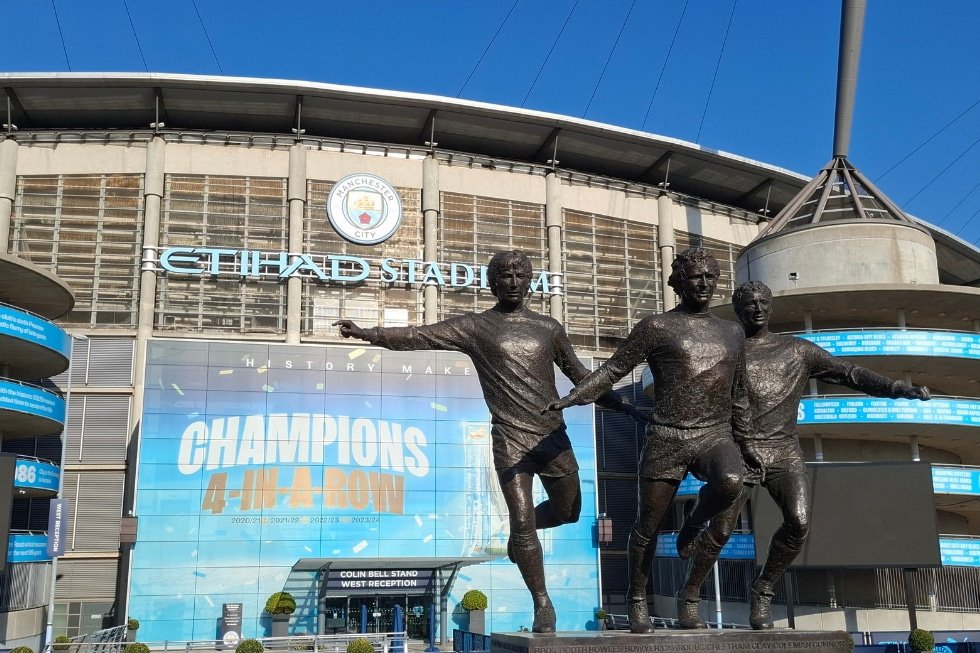
Now for the league’s financial folly. On September 29, 2026, an independent commission found Manchester City guilty of serious breaches of the Premier League’s financial rules over nine seasons. The findings concerned arrangements that artificially inflated revenues and reduced costs by more than £900 million (nearly $1.2 billion). City denies wrongdoing and has appealed. The appeal remains unresolved and its outcome could change the position. As things stand, however, the commission has found the club guilty of serious financial transgressions.
There is a further possibility, though no evidence currently establishes that it is being pursued. The Serious Fraud Office (SFO) has powers to investigate suspected serious or complex fraud independently of football’s disciplinary processes. The commission’s findings are regulatory, not criminal: A breach of the Premier League’s rules does not, by itself, establish a criminal offense.
The findings nevertheless raise questions that could extend beyond sporting regulation. On October 14, Reuters reported that HM Revenue and Customs had declined to say whether it was investigating Manchester City’s finances, citing taxpayer confidentiality. That report concerned HMRC, not the SFO, and it does not establish that a criminal investigation is underway. There is no public evidence that the SFO has opened an investigation into Manchester City. But should criminal investigators become involved, the consequences could extend well beyond football governance.
The findings are serious enough. But the problem extends beyond Manchester City because the league’s reputation is also at stake. The Premier League represents 20 clubs, but its authority extends beyond any one of them.
There is no evidence in the commission’s findings that other clubs committed the same offenses. Yet suspicion doesn’t need to establish a second offense before it begins to erode confidence in an institution. This is where the City case has its deeper impact: The damage can attach itself not only to the club but to English football and, by extension, Britain.
The Premier League’s transformation into a global phenomenon owes much to international capital. Its clubs have attracted wealthy owners from the Gulf states, the United States and elsewhere. Their money has financed huge player transfers, stadium development and commercial expansion on a scale that would once have been unimaginable. The league is now broadcast in 189 countries, with an estimated 1.9 billion followers worldwide. Its international broadcast revenue alone is reported at £1.8 billion (nearly $2.4 billion).
This success rests on more than money and celebrity. It depends on the belief that the competition is genuine. Fair play is what distinguishes a sports contest from a scripted entertainment product. Supporters may accept that their club has less money, worse players or a less capable manager than its rivals. What they’ll never accept is the possibility that the contest itself has been compromised.
Calciopoli
No one knows how much damage the Manchester City case will do to the league’s credibility. The closest historical comparison is Calciopoli, the Italian football scandal that erupted in 2006.
During the 1990s and into the early 21st century, Italy’s Serie A was the envy of the football world. It attracted glamorous players, commanded international attention and featured some of the biggest clubs in the game. Its giant was Juventus, a club whose domestic dominance appeared almost unassailable.
Then investigations exposed arrangements involving Juventus and other clubs that undermined the integrity of the competition. Juventus was forcibly demoted to a lower division and stripped of two league titles. The scandal damaged the standing of Italian football at a time when it enjoyed considerable international prestige.
Juventus returned to Serie A after one season, but Italian football never recovered its former standing in the international marketplace. In the aftermath of Calciopoli, broadcasting income fell by about 18%. The decline had several causes, and the scandal can’t bear responsibility for all of them. Yet the sports record makes the subsequent loss of prestige harder to ignore.
Italy won the World Cup in 2006, the same year the scandal broke, but then failed to qualify for the 2018, 2022 and 2026 tournaments. A world champion had become an absentee from three successive World Cups. These failures cannot be attributed to Calciopoli either, but they underline the scale of Italian football’s subsequent decline. Serie A retains passionate domestic support, yet its international broadcasting revenues remain far below those of the Premier League. The lesson is not that a scandal inevitably destroys a league, but that reputational damage can become part of a much longer decline from which recovery is difficult.
The comparison has limits, however. The Premier League operates in a different commercial environment and has established a far stronger international broadcasting position than Serie A. But its very success raises the stakes. The greater the value of its reputation, the more expensive a loss of confidence could become.
Compromised
The Premier League has been compromised. Will it suffer?
Consider a Michelin-starred restaurant whose celebrated chef is discovered serving food past its use-by date or allowing basic hygiene standards to slip. The restaurant can dismiss the chef, appoint a replacement and insist that its standards remain intact. The institution is bigger than the individual who works in its kitchen.
The Premier League has no equivalent remedy. Manchester City is not its head chef but one of its constituent clubs. Remove it and the character of the competition changes. Leave it untouched and the league risks appearing powerless against one of its most successful members. Whatever the eventual outcome of the appeal, the league must demonstrate that its rules are enforceable, including against its most powerful clubs.
More fundamentally, the case raises questions about the institution’s capacity to police its participants. A brick removed from the bottom course of a wall may account for only a small fraction of its total mass. Yet if the bricks above depend on it for stability, the consequences can spread through the entire structure. The danger is not that one club will bring down English football but that its case will expose weaknesses in the foundations on which the league’s credibility rests.
The Premier League may emerge commercially unscathed. Its global audience is unlikely to vanish overnight, and its broadcasting contracts will not suddenly become worthless. But commercial resilience is not the same as institutional authority. A league can continue to make money while losing the confidence that once distinguished it from its competitors.
This is why the case resonates beyond football. Britain has produced many cultural icons, but few contemporary institutions possess the Premier League’s combination of global reach, commercial power and continuing visibility. Its success offers something that nostalgia can’t: Evidence that Britain can still create and sustain an enterprise that commands the world’s attention.
The league’s reputation was built over decades. It can’t be bought and it can’t be protected by marketing. Britain has plenty of historical monuments to remind the world of what it once was. The Premier League is different: A living institution, still capable of magnetizing a global audience. If it loses all credibility, one of Britain’s most valuable contemporary emblems of influence will be damaged. The country will still have its history, its famous names and its memories of past achievements. What it will have lost is something harder to replace: A compelling demonstration that it can still shape the world beyond its shores.
[Ellis Cashmore is a co-author of Sport and Crime.]
[Lee Thompson-Kolar edited this piece.]
The views expressed in this article are the author’s own and do not necessarily reflect Fair Observer’s editorial policy.
Football’s Filthy Appeal
Major sports always seem to get hit with some legal or moral controversy. In the case of football, the world’s...

Why Do Americans Want To Buy Premier League Football Clubs?
On October 15, 2010, the Fenway Sports Group acquired Liverpool Football Club for £300 million ($410 million), allowing the club...
Football and Politics: An Old Love Affair
The inaugural World Cup got off to an inauspicious start. The competition was cold-shouldered by the European powers. They objected...

What England’s Premier League Did for Football
Thirty years ago, English football changed when the top clubs announced they were leaving the Football League.

Support Fair Observer
We rely on your support for our independence, diversity and quality.
For more than 10 years, Fair Observer has been free, fair and independent. No billionaire owns us, no advertisers control us. We are a reader-supported nonprofit. Unlike many other publications, we keep our content free for readers regardless of where they live or whether they can afford to pay. We have no paywalls and no ads.
In the post-truth era of fake news, echo chambers and filter bubbles, we publish a plurality of perspectives from around the world. Anyone can publish with us, but everyone goes through a rigorous editorial process. So, you get fact-checked, well-reasoned content instead of noise.
We publish 3,000+ voices from 90+ countries. We also conduct education and training programs
on subjects ranging from digital media and journalism to writing and critical thinking. This
doesn’t come cheap. Servers, editors, trainers and web developers cost
money.
Please consider supporting us on a regular basis as a recurring donor or a
sustaining member.
Will you support FO’s journalism?
We rely on your support for our independence, diversity and quality.




Comment