



It’s one of history’s perversities that figures remembered for their appalling misdeeds sometimes become unwitting catalysts of profound and beneficial social change. Napoleon Bonaparte’s wars helped dismantle feudal Europe. Belgian King Leopold II’s atrocities in the Congo galvanized an international humanitarian movement. Otto von Bismarck, the iron-fisted architect of German unification, helped lay the foundations of the modern welfare state. None intended the valuable ramifications they set in motion. Far from it.
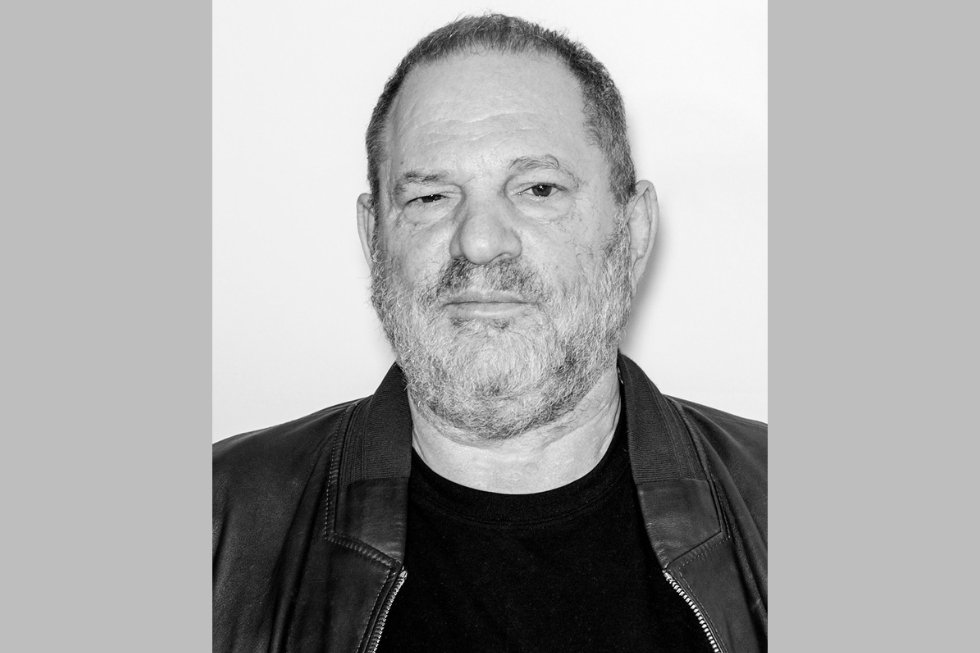
Former film producer Harvey Weinstein belongs in a different league, but his impact is similarly favorable. The dramatic revelations of his predatory conduct, the public humiliation that followed and his eventual imprisonment helped precipitate a cultural upheaval — a welcome cultural upheaval.
Bear with my apparently cranky logic: Weinstein was a disgraced Hollywood producer, but his hugely publicized downfall became a landmark in the changing relationship between celebrity, power and gender. It paved the way for a succession of exposés of men who’d used their status and the leverage it conferred to abuse women and who the public has since revealed and punished.
Sean Combs and Russell Brand
Over the past year or so, two high-profile entertainers have been convicted of sexual offenses and sentenced to prison. In October 2025, Sean Combs, better known as P. Diddy, received a 50-month prison sentence in New York after being convicted on two counts of transporting people across state lines for prostitution. Manhattan federal court acquitted him of the more serious charges of racketeering conspiracy and sex trafficking. More recently, in London, Russell Brand was convicted of rape and three counts of sexual assault. On November 9, Southwark Crown Court sentenced him to ten years and six months in prison.
Both men enjoyed success in their respective fields. Combs, a rapper, presided over an entertainment empire; Brand became a hugely popular comedian, actor and broadcaster before reinventing himself as a podcaster and online personality. Neither wealth nor celebrity status protected them from prosecution. In both cases, women came forward with allegations that ultimately formed the basis of criminal proceedings.
I doubt we’d have heard of either case in the pre-Weinstein years. Sexual offenses have long been notoriously underreported, for reasons that are hardly difficult to understand. Complainants may feel shame or stigma; they may anticipate having their credibility questioned, their sexual histories scrutinized and their motives challenged.
They may also doubt that the authorities will take a complaint seriously or pursue it, particularly where forensic evidence is absent or unavailable. When the accused is wealthy, famous and professionally powerful, the prospect of challenging him becomes especially intimidating. Celebrity status itself can act as a deterrent, discouraging allegations before they ever reach the police.
Weinstein’s exposure changed the climate. The women who came forward about Combs and Brand did so in a world already altered by the public reckoning that followed the revelations about the Hollywood bigwig. Their accounts were challenged by the defense and tested before juries. The significance isn’t simply that two famous men were convicted. It’s that allegations against men of their wealth, influence and public standing were brought into the open, investigated and pursued through the criminal justice system.
Droit du seigneur
Women had been speaking out about sexual harassment and assault for decades. What changed in 2017 wasn’t their willingness to speak but the likelihood that they’d be heard. For a long time, the industry treated the sexual privileges of powerful men as an occupational hazard for women seeking opportunity or advancement in certain professions.
The traditional droit du seigneur (“right of the lord,” or the alleged right of a medieval feudal lord to have sex with a vassal’s bride on her wedding night) may be more folklore than medieval law, but the sentiment it represents was hardly extinct. In Hollywood, the casting couch was both a literal description and a metaphor. An aspiring female actor might understand that professional opportunity came with an unwritten, unspoken and unpleasant price. Refusal could mean losing a role, a career or simply the chance to get through the door.
Squeezing the toothpaste
Weinstein was perhaps the most conspicuous modern embodiment of this arrangement. For decades, he wielded appreciable influence over the careers of actors and filmmakers. Stories about his conduct circulated in Hollywood: There were whispers, private warnings, settlements and jokes about his lordly behavior. Yet none of this led to the kind of public reckoning that would have forced him to confront the women he compromised.
His power, influence and authority endured not simply because of his own appetite but through intimidation abetted by the complicity, silence or calculated indifference of people and institutions around him. In fact, it’s difficult to understand how any predatory male operating comparable arrangements could — and perhaps still can — maintain them without the collaboration of colleagues. Some women were afraid to speak; others had good reason to assume they wouldn’t be believed or might be ignored. Weinstein’s malign influence over careers, coupled with the prospect of legal threats and professional retaliation, made challenging him a forbidding task.
Then, in October 2017, investigative reports in The New York Times and The New Yorker brought the allegations into public view. The accounts were numerous, detailed and too consistent to dismiss as isolated misunderstandings. Within days, Weinstein found himself fired as chairman of The Weinstein Company, which he helped form. His wife left him. More women came forward, and, in a self-perpetuating way, more allegations followed. The toothpaste was out of the tube. There was no putting it back.
The character of contemporary media proved crucial. Investigative journalism broke the story, but digital media gave it an immediacy and reach that made it extraordinarily difficult to contain. Women could share their accounts across borders, find others with similar experiences and discover that what they had regarded as isolated or uniquely shameful was widespread. Weinstein’s exposure became a global event.
The consequences extended well beyond Weinstein. Men in entertainment, broadcasting, journalism, politics and business faced allegations that might previously have remained private or been quietly settled. Prominent figures whose careers were abruptly disrupted included actor Kevin Spacey, journalist Charlie Rose and television personality Matt Lauer. My point isn’t to equate their conduct or the outcomes of their cases, which differed considerably. It’s to say that Weinstein’s exposure helped create an atmosphere in which women were more willing to speak and institutions found it harder to ignore what they said. A succession of individual disclosures began to look like evidence of a much larger social malaise.
Unstoppable #MeToo
The hashtag #MeToo gave this emerging consciousness a name and a means of expression. The phrase itself wasn’t new. Tarana Burke had been using it since 2006 to encourage solidarity among survivors of sexual abuse. But in October 2017, following the Weinstein revelations, female actor Alyssa Milano urged women to use the hashtag if they’d experienced sexual harassment or assault. She received an astonishing response. Millions of women across the world read and heard the testimonies of women who’d suffered mistreatment and answered, often with just two words: Me too.
I regard #MeToo as one of the most impactful social movements of recent decades, comparable in its capacity to change attitudes and public consciousness to the Civil Rights Movement. That’s a bold claim, and I make it deliberately. #MeToo didn’t invent opposition to sexual exploitation any more than the Civil Rights Movement invented opposition to racial discrimination.
#MeToo generated its unstoppable power by expressing hitherto smothered grievances that had accumulated over generations. The movement didn’t arrive before its time: #MeToo’s credo was entirely congruent with the context of the 21st century, with changing expectations of gender equality, growing resistance to the privileges traditionally enjoyed by powerful men and a media environment capable of turning individual cases into collective recognition.
Its influence has been definitive: I suspect it hasn’t yet been fully appreciated. The movement did more than encourage women to report abuse. It altered the grammar with which people discussed sexual conduct, the assumptions they brought to questions of consent and credibility and the reputational calculations employers, broadcasters, institutions and commercial sponsors made. It changed what could be said publicly, what could be dismissed privately and what powerful men could reasonably expect to get away with. It redrew boundaries.
Appetite for spectacle
There’s a final irony here: Both Combs and Brand built their careers in a media environment that rewarded visibility. Both understood the value of being seen, heard and talked about — attention. Brand in particular turned notoriety into a professional asset, moving from stand-up comedy and television into a vast online audience. Combs built an entertainment empire around music, fashion, celebrity and self-promotion. Exposure wasn’t a byproduct of his success, but a part of it.
But the media proved to be a less obliging friend when their fortunes turned. The allegations, investigations and court proceedings became spectacles in their own right. Their names, faces and histories appeared everywhere. The same appetite for visibility that had helped propel them upward now ensured that their falls were equally conspicuous. Both were, in a sense, hoisted by their own petards.
And this takes us back to Weinstein. The media had helped manufacture and sustain celebrity, sometimes insulating its most powerful beneficiaries from scrutiny. But it could also expose them, amplify the voices of those who challenged them and make it increasingly difficult for institutions to look the other way. Audiences had an appetite for narrative, performance and display. The dramatis personae were irrelevant — the spectacle was all that mattered.
Weinstein, Brand and Combs are not interchangeable cases and their offenses and legal outcomes are substantially different. But together they illustrate a historically important shift in the relationship between power and celebrity status. The men who once profited from the extraordinary reach of modern media discovered that the selfsame media could work against them. Their celebrity made them conspicuous; but it couldn’t protect them as it once did.
[Ellis Cashmore is the author of Celebrity Culture.]
[Lee Thompson-Kolar edited this piece.]
The views expressed in this article are the author’s own and do not necessarily reflect Fair Observer’s editorial policy.
Sexual Exploitation — Why Leaving Is Not So Simple
A woman was coerced into sexual exploitation for over 30 years through invisible captivity that eroded her agency without physical...

Sean “Diddy” Combs: Race, Gender and a New American Dilemma
Sean “Diddy” Combs’s upcoming federal trial on sex trafficking and racketeering charges reflects deep cultural tensions at the crossroads of...

Silence Is Consent? … Not Now, It Isn’t
The news has been full of sexual assault cases that hinged on the concept of consent. Are we sure that...

The Prince, the Financier, the Henchwoman and the Girl
Virginia Roberts Giuffre has filed a civil lawsuit against Prince Andrew in a New York court, accusing him of sexual...


Support Fair Observer
We rely on your support for our independence, diversity and quality.
For more than 10 years, Fair Observer has been free, fair and independent. No billionaire owns us, no advertisers control us. We are a reader-supported nonprofit. Unlike many other publications, we keep our content free for readers regardless of where they live or whether they can afford to pay. We have no paywalls and no ads.
In the post-truth era of fake news, echo chambers and filter bubbles, we publish a plurality of perspectives from around the world. Anyone can publish with us, but everyone goes through a rigorous editorial process. So, you get fact-checked, well-reasoned content instead of noise.
We publish 3,000+ voices from 90+ countries. We also conduct education and training programs
on subjects ranging from digital media and journalism to writing and critical thinking. This
doesn’t come cheap. Servers, editors, trainers and web developers cost
money.
Please consider supporting us on a regular basis as a recurring donor or a
sustaining member.
Will you support FO’s journalism?
We rely on your support for our independence, diversity and quality.





Comment