


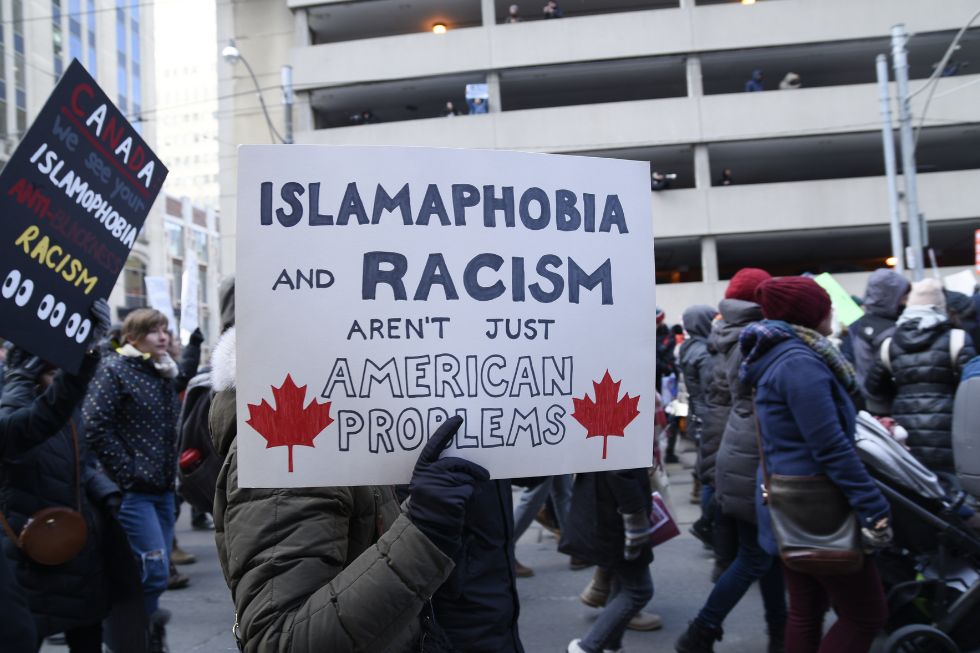



I have been a Canadian citizen living in the country since 1998. Throughout all these years, I have never encountered the level of racial harassment that I have experienced in the past year alone. From April 2025 until the moment I write these lines, I have been subjected to racist outbursts in various times and places, often dismissed with the excuse that the perpetrator was “just drunk” or “having a bad day.”
The first time it happened, my mustache and beard were trimmed short, and my curly hair was more prominent. A man shouted at me, “Go back to Mexico, you loser!” By sheer coincidence, I had recently changed my barber because I moved houses. My previous barber was a talented Kurdish woman whose styling of my hair and beard actually made me feel like I looked Mexican myself.
Now that I live further away, I’ve had to find a new barber, a man of Vietnamese origin. Despite giving him the exact same instructions, the result is somehow different. I feel that my Middle Eastern background now resonates differently; I no longer look Mexican to the observer, but Indian. Thus, I almost don’t blame the two racists who, in separate incidents, screamed at me: “Go back to India!”
These moments of hostility are more than personal insults; they represent a fracturing of the Canadian sanctuary I once knew, signaling a shift from a culture of mutual support to tribalism that now threatens, at various levels, the very multicultural fabric of our nation. In this delicate moment for both Canada and the world, it is time to confront the rise of these harmful ideologies and make a better country for all who live here.
The erosion of civil discourse in a multicultural Canada
Thanks to the rise of racism and other harmful ideologies, engaging in healthy, logical arguments has become increasingly difficult with a certain angry segment of the Canadian population. I can conceptually understand why those whose roots trace back to the early settlers of Canada might fall into the trap of racism (not that it is acceptable, but the objective grounds for their bias are historically visible). However, what I find truly painful and difficult to process is the growth of racism among different immigrant communities.
When we — Kurds, Persians, Arabs, Vietnamese, Ukrainians — adopt the same tired tropes of the “classic” racist, something is deeply wrong. When an immigrant tells an Indian person, “You’re taking all our jobs, go back to India,” or mocks a Chinese driver for being overly cautious at a left turn, we are failing. This situation demands that we look beyond immigration laws and address the social sickness spreading within our communities, where everyone identifies as “Canadian” only to label the next person as the “alien.”
This reality is agonizing because when I first arrived in Canada, I felt I had reached the safest place in the world for social rights and harmony. Now, I feel that arguments are no longer arguments; they are one-dimensional screams. No one is looking for a calm, shared logic to solve our communal responsibilities. Instead, we are following egos and deceptive rhetoric that only seek an audience. This is the breeding ground for extremist ideological demagoguery.
Facing the data: A national crisis of hate
After those unsettling encounters, I didn’t want to rely solely on my emotions; I sought answers in the cold, hard data provided by the Royal Canadian Mounted Police (RCMP). What I discovered only deepened my heartache. Reading through their reports on hate crimes and incidents in Canada, I realized that my experiences weren’t isolated moments of “bad luck.”
The data confirms a disturbing upward trend in hate-motivated incidents across the country, crimes that target the very essence of a person’s identity, race and origin. Seeing my personal pain reflected in official statistics transformed my individual sorrow into a broader concern for our collective future. It is one thing to feel the sting of a slur on the street; it is another to see that sting validated as a growing national crisis, proving that the sanctuary I once believed in is facing a profound moral challenge.
A lost ideal: the Canada we must reclaim
I often think back to my first years in Vancouver when my English was quite poor. One day, while waiting at the Granville SkyTrain station downtown, an older white woman with a backpack, likely a tourist, approached me. With a warm, friendly smile, she asked, “Hi, do you know how often the SkyTrain comes?”
I felt a surge of joy. It was the first time a white Canadian had asked me for directions; for a brief moment, I felt like I truly “owned” the city. I replied with great confidence: “In shower time, every 3 minutes.”
I knew I had made a mistake, but before I could even process it, she gently placed her hand on mine and said, “You mean in ‘rush hour’ time, every 3 minutes.” She corrected my English without making me feel embarrassed. In that brief moment, she didn’t just give me a linguistics lesson; she gave me a lesson in ethics, culture and mutual support.
I wonder: Do we still encounter people like her today? If we do, why do they seem so few, while the angry voices of society seem so loud?
This memory serves as a reminder of the Canada we once were and the one we must strive to reclaim. We cannot simply be passive observers of our own decline. If we are to heal, we must actively reject the language of exclusion in our own social circles. The next time you witness a microaggression or hear a hateful trope, regardless of the background of the speaker, do not stay silent. Correct the narrative, defend the targeted individual and remind one another that our strength lies in our plurality, not our prejudices. We must choose to be the person who offers a hand of support rather than the one who points the finger of blame
[Kaitlyn Diana edited this piece.]
The views expressed in this article are the author’s own and do not necessarily reflect Fair Observer’s editorial policy.
How Domestic Racism Is Undermining Finland’s Global Credibility
Finland’s recent racist scandal involving public figures has exposed deep structural racism that challenges its global reputation for fairness and...
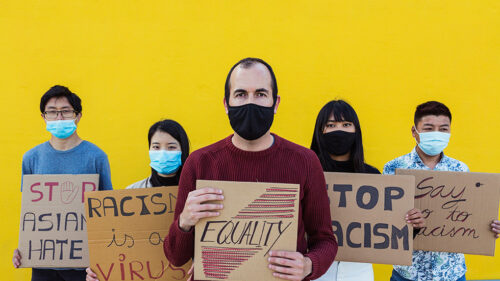
Anjel Chakma’s Killing Exposes India’s Denial of Racism
The killing of Anjel Chakma, a young student from India’s Northeast, exposes the persistent denial of racism within Indian society...
FO° Talks: Alabama Can Teach the World a Lot About Racism, Resilience and Community
In this episode of FO° Talk, Rohan Khattar Singh and Alexis Okeowo discuss Okeowo’s new book, Blessings and Disasters: A...

Support Fair Observer
We rely on your support for our independence, diversity and quality.
For more than 10 years, Fair Observer has been free, fair and independent. No billionaire owns us, no advertisers control us. We are a reader-supported nonprofit. Unlike many other publications, we keep our content free for readers regardless of where they live or whether they can afford to pay. We have no paywalls and no ads.
In the post-truth era of fake news, echo chambers and filter bubbles, we publish a plurality of perspectives from around the world. Anyone can publish with us, but everyone goes through a rigorous editorial process. So, you get fact-checked, well-reasoned content instead of noise.
We publish 3,000+ voices from 90+ countries. We also conduct education and training programs
on subjects ranging from digital media and journalism to writing and critical thinking. This
doesn’t come cheap. Servers, editors, trainers and web developers cost
money.
Please consider supporting us on a regular basis as a recurring donor or a
sustaining member.
Will you support FO’s journalism?
We rely on your support for our independence, diversity and quality.





Comment