


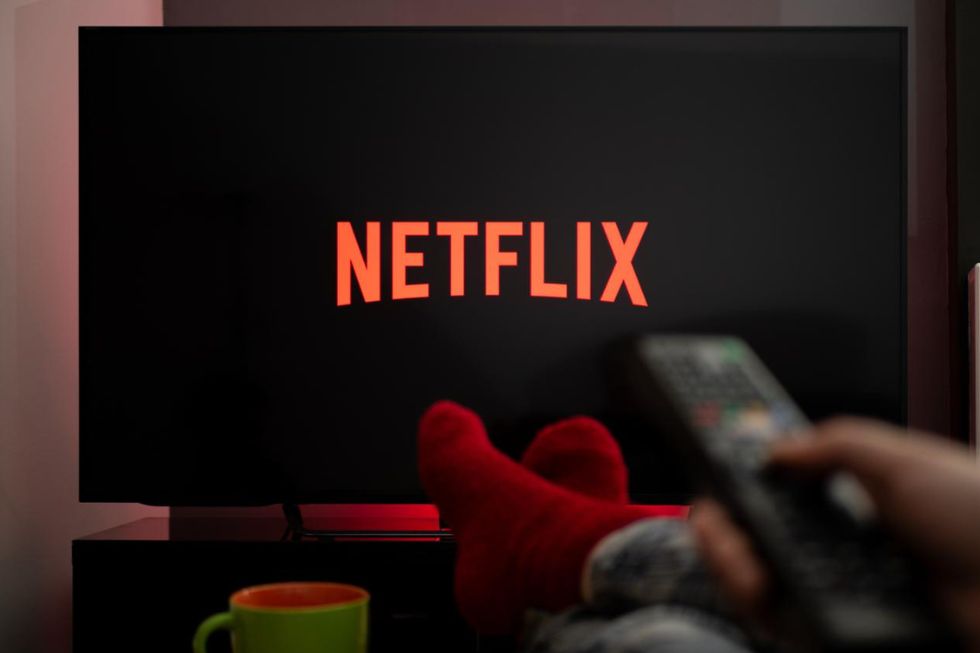


Traveling home from London after a conference recently, I fell into conversation with four fellow passengers, all 16-year-old high school students. We talked about several subjects, including Cristiano Ronaldo, about whom I was then writing a piece for Fair Observer.
I noticed one young man looked at my newspaper as I might look at a 1990 Chevrolet: Impressed that the owner had kept it roadworthy, but curious why they hadn’t traded it in for a newer model.
After a while, I asked, “Do you guys watch any television?” They all shook their heads, one waving his phone to show their favored hardware. “I mean content,” I added. “Oh yeah, plenty of shows. But we like to watch when we feel like it.” “What do you do for news? CNN? SkyNews?” They all shook their heads. “TikTok, Instagram …” said one.
End of legacy media
My generation and the students’ parents grew up in a world where TV was prevalent. Avid viewers adjusted their evenings in accordance with schedules. We now call it linear TV: channels screen programs at a certain time. That arrangement won’t last much longer. As Generation Z matures, the channels will find viewing figures dwindling and advertisers disappearing. So, why on earth does a streaming service that has risen to power by offering flexibility in viewing want to buy a traditional, or legacy, media company? Surely, it would be a retrograde step. Or would it? (By legacy media, I refer to newspapers, TV, radio and film that dominated before the arrival of the internet, and which conveyed their contents to consumers but provided no opportunity for interactive participation.)
Hollywood’s boardrooms and streaming executives have recently been involved in a power struggle worthy of Succession. Netflix offered $72 billion for Warner Bros. Discovery’s (WBD) studio and streaming assets. Paramount also wanted WBD, so it countered with a hostile all-cash bid of $30 per share, valuing the transaction at more than $108 billion.
Beyond the Machiavellian maneuvering and humongous sums lies another narrative. Two companies are battling for dominance of an industry that increasingly resembles the Sistine Chapel with no worshippers: magnificent, epoch-making, still a thing of wonder — but belonging to a different age. Legacy media has status, gargantuan libraries and brand equity built over a century. But younger generations have deserted it.
They curate what they watch, rarely engaging with mainstream news, selecting only the drama they want. And for Gen Z especially, the smartphone provides the primary portal; everything else is background noise. The unavoidable truth is this: the grip that television and its mass media forerunners have held over our imaginations for over a century is unclasped.
Shaping habits
Television and the advertising-driven business model on which it was founded once reigned supreme, holding an almost mesmeric power over audiences and shaping popular taste, opinion, attitude and behavior. Its homogenizing effect on audiences justified its description as the mass media. Its precursors, newspapers and radio, had reach and immediacy, penetrating millions of homes, but not the same spellbinding power of TV.
In the middle of the 20th century, television arrived and quickly became the preeminent medium, capturing audiences like nothing else in history. Broadcast schedules didn’t just influence; they dictated daily rhythms, from evening news to Saturday night programming, establishing television as a central institution in social life. The media was no longer a segment of life; it became comprehensive, guiding perceptions, shaping habits and commanding the attention of near-whole populations. Entertainment and advertising became intertwined, forming a commercial and cultural attachment that remains a defining feature of media power today.
Television set agendas, won political elections, dramatized wars and sometimes scandalized audiences; no other social institution has ever shaped collective human thought and action so compellingly. It scripted narratives, created memories and for decades served as the default interpreter of reality, bringing historical events like the moon landing (1969), the funeral of Princess Diana (1997) and the assassination of John F. Kennedy (1963) to our living rooms.
Then the landscape began to move. In the early 1980s, cable television introduced new technology that sliced mass audiences into narrow segments, weakening the cultural unity that the big networks once created and commandeered. ESPN started in 1979, with CNN and MTV launching over the next two years. Telecommunications satellites pushed the shift further: Viewers could choose from channels originating anywhere, offering round-the-clock news, sports, movies and later, pay-per-view.
Often overlooked, but enormously powerful in changing sensibilities was the VCR, short for video cassette recorder, a piece of technology that allowed viewers to record programs and play them back whenever they wished. They could also build their own libraries of programs. The ability to choose when and what to watch seemed like a minor innovation at the time, though it turned out to be revolutionary.
Choice became the decisive force in media consumption. That became obvious when a California DVD-by-mail company called Netflix took the next step: In 2007, it began delivering video through a new-fangled system called the internet. Within a decade, streaming was no longer a novelty; it was a different architecture for global entertainment. The era of the mass media was gone.
The media in 2030
Today, TV no longer commands the mass audiences it did in the last century. As a result, the legacy media are weakened, and the once-mighty behemoths have become acquisition targets. Netflix and Paramount are not fighting for the future of television. If anything, they want its past: access to WBD’s vast libraries (of shows, such as Friends and The Big Bang Theory), franchises (including the DC Universe and the Harry Potter series) and a subscriber base (of nearly 130 million), assets that can be leveraged to maintain relevance and global reach as audiences continue to fragment. Even a fragmented audience is crucial, of course. So far, streamers’ primary source of income is subscriptions, while traditional media depends on advertising revenue. Both models need viewers.
The WBD deal is sure to be only one of a series that will reconfigure the media. So, how will things look in 2030? The first point we should understand is that streaming is today, not tomorrow. As radio and TV themselves once appeared to be the present and future, streaming will also soon be the past. TV was like a default setting for populations in the late 20th century, but audiences now have other distractions, like TikTok, gaming, messaging and AI-enabled video generation. But there will soon be something else, if only because young audiences treat the media as interchangeable, temporary and disposable.
The Big Tech companies could make moves to buy major studios. But why would they? Apple TV+ and Amazon Prime give them a presence in the TV market without the liabilities that come with a legacy institution. Meta shows little interest. This doesn’t rule out an incursion: If studios become cheap enough, one of these companies might pounce, though not because the content is valuable. More likely, they would value the distribution rights, trademarks and back catalogs that could serve their broader ambitions.
The media has found ways to outwit or circumvent death before, of course. Newspapers are still with us after well over a century. Radio has listeners and linear TV has a Darwinian knack of adapting to new environments. The WBD deal may provide a clue as to how it will try to adapt again.
Netflix carries significant debt (as much as $75 billion if the deal goes through) but has a matchless global subscriber base of over 300 million. Yet it commands less US viewing time than YouTube. It now needs premium libraries to complement its original content and maintain growth momentum. Paramount, in its effort to raise more capital to acquire WBD, will potentially have to ask its Middle East sovereign wealth fund backers — Saudi Arabia, Abu Dhabi and Qatar — to increase their equity contribution from the existing $24bn, meaning that one of the world’s media conglomerates will be partly owned by Gulf state interests.
The new entity that emerges will likely be a hybrid that moves away from reliance solely on subscriptions or advertising. A Netflix company would probably integrate the WBD library into a premium, global subscription ecosystem to try to tighten its hold on the direct-to-consumer global market. It would also choke to death the already terminally ill cinema chains.
If Paramount prevails, the new entity will be more familiar, though it will have to take a more diversified, multitiered approach, balancing ad-supported global broadcast networks with targeted streaming subscriptions in an attempt to combine traditional media access with modern digital strategy. The Gulf state funds have relinquished governance rights, we are told; so they should have no influence on content.
History teaches that the media is never just entertainment. It shapes thought, behavior, habits, values and even relationships. The latest developments in Hollywood are the current stage of a process that began with the burgeoning newspaper industry of the late 19th century. Now, the scale is global, the pace unrelenting and the stakes higher than ever.
For a generation whose waking hours are increasingly mediated through screens, the winners and losers in this corporate drama will define not just the future of entertainment, but the contours of contemporary life itself.
[Ellis Cashmore’s The Destruction and Creation of Michael Jackson is published by Bloomsbury.]
[Kaitlyn Diana edited this piece.]
The views expressed in this article are the author’s own and do not necessarily reflect Fair Observer’s editorial policy.
FO° Talks: Netflix and NFL Are More Popular Than Church, Gen Z Moving Away From Religion?
In this episode of FO° Talks, Rohan Khattar Singh and Anna Mays discuss the decline of church attendance in the...

FO° Talks: Your Netflix, Prime, Hulu, Hotstar Could Get Costlier, Here’s Why
In this episode of FO° Exclusive, Rohan Khattar Singh and Daniel Bunn discuss digital services taxes (DSTs). Bunn outlines how...
Tech Goes Mainstream, Shattering the Old Movie Industry
A new oligopoly has transformed the face of Hollywood. Major tech companies like Amazon, AT&T and Apple buy and overhaul...

Support Fair Observer
We rely on your support for our independence, diversity and quality.
For more than 10 years, Fair Observer has been free, fair and independent. No billionaire owns us, no advertisers control us. We are a reader-supported nonprofit. Unlike many other publications, we keep our content free for readers regardless of where they live or whether they can afford to pay. We have no paywalls and no ads.
In the post-truth era of fake news, echo chambers and filter bubbles, we publish a plurality of perspectives from around the world. Anyone can publish with us, but everyone goes through a rigorous editorial process. So, you get fact-checked, well-reasoned content instead of noise.
We publish 3,000+ voices from 90+ countries. We also conduct education and training programs
on subjects ranging from digital media and journalism to writing and critical thinking. This
doesn’t come cheap. Servers, editors, trainers and web developers cost
money.
Please consider supporting us on a regular basis as a recurring donor or a
sustaining member.
Will you support FO’s journalism?
We rely on your support for our independence, diversity and quality.





Comment