


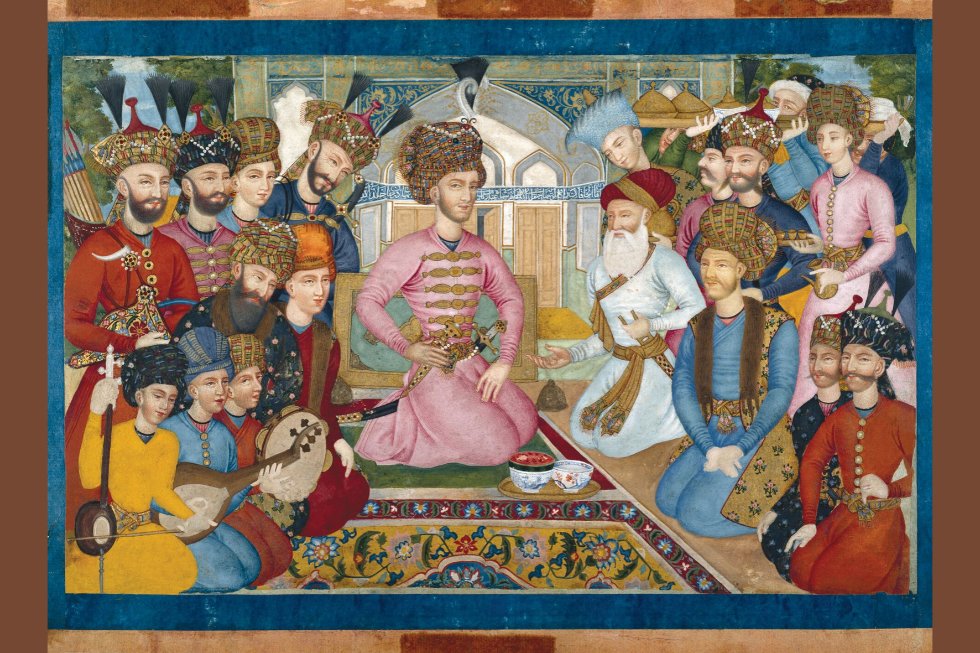



On February 28, the United States and Israel launched a new wave of attacks against Iran, igniting a war that remains unresolved more than eight months later. Why has the conflict dragged on for so long? How did Washington underestimate the resilience of the Iranian regime? These are pressing questions, but they barely scratch the surface of a far more complicated relationship between Iran and the West.
The consequences now extend well beyond the Middle East. With the 2026 US midterm elections complete, Vice President JD Vance, in an extraordinary post on X, argued that the Republican loss was partially due to the war with Iran, underscoring just how deeply the conflict has become intertwined with American domestic politics.
Yet understanding Iran requires looking beyond military confrontation, electoral consequences and the familiar narratives that have shaped Western foreign policy for decades. In this three-part series, I’ll explore what the West fundamentally misunderstands about Iran, how our histories and futures are far more intertwined than we might imagine, and what a realistic path toward political transformation could look like.
To examine these questions, I’ll explore three distinct pathways for Iran’s present and future. The first, which I explore in this piece, considers externally imposed political change, examining whether military intervention and foreign pressure can fundamentally reshape Iran’s political system. The second turns inward, exploring elite fractures within the Islamic Republic and whether political transformation could emerge from divisions within the ruling establishment. The third examines gradual political change through sustained pressure, bargaining and institutional erosion, asking whether transformation can emerge without an outright collapse of the existing order.
Together, these three pathways offer a framework for understanding not only how Iran might change, but why decades of Western assumptions about the country have so often failed to anticipate its political trajectory.
A civilization beyond its political systems
The famous poet Nizami Ganjavi wrote, “The whole world is a body, and Iran is the heart.” For more than two and a half millennia, Iranian civilization has changed through empires, invasions, revolutions, religious transformations and foreign occupations while maintaining a cultural identity.
Iran never existed in isolation. From its earliest empires, it sat between the Mediterranean and the Indian Subcontinent. Over 2,500 years, Iran maintained continuity, carrying its language, literature, architecture, religious traditions and, of course, its invention of ice cream. You’re welcome.
In Testament One’s Book of Isaiah, Cyrus the Great, the founder of Persia, is described as the Lord’s “anointed.” The Book of Ezra credits Cyrus with permitting the Jewish exiles in Babylon to return to Jerusalem and rebuild the second Temple. The Cyrus Cylinder became an important modern symbol of religious tolerance and humane government. US President Thomas Jefferson was deeply familiar with Xenophon’s Cyropaedia, an account of the life and education of Cyrus the Great. Jefferson owned at least two copies.
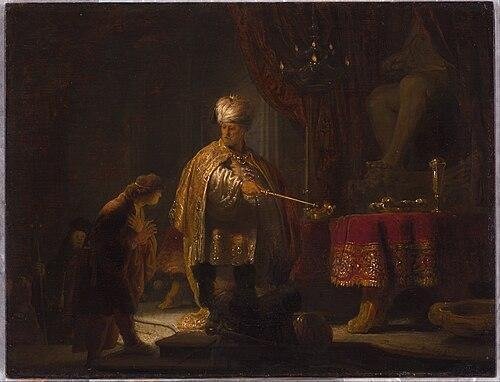
Persia appears in the Qur’anic historical imagination. Surah al-Rum describes the Romans being defeated and predicts that they would recover; the adversary is described as the Sasanian Persian Empire during the great Byzantine–Sasanian war of the seventh century.
The Greeks created their own mythology to explain the Persians. Herodotus recorded a tradition connecting the Persian people with Perses, a son of the Greek hero Perseus and Aethiopian princess Andromeda. Centuries later, Rome and Persia confronted one another as rival superpowers. Yet rivalry did not prevent cultural exchange. Roman and Sasanian courts developed overlapping languages of royal power, ceremony and art. Each influenced the other even as they fought for over 400 years.
Alexander conquered the Achaemenid Empire, but Persian administrative traditions survived him. Arab armies conquered the Sasanian Empire in the seventh century, yet Iran was not culturally absorbed in the same way as many former Byzantine territories. New Persian eventually reemerged as one of the great literary and administrative languages of the Islamic world. Turkic and Mongol dynasties conquered Iran and then, in many cases, became Persianized themselves. Under the Delhi Sultanates and later the Mughal Empire, Persian became deeply embedded in court life and government. Even Urdu developed in an environment heavily shaped by Persian vocabulary. The result was not simply Persian influence on India, but the creation of a broader Indo-Persian civilization whose legacy can still be seen in South Asia today.
Persian language and court culture spread, creating what historians now call the Persianate world. Under the Safavids, beginning in the 16th century, political Iran was consolidated once again around a distinct Iranian and Shi’a identity. From the Parthians, who resisted Roman expansion for centuries, to the Sasanians, who rebuilt Iran into one of late antiquity’s two great Eurasian powers, to the Safavids, who reestablished a durable Iranian state after centuries of foreign dynastic rule, the political system repeatedly changed while the idea of Iran survived.
Iran is not synonymous with any one dynasty or political system. The Islamic Republic is one chapter in a much longer history. Before it came the Pahlavis, the Qajars, the Safavids, the Timurids, the Mongols, the Arab caliphates, the Sasanians, the Parthians, the Seleucids and the Achaemenids. Despite repeated wars with Russians, Romans, Greeks, Arabs, Mongols, Turks, British imperial interests and neighboring states, a recognizable Iranian cultural identity endured. Historians debate exactly when a modern Iranian national consciousness can properly be said to begin, but the political and cultural idea of Iran itself can be traced incredibly far. That history helps explain something about modern Iran.
Many Iranians can reject their government without rejecting their country. Iranian nationalism, Persian cultural memory, Shi’a identity, secular identity and opposition to foreign domination can coexist in complicated ways. Someone can dislike the Islamic Republic while simultaneously opposing the idea that an outside power should determine Iran’s future. To understand why that distinction matters so much, you have to understand the war that shaped an entire generation.
The war that changed everything
My father was 16 years old when he fought in the Iran–Iraq War. He rarely spoke about what he had experienced. Many of his friends never returned from the war, and in the years that followed, alcohol became one way of quieting the memories he took with him. He was born in Kerman, a fairly conservative province with a history that mirrors Iran’s own experience of conquest and survival. Kerman had passed through the hands of successive dynasties and eventually came under Timur’s domination after the collapse of the Mozaffarids.
Centuries later, in 1794, the city suffered one of the darkest episodes in Iranian history. After its inhabitants supported Shah Lotf Ali Khan Zand against Shah Agha Mohammad Khan Qajar, the victorious Qajar ruler ordered mass killings and blindings. Tradition says 20,000 eyes were collected and piled before him. The city was devastated, yet it survived and was rebuilt.
On September 22, 1980, President Saddam Hussein’s Iraq invaded Iran. Saddam saw a country in turmoil. The Shah, Mohammad Reza Pahlavi, had been overthrown the previous year and had died of lymphoma in Cairo on July 27, 1980, less than two months before the invasion. Iran’s revolutionary government had purged or executed portions of the former imperial military leadership, while relations with the United States, previously Iran’s principal arms supplier, had collapsed after the revolution and hostage crisis. Iraq calculated that Iran was vulnerable.
Khuzestan was central to Saddam’s calculations. The province contained much of Iran’s petroleum infrastructure and reserves, had an Arab minority population and bordered the strategically vital Shatt al-Arab waterway. Saddam believed the invasion could force Iran to accept a new regional balance of power. What Saddam underestimated was Iranian nationalism. Despite the political turmoil following the 1979 Revolution, deep divisions within Iranian society and the weakening of Iran’s military leadership, the invasion united much of the country against a common enemy.
Saddam had hoped that Khuzestan’s Arab population would welcome Iraqi forces as liberators. Instead, many Iranian Arabs resisted the invasion alongside their fellow countrymen. Cities such as Khorramshahr and Abadan became symbols of national resistance, with Iranian soldiers and civilians fighting to defend their territory. Yet, in one of the war’s greatest geopolitical ironies, Israel emerged as a covert supplier of military equipment to the Islamic Republic.
Despite Iranian Supreme Leader Ayatollah Khomeini’s open hostility toward Israel, Israeli arms and spare parts reached Iran through intermediaries, beginning with equipment for American-made fighter jets and tanks and expanding to ammunition, missiles, and other military supplies. Israel’s calculation was strategic: Saddam Hussein’s Iraq was considered a greater immediate military threat, and preventing an Iraqi victory outweighed its hostility toward Tehran.
My father remembers recruiters calling on young men and boys to defend the country. Before being sent toward the front, he was given a key and told that if he died, it would open the gates of heaven. Yet many of the people fighting Saddam were not necessarily fighting because they supported every aspect of the Islamic Republic. They were fighting because Iraq had invaded Iran. Reza Pahlavi himself wrote a letter to Khomeini, pleading to be allowed to join the air force. The vast majority of fighter pilots from the Imperial Army had been freed from prison to fight.
What Saddam expected to be a rapid campaign became an eight-year devastating trench conflict. Iran recovered from the initial shock, reorganized its armed forces and stopped the Iraqi advance. The conflict eventually became one of the longest and bloodiest conventional wars of the 20th century.
The consequences are difficult to overstate. The revolutionary state learned that Iran could become internationally isolated very quickly. A generation of Iranians learned that political chaos at home could invite pressure from abroad. The new leadership built institutions around the assumption that Iran had to be capable of defending itself even when it could not rely on traditional allies. That memory still helps explain Iranian political behavior today. It does not mean every Iranian supports the government. It means opposition to the government and suspicion of foreign intervention are not mutually exclusive.
Iranian identity and the limits of regime change
Iranian society has also changed dramatically. While official figures classify roughly 99% of Iranians as Muslim, a 2020 Group for Analyzing and Measuring Attitudes in Iran (GAMAAN) survey found only 32% identifying as Shi’a Muslim and nearly 47% reporting a shift from religious to nonreligious.
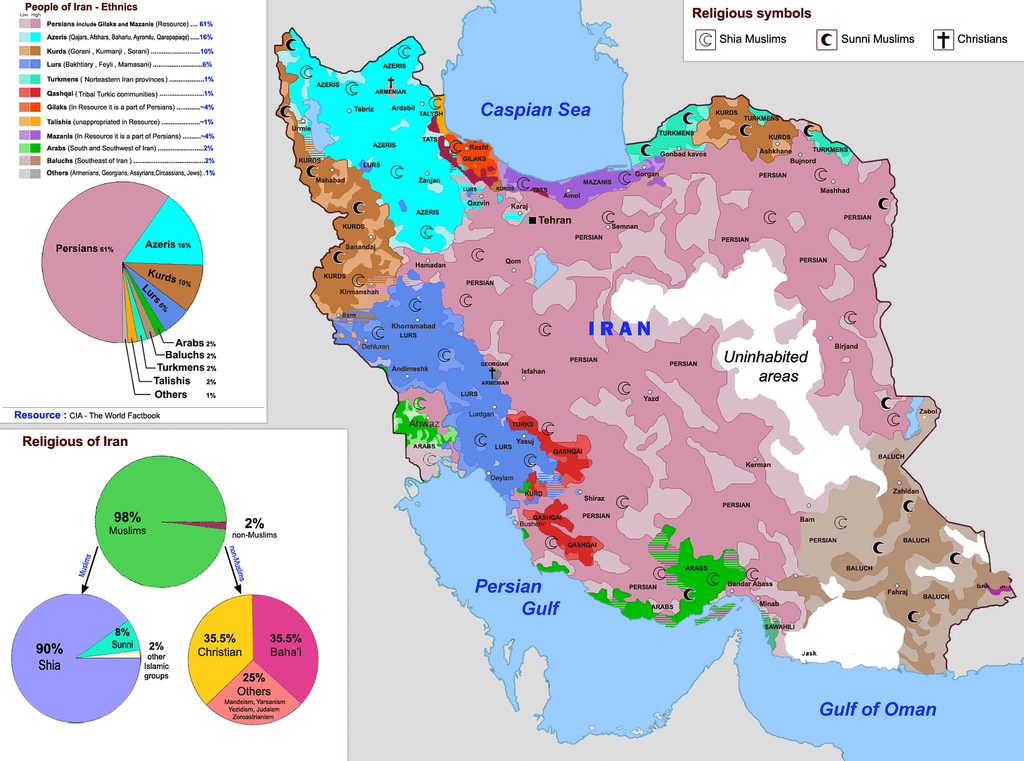
Iran is also one of the Middle East’s most ethnically diverse states. Estimates generally place Iran’s Azeri population at over 18 million, more than Azerbaijan’s. Kurds constitute another substantial minority, alongside Lurs, Arabs, Baloch, Turkmen, Armenians, Assyrians and others. The country has also hosted very large Afghan refugee and migrant populations; roughly 1.6 million registered refugees and other Afghans in need of international protection were reported at the end of 2025.
Iranian unity therefore should not be romanticized. Minorities have faced discrimination, separatist conflicts have occurred, and linguistic, economic and political grievances remain. However, the endurance of an overarching Iranian identity across many linguistic and ethnic communities is nevertheless historically significant. This brings us to the central question: If Iran is undergoing another period of political evolution, what does political change actually mean?
Removing one leader is not the same thing as changing a political system. Replacing a government is not the same thing as building a legitimate successor. Overthrowing a regime does not automatically answer who controls the army, who writes the constitution, who protects minority rights, who controls the borders, what happens to the bureaucracy or how 93 million people continue receiving basic government services the next morning.
Jimmy Carter, Ronald Reagan and the 1979 hostage crisis
Iran’s own history demonstrates how the overthrow of a government can create political uncertainty rather than resolve it. On November 4, 1979, Iranian militants seized the United States Embassy in Tehran. Fifty-two Americans would ultimately remain captive for 444 days. The hostage-takers demanded, among other things, the return of the deposed Shah, whom the Carter administration had admitted into the United States for cancer treatment. For Americans, the hostage crisis became one of the defining political events of the era. For Iranians, it became part of the process through which the revolution radicalized and consolidated itself.
US President Jimmy Carter initially pursued diplomacy, sanctions and other forms of pressure. When negotiations failed, his administration authorized Operation Eagle Claw, a joint military attempt to rescue the hostages.
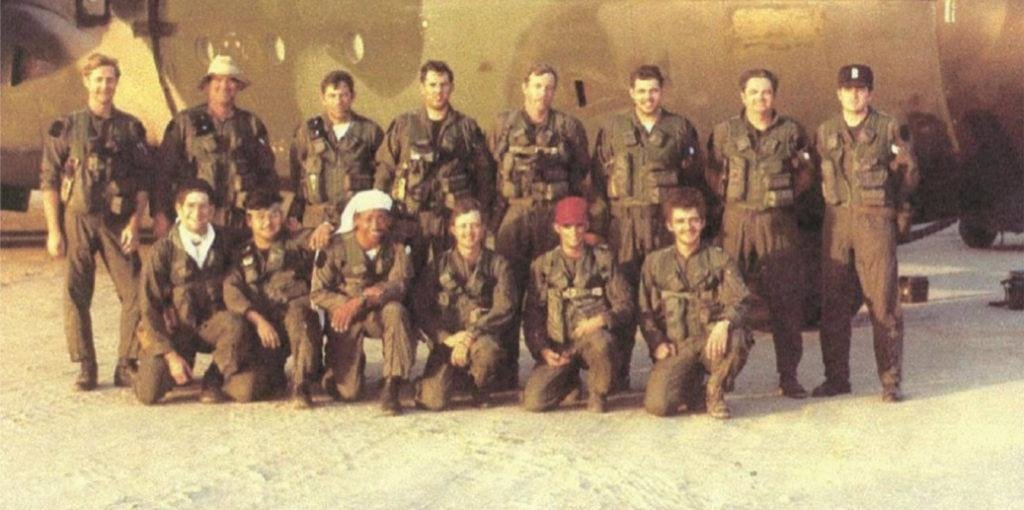
Eight RH-53 helicopters were dispatched toward a remote area in the Iranian desert. Only six reached the rendezvous. Another developed mechanical problems, leaving the force below the number planners considered necessary. During the withdrawal, a helicopter collided with a C-130 transport aircraft at Desert One near Tabas, South Khorasan Province, killing eight American servicemen.
The failure exposed severe weaknesses in coordination between the American military services. The lessons drawn from Eagle Claw contributed to the reforms that eventually produced a much more integrated American special-operations structure, including US Special Operations Command.
Politically, the crisis damaged Carter, although the story is more complicated than saying his approval simply collapsed because of the embassy seizure. His approval rating actually rose sharply in the first weeks of the hostage crisis before declining again as the captivity dragged on amid inflation, economic strain and the Soviet invasion of Afghanistan.
President Ronald Reagan defeated Carter in November 1980 by 489 electoral votes to 49. The hostages were freed on January 20, 1981, the day Reagan was inaugurated, after the outgoing Carter administration had negotiated the Algiers Accords.
Growing up in Canada after leaving Tehran, I often heard Iranian families, especially families that had fled the revolution, speak bitterly about Carter. Many believed Washington had abandoned the Shah or failed to prevent the Islamic Republic from consolidating power. Whether that interpretation is historically fair is a separate question. What matters is that it became part of the political memory of parts of the Iranian diaspora.
Only a few years later, senior Reagan administration officials secretly facilitated arms sales to Iran in an effort partly connected to securing the release of American hostages held by Iranian-aligned Hezbollah in Lebanon. Money from the transactions was diverted to support the Contra forces in Nicaragua despite congressional restrictions. When the operation became public in 1986, the Iran–Contra affair became one of the defining scandals of Reagan’s presidency.
The larger lesson is not that Washington and Tehran were secretly allies. They were not. It is that even at periods of extreme hostility, governments can act transactionally when strategic interests overlap. The more contemporary argument over externally imposed regime change is inevitably shaped by another American experience: Iraq.
The Iraq War and the distinction between regime change and political change
On February 5, 2003, US Secretary of State Colin Powell appeared before the United Nations Security Council and presented the American case that Saddam Hussein’s government possessed prohibited weapons programs. UN inspectors subsequently reported that they had not discovered the stockpiles alleged by Washington, and major Security Council members argued that inspections should continue. The Security Council ultimately did not authorize the US-led invasion that began in March.
Hussein’s government fell within weeks. Building a stable political order afterward proved vastly more difficult. The broader post-9/11 wars imposed extraordinary costs on the United States. One major estimate placed the post-9/11 wars at roughly $8 trillion when future veterans’ obligations were included. The same body of research estimated that approximately 30,000 active-duty personnel and post-9/11 veterans had died by suicide, compared with roughly 7,000 US service members killed in combat in those wars. Those figures encompass the wider post 9/11 military generation, not simply veterans of Iraq.
That history does not by itself determine what should happen in Iran. Iran and Iraq are profoundly different countries. Iran has a population of 93 million and almost 4 times Iraq’s size, a stronger national identity, different institutions and a much longer tradition of centralized statehood. However, Iraq demonstrates the distinction between removing a regime and replacing a political order.
The fear of a fragmented Iran
Perhaps no fear runs deeper through Iranian political history than the fear of the country coming apart. Iran is a multiethnic state sitting between powerful neighbors and competing spheres of influence, and periods of weakness at the center have repeatedly invited foreign intervention, separatism and territorial loss. The possibility of balkanization is therefore not entirely imaginary.
Precisely because the fear is so deeply rooted, the Islamic Republic has repeatedly used it as a political narrative: that whatever the failures of the state, the alternative to the existing order could be another Syria, Iraq or Yugoslavia. A country divided among foreign powers and ethnic movements. Iranian officials have long emphasized separatism and threats to territorial integrity when confronting internal dissent, while analysts have noted that fear of Iran’s breakup can also divide opponents of the government who otherwise favor political change.
The anxiety is reinforced by history. Almost every major Iranian dynasty watched the state’s boundaries expand and contract. The Achaemenid Empire eventually disappeared under Alexander’s conquest. The Parthians repeatedly surrendered and recovered western frontier territories in their wars with Rome. The Sasanians, after briefly reaching Egypt and the Mediterranean under Khosrow II, lost those conquests to Byzantium before the entire empire fell during the Arab conquest. The Safavids lost much of eastern Anatolia and eventually Baghdad and most of Mesopotamia to the Ottomans, helping establish a western frontier that still resembles Iran’s border with Iraq and Turkey today.
After Nader Shah’s death in 1747, the enormous Afsharid realm fragmented almost immediately. It was under the Qajar dynasty that the territorial losses most closely associated with modern Iranian historical memory occurred. Iran surrendered vast territories in the Caucasus to the Russian Empire during the nineteenth century, including lands that today form Georgia, Armenia, Azerbaijan and parts of the North Caucasus, and later abandoned its claim to Herat. Even under the Pahlavis, Iran formally relinquished its longstanding claim to Bahrain in 1970. Bahrain subsequently became independent, and Iran formally recognized it in 1971.
An externally driven collapse of the Islamic Republic would immediately raise questions that military action alone cannot answer: Who assumes political legitimacy? What happens to the Revolutionary Guards? Who administers ministries, hospitals, electrical grids, courts and oil infrastructure?
External force can change who controls a capital. It cannot by itself determine whether what follows is a unified constitutional state, another authoritarian system, a prolonged power struggle or something else entirely.
[Kaitlyn Diana edited this piece.]
The views expressed in this article are the author’s own and do not necessarily reflect Fair Observer’s editorial policy.
The Empire Comes Home: Colonial Legacies and Global Migration
European colonialism’s enduring institutional and territorial legacies continue to shape contemporary migration patterns, as displaced communities follow historical routes forged...
Regime Change: What We Don’t Understand About Both Words
US President Donald Trump has thus far demonstrated a major lack of understanding of Iran’s regime. It’s not a small...
How Iran Became a Great Power and Why It Hates America and Israel
In this episode of The Dialectic podcast, Atul and Glenn explore how Iran’s imperial history, colonial subjugation and 1953 coup...

Seleucids: The Valuable Architects of the Middle East
The Seleucid Empire, emerging from Alexander the Great’s conquests, played a significant role in shaping the Middle East culturally and...

What Do You Know About Iran, Formerly Persia?
Iran, aka Persia, is one of the oldest civilizations, formed one of the first empires in the world and contributed...
Support Fair Observer
We rely on your support for our independence, diversity and quality.
For more than 10 years, Fair Observer has been free, fair and independent. No billionaire owns us, no advertisers control us. We are a reader-supported nonprofit. Unlike many other publications, we keep our content free for readers regardless of where they live or whether they can afford to pay. We have no paywalls and no ads.
In the post-truth era of fake news, echo chambers and filter bubbles, we publish a plurality of perspectives from around the world. Anyone can publish with us, but everyone goes through a rigorous editorial process. So, you get fact-checked, well-reasoned content instead of noise.
We publish 3,000+ voices from 90+ countries. We also conduct education and training programs
on subjects ranging from digital media and journalism to writing and critical thinking. This
doesn’t come cheap. Servers, editors, trainers and web developers cost
money.
Please consider supporting us on a regular basis as a recurring donor or a
sustaining member.
Will you support FO’s journalism?
We rely on your support for our independence, diversity and quality.




Comment