

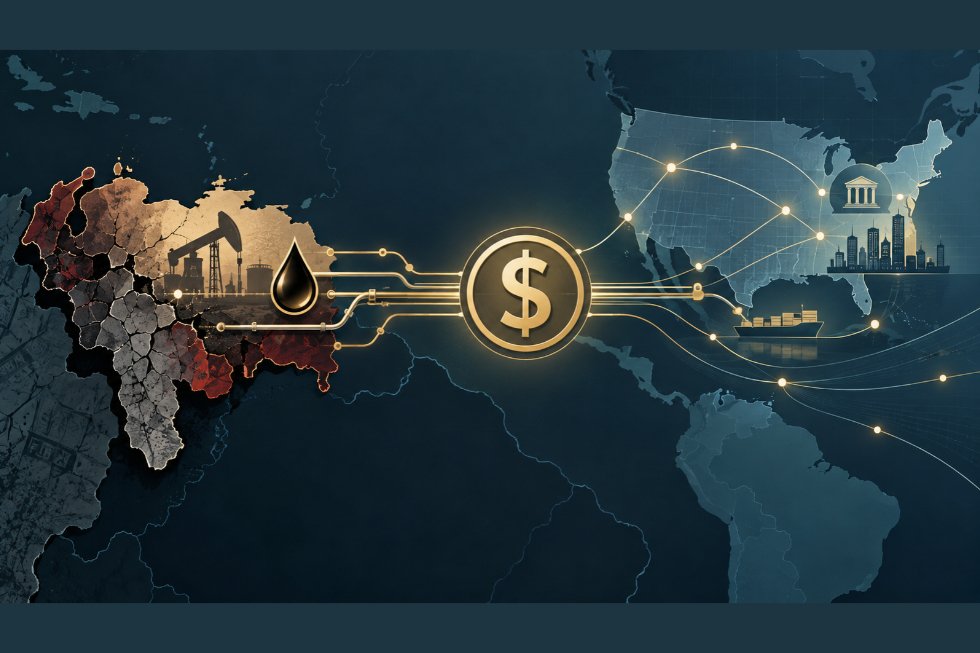



The debate over formally dollarizing Venezuela is usually presented as a question about Venezuela: Can the country finally escape recurrent inflation, exchange-rate instability and distrust of the bolivar? That is the immediate issue, but it is not the whole one. Official dollarization would also affect the United States. It would extend the dollar’s institutional reach into one of the world’s largest oil economies, place more Venezuelan commerce within a financial system over which Washington exercises unusual influence and potentially anchor a politically fragile country more firmly to the US economic sphere.
The proposal remains politically and legally contested. Venezuela already uses dollars widely in shops, contracts and savings, but the state continues to issue bolivars. Formal dollarization would end that halfway arrangement by converting cash, deposits, wages, debts and public obligations at an official rate. Informal dollarization is an adaptation by households; official dollarization is a commitment by the state.
Dollarization as a commitment mechanism
The strongest economic case for dollarization is not that the United States necessarily conducts perfect monetary policy. It is that a Venezuelan government cannot instruct the US Federal Reserve to finance a Venezuelan budget deficit. Dollarization therefore acts as a commitment device. It removes the possibility of covering fiscal gaps through domestic money creation and sharply reduces the risk of another inflationary tax on money balances.
The time-consistency literature associated with economists Finn Kydland and Edward Prescott and with Robert Barro and David Gordon explains why governments may promise price stability and later find surprise inflation attractive. If the promise lacks credibility, the public anticipates that temptation. Dollarization changes the feasible policy set: The government does not merely promise restraint; it gives up the printing press.
For Venezuela, such an external constraint could reduce the currency-risk premium embedded in interest rates, lengthen contracting horizons and make accounting more intelligible. It could also eliminate many conversion costs created by the coexistence of bolivars and dollars. Yet credibility is imported only in the monetary domain. A dollarized government can still overspend, borrow excessively, default, impose controls or weaken property rights. As economists Andrew Berg and Eduardo Borensztein emphasize, full dollarization eliminates devaluation risk but does not eliminate banking crises or fiscal insolvency. Currency reform can harden the budget constraint; it cannot substitute for a functioning state.
The first US benefit: reinforcing the dollar’s network
The direct financial gain would be modest but real. Foreign holders of dollar banknotes effectively provide the US government with an interest-free loan — seigniorage that rises when another country adopts the currency.
Venezuela alone would not materially transform US public finances. Its monetary base is tiny relative to the stock of dollars circulating worldwide. The larger benefit is strategic and derives from network effects. A currency becomes more useful when more people invoice trade, settle contracts, keep accounts and issue debt in it. Each additional user reduces others’ incentive to shift to a rival unit. The Federal Reserve’s 2025 review of the dollar’s international role reports that the dollar remains dominant across reserves, international banking, foreign-currency debt, and trade invoicing; it also notes that 96% of trade in the Americas was invoiced in dollars over 1999–2019. Bringing a major South American oil producer formally into that network would reinforce an already powerful regional standard.
This matters as China promotes renminbi settlement and some governments seek alternatives to dollar-based sanctions exposure. Venezuela would not decide the global currency contest, but its adoption would be symbolically important after years outside the US political orbit. It would show that, after institutional breakdown, economic actors still regard the dollar as the preferred monetary anchor.
The second benefit: changing the political economy of oil
Venezuela’s oil makes the proposal more consequential than dollarization by a small, service-based economy. If petroleum exports, royalties, taxes, contractor payments and investment accounts were all organized in dollars, exchange-rate risk inside the oil chain would decline. US refiners, oil-service companies, banks and investors could compare costs and returns without continuously pricing in a bolivar collapse. Dollar invoicing would not repair pipelines, improve electricity supply or reverse underinvestment, but it could remove one layer of uncertainty from every contract.
The change could also make the link between oil earnings and domestic finance more transparent. Under the hybrid regime, the government can receive dollars from oil while spending bolivars at home, enabling multiple rates, preferential access and opaque transfers. Under dollarization, the state must obtain the currency it spends.
For the United States, this could support a more predictable hemispheric energy relationship. It might encourage the redirection of Venezuelan crude and investment toward US-linked markets, particularly if accompanied by credible rules on licensing, contracts and revenue disclosure. But the causal qualification is essential: The currency cannot make oil institutions trustworthy. Dollarization becomes valuable to the energy sector only when paired with enforceable property rights, transparent procurement and a durable settlement of sanctions and claims.
The third benefit: greater visibility — and leverage — within the financial system
Dollarization also changes the geography of financial power. A large share of cross-border dollar transactions ultimately touches correspondent banks, clearing arrangements or financial institutions subject to US law. If Venezuela’s legitimate commerce moved from improvised currency substitution into formal dollar accounts, the United States could gain better visibility into payment flows and stronger enforcement leverage against money laundering, corruption, and sanctions evasion.
This is not automatic. A cash economy can remain opaque, while cautious international banks may refuse Venezuelan customers. Excessive “de-risking” could push commerce into cash, crypto assets or unregulated intermediaries. Dollarization without correspondent-banking access would provide the unit of account but deny Venezuela the circulatory system.
Here the strategic bargain becomes clear. Washington could offer licensed access to the dollar network in exchange for stronger bank supervision, beneficial-ownership disclosure, anti-money-laundering enforcement and transparent treatment of oil receipts. The source of US influence would no longer be only the power to block transactions. It would also be the power to define the conditions under which transactions can occur.
The fourth benefit: regional stabilization
A stable Venezuelan monetary system could produce positive externalities for the United States even if the direct seigniorage gain is small. Severe inflation destroys tax capacity, compresses real wages, encourages capital flight and contributes to outward migration. Monetary stabilization would not by itself reverse Venezuela’s humanitarian and institutional crisis, but it could reduce one important accelerant.
That matters to neighboring countries and, indirectly, to the United States. Lower migration pressure, more reliable remittances and recovering commerce would reduce the regional costs of Venezuelan instability. US exporters could benefit, while a credible unit of account could help reconstruct long-term credit.
The optimum-currency-area framework, beginning with Canadian economist Robert Mundell, nevertheless warns that sharing a currency works best when economies trade heavily, experience similar shocks, and possess mechanisms for labor mobility or fiscal transfers. Venezuela would use the dollar without gaining representation on the Federal Open Market Committee or automatically receiving US fiscal transfers. Its oil-dependent business cycle may diverge sharply from the US cycle. The Federal Reserve will set interest rates for US employment and inflation, not for Venezuelan output. Dollarization exchanges the risk of domestic monetary abuse for the risk of an externally inappropriate monetary stance.
How the game changes inside Venezuela
Under the bolivar regime, political conflict often concerns who controls the central bank and who receives subsidized foreign exchange. Under dollarization, the contest moves elsewhere. Because the government cannot manufacture dollars, access to cash flow becomes the central constraint. Oil receipts, taxes, remittances, foreign credit and investment determine the economy’s liquidity. Fiscal policy, banking regulation and external financing become more important, not less.
Adjustment to shocks also changes. A fall in oil prices can no longer be absorbed through a currency depreciation or monetary expansion. Instead, adjustment must occur through wages, employment, prices, fiscal reserves, external borrowing or productivity. Economists call this internal devaluation. It can ultimately restore competitiveness, but it is slower and politically harsher than changing the nominal exchange rate.
The central bank could still supervise institutions and manage reserves, but it could not create dollars during a bank run. The system would therefore need higher liquidity requirements, dollar-backed deposit insurance, strong resolution procedures and a prearranged emergency facility. Washington should make no implicit promise to rescue Venezuelan banks.
Fiscal rules would become the new anchor. An oil stabilization fund and transparent limits on deficits and guarantees would reduce the risk that monetary financing reappears through arrears, forced lending or state-company debt. Ecuador shows both sides of the lesson: Dollarization can stabilize prices and survive political upheaval, but it cannot prevent fiscal stress.
How the game changes for Washington
For Washington, dollarization would convert Venezuela from a country merely using US currency into a jurisdiction structurally dependent on the integrity and accessibility of the dollar system. That creates leverage, but it also creates responsibility. Venezuelans may blame the United States for high interest rates, credit shortages or recession even when those outcomes arise from domestic fiscal weakness. A sanctions decision could have broader humanitarian effects once nearly all lawful payments use the same currency and channels. And pressure for emergency support would intensify during a banking crisis.
The United States should therefore avoid treating dollarization as a geopolitical trophy or costless technical fix. Support should require a credible conversion law, an independent audit of reserves and bank liabilities, protection for small deposits, transparent oil-revenue management, bank-resolution rules and bounded multilateral liquidity support. An overvalued conversion rate would damage competitiveness; an undervalued one would impose a regressive loss on wages and savings.
Nor should Washington demand exclusive commercial privileges. That would turn stabilization into a visible instrument of domination. The better strategy is rules-based openness: equal treatment for investors, transparent procurement and financial access conditional on compliance rather than political favoritism.
A new monetary bargain
Official dollarization would rewrite the allocation of power. Venezuela would surrender money creation and gain a currency whose credibility it cannot easily destroy. The United States would gain modest seigniorage, stronger network effects, greater financial influence and potentially a more stable energy partner. In return, it would face pressure to keep channels open, respond to crises and distinguish legitimate enforcement from collective punishment.
That is how the game changes. The old game centers on discretionary money creation, exchange controls, devaluation and the political allocation of scarce dollars. The new game centers on earning dollars, retaining them in the banking system, meeting the rules of international finance and adjusting the real economy when shocks arrive. Power moves from the printing press to the fiscal account, from the official exchange-rate decree to the balance sheet and from domestic monetary discretion to negotiated access to a US-centered network.
For Venezuela, that trade may be worthwhile because the credibility of the national currency has already been gravely damaged. For the United States, the opportunity is larger than selling more banknotes or importing more oil. A successful transition could show that dollar leadership rests not only on sanctions and market size, but also on providing a reliable monetary institution. Yet success would require restraint. The dollar is most powerful when countries choose it because its rules are credible — not when they experience it as another instrument of political control.
[Kaitlyn Diana edited this piece.]
The views expressed in this article are the author’s own and do not necessarily reflect Fair Observer’s editorial policy.
Donroe Doctrine Makes Guyana Key for US Latin America Policy
Oil-rich Guyana is now more secure from Venezuelan aggression and can profit from higher energy prices thanks to the US/Israel–Iran...
FO Exclusive: The Trump Administration Tries Regime Change and Oil Grab in Venezuela
In this section of the January 2026 episode of FO Exclusive, Atul Singh and Glenn Carle analyze US President Donald...
Argentina’s Endless Cycle: Why Sovereign Debt Crises Keep Returning
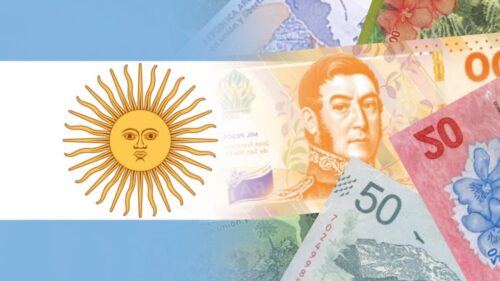
Argentina’s recurrent debt crises reflect deep structural weaknesses: fiscal dominance, financial dollarization and institutional fragility. Despite repeated reforms, external bailouts...
Support Fair Observer
We rely on your support for our independence, diversity and quality.
For more than 10 years, Fair Observer has been free, fair and independent. No billionaire owns us, no advertisers control us. We are a reader-supported nonprofit. Unlike many other publications, we keep our content free for readers regardless of where they live or whether they can afford to pay. We have no paywalls and no ads.
In the post-truth era of fake news, echo chambers and filter bubbles, we publish a plurality of perspectives from around the world. Anyone can publish with us, but everyone goes through a rigorous editorial process. So, you get fact-checked, well-reasoned content instead of noise.
We publish 3,000+ voices from 90+ countries. We also conduct education and training programs
on subjects ranging from digital media and journalism to writing and critical thinking. This
doesn’t come cheap. Servers, editors, trainers and web developers cost
money.
Please consider supporting us on a regular basis as a recurring donor or a
sustaining member.
Will you support FO’s journalism?
We rely on your support for our independence, diversity and quality.




Comment