


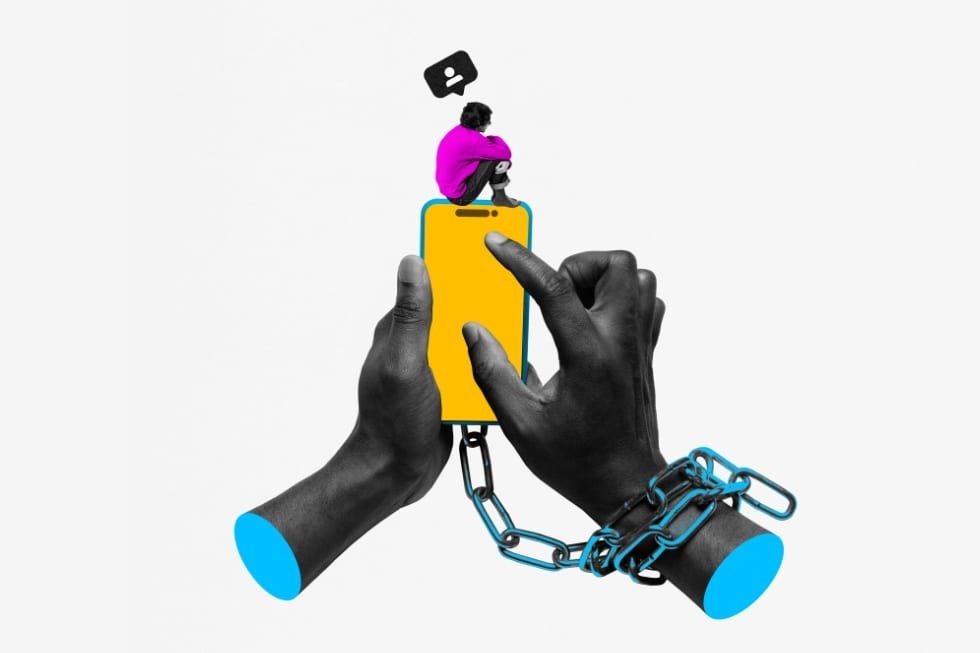



There is a pattern in the men who now own the infrastructure of modern life, and it looks at first like hypocrisy. They are radicals about technology and reactionaries about human beings. They will remake what you see, what you read, what you buy, whom you meet, what you believe and what you want, at a speed no society has ever had to absorb — and then, having appointed themselves the agents of permanent revolution in every technical domain, they turn to the arrangement of human life and discover that the old order was right all along. A woman’s place. A nation’s blood. A father’s authority. The natural hierarchy of the strong over the weak. Move fast and break everything, they say, except the hierarchy.
It is tempting to call this contradiction, and to leave it there. Call Elon Musk a hypocrite for preaching free speech while throttling it, or for championing fatherhood as an abstraction while scattering children across a dozen households. Call Peter Thiel incoherent for building the surveillance state while quoting Scripture about freedom, or for declaring democracy incompatible with liberty while funding the candidates who will wield it. The charge of hypocrisy is satisfying and it is also a trap, because it treats the two postures as an accident, as if these were merely flawed men failing to live up to their own stated values. They are not failing. The two postures are not in tension. They are a single operation, and the operation is coherent once you see what it is for.
To see it, you have to start further back, with what a human being actually is.
Humans exist in a web of relationships
We are taught to think of ourselves as individuals: self-contained units of choice and will, bound by our skin, meeting other individuals in the marketplace and the public square as separate agents who have agreed to associate. Nearly every political tradition we have inherited takes this picture as its ground. The liberal begins with the autonomous chooser and his rights. The conservative begins with the sovereign self and his responsibilities. The libertarian begins with the individual and his property. The Marxist begins with the worker as a unit of labor. They disagree about almost everything except the starting point, which is the bounded, separate self.
The starting point is wrong. A human being is not a unit. A human being is a node — a point of connection in a web of relationships, and almost everything we are is a property of the web, not of the point. Language is not something you invented; it was handed to you by the people who raised you. Your conscience is not a private faculty you built alone; it is the internalized voice of the relationships that formed you.
The research is not subtle on this. Isolate a human being and the mind degrades: perception, judgment, impulse control, the capacity for empathy, all of it begins to fail. We are not individuals who happen to live in groups. We are group organisms who, deprived of the group, come apart. Moral cognition itself — the ability to feel the weight of another person, to be constrained by their reality — is not housed in the individual. It is distributed across the network. It is something that happens between people, and it atrophies in their absence.
This is not a metaphor and it is not sentiment. It is the physical architecture of the thing. And it has a consequence that matters enormously for what follows: if moral cognition is a network property, then it can be damaged by cutting the network. Not metaphorically damaged. Damaged the way a severed nerve is damaged.
For almost all of human history this did not matter much, because no one could actually de-network themselves. Even kings lived inside dense webs of obligation — to courtiers, priests, soldiers, subjects, family, God. The web might be unequal and brutal, but it was there, and it transmitted the pressure of other human beings into even the most powerful life. You could be a tyrant, but you could not be alone. The physical facts of pre-modern life made sustained isolation from the consequences of your actions essentially impossible.
That is no longer true. For the first time, a sufficiently wealthy human being can architect his own de-networking, can arrange his life so that almost no other human being’s reality is permitted to press on him. The staff is paid and replaceable. The security is absolute. The travel is private. The information arrives pre-filtered by machines he owns. The children are raised by others. The city is seen, if at all, through tinted glass at altitude. He can go years without a single unchosen human encounter, without once being subject to another person he did not select and cannot dismiss. He has incoming edges, but he has cut them. He transmits; he does not receive.
And here is the part that should frighten us rather than satisfy us: this is not a story about bad men. It is a story about what happens to any node when you cut its edges. The Berkeley and Yale research on wealth and cognition is consistent and it is grim; as subjective power and isolation rise, empathy measurably falls, the ability to read other people’s emotions declines, entitlement rises, the sense that the normal rules are for other people rises.
These are not character flaws peculiar to a few individuals. They are the predictable output of a particular position in the network, or rather, a position outside it. The Cloud Lords (think Silicon Valley tech giants) are not villains who happen to have money. They are canaries. They are what the human animal becomes when you remove the thing that makes it human, which is the pressure of other humans. They are the experiment, run at the top of the wealth distribution, and the results are in.
None of this absolves them. A degraded capacity for empathy is a condition, not an excuse — it explains the shape of the choices without making them any less choices. These men are not weather. They are agents, acting with whatever empathy they have left, and the choices they make from inside their isolation reach further than any choices in human history, because the platforms carry them to everyone at once. To explain a thing is not to pardon it. The canary is also the perpetrator. Both are true, and the argument that follows needs both.
A human without a network is without meaning
Now return to the paradox, because now it dissolves.
Technological acceleration is not an expression of visionary optimism about the human future. Whatever it is in the minds of the men who drive it, in its effects it is a solvent. It dissolves the intermediate structures of human life: the local community, the union, the profession, the independent press, the small institution, the dense civic ecology that Tocqueville, two centuries ago, identified as the one thing standing between the lone individual and unchecked power.
Every platform that replaces a neighborhood with a feed, a profession with a gig, a civic association with an app, performs the same operation. It takes a person who was embedded in a web of local, reciprocal, face-to-face relationships — a person who was a node in a functioning network — and it re-wires him so that his primary connections now run vertically, through a platform, to the center. It de-networks him horizontally and re-networks him vertically. It cuts the edges that connected him to the people around him and replaces them with a single edge that connects him to the machine.
This is not a side effect of the technology. It is the primary effect. A de-networked population cannot constrain concentrated power, and constraint is precisely what intermediate institutions exist to do. Organizing is networking. A union is a network. A functioning town is a network. A free press is a network. To dissolve these is not to liberate the individual; it is to isolate him, and an isolated individual is powerless against a concentrated one in exactly the way a single node is powerless against the hub that all the other nodes now route through. The acceleration clears the field. That clearing is the condition that everything else grows in.
But a cleared field is not stable. You cannot simply atomize a population and leave it atomized, because the atomized human is not a contented individual enjoying his freedom. He is a node starved of its substrate — lonely, unmoored, cognitively and emotionally deprived of the relational web that his nervous system evolved to run on, and therefore in acute distress and acute hunger. He is desperate for meaning, for belonging, for an identity, for a place to stand and a group to stand with. The acceleration produces this hunger at scale. It manufactures, as its direct output, hundreds of millions of de-networked people whose deepest need is for exactly the thing the acceleration has stripped from them.
Traditionalism is a tool of control
And this is where traditionalism arrives, not as a contradiction of the acceleration, but as its necessary complement. Blood. Faith. Nation. Family. The strong father, the ordered household, the proper role of the woman, the sacred people, the enemy at the gate. This is not a rival value system that the Cloud Lords hold in some other compartment of their minds. It is belonging sold back to the people that the acceleration unmoored.
It is meaning offered to the meaning-starved, identity offered to the identity-stripped, a web offered to the de-webbed, except that it is not a real web. A real web is horizontal, reciprocal, local, and therefore a source of power for the people inside it. Traditionalism offers something that feels like belonging while demanding submission: an identity you receive from above rather than build with your neighbors, a belonging that binds you to an abstraction — the nation, the faith, the race — rather than to the actual people beside you. It is a counterfeit of the thing the acceleration destroyed, and because it is a counterfeit, it does not restore the horizontal power that real networks confer. It channels the hunger upward, toward the leader, the movement, the platform, the center – the same center the vertical re-wiring already installed.
It is tempting to read this as a plan, as if these men sat down twenty-five years ago and designed the dissolution and the counterfeit that would follow it. They did not. Almost none of this was foreseen. The platforms were built for ordinary reasons: money, status, the genuine belief that connection was good. The de-networking was an externality, not a goal — what maximizing engagement happened to do to the neighborhood, was not what anyone set out to do. And traditionalism was not designed to meet the resulting hunger either. It was selected by it.
Once a vast, meaning-starved, de-networked population exists, it becomes an enormous attractor, and any ideology offering cheap belonging and an enemy and an identity-from-above will find purchase there, spread, and be rewarded. The political entrepreneurs selling that product did not need to have planned the hunger. They needed only to be standing there with the right thing to sell when the demand arrived. The system behaves as if it were designed because selection shapes things to look designed, the way an eye looks designed without a designer. This should frighten us more, not less. A conspiracy can be exposed. A selection pressure cannot be arrested.
But emergence is not the opposite of agency. It is the medium that agency moves in. No one chose the whole system; everyone chooses their move inside it. And because the system is a feedback loop, each round of choices reshaping the context that selects the next, the moves of the largest nodes weigh the most, because they set the conditions everyone else must then act within. That the Cloud Lords are de-networked does not make them weather. It makes them the most powerful agents alive, acting on the whole species from inside the worst possible vantage for understanding it: isolated, empathy degraded, convinced the view from the top of the gradient is the view of reality itself. The emergence explains how we got here. It does not tell anyone what to do next, because at every node, including theirs, including yours, there is still a choice.
And then there is the tell, the thing that gives the whole operation away.
If not hypocrisy, then what is it?
The men prescribing rootedness are the least rooted human beings who have ever lived. They preach family while optimizing away every material condition under which ordinary families can form — the stable job, the affordable home, the time not sold to the platform.
They preach nation while renouncing any binding obligation to the actual people in theirs, moving capital and residence and citizenship to wherever the advantage lies. They preach faith while worshipping, in any observable sense, their own ascension. They preach that a woman belongs in the home and that the family is sacred, from lives arranged so that no unchosen human being — no wife, no child, no neighbor, no fellow citizen — is permitted to press on them with a reality they did not select. They are selling roots to the people they uprooted, from the one position in human history that has abolished roots entirely for itself.
This is not hypocrisy, because hypocrisy implies they believe the thing they fail to practice. They do not practice traditionalism because traditionalism is not for them. It is medicine for the masses, prescribed by physicians who would never take it. The rootedness, the submission, the fixed place in a fixed order, these are the conditions of a population that is manageable, legible, pacified and incapable of horizontal organization.
The Cloud Lords want you embedded in blood and faith and nation, because an embedded-in-ideology population is a controlled population. They themselves intend to remain what they already are: the only genuinely unbound agents on the planet, building their exits — the bunker, the compound, the Mars colony, the life extended beyond its term, the jurisdiction answerable to no one — while they tell you where a woman belongs.
The paradox was never a paradox, but it was never a plan either. It emerged in two movements, the solvent and the counterfeit, and it coheres not because anyone drew it up but because the pressure that shapes it rewards exactly this shape: a population broken horizontally and re-bound vertically, atomized by the machine and re-aggregated by the altar, with the exit reserved, always, for the few who stand nearest the center of the gradient they are steepening.
And because it emerged, it is not fate. A system held together by selection pressure rather than by a plan has no architect to defeat and no master switch to flip, which is the bad news; but it also has no necessity to it, which is the good. It is being produced, right now, by choices; theirs at enormous scale, and ours at small scale that compounds through every network still intact. The largest nodes are making world-shaping choices from inside the one position least able to see what the world is. The rest of us are making smaller ones, from inside whatever web we have left. No node is at zero.
The thing being dismantled from two directions at once — the genuine web, horizontal and reciprocal and local, the neighbor you did not choose and the obligation you cannot sell — is also the thing that confers the only power ordinary people have ever had against concentrated power, which is each other. That is what the acceleration dissolves and the counterfeit imitates. That is the choice still open at every node that has not yet been cut. It is not a grand refusal. It is the small, daily, unglamorous work of staying woven and of weaving, deliberately now, with the knowledge of what the alternative produces.
[Cheyenne Torres edited this piece.]
The views expressed in this article are the author’s own and do not necessarily reflect Fair Observer’s editorial policy.
Peter Thiel: Prophet, Provocateur or Threat to Liberal Democracy?
American entrepreneur and venture capitalist Peter Thiel’s transatlantic childhood shaped his unique blend of German philosophical seriousness and American entrepreneurial...

From Rerum Novarum to Magnifica Humanitas: The Vatican’s Warning Against Technological Determinism
In this time of technological uncertainty, Pope Leo XIV’s Magnifica Humanitas is a welcome reflection on how humanity should approach...

Palantir Assumes the 21st Century’s Digital White Man’s Burden
Perhaps unconsciously inspired by George Orwell, Palantir’s CEO Dr. Alex Karp has embraced the logic and ideology that he expects...

Support Fair Observer
We rely on your support for our independence, diversity and quality.
For more than 10 years, Fair Observer has been free, fair and independent. No billionaire owns us, no advertisers control us. We are a reader-supported nonprofit. Unlike many other publications, we keep our content free for readers regardless of where they live or whether they can afford to pay. We have no paywalls and no ads.
In the post-truth era of fake news, echo chambers and filter bubbles, we publish a plurality of perspectives from around the world. Anyone can publish with us, but everyone goes through a rigorous editorial process. So, you get fact-checked, well-reasoned content instead of noise.
We publish 3,000+ voices from 90+ countries. We also conduct education and training programs
on subjects ranging from digital media and journalism to writing and critical thinking. This
doesn’t come cheap. Servers, editors, trainers and web developers cost
money.
Please consider supporting us on a regular basis as a recurring donor or a
sustaining member.
Will you support FO’s journalism?
We rely on your support for our independence, diversity and quality.




Comment