


Few figures in contemporary technology and politics generate as much contradictory commentary as entrepreneur and venture capitalist Peter Thiel. Depending on the lens, he appears as a visionary investor, a philosophical contrarian, a kingmaker of the American right, or, in darker readings, an architect of illiberal politics dressed in Silicon Valley language. To understand why he provokes such wildly divergent verdicts, start not in Palo Alto or Washington but in Frankfurt am Main, where the story begins: the peculiar transatlantic childhood that, biographers argue, shaped almost everything that followed.
A German childhood in America
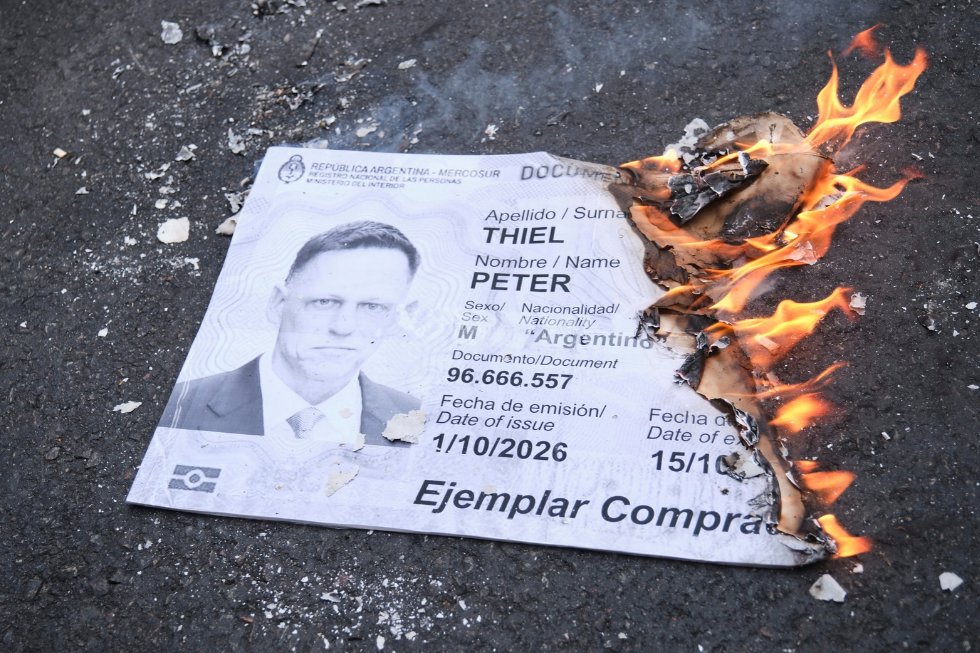
Peter Andreas Thiel was born on October 11, 1967, in Frankfurt, then-West Germany’s financial capital, to Klaus Friedrich Thiel, a chemical engineer, and Susanne Thiel. He was barely a year old when his parents packed up and moved the family to the United States, settling first in Cleveland, Ohio, a city that could hardly have been more different from the booming, internationally minded Frankfurt they had left behind. Thiel’s biographer Max Chafkin, author of the acclaimed 2021 book The Contrarian, has noted that this move, from West Germany’s financial capital to a fading industrial city representative of the American heartland, left its mark on the family and, by extension, on the boy who grew up there.
What makes Thiel’s American childhood unusual is that it was not, linguistically speaking, especially American at all. Although he was an infant when the family crossed the Atlantic, his German-born parents spoke only German to him at home for roughly the first 12 years of his life. Thiel effectively grew up bilingual and bicultural from the cradle, absorbing English from schoolmates and American television while his domestic world remained resolutely German.
It is a detail easy to overlook amid the PayPal Mafia lore and the Palantir conspiracy theories, but it goes some way toward explaining the curious hyphenated identity Thiel has cultivated ever since: a man frequently described, and who frequently describes himself, as German-American rather than simply American; a man who has retained his German citizenship alongside his American passport; a man who returns to Germany regularly, writes op-eds in German newspapers, and has, across four decades, been alternately celebrated and denounced by the German press as a native son who made it spectacularly, if unsettlingly, good.
The itinerant childhood did not stop in Cleveland. Klaus Thiel’s work for various mining companies took the family to South Africa and then to Southwest Africa, present-day Namibia, while apartheid was still the law of the land, before the Thiels finally settled in Foster City, California, in 1977. Along the way, young Peter changed elementary schools seven times. In Swakopmund, he attended a German-language school that required uniforms and still practiced corporal punishment, and where, according to Chafkin, an unreconstructed nostalgia for the Third Reich lingered among parts of the German expatriate community.
Thiel said this experience instilled in him a lasting aversion to conformity and regimentation, which he later channeled into a very American vocabulary of individualism and libertarianism. He was, by most accounts, a lonely and bookish child, a gifted mathematician who loved science and fantasy fiction — especially authors like Isaac Asimov, Robert A. Heinlein and J.R.R. Tolkien — played Dungeons & Dragons, and rarely stayed anywhere long enough to make lasting friends.
It is this doubled inheritance, a German mother tongue and a German family culture grafted onto an American upbringing forged in the Rust Belt and the Namibian desert, that biographers keep returning to when they try to explain Thiel’s peculiar mixture of Continental philosophical seriousness (René Girard, Carl Schmitt, Leo Strauss) and American entrepreneurial swagger. He is, in a sense, a product of both traditions and fully at home in neither, which may be precisely why he has made a career out of standing athwart consensus on both sides of the Atlantic.
After graduating as valedictorian of San Mateo High School, Thiel studied philosophy at Stanford, where a curricular fight over multiculturalism prompted him to co-found the conservative Stanford Review in 1987, a paper that would later seed an extraordinary network of Silicon Valley founders and Trump-era officials. He went on to Stanford Law School, graduating in 1992, and it was there that he encountered the French American literary theorist and anthropologist René Girard, whose mimetic theory — the idea that human desire is fundamentally imitative, and that societies periodically resolve the resulting rivalries through scapegoating — became something close to an intellectual religion for Thiel. Girard’s influence runs through everything from Thiel’s investment thesis (avoid competition, build monopolies) to his more recent, headline-grabbing lectures on the Antichrist and the Katechon, the biblical “restrainer” of apocalyptic forces.
From Silicon Valley success to German recognition
The business career that followed is by now the stuff of Silicon Valley legend: a stint as a securities lawyer and derivatives trader, the founding of Confinity in 1998 with Max Levchin and Luke Nosek, its transformation into PayPal, the merger with Elon Musk’s X.com, and the $1.5 billion sale to eBay in 2002 that minted the so-called “PayPal Mafia.” Thiel used his proceeds to found the hedge fund Clarium Capital, then in 2003 launched Palantir Technologies, named, tellingly, after the all-seeing stones of Middle-earth, as a post-9/11 bet that data analysis could make the security state both more powerful and, in his telling, more lawful.
In 2004 he became Facebook’s first outside investor, buying a 10.2% stake for $500,000, a decision that alone would have secured his fortune many times over. Founders Fund, Valar Ventures, Mithril Capital and a sprawling constellation of defense-tech and biotech vehicles followed, along with a growing reputation as the venture capitalist most willing to say in public what others in Silicon Valley only murmured in private.
It was against this decades-long backdrop that Thiel returned to the German public spotlight last month to accept the Axel Springer Award in Berlin. The publishing house behind the newspapers Bild and Die Welt said the award recognized Thiel’s role in creating “entirely new markets and industries” and for having “helped defend democracies” while being “attacked and vilified” for it. It was not his first brush with German institutional recognition.
In 2018, the German American Heritage Foundation named him its Distinguished German-American of the Year, praising him for having “always remembered his roots and kept strong ties to his home country.” In 2021, the Frankfurter Allgemeine Zeitung controversially awarded him the Frank Schirrmacher Prize, typically reserved for intellectuals and artists judged to have made “outstanding achievements in understanding our current events.” The awarding foundation defended the decision by praising Thiel’s “comprehensive work in analyzing the opportunities and risks of technological progress.” Critics immediately denounced the claim as reputational laundering for a man whose politics sat uneasily with the prize’s legacy.
The Axel Springer ceremony followed the same script, amplified. Accepting the award, Thiel returned to the theme that has defined his public persona for more than a decade: Stagnation, not runaway innovation, is civilization’s greatest danger. He framed Europe’s caution, its ingrained regulatory instinct and aversion to risk, not as prudence but as a symptom of decline, arguing that societies that stop daring to build stop growing altogether. Axel Springer CEO Mathias Döpfner framed Thiel as someone who “reminds us that progress requires courage and nonconformism,” echoing the case Thiel made on stage: The future belongs to those willing to be publicly wrong rather than safely mediocre. The old Silicon Valley adage, “Go fast and break things,” which has aged poorly, still seems to apply to him.
The award did not pass without controversy in Germany itself. Der Spiegel wrote that Axel Springer was presenting only half the story, while the Süddeutsche Zeitung observed that although Thiel’s companies genuinely provide states with capabilities they claim to need, the German right’s embrace of him as a figure of hope carries real implications for democracy. They pointedly noted that the Christian Social Union politician Peter Gauweiler had publicly called on Berlin to make Thiel federal minister for artificial intelligence and technological sovereignty. That a serving German politician could float, even rhetorically, installing an American-based billionaire in a cabinet post is itself a measure of how far Thiel’s German celebrity has traveled from mere nostalgia about a native son.
The European backlash and the messianic frame
Outside that carefully curated Berlin ceremony, the picture grows considerably more complicated. Chafkin portrays Thiel as someone whose intellectual influences, chief among them Girard’s mimetic theory, feed a worldview that is both apocalyptic and messianic. Seen through that frame, Thiel’s Berlin remarks about stagnation are not merely economic commentary but something closer to eschatology. Civilizational decline, in his telling, becomes an almost spiritual crisis, and entrepreneurship becomes a form of salvation.
Chafkin’s account also ties Thiel’s fascination with monopoly, secrecy and surveillance technology through Palantir to his acceptance-speech rhetoric: The same “courage” praised on stage becomes the courage to build instruments of state power that many liberal democracies would hesitate to deploy.
Thiel’s speech also sits within a broader European anxiety. Since the 1990s, he has moved from libertarianism toward a more nationalist, democracy-skeptical posture, epitomized by his infamous line that he “no longer believe[s] freedom and democracy are compatible.” Critics argue his Berlin remarks about “progress” versus institutional drag are a polished restatement of that same skepticism: regulation and democratic deliberation recast as obstacles rather than safeguards.
What once read as eccentric philosophy now looks prescient to some, as several billionaire tech founders — Elon Musk, Jeff Bezos, David Sacks, among others — have drifted toward similar ground during US President Donald Trump’s second term. A new generation of Thiel-funded politicians and technologists, including his former employees Blake Masters and US Vice President JD Vance, now echo Thiel’s template, treating elections and institutional checks as friction to be engineered around.
Theology, AI and the post-liberal horizon
A further thread running beneath the acceptance-speech applause is the convergence of Christian nationalism with Thiel-adjacent political networks. Secular tech power has fused with religious-right activism to produce a movement skeptical of pluralism itself. Conservative thinkers such as Adrian Vermeule and Patrick Deneen have developed a post-liberal critique arguing that liberal democracy has exhausted itself: too procedural, too neutral and incapable of defending shared values. That critique, once confined largely to academic journals, now finds an unlikely stage in Berlin, where a Silicon Valley billionaire’s applause line about “daring greatly” doubles, for critics, as coded support for dismantling the liberal guardrails his hosts claim to champion.
Thiel’s own religious commitments complicate any easy caricature. A self-described Christian shaped as much by Girard’s anthropology as by the evangelical household of his upbringing, he has in recent years devoted a series of private, off-the-record lectures — organized in 2025 by San Francisco’s Acts 17 Collective — to the Antichrist, Armageddon and the figure of the Katechon, the mysterious restraining force of Pauline theology.
He has controversially labeled figures as varied as climate activist Greta Thunberg and AI-safety advocate Eliezer Yudkowsky as “legionnaires of the Antichrist.” Scholars such as Matthew Avery Sutton warn that this rhetorical move risks “delegitimizing compromise” and casting democratic deliberation itself as spiritually suspect.
Vatican-affiliated commentators, including Antonio Spadaro and Paolo Benanti, have taken Thiel’s theological framework seriously enough to critique it point by point. Benanti described Thiel’s vision as “tragically cyclic, and therefore pagan,” in which Palantir functions as a kind of modern House of Solomon serving what Benanti calls Thiel’s underlying “political heresy”: financing the forces that erode the nation-state with one hand while arming the state with panoptic surveillance capacity with the other.
Thiel views artificial intelligence as a pivotal force that could either break decades of economic stagnation or, if overregulation suppresses it, pave the way for global totalitarianism. While he acknowledges that AI carries genuine existential risks, he argues that a precautionary slowdown or heavy government regulation poses the greater threat to humanity. In his telling, crypto and AI sit at opposite poles of a single ideological spectrum: “Crypto is decentralizing, AI is centralizing.” “[I]f you want to frame it more ideologically, crypto is libertarian and AI is communist.” It is a formulation that captures both his anti-statist instincts and his deep unease about concentrated technological power, an unease he nonetheless seems willing to override when the concentrating entity is Palantir, or the American state itself, acting, in his view, on the right side of history.
Thiel is no longer merely a tech investor with idiosyncratic opinions accepting a trophy. He is a node connecting venture capital, applied surveillance technology, nationalist politics, religious conservatism and post-liberal philosophy, and his Axel Springer speech was less an acceptance than a manifesto in miniature. That the ceremony took place in the country of his birth, before an audience partly composed of the same establishment German press that has spent two decades trying to decide whether he is a native son to be celebrated or a cautionary tale to be studied, only sharpens the irony. Whether one reads his Berlin remarks as a clear-eyed critique of a stagnating status quo, a wealthy ideologue’s polished case for democracy’s retreat, or a visionary path to a brighter technological future depends largely on which version of the future one fears most — or hopes to build.
[Kaitlyn Diana edited this piece.]
The views expressed in this article are the author’s own and do not necessarily reflect Fair Observer’s editorial policy.
Palantir and the Techno-Oligarchs: Honeyed Reason, or Crushing Hegemony?
Western democracies have entered a period dominated by techno-oligarchs, e.g., Elon Musk (Tesla, SpaceX, Starlink, X-Corp and xAI), Peter Thiel...
Peter Thiel: The Antichrist Hunter of Silicon Valley
One journalist describes Peter Thiel as a fan of the Bible. Columnist Ross Douthat calls him an influential right-wing intellectual....

Palantir Assumes the 21st Century’s Digital White Man’s Burden
Perhaps unconsciously inspired by George Orwell, Palantir’s CEO Dr. Alex Karp has embraced the logic and ideology that he expects...
Support Fair Observer
We rely on your support for our independence, diversity and quality.
For more than 10 years, Fair Observer has been free, fair and independent. No billionaire owns us, no advertisers control us. We are a reader-supported nonprofit. Unlike many other publications, we keep our content free for readers regardless of where they live or whether they can afford to pay. We have no paywalls and no ads.
In the post-truth era of fake news, echo chambers and filter bubbles, we publish a plurality of perspectives from around the world. Anyone can publish with us, but everyone goes through a rigorous editorial process. So, you get fact-checked, well-reasoned content instead of noise.
We publish 3,000+ voices from 90+ countries. We also conduct education and training programs
on subjects ranging from digital media and journalism to writing and critical thinking. This
doesn’t come cheap. Servers, editors, trainers and web developers cost
money.
Please consider supporting us on a regular basis as a recurring donor or a
sustaining member.
Will you support FO’s journalism?
We rely on your support for our independence, diversity and quality.





Comment