




Kayce Atencio was 19 when he suffered a heart attack caused by an undiagnosed congenital defect. It nearly killed him. The medical bills that followed devastated his finances and impacted his credit, making it difficult for Atencio to secure a lease or mortgage. By 25, Atencio had to declare bankruptcy. He spent much of his adult life dodging homelessness, sleeping on friends’ couches or staying with family. The instability took a toll, not only on him, but also on his two young children.
Atencio’s story reflects America’s flawed healthcare system; almost everyone in the country knows someone like Atencio. These stories are part of a much larger pattern. Nearly a third of working-age Americans with private health insurance are burdened by medical debt. Millions more struggle to make ends meet as the rising cost of housing, groceries and other essentials outpaces wage growth.
Despite living in the richest democracy on Earth, many families are just one unexpected bill away from a financial crisis. A third of middle-class families struggle to afford basic necessities, with minority communities being hit the hardest. This is the economic reality for many Americans today. And it raises a profound question: What happens when ordinary citizens stop believing their government works for people like them?
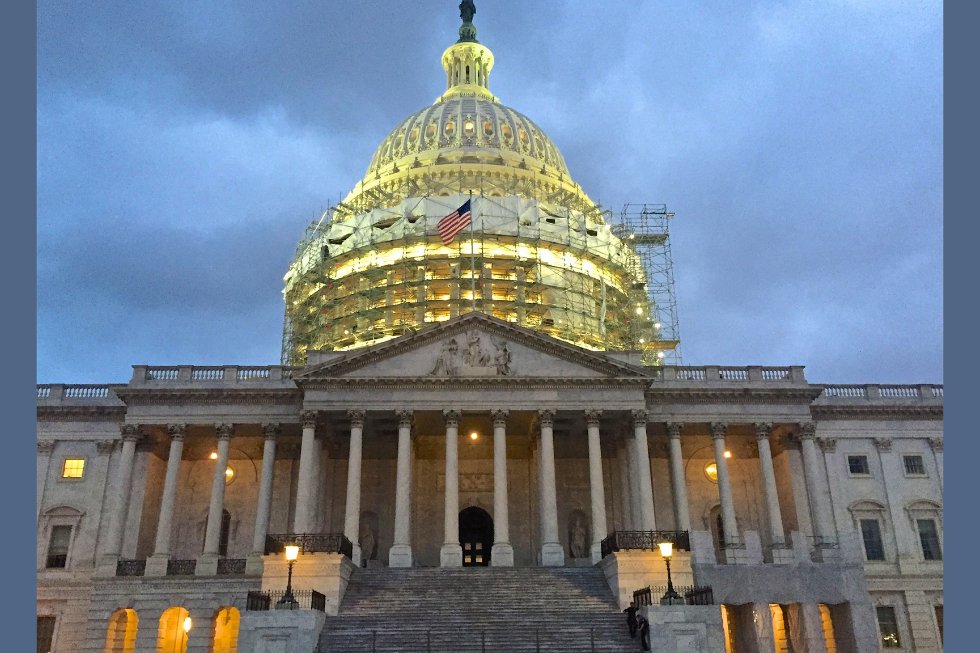
That question harks back to the radical proposition embedded in America’s founding and the Declaration of Independence that governments derive “their just powers from the consent of the governed.” But the consent of the governed is not won once in a revolutionary war or reaffirmed each election cycle. It must be continually renewed through institutions that are transparent, responsive, representative and worthy of public trust. That is especially important as America’s population has expanded and its society has become increasingly racially and ethnically diverse.
This is where the rubber meets the road. A December 2025 Pew study found that just 17% of Americans trust their government to do what is right at least “most of the time.” The May 2026 Brennan Center for Justice Corruption Survey found that 72% of respondents had an unfavorable view of Congress; 52% viewed the Supreme Court unfavorably.
Grievance, inequality and polarization grab headlines on an almost daily basis. But these are manifestations of a far deeper underlying problem: There is a widening gap between what citizens expect from their elected representatives and what their political institutions are able (or willing) to deliver. Put simply, America faces a crisis of democratic legitimacy.
Why do so many Americans feel locked out of their own democracy?
There are, of course, many explanations. But three structural problems stand out: distorted representation, institutional dysfunction and perverse incentive structures.
Distorted representation
Placing control of elections in the hands of politicians and state legislatures has led to widespread partisan gerrymandering, allowing politicians to choose their voters rather than allowing voters to choose their politicians. This results in distorted representation, weakens accountability and leads to a decline in public trust. And it’s getting worse. The 2025 Cook Partisan Voting Index classifies only 97 of 435 (22%) US congressional districts as competitive (meaning they had less than a 5% lean for one party or the other) versus 164 (38%) in 2000. In reality, only 21 congressional seats are classified as “Toss-Up” races in the 2026 election cycle (5%!).
Voter suppression (often cloaked in the guise of election integrity) exacerbates these distortions. These are not just local issues either. A partisan gerrymander or voter purge in Texas that contributes to changing control of the US House of Representatives effectively disenfranchises voters across the country. Recent “gerrymander wars” leading up to the 2026 midterms have undercut limited progress in instituting independent redistricting commissions. This is classic “race to the bottom” mentality, in which rational (and, in some instances, irrational) actors pursue a short-term, self-interested goal that results in collective harm and weakens democracy.
In 2023, Pew reported that three in ten Americans were dissatisfied with both the Democratic and Republican parties. By 2025, a Gallup poll found that a new high of 45% of American adults identified as political independents versus only 27% each for Democrats and Republicans; a majority (> 54%) of Gen Z and Millennials identified as independents. But the entrenched duopoly has stifled alternative voices, leaving disaffected voters nowhere to go.
Moreover, the primary process for selecting candidates for the duopoly can result in extreme, polarizing candidates being foisted on the general electorate by one or both parties. These extreme, often poorly qualified candidates who win gerrymandered districts enter Congress with a bombastic, performative brand of politics that is off-putting to unaligned voters, further straining the legitimacy of government institutions.
Institutional dysfunction
In “Federalist No. 10,” Founding Father James Madison warned of the danger of a “tyranny of the majority.” Madison’s concern was principally that a faction representing a numerical majority might weaponize government against property-owning minorities. Several of America’s constitutional institutions reflected that concern about unchecked majority power by incorporating counter-majoritarian principles. Over time, however, those institutions have increasingly come into tension with contemporary expectations of democratic equality. In some cases, they have succumbed to the “mischiefs of faction” of which Madison warned, producing outcomes that might be regarded not as the tyranny of the majority that he feared, but rather as a tyranny of the minority.
To illustrate, in 2024, the 47 elected Democratic senators represented 53.5% of the US’s 50-state population, while the 53 Republican senators who held the majority represented 46.5%. In fact, not since 1996 has a majority Republican Senate cohort represented a majority of the population.
Think about that: During the 18 years Republicans have controlled the Senate over the past three decades, they have done so while representing a minority of Americans! That imbalance has had profound consequences. It has allowed Republicans to refuse to hold hearings on former President Barack Obama’s Supreme Court nominee, Merrick Garland, then rush through President Donald Trump’s nomination of Amy Coney Barrett four years later.
What many regarded as Republicans’ bare-knuckle politics helped to consolidate a conservative supermajority on the Supreme Court that went on to issue unpopular landmark decisions — from Dobbs to presidential immunity. It also enabled passage of a succession of Republican tax cuts that disproportionately benefited corporations and higher-income households, exacerbating inequality while contributing to persistent, widening structural deficits that have added trillions of dollars to the national debt.
The filibuster compounds the Senate’s anti-majoritarian structure. Theoretically, just 41 senators representing roughly one in nine Americans could block legislation supported by senators representing the country’s overwhelming majority. The proverbial tail wagging the dog. In 2021, Senator Mitch McConnell infamously said that he was “‘100 percent’ focused ‘on stopping’ President Joe Biden’s administration.” As Democrats held the Senate majority at the time, McConnell’s tool was the filibuster. That is not governance; it is obstructionism — a practical example of tyranny of the minority. That’s precisely why Americans are frustrated that politicians are focused on partisan politics and not on solving their problems.
The Electoral College further compounds the Senate’s representational distortion. A state’s electoral votes are determined by the number of congressional seats plus two for its senators. The effect is that a Wyoming citizen’s vote for president is worth 3.6 times that of a California voter (based on Electoral College and US Census data).
But for most voters, the point is moot. Forty-eight of 50 states use a winner-takes-all system, awarding all their electoral votes to the candidate who wins the statewide popular vote. That effectively renders millions of votes irrelevant to the Electoral College outcome. In 2024, only seven “swing states” (Arizona, Georgia, Michigan, Nevada, North Carolina, Pennsylvania and Wisconsin) were in play on election night. Swing states garner almost all the attention of presidential campaigns and a vastly disproportionate amount of their spending, while citizens in the rest of the country feel as if their voices don’t matter. Arguably, the Electoral College may also influence who ends up on the presidential ticket — in particular, the selection of the vice president nominee because of their perceived ability to help deliver one or more swing states.
The Electoral College also allows a popular-vote loser to win the presidency, which has happened five times in America’s 250-year history — twice since 2000, both times favoring Republicans (President George W. Bush in 2000 — with a conservative Supreme Court intervention — and Trump in 2016).
The reality is that for millions of Americans, their vote carries limited practical weight. Whether that perception is fair is beside the point. Democratic legitimacy rests not only on constitutional rules but on citizens’ belief that their participation matters. The consent of the governed is difficult to sustain when millions of citizens feel that their votes have little or no influence over political outcomes. It is harder still when those citizens feel their voices are being stifled through electoral distortions and systemic institutional dysfunction.
Perverse incentive structures
Perverse incentive structures tilt politics further away from the interests of ordinary voters. The May 2026 Brennan Center for Justice Corruption Survey found that more than nine in ten voters regard corruption as a big problem in politics “that permeates every government institution.” Supermajorities (90% or more) of Republicans, Democrats, and Independents were aligned on this issue, and 79% of Americans favor “significant reform,” including a constitutional amendment to restore limits on money in elections.
Why, then, has Congress struggled to enact campaign finance reforms that enjoy broad public support? Part of the answer is that many politicians are captive to the existing system.
The hardest part of a politician’s job is raising money to get elected and, once elected, to get reelected. They face hard choices, not the least of which is how to allocate their time. Time spent fundraising from small-dollar donors is time not spent legislating, meeting constituents or being with family. Cultivating relationships with larger donors and Super Political Action Committees can ease that burden but often comes with strings attached. Those strings distort politicians’ incentives, aligning them with large donors rather than with the ordinary citizens the politicians were elected to represent. The May 2026 Brennan Center for Justice survey found that the majority of voters (52%) believe their member of the US House of Representatives is very or somewhat corrupt.
The Supreme Court has played a hand here, too, fundamentally reshaping campaign finance law by striking down or narrowing many of the restrictions that actually made it through Congress. It has also reduced transparency around political spending, contributing to the growth of dark money in American elections. The Brennan Center for Justice reported that the “2024 federal election cycle was the most secretive since the Supreme Court’s Citizens United decision in 2010,” with $1.9 billion spent by dark money groups that do not reveal their donors. In parallel, the Court has narrowed the scope of public corruption under federal statutes (e.g., McDonnell v. United States, Snyder v. United States), making it significantly harder to prosecute. Against that backdrop, it is perhaps unsurprising that the May 2026 Brennan Center for Justice survey also found that 62% of voters believe the US Supreme Court is very or somewhat corrupt.
Democratic legitimacy depends on citizens believing that their elected officials are ultimately accountable to them. When elected officials appear more accountable to donors than voters — and when institutional distortions such as gerrymandering make electoral accountability harder to impose — public trust inevitably erodes. A partisan Supreme Court further erodes that trust by adopting a permissive stance on corruption and amplifying the voice of money while allowing donors to conceal the ultimate speaker.
The seeds of America’s discontent
America emerged from World War II better placed than most countries to take advantage of an increasingly open global marketplace. The expansion of trade — the prelude to globalization — was enabled by economic and security treaties overseen by international institutions in which America was a crucial partner. Domestically, the New Deal and the GI Bill, and later progress on civil rights, expanded opportunities for an increasing number of Americans. For roughly three decades, ordinary Americans experienced rising living standards and a growing sense of a shared prosperity, undergirding democratic legitimacy.
Things began to change in the 1970s. America continued to prosper. But with the advent of globalization, a flatter, more accessible world allowed companies to optimize cost structures across global supply chains. Blue-collar manufacturing jobs moved to countries with lower labor costs and lighter regulation.
Within America’s transition to a service- and, later, technology- and data-driven economy lay the seeds of discontent. The gains of prosperity were increasingly concentrated in fewer hands. Blue-collar communities that had come to expect each generation to be better off than the last instead experienced industrial decline, wage stagnation and diminishing economic security.
Politics was changing, too. Ronald Reagan helped reframe Americans’ perception of government with his quip in 1986 that the “nine most terrifying words in the English language are: I’m from the Government, and I’m here to help.” Newt Gingrich then reshaped the language of politics and corroded civility with his Grand Old Party Action Committee (GOPAC) memo, titled “Language: A Key Mechanism of Control.” Scholars and journalists often cite the memo as a key turning point in American politics and an important contributor to today’s toxic polarization. It gave rise to a more performative, tribal brand of politics and institutionalized the encoding of ideology through language. Republicans were encouraged not to treat opponents as rivals to be persuaded but as moral enemies to be defeated. As Gingrich himself put it in a 1978 speech to College Republicans, “[politics] is a war for power.”
Before the advent of social media and recommendation algorithms, conservative talk radio, led by Rush Limbaugh, amplified and popularized Gingrich’s weaponized political language. Then, Fox News carried that combative brand of politics into 24-hour cable television, fouling the public square. As the GOPAC memo itself observes, “Language matters.” Renowned semiotician and cognitive linguist Marcel Danesi describes it thus: “There is no mind control without semantic control.”
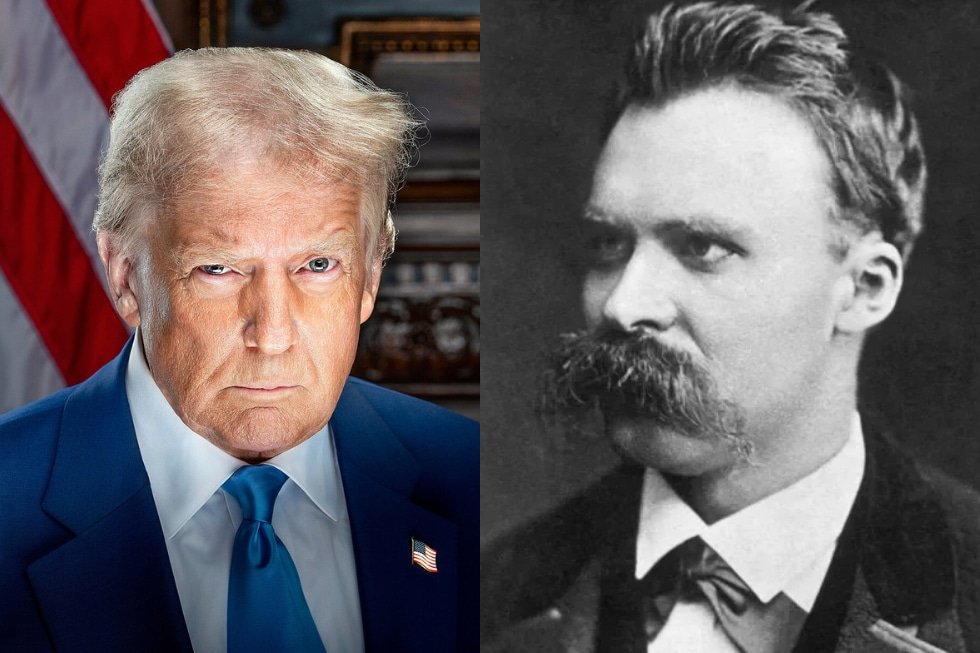
Trump’s brand of hobgoblin politics is, in many ways, the inevitable conclusion of a nearly forty-year project initiated by Newt Gingrich’s GOPAC memo to weaponize language in the service of tribal politics. Trump’s success relied, in part, on appealing to disaffected groups who believed America no longer worked for them. That perception provided fertile ground for grievance, polarization and the politics of resentment and retribution. But Trump would not have succeeded had the groundwork not already been laid.
Artificial intelligence as an accelerant
Advances in technology have had a disruptive effect on societies throughout history. Whether they had a net positive or negative effect depended less on the technology, per se, than on how it was deployed by its owner — and on the incentives and regulations that governed its use.
AI is already accelerating democratic fragility and decay in at least two important ways. The first is through recommendation algorithms. Social media platforms are designed to maximize engagement. Engagement drives advertising revenue and, therefore, profit. Recommendation algorithms have become extraordinarily adept at learning what captures our attention. Posts that evoke high-arousal emotions such as anger, outrage and fear in humans spread further and faster than calmer, more considered content. This creates a perverse incentive for social media platforms to amplify content that is corrosive to civility and democratic discourse. Like Gingrich’s ideologically encoded language, such content intensifies polarization, undermining trust and political legitimacy.
To compound the problem, generative AI has dramatically reduced the cost of deception by removing traditional barriers — time, effort and expertise — needed to develop content and has enhanced the perceived authenticity of that content. Political messaging that once required teams of designers, writers and translators can now be produced in minutes. Deception campaigns and propaganda can be hyper-targeted using publicly available data (e.g., users’ social media activity); they can also be adaptive, generating interactive messaging to enhance persuasiveness. Multilingual fluency further reduces the cost. For platforms optimized for engagement, this abundance of emotionally charged content is a boon to profitability, even as it further corrodes the digital public square.
Technology companies reinvest part of their profitability in lobbying to limit regulatory oversight, especially of AI, and to secure policies to facilitate the development of AI infrastructure. Many legislators concede that the “government lacks the knowledge and processes to regulate AI effectively,” adding to the challenge of constraining the corrosive impacts social media and AI are having on society.
University of Gothenburg’s V-Dem Institute Democracy Report 2025 notes that “disinformation is used … to purposefully inflate negative feelings and create a sense of distrust within the society, fueling polarization.” AI did not invent America’s hobgoblin politics. It industrialized it.
Industrial-scale AI-generated disinformation effectively targeted with recommendation algorithms can help trigger the authoritarian impulse of citizens already predisposed to believing democratic institutions no longer solve their problems.
Could democratic legitimacy be America’s version of Goliath’s curse?
In Goliath’s Curse: The History and Future of Societal Collapse, Luke Kemp, a research affiliate with the Centre for the Study of Existential Risk at Cambridge University, examines history through the lens of societal collapse. A “Goliath” is Kemp’s term for a collection of hierarchies organized through dominance and, often, violence (or the threat of violence) to allow some individuals to control energy and labor with the objective of capturing “lootable resources” — in modern terms, these would include fossil fuels, commodities, property and data.
Generative AI provides a powerful new engine to monetize data and human attention. That monetization enables the concentration of wealth and power while accelerating the degradation of democracy; this, in turn, weakens the constraints on further concentration of wealth and power. It’s a classic feedback loop.
According to Kemp’s research, the characteristics that precede a Goliath’s collapse are typically the concentration of power, the over-exploitation of labor by elites, and extreme wealth inequality. Military activity is often a contributing factor, as Goliaths seek to protect and expand the looted resources of those at the top of their hierarchies. War machines, inherently, demand hierarchy and resources, placing incremental stress on societies.
The irony is that, because Goliaths are extractive and hierarchical, success tends to breed rigidity and, with it, fragility. As power and wealth become increasingly concentrated, societies become less adaptable. Elites become insulated from the needs of citizens, who lose faith in institutions that no longer serve them. Historically, populations have responded by withdrawing their consent, emigrating where possible, resisting authority or, in some cases, rebelling against their rulers — “voting with feet and fire,” as Kemp puts it. The majority of humans, it transpires, have an aversion to dominance.
External shocks — droughts, pandemics, financial crises or wars — rarely topple healthy societies on their own. Rather, they expose existing frailties. Kemp argues that societies based on democratic principles tend to make better decisions because they draw on diverse perspectives, information and expertise. In that sense, democracy is not merely a political ideal; it’s a superior adaptive model.
In Kemp’s framing, the US is a quintessential Silicon Goliath. It is economically dominant with the largest share of nominal global GDP and nearly half of global equity market capitalization. Information technology alone represents approximately one-third of the S&P 500’s market capitalization, exceeding even the energy sector’s peak of around 29% in 1980. And the US has the most powerful — and expensive — military in the world and the second-largest nuclear arsenal (after Russia).
Does America exhibit the characteristics Kemp warns of?
According to the V-Dem Institute, American democracy has measurably decayed. In its 2025 report, the Institute notes that “Democracy took a beating during President Trump’s first time in office. The [Liberal Democracy Index (LDI) score] fell from 0.85 to 0.73.” Eighteen months into Trump’s second term, the V-Dem Institute’s Democracy Report 2026 noted the LDI has “plummeted” to 0.57, a level not seen since the civil rights era.
The forces driving today’s democratic decline, however, are profoundly different. The Institute attributes this deterioration to the concentration and expansion of presidential power, weakening oversight of the executive branch, attacks on the rule of law and suppression and intimidation of media and dissenting voices. Trump’s deployment of America’s war machine in Venezuela and Iran during Trump 2.0 illustrates the expansion of presidential power and weakening of congressional oversight.
The Center for Systemic Peace’s (CSP) Polity Project’s assessment is even more troubling than the V-Dem Institute’s. In 2016, as if with a nod to Madison, “CSP changed the coding for Political Competition in the USA to Factional Competition.” Then, in 2025, it downgraded the US from +8 to 0 on its polity index, reclassifying the country from a democracy to an anocracy, or partial democracy. It cited similar concerns to those identified by the V-Dem Institute and explicitly singled out the Supreme Court’s decision to grant presidents broad immunity as a basis for its assessment that the US was undergoing a regime transition. CSP’s announcement concluded:
The USA is no longer considered a democracy and lies at the cusp of autocracy; it has experienced a Presidental [sic] Coup and an Adverse Regime Change event. … The CSP COUP dataset lists an “attempted coup” (COUP=2) for the USA on 6 January 2021 and a successful coup (COUP=1) on 20 January 2025.
As the V-Dem 2026 report puts it: “The scale and speed of autocratization under the Trump administration are unprecedented in modern times.” That reclassification has implications beyond the health of American democracy. In How Civil Wars Start: And How to Stop Them, American political scientist Barbara F. Walter identifies a nation’s Polity score as the best predictor of instability, with peak risk occurring “smack in the middle of the zone — between -1 and +1.” The US now sits at 0.
Wealth and income inequality have been expanding over the past five decades. The US has a Wealth Gini coefficient, measuring inequality, of 0.83 on a scale of 0 to 1, placing it fourth highest among the G20 — behind Russia, Brazil, and South Africa. More disturbing is the extreme concentration of wealth among the top 1% of Americans, who control 29% of total wealth (almost half of that held by the top 0.1%). In contrast, the bottom half of Americans control a mere 5.3% of wealth, about half of that in real estate (i.e., typically in primary residences).
Extreme concentrations of wealth coupled with weak campaign finance laws allow elites to translate economic power into political influence. More than a century ago, President Theodore Roosevelt warned that government risked becoming the servant of capital. Elon Musk’s role in the 2024 election provides a glaring contemporary example of this risk. The May 2026 Brennan Center for Justice Corruption Survey found that 56% of voters believe that all or most government officials prioritize the interests of billionaires and big corporations over the interests of the public. Inevitably, this undermines democratic legitimacy.
Americans’ discontent with the nation’s trajectory is not just present in the surveys. It can be seen on the streets — in a series of “No Kings” protests held across the US since Trump’s inauguration in January 2025 to rebuff what organizers described as executive overreach, authoritarianism and the militarization of government. The significance of these protests lies not only in their size but in what they reveal: Millions of Americans increasingly question the concentration of executive power — an anathema to the founding idea of America. The consent of the governed cannot be taken for granted.
Decaying democracy undermines America’s international legitimacy
America’s international legitimacy has been crucial to its economic success. Across his two terms, Trump has undercut many of the international institutions and agreements that underpinned the post-war international order and America’s rise within it. These actions — and the capricious manner in which they have often been undertaken — have unsettled allies and raised questions about the reliability of the United States as a long-term trade and security partner. As international trust erodes, so, too, does America’s international legitimacy.
Why should citizens care about America’s international legitimacy?
One of the key benefits of America’s rise as a “Goliath” has been the US dollar’s adoption as the world’s dominant trading and reserve currency. Approximately 50% of international payments are in US dollars — roughly twice the US’s share of global GDP — and about 58% of the world’s foreign exchange reserves are held in dollar-denominated assets. That increased international demand for dollar assets lowers borrowing costs for the US Treasury, the world’s largest borrower with more than $40 trillion in total debt outstanding — about $117,600 per US resident (based on US Census data). Those benefits flow through the American economy in the form of cheaper mortgages, business loans, and consumer credit. International trust in America’s institutions, rule of law, financial markets and democracy has tangible economic value.
What happens if trust in these American institutions continues to erode?
The dollar’s privileged role in the global economy would gradually weaken as central banks and international investors continue to diversify away from dollar-denominated assets. This process is already underway; the dollar’s share of global foreign-exchange reserves has declined by around 14 percentage points since the turn of the century. Over the same period, all three major credit-rating agencies downgraded the US sovereign credit rating from their highest grade — S&P in 2011, Fitch in 2023 and Moody’s in 2025 — citing concerns that include persistent fiscal deficits, rising debt and an erosion of governance.
Weaker demand for US Treasuries would push up US dollar interest rates, increasing the government’s borrowing costs. Those higher rates and costs would impact Americans in two ways: First, through reduced government programs and higher taxes to service the ballooning national debt. And, second, through higher interest rates on mortgages, business loans and consumer credit. That would hit financially vulnerable households the hardest, reinforcing the perception that the government isn’t working for them, further undermining democratic legitimacy.
International and domestic legitimacy are not divorced; they are interconnected and mutually reinforcing. A decaying democracy erodes America’s international legitimacy. That leads to a decline in American prosperity, which further undermines democratic legitimacy. The question is whether that feedback loop can be broken.
America’s inflection point
America and the world are in uncharted territory. Democracy is ebbing around the world. More countries are simultaneously autocratizing in today’s “third wave of autocratization” than during any period of recorded history. In its 2026 study, the V-Dem Institute reports that “Nearly a quarter of the world’s nations (44) are now on the list of autocratizers”; 41% of the world’s population — about 3.4 billion people — now live in countries experiencing democratic decline.
America’s trajectory is especially alarming. Its democratic decay stands out even among prominent autocratizers of the past quarter century — including Russia, Turkey and India — because of its speed. The V-Dem Institute’s 2026 report notes its distinctive feature is that one party within a duopoly has embraced a “far-right, nationalist, and anti-pluralist agenda” while largely abdicating its constitutional responsibility to check the excesses of an increasingly unconstrained executive.
American democracy is decaying because its structural flaws have been exposed by the passage of time and by progress, allowing their exploitation to produce profoundly undemocratic outcomes. That has undermined trust in — and the legitimacy of — its democratic institutions.
The good news is that democracy possesses an advantage absent from most of the historical Goliaths Kemp studied: a peaceful mechanism for self-correction. Through free and fair elections (assuming they will be largely preserved), citizens can withdraw their consent, replace their representatives and change the trajectory of their nation.
With that in mind, where does America go from here? There are broadly three paths it could take:
The first path: democratic collapse
America continues on its present trajectory. The appurtenances of democracy may survive, as they have in other autocratic states such as Russia and Turkey, but election outcomes become increasingly hollow as legitimacy is further eroded. Executive power expands, dissent is suppressed and freedoms are progressively withdrawn. Political and economic power continues to concentrate around the leader and among compliant elites. This scenario may unfold rapidly if the assumption of free and fair elections no longer holds.
America’s international legitimacy would also erode, accelerating the realignment of global trade and security partnerships already underway. America’s stature as a global superpower would diminish. In time, so, too, would American prosperity. Ironically, globally mobile capital — and perhaps even some of the very elites who benefited most from America’s rise and contributed to its demise — could relocate to more stable democracies. But, as the V-Dem Institute’s Staffan Lindberg warns, “With the United States of America now turning into an autocracy, the future for remaining democracies is going to be challenging, to say the least.”
The second path: a dysfunctional and unstable anocracy
Democratic decay is arrested, but the underlying flaws remain and continue to undermine legitimacy and public trust. Executive power remains consolidated at roughly present levels, distorting the functioning of the three branches of government and permanently weakening Congress’s oversight. Corruption becomes entrenched. Toxic polarization continues — potentially worsens.
America devolves into a dysfunctional and unstable anocracy, with an elevated vulnerability to political violence. The risk of renewed democratic decay remains ever-present.
This path also risks further erosion of America’s international legitimacy and its role as a global superpower, coupled with protracted economic decline.
The third path: democratic reconstruction
America uses democracy’s greatest strength — its capacity for self-correction. But a word of caution: a narrow electoral victory by a pro-democracy party would be insufficient; it would likely leave the country on the second path — a dysfunctional and unstable anocracy in which the structural flaws remain intact.
History suggests societies rarely recover by restoring yesterday’s dysfunctional institutions. They recover by redesigning institutions that address today’s realities and prepare for tomorrow’s opportunities. If Americans — the governed — want to halt democratic decline, they would need to deliver a decisive electoral mandate for real change — one that gives representatives the democratic legitimacy and political authority to undertake the necessary reconstruction.
In the present American moment, one might be forgiven for believing that power and wealth will continue to centralize, that the arc of history bends towards autocracy, either through accelerated democratic collapse or a drawn-out descent. But that ignores the agency of the American citizen and their collective power to alter the country’s trajectory. Democratic reconstruction is not self-executing; reform requires citizens willing to defend democratic institutions, demand structural change and hold those who govern accountable.
That will be a herculean undertaking. It requires confronting the institutional weaknesses that have endured through the first 250 years of the American experiment and reconstructing America’s democratic architecture for the twenty-first century. That will take time. Trust and legitimacy are asymmetric: they can be lost in an instant but often take years — perhaps decades — to rebuild. America will need to stay the course.
How does America recover the consent of the governed?
At the outset, it was established that the consent of the governed must be continually renewed through institutions that are transparent, responsive, representative and worthy of public trust. Those same principles should therefore provide the framework for America’s democratic reconstruction. They are also consistent with internationally recognized principles of democratic governance.
Rather than delving into the minutiae of specific policy and legal reforms, the focus here is on the principles necessary to bring about America’s democratic reconstruction.
Restore representative government
Representative government requires citizens to believe that elections translate the will of the electorate into political outcomes that align with their expectations. That means restoring confidence that every citizen’s vote carries meaningful and equal weight.
Every citizen should enjoy an equal opportunity to participate in free and fair elections without unreasonable barriers or discrimination. Constitutional counter-majoritarian institutions should be reformed to uphold the democratic principle of political equality.
Electoral boundaries should be drawn independently of political actors to ensure that votes carry as close to equal weight as is practicable, promote competitive elections and produce representative outcomes rather than a predetermined partisan advantage. This responsibility, together with the oversight and administration of elections generally, should rest with independent electoral bodies to ensure impartiality and public confidence.
Electoral systems should encourage candidates to appeal beyond narrow partisan, ethnic or religious bases and reward coalition-building rather than political extremism while simultaneously ensuring that minorities are properly and equitably represented.
Restore responsive government
At the most fundamental level, representatives should be accountable to the citizens they serve rather than to concentrated economic interests. Their public fiduciary duty should include post-office restrictions to avoid any perception that public service is a pathway to private enrichment.
Campaign finance regulation should ensure that political influence reflects the democratic equality of citizens rather than disparities in wealth. Any permitted spending (including on public interest subjects) should be fully transparent so that citizens know who is seeking to influence them.
Digital platforms should be regulated to protect the integrity of the public square and restore civility. Their commercial incentives should not undermine democracy by rewarding outrage, deception or political extremism. Regulation should promote transparency regarding algorithmic recommendation systems, the provenance of AI-generated political content and the identity of those seeking to influence democratic debate while protecting freedom of expression without measuring it in dollars and cents.
Restore public trust
Restoring representative and responsive government will contribute meaningfully to restoring public trust in America’s democratic system. But additional elements will be necessary to fully restore that trust and ensure impartial accountability.
Judicial independence is a foundational principle of a democratic society. Citizens must have confidence that everyone is subject to the same laws and that those laws are enforced in a fair, impartial, just and transparent manner. Judicial appointment, tenure and removal should therefore be structured to protect the judiciary from partisan control and ensure that the law can be applied without fear or favor.
Societies are guided, for better or worse, by the ethos of the apex and by the cadence of leadership. Restoring civility to America’s political discourse must therefore begin with those who shape it. Codes of ethics and conduct should apply broadly to elected officials, public servants and the judiciary, establishing standards of behavior appropriate to public office.
That initiative should be paired with broad civic education to deepen citizens’ understanding of how their government functions, their role within it and how reconstructed institutions make government more representative and responsive to them.
America is at an inflection point. Its citizens can choose to allow their democracy to continue its decay, arrest that decay while leaving its underlying dysfunctions intact or invoke democracy’s self-correcting mechanism to reconstruct American democracy for the twenty-first century. The third of these paths is by far the most difficult, and its success uncertain. But it is the only path leading to a renewal of the consent of the governed and restoration of trust in America’s democratic institutions. And that is the only path that may lay the foundation for the next 250 years of American prosperity.
Americans will determine the fate of their democracy. But the consequences of their choice will reverberate far beyond America’s shores. We all have a stake in America’s success.
[Andrew Litz edited this piece.]
The views expressed in this article are the author’s own and do not necessarily reflect Fair Observer’s editorial policy.







Join the conversation
Share your perspective
Log in to share your thoughts and take part in the discussion.