





According to a June Pew Research survey, just 35% of respondents across 36 countries — essentially those where the US has been a reliable partner — still consider the US that partner. Meanwhile, only 23% expressed confidence in US President Donald Trump.
Moreover, another Pew Research study conducted in February–May across 10 European countries found that a majority in each nation surveyed lacks confidence in Trump. In eight of the ten, roughly three-quarters or more expressed that view. Significantly, even among extreme right-wing constituencies, mistrust in Trump prevailed.
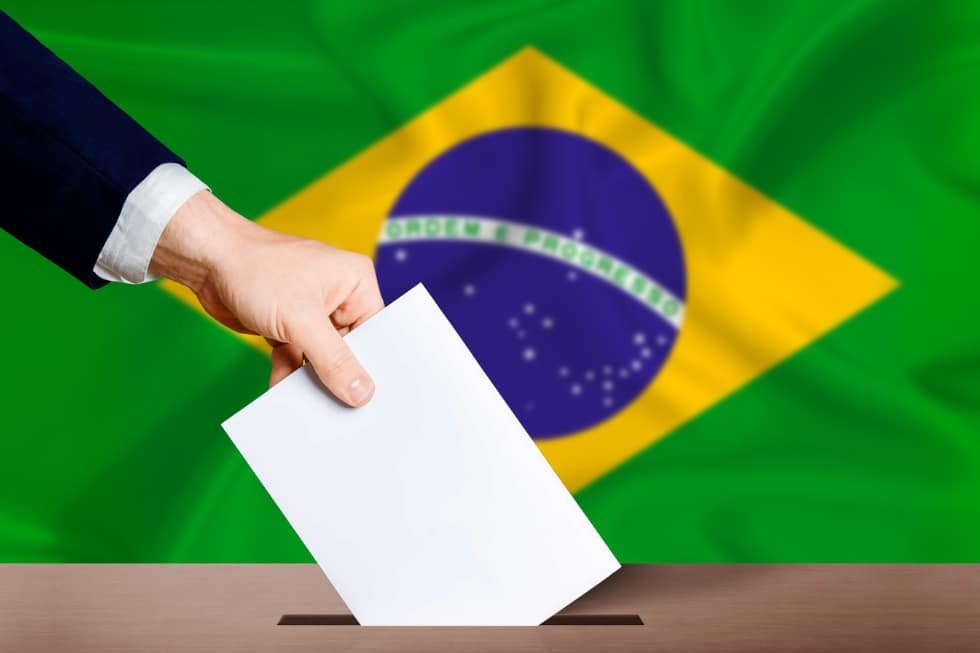
This mistrust is oddly absent from Latin America, where a significant number of right-wing candidates have won recent elections. With the first round of Brazil’s presidential election being October 4, we might see this trend continue. If so, Trump’s influence, which has already found its footing in Latin America, will grow even stronger.
Core supporters turning away
Not surprisingly, Europe’s far-right governments and parties have distanced themselves from Trump. Italy’s prime minister, Giorgia Meloni, the only European leader invited to his inauguration, had by mid-2026 fully disengaged from him. This was to the extent that Reuters described her trajectory as going from “Trump whisperer to Trump basher.” Jordan Bardella, the French National Rally’s number two, who was initially enthusiastic about Trump, ended up calling his European policy actions intolerable and erratic. Meanwhile, Tino Chrupalla, co-Chairman of Germany’s Alternative for Germany (AfD), chastised Trump’s “Wild West methods.” Even the UK’s Nigel Farage, who claimed to have been a long-time friend of Trump, described Trump’s European policy as the “biggest fracture” in the transatlantic relationship since the Suez crisis of 1956.
As Politico puts it:
European populist champions are turning away from a U.S. president they once openly admired. As Donald Trump escalates his attacks on the continent, his scorched-earth approach to transatlantic relations is becoming a political liability — even for leaders who previously benefited from their association with him.
While this happens, within the US, as The New York Times reports:
Forty days before the midterm elections, a growing number of Republican candidates across the country are openly seeking to distance themselves from President Trump, breaking with a leader who has long held an iron grip on his party … as Republicans struggle to overcome the unpopularity of the president and his signature policies. Mr. Trump approval rating is languishing near record lows … The movement away from Mr. Trump has stretched into some of the most consistently Republican states in the country.
MAGA’s best-selling brand
Hence, as a result of Trump’s actions and unpopularity both at home and abroad, close followers and allies are breaking away from him. Oddly enough, the Make America Great Again (MAGA) brand keeps being a best seller in Latin America. Indeed, pro-Trump candidates have won a string of recent presidential elections in the region, and most governments there explicitly align with him. This is unexpected, given that the Trump administration’s 2025 National Security Strategy and its 2026 National Defense Strategy reiterate the Monroe Doctrine and a Trump Corollary to it, the so-called “Donroe Doctrine,” which asserts a neo-imperial grip over the region.
Nothing more awkward, indeed, than the kind of popularity and support that Trump commands in a region historically scarred by US old-time imperial excesses. However, alignments are clearly there. They fall into two groups: core and strong supporters. The first group includes President Javier Milei in Argentina, President Nayib Bukele in El Salvador, President José Antonio Kast in Chile and President Abelardo De la Espriella in Colombia. The latter group includes President Daniel Noboa in Ecuador, President Rodrigo Paz in Bolivia, President José Raúl Mulino in Panama, President Santiago Peña in Paraguay and President Nasry Asfura in Honduras.
Several other governments have bent in the same direction, given the strength of the prevailing political wind. They are all members of Trump’s proposed initiative “Shield of the Americas.” And there is, of course, the case of Venezuela, which has been forcefully transformed into a US client State.
Will Brazil fall?
The main outliers within this scenario have been Brazil and Mexico, which have acted as bulkheads against the consolidation of a Trump heliocentric system. As the region’s two major countries, their reluctance to orbit Trump has somewhat contained his overwhelming influence.
However, Brazil will hold its first round of presidential elections on October 4. According to the polls, President Luiz Inácio Lula da Silva is in a statistical tie with Flavio Bolsonaro Jr., the son of Trump’s big pal during his first term in office. Should Bolsonaro win, the region’s sole remaining firewall against Trump’s grasp would be Mexico, which alone won’t be able to fulfill that role. This is because the country is constantly subjected to strong pressure from its powerful northern neighbor.
As Trump aims at imposing America’s neo-imperial grip upon the region by hook or by crook, the kind of support that he enjoys there is definitely helpful to his purpose. The fact is that in addition to its gigantic oil and gas reserves, Latin America tops, or is close to topping, the list of global reserves for several critical minerals. This is at a point in time when critical minerals are seen not just as commodities, but as instruments of geopolitical power.
However, for more than two decades, and while the US was missing in action, China had been strategically and patiently investing in the exploitation, mining and refining of those minerals. Trump wants to reverse that situation expeditiously. That is, by increasing the US’ control over their reserves and exploitation and by reducing the annoying Chinese encroachment. If these aims can be attained indirectly, through the actions of MAGA-friendly governments, the United States can undoubtedly benefit greatly.
The case of Brazil is telling. That country holds 21 million tons of the highly strategic rare earth reserves, second only to China’s 44 million and well ahead of India, which, as number three in world reserves, has 6.9 million tons. But Brazil also plays a leading role in relation to niobium, a critical mineral that enables modern technologies by strengthening materials with minimal weight increase. The country holds 98% of the world’s known reserves. And the list goes on.
Should Bolsonaro win the upcoming presidential election, the Donroe Doctrine’s objectives would receive an important boost. As US Army War College Professor R. Evans Ellis writes: “Brazil’s next President will play a key role in whether Brazil is a net contributor to China’s global monopoly in rare earth sourcing and refining, or a part of the solution.” The solution being, of course, giving preferential treatment to US interests and curtailing China’s ones.
How did Trump manage it?
But even if Lula were to electorally prevail, what Trump has already attained in Latin America is truly impressive. The fundamental question, then, is how he has managed to gain and keep such a following in the region. This is at a time when his unpopularity has skyrocketed, and his magic is fading even among core supporters.
A few reasons might explain why Trump policies have become so popular in ample sectors of the region’s society. Firstly, law and order propositions are favorably received amid the flourishing of insecurity, drug trafficking and organized crime. Secondly, restrictions against irregular migration are well seen when millions of Venezuelan migrants, escaping from their country’s economic collapse, have fled the region. Thirdly, hostility toward the political establishment is gaining strength, as perennial problems remain unresolved. Fourthly, counterbalancing a growing Chinese presence and influence is seen favorably, especially since America’s absence from the region for more than two decades has overshadowed the resentment that existed against it.
However, certain cultural issues in Latin America’s polarized societies have fueled populist movements inspired by MAGA’s propositions. First is the rejection of what is described as “woke ideology,” which encompasses feminism and gender equality, LGBTQ, diversity and inclusion programs, progressive approaches to education and cultural institutions, and environmentalism as an obstacle to economic development. Second is the defense of traditional family and Christian values, which includes, among others, opposition to abortion and resistance to the erosion of traditional gender roles. This has become an important populist tool to construct a moral distinction between a virtuous people and a corrupt political and cultural elite.
Third is the belief that strong leadership can overcome a dysfunctional political system. In other words, a leader who embodies national renewal can bring order and confront entrenched political interests. Fourth is a populist moral polarization where the people are confronted by a powerful elite and a corrupt establishment.
What will become of Trump’s wannabes?
As a result of the above, Trump’s wannabes have proliferated in Latin America. It is difficult to ascertain what their relationship with Washington would be, once the current occupant of the White House departs in less than 850 days. With a Democrat most likely replacing Trump, important cultural differences between the two sides would be in place. The relationship between Brazil’s President Jair Bolsonaro and former US President Joe Biden, once Trump’s first administration ended, may serve as a precedent.
Such a relationship was, indeed, extremely cold, ideologically antagonistic and diplomatically uneasy. However, it is likely that, notwithstanding the differences, any future Democratic administration will willingly accept the positional gains that the US might have obtained in Latin America during Trump’s second term.
In any case, one thing seems certain — amid Trump’s chaotic foreign policy, nowhere else on the planet has he been as successful in achieving his aims as in Latin America. And, given the fact that his avowed priority has been the Western Hemisphere, this should not be considered (Canada excluded, of course) as a minor attainment.
[Kaitlyn Diana edited this piece.]
The views expressed in this article are the author’s own and do not necessarily reflect Fair Observer’s editorial policy.
FO Talks: Lula vs Another Bolsonaro — Brazil’s 2026 Election
In this episode of FO Talks, Roberta Campani and Helder Ferreira do Vale examine Brazil’s presidential election between incumbent President...
Brazil’s 2026 Election Is Becoming a Competition for the Algorithm
Brazil’s 2026 election has pitted incumbent President Lula da Silva, Federal Senator Flávio Bolsonaro, and social media powerhouses Renan Santos...

FO Explainers: The Donroe Doctrine — The Future of the Western Hemisphere?
In this episode of FO Explainers, Atul Singh examines the Trump administration’s proposed “Donroe Doctrine,” tracing it from the Monroe...
Brazilian 2026 Election: Lula’s Soft Power Skills Threatened by a Hard-Power World
Brazil’s October election matches the polarized 2022 election, with incumbent Brazilian President Lula da Silva polling ahead of Senator Flávio...

Support Fair Observer
We rely on your support for our independence, diversity and quality.
For more than 10 years, Fair Observer has been free, fair and independent. No billionaire owns us, no advertisers control us. We are a reader-supported nonprofit. Unlike many other publications, we keep our content free for readers regardless of where they live or whether they can afford to pay. We have no paywalls and no ads.
In the post-truth era of fake news, echo chambers and filter bubbles, we publish a plurality of perspectives from around the world. Anyone can publish with us, but everyone goes through a rigorous editorial process. So, you get fact-checked, well-reasoned content instead of noise.
We publish 3,000+ voices from 90+ countries. We also conduct education and training programs
on subjects ranging from digital media and journalism to writing and critical thinking. This
doesn’t come cheap. Servers, editors, trainers and web developers cost
money.
Please consider supporting us on a regular basis as a recurring donor or a
sustaining member.
Will you support FO’s journalism?
We rely on your support for our independence, diversity and quality.





Comment