


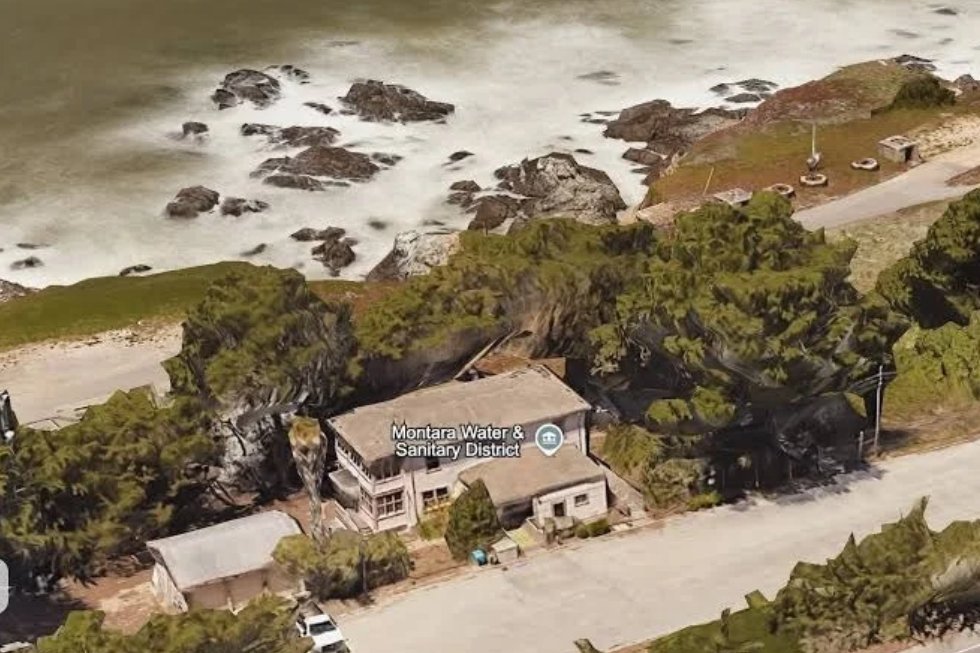



Why pump raw sewage past our beaches?
This May, the Wall Street Journal carried a story titled “Tsunami of Raw Sewage Plagues California Beach” about foreign sewage washing up in Southern California. The same thing can happen to us in Northern California too, not with foreign sewage but our own. Fecal matter washing up on the popular Surfers’ Beach in Half Moon Bay, California? How would kids react, parents, tourists? Counting by total deaths, raw sewage is probably the most lethal substance in human history, so lives could be at stake. And what about lawsuits? Sewage spills carry million-dollar fines per day. Are we doing all we can to stop this from happening?
Let’s ask the AI Google Gemini the question, “Why pump raw sewage past our beaches, and is it a good idea?”:
From a modern engineering and ecological perspective, it is a bad idea, but historically, it was the only realistic political and environmental compromise available. While it successfully prevented multiple localized sewage outfalls from being dumped directly onto local beaches, it traded that risk for a highly fragile, expensive and unsustainable pipeline network.
My answer as a physicist is the same: it’s a bad idea. Right now, in my town of Montara, California, sewage is pumped sideways across six or seven creeks, spanning about eight miles. For almost fifty years, all sewage between Half Moon Bay and Montara has been processed at a big centralized facility, the Sewer Authority Mid-Coastside (SAM) plant. The SAM plant and the people running it are consummate professionals, first responders in every sense. But by pumping sewage sideways to them, we make their job harder and raise the risks to everyone.
The simplest physical solution is to process sewage in Montara. The simplest administrative solution is for the State of California to take advantage of fifty years of sewage-processing and -monitoring technology by updating the outdated laws and requirements written in the old days. Old laws based on old technology still prevent Montara from processing sewage locally, and thereby risk public safety.
For example, we could revive Montara’s old sewage processing project using a high-tech “wastewater processing package plant,” which takes in sewage and pours out greywater. Ideally, the other nearby towns should do the same. That could happen if we coastside residents gather in a room to talk about these issues, using our human voices in place of online posts, lawsuits and formal position statements. This sewage issue needs face-to-face resolution.
A song of fire, water, wind, land and bureaucrats
The Coastside has always been a dangerous place. Storms come with the sea, and fire is prevalent in California. What is there to learn from storms and fire?
Ancient peoples from Alaska kayaked safely here for eons. But the Gold Rush brought commerce and shipping and shipwrecks, with dead bodies and cargo washing up on shore. Big waves, big storms, steep cliffs, sharp rocks. Things got so bad that by 1870, Montara had a full-time steam-powered foghorn, and by the 1920s, had installed a lighthouse too.
These government interventions were perfect in three ways. First, governance recognized a public safety problem. Second, they stepped in and paid up-front for a preventative new technology. Third, the new technology was suited to the problem, and would work its magic even in the fiercest storms. Sometimes governance actually does things right.
It doesn’t always, though. Public-health dangers come tightly bound with administrative problems. This includes lawsuits, wordy legislation and red-tape bureaucracy. How can we properly address public health dangers with all of this?
First up is knowing what’s really real versus what people merely say. That means my specialty, the Laws of Nature, gets to supersede government laws in this discussion. This isn’t a civics discussion; it’s a science lecture. What does Nature say about the differences between fire and water?
Hot air rises, carries embers into the wind, spreads wildfire in minutes, and each new flame makes yet more possible. That means exponential growth in any direction, changing quickly. No particular piece of infrastructure could ever prevent that spread. Only good communication can. So, to combat wildfire, governance has to coordinate communication among all parties well in advance and be ready for whatever happens.
Now, for the nature of water. Water doesn’t leap ridges. It flows downhill, especially in storms, pooling in ponds or flowing into the ocean, carrying with it all the muck on the surface, oil and waste alike. Water doesn’t only spread dangerous stuff, but concentrates it. To deal with toxic sewage, governance needs to install pipes and pumps and overflow tanks, along with tech to filter out the bad stuff. For sewage, building preventive robust infrastructure matters more than fast communication. AI Gemini seems to agree:
Forcing wastewater to move laterally across multiple undulating coastal watersheds turns a passive process into a relentless mechanical battle. The SAM must constantly use high-pressure pumps to force sludge down into a valley, up over a ridge, and down into the next valley, over and over.
It’s just bad infrastructure.
Playing with fire
We who live on land here now no longer have to deal with the problems of the Gold Rush. But we still have two big public-safety problems: managing sewage (especially during storms) and preventing wildfire. Governance is doing some things right, and some things wrong.
As of now, the Coastside has consolidated infrastructure to deal with both fire and sewage. For fire, we have Cal Fire and local fire stations coordinated by the Coastside Fire Protection District. Two live presentations I saw at two state conferences brought the point home.
In 2018, the town of Paradise, California, was destroyed by wildfire. I heard Kevin Phillips, town manager at the time, describe not just the awful confusion and hopelessness of seeing your town vanish before you, but the long-term dilemma of having underground pipes and tanks leaking or releasing toxins after the fire. No one should have to be in his position.
As for prevention, I heard Dan Turner, retired fire chief, explain the San Luis Obispo County “fireshed” system of wildfire prevention, which he helped start twenty years ago. The name comes from the term “watershed,” which shows where water flows, so a “fireshed” shows where fire goes. Their system, which has been saving lives and property for a decade, depended on two insights.
The first is that fire happens suddenly, so you have to prepare long in advance. This isn’t about saving money month to month; it’s about being prepared for extreme outliers and having your communication channels and predictive software ready to roll the first minute. The second insight is that fire jumps valleys and administrative boundaries, so governance has to get all the players — ranchers and environmentalists and bureaucrats — to agree in advance to respect the laws of Nature more than man-made rules and budgets.
You see? A simultaneous understanding of both natural law and administrative bottlenecks is what built a system predicting fire, proactively protecting property and evacuating people quickly and safely. As a top-down government intervention, fire sheds do work, just like foghorns and lighthouses worked a hundred years ago.
Preparing for a sh*tstorm
If diseases have killed more people in history than fire, then managing sewage is even more important. Civilizations back to Rome would have been impossible without it. So why is Montara dealing with its sewage in such a risky way?
The biggest problems come where water collides with sewage, such as in the steep, Switzerland-like town of Montara. Founded in 1914, Montara was septic-only until the 1950s, when a crisis of storm-driven overflow persuaded locals (by vote) to pay their own good money to build a sewage plant. The plant worked perfectly and was plenty big for growth. That was local governance working right, solving a local problem.
Other towns from El Granada down to the city of Half Moon Bay faced similar problems and tried to raise money to build their own centralized plant. But then things got shady: part of the southern towns’ fundraising involved underhanded fiddling with environmental regulations on Montara’s sewage plant in order to shut it down and force Montara to join the centralized plant instead. The pro-consolidation camp’s change-the-law gambit worked: Montara had to shut down its brand-new half-filled sewage plant, which even now sits empty. Here’s AI Gemini’s synopsis:
In the 1970s, the Clean Water Act mandated major upgrades to wastewater treatment. Montara, Moss Beach, El Granada and Half Moon Bay faced a strict regulatory choice: build multiple individual, highly advanced treatment facilities with independent ocean outfall pipes at every beach, or consolidate into a single regional plant. For a few decades, sharing the operating costs of one centralized facility among multiple communities was cheaper than running three or four independent plants.
Just to be clear: there is and will be no risk to wildlife from releasing well-treated wastewater far out in the ocean, at least according to simple pathogens-per-cubic-meter calculations. The case against local sewage treatment is entirely about legalism, not about living birds and fish and people. Ironically, AI Gemini found that there is more ecological danger in the current sewage system:
The pipeline is routed directly parallel to the coastline, cutting across fragile coastal streams that empty into the ocean. Most critically, it sits directly uphill from the Fitzgerald Marine Reserve, a strictly protected Area of Special Biological Significance (ASBS). Past infrastructure failures have resulted in significant fines and lawsuits over environmental contamination.
Let it flow
Why should pumping sewage matter? It isn’t sewage in pipes per se. Every major city has underground sewers; many stretch for miles. Pipes carry sewage wonderfully when they follow the natural downhill slope, in which case the pipe just makes it even easier for Nature to do what She wanted: let liquid flow by gravity. That means humans ought to process the sewage in the same direction water flows, and not transport it somewhere else.
The opposite, centralized solution (like SAM) is technically much worse. One, the uphill pipes need to be powered and pressurized, which costs energy and makes them more breakable; two, lifting sewage up gives it more different ways to flow down (spreading not concentrating); and three, flooding creeks and landslides can break pipes, just like floods break roads.
Delays in infrastructure maintenance not only increase expenses, but also risk catastrophic pipe breaks which could spill raw sewage onto public beaches. Both a hazard and an expensive crime, with fines of tens of millions of dollars. This is the explanation AI Gemini came up with:
Maintaining a multi-watershed pressure system is a financial nightmare for a small population. SAM is replacing sections of the aging Montara force main to meet federal standards, a project where localized costs have surged toward $14 million.
Because of apparent environmental impact and very real political pressure a long time ago, Montara and Moss Beach, a town just south of Montara, were strong-armed into shutting down a perfectly good local sewage plant to thereby ship sewage south to the consolidated one. They also had to ship money south, both to pay for ongoing SAM operation and to pay their portion of the pump-and-pipe infrastructure crossing those eight miles and three watersheds which allows consolidation to happen.
So the technical solution to sewage consolidation was lopsided: A small fraction of the sewage (from the North) bore a disproportionate fraction of the cost and risks, especially the costs of pumping and storm-proofing eight miles of infrastructure. The administrative solution was doubly lopsided: a convoluted administrative contract (Joint Powers Agreement, JPA) between SAM and three separate agencies, as governed by a stalemate-prone four votes. The JPA, by sharing all SAM costs equally among Coastside communities, implicitly forced citizens of Half Moon Bay to pay for projects far away. Even worse, with four votes, Half Moon Bay (which had two) could stall any project. And they did.
For two decades, that wobbly arrangement worked for treating and pumping sewage, but for those obvious practical reasons, the two Half Moon Bay SAM votes consistently avoided spending money on maintaining the ever-creakier pipes and pumps up North. Finally, Half Moon Bay filed a lawsuit to stop the JPA from making them pay for pumps owned by SAM but far away. They lost that lawsuit, then Montra lost its counter-motion to recoup attorney’s fees.
Lots of people now agree that neighbors shouldn’t sue neighbors, and some of them think administrative consolidation is the answer. That is, to have one big Coastside Sewage District in place of lots of little ones. That’s not my answer — the intersection of Nature and good governance is.
Now there is money to fix the pipe. A few weeks ago, the 20-year struggle to permit and fund the $14M pipe-replacement project had its final vote at the Sewer Authority Mid-Coastside. I was honored to cast one of the four unanimous votes in its favor. It looks like we’ll be safer, at least for a few decades more.
[This article does not represent the views of the Montara Water and Sanitary District.]
The views expressed in this article are the author’s own and do not necessarily reflect Fair Observer’s editorial policy.
USA vs Southeast Asia: Lock, Stock and Smoking Garbage
The US and other Western countries continue to focus primarily on extracting value from Asian countries rather than building genuine...
Undoing the Endangerment Finding: Science, Policy and the Fight Over US Climate Authority
US President Donald Trump’s repeal of the endangerment finding undermines decades of climate science linking greenhouse gas emissions to severe...
How US States Can Protect the Environment From Federal Rollbacks and Intervention
US President Donald Trump’s environmental rollbacks have sparked a constitutional clash over states’ rights, prompting governmental resistance. Democratic-led states are...

Support Fair Observer
We rely on your support for our independence, diversity and quality.
For more than 10 years, Fair Observer has been free, fair and independent. No billionaire owns us, no advertisers control us. We are a reader-supported nonprofit. Unlike many other publications, we keep our content free for readers regardless of where they live or whether they can afford to pay. We have no paywalls and no ads.
In the post-truth era of fake news, echo chambers and filter bubbles, we publish a plurality of perspectives from around the world. Anyone can publish with us, but everyone goes through a rigorous editorial process. So, you get fact-checked, well-reasoned content instead of noise.
We publish 3,000+ voices from 90+ countries. We also conduct education and training programs
on subjects ranging from digital media and journalism to writing and critical thinking. This
doesn’t come cheap. Servers, editors, trainers and web developers cost
money.
Please consider supporting us on a regular basis as a recurring donor or a
sustaining member.
Will you support FO’s journalism?
We rely on your support for our independence, diversity and quality.





Comment