





After the war with Spain at the turn of the 19th century, the United States occupied Cuba militarily, ushering in an era of tight tutelage over the island’s governments, international relations and political and economic life more broadly. The withdrawal of US military forces was followed by the Platt Amendment, under which Cuba agreed not to enter into treaties with other powers, not to incur debt without authorization, and to allow the United States to intervene militarily, including through the establishment of military bases, as was the case at Guantánamo.
The US occupation of 1898–1902 did not simply end with Cuba’s independence from Spain; it reconfigured the conditions under which that independence could be exercised. The Platt Amendment of 1901 established something extraordinarily novel: The United States could formally recognize a Latin American country’s independence while reserving legal rights to intervene in its internal affairs. The Amendment thus became the principal institutional instrument of US influence.
These provisions had to be incorporated into the Cuban Constitution, turning Cuba into an “independent” republic with limited sovereignty. The US carried out several military interventions, particularly in 1906 and 1909. President Franklin Delano Roosevelt repealed this mechanism, designed to give the United States strong military and economic influence over Cuba, in 1934 as a manifestation of the Good Neighbor Policy he launched in Latin America.
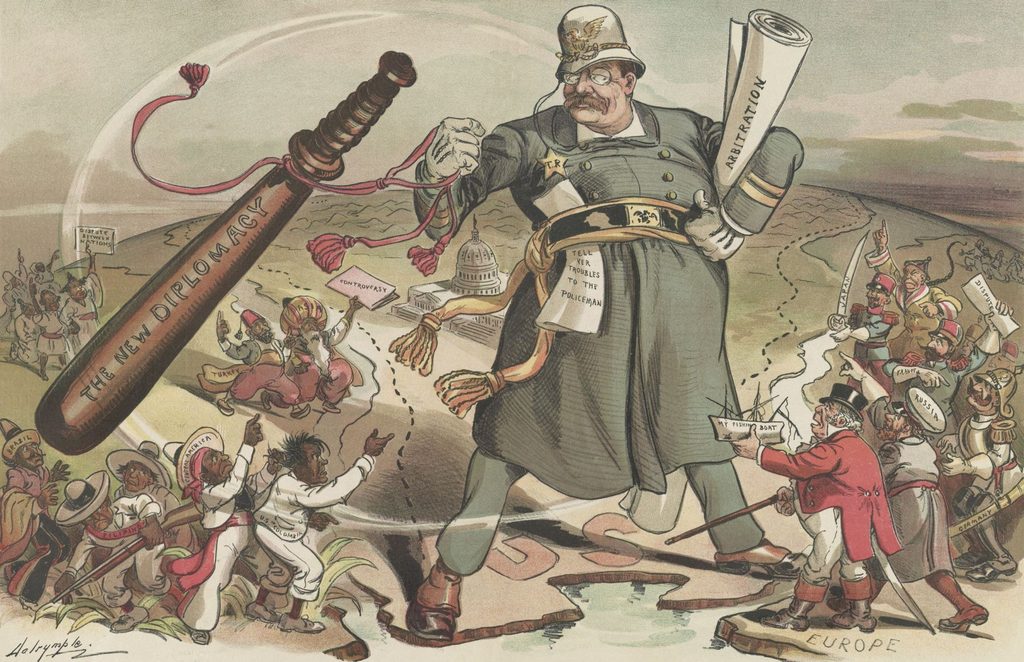
There is more. The Platt Amendment did not affect Cuba alone; it established an institutional framework and legal basis for successive US interventions in Latin America. The European powers’ blockade of Venezuela in 1902–1903 led to US mediation and the withdrawal of the European naval forces. Subsequently, the United States established what became known as the Roosevelt Corollary, which granted Washington the right to prevent intervention by other powers and to intervene directly whenever it considered that a country in the region was departing from the expected pattern. The US applied this approach in the Dominican Republic through control of customs revenues to guarantee debt payments and prevent European intervention. In Cuba, Washington institutionalized this relationship before withdrawing from the military occupation.
It is also clear that the possibility of US intervention eventually became embedded in the logic of Cuban domestic politics itself: Cuban actors began to calculate their strategies in light of what Washington might accept or reject. From a political science perspective, foreign intervention does not merely limit sovereignty from the outside; it also alters the behavior of domestic political actors from within.
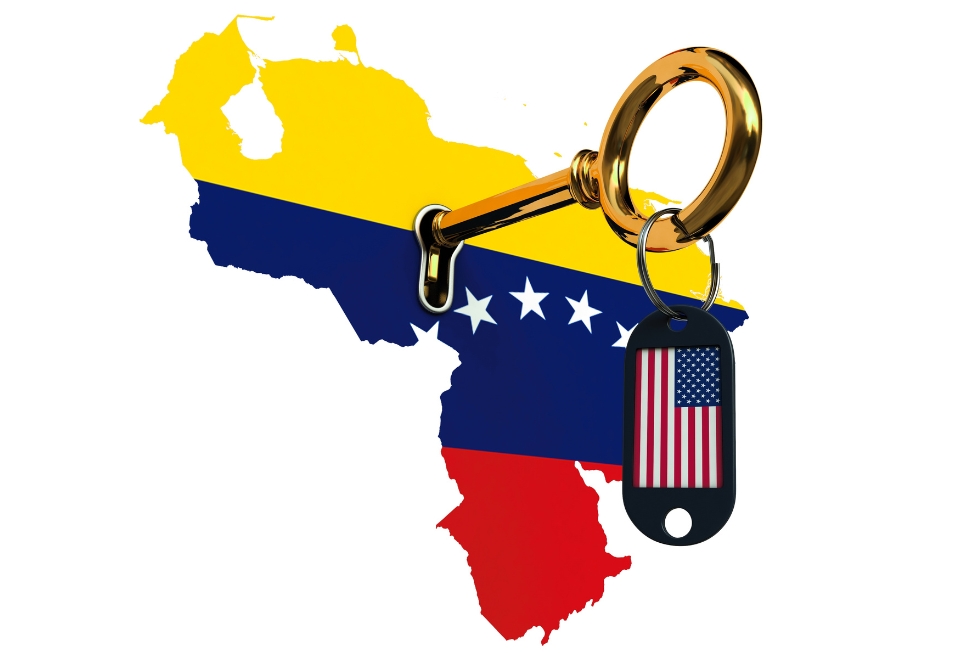
This context is highly relevant to Venezuela’s transition, given its asymmetric relationship with the United States.
Venezuela’s transition: two tracks, two speeds
Thus far, the transition process that opened in Venezuela following President Nicolás Maduro’s capture has proceeded along two tracks. The principal one has been the economic track, particularly oil, which is not only part of a vision of Venezuela’s new role in the region but also of the new US geopolitical strategy following US President Donald Trump’s return to power for a second administration. The second, weaker track has been political and institutional. It has revolved around the gradual release of thousands of political prisoners, the dismantling of Cuban influence, the removal of officials closely aligned with Maduro and, only more recently, the opening of negotiations between the government of interim President Delcy Rodríguez and the representatives of the 2015 National Assembly led by Dinorah Figuera.
The so-called Dialogue Table is seeking a comprehensive overhaul of the Supreme Tribunal of Justice and the mechanisms required to make it possible, the return of the gold held in England to address post-earthquake reconstruction and a new configuration of the National Electoral Council.
In recent days, the economic track has accelerated significantly, not only because of important decisions in telecommunications and a new oil plan, but also because of the legal and institutional framework within which these new decisions are to operate. Regarding telecommunications, the most controversial issue directly affecting the country’s sovereignty is that US law will apply to investments in the sector. This decision is, to say the least, unusual, given the degree of openness already provided for in Venezuela’s Telecommunications Law, which is considerably more liberal than that of any other Latin American country.
More recently, Venezuela and the United States launched a long-term oil agreement that would grant US companies highly advantageous exploitation rights for 100 years. At the time of writing, the agreement’s details remain unclear, but US Secretary of State Marco Rubio has presented it as a major victory for both the American and Venezuelan peoples. Yet a closer look at the agreement makes it clear that the royalties to be paid for exploiting the new oil fields would be, in the words of oil expert Francisco Monaldi, “unusually low” ($209 billion for 65 billion barrels represents approximately $3.20 per barrel).
Is Venezuela moving toward the Platt model?
If we consider the type of decisions and agreements being made in the economic sphere and their new legal foundations, as well as the continued and direct military presence, apparently operating outside the provisional government, it appears that Venezuela is gradually developing a model with significant similarities to the Platt Amendment through US control over various functions of the Venezuelan state:
- Limitations on international relations;
- Control over revenues and debt;
- Special privileges for US companies;
- Application of US law in Venezuela (in the telecommunications sector);
- Implicit military occupation since January 3, 2026.
In the strategic sectors of oil and telecommunications, under direct US control, the relationship resembles that established under the Platt Amendment. Although it does not approach the depth or scale of the direct domination imposed on Cuba, it is by no means an exaggeration to argue that what is taking shape in Venezuela is an application of the model used during the period of the Platt Amendment, but essentially in the economic sphere — particularly with regard to the management of Venezuela’s oil resources in both the short and long term.
The parallel also applies politically. The tutelage exercised by the United States directly affects the expectations and actions of domestic actors, who are beginning to calculate what response the external power exercising control over them might take to any of their actions or political positions. This has already occurred in Venezuela since January 3 and has become the key consideration shaping virtually every political decision made by both the provisional government and the principal opposition actors.
[Kaitlyn Diana edited this piece.]
The views expressed in this article are the author’s own and do not necessarily reflect Fair Observer’s editorial policy.
FO Explainers: The Donroe Doctrine — The Future of the Western Hemisphere?
In this episode of FO Explainers, Atul Singh examines the Trump administration’s proposed “Donroe Doctrine,” tracing it from the Monroe...
FO Exclusive: The Trump Administration Tries Regime Change and Oil Grab in Venezuela
In this section of the January 2026 episode of FO Exclusive, Atul Singh and Glenn Carle analyze US President Donald...
Beyond the Fog of War: Venezuela’s Democracy is at Stake
Venezuela faces a turning point after the capture of Nicolás Maduro by US forces, which shattered the balance of the...
The Trump Corollary: US Imperialism in Latin America From the Monroe Doctrine to Maduro
Washington is reviving its long-standing history of control in the Western Hemisphere by citing threats from Venezuela to justify military...

Support Fair Observer
We rely on your support for our independence, diversity and quality.
For more than 10 years, Fair Observer has been free, fair and independent. No billionaire owns us, no advertisers control us. We are a reader-supported nonprofit. Unlike many other publications, we keep our content free for readers regardless of where they live or whether they can afford to pay. We have no paywalls and no ads.
In the post-truth era of fake news, echo chambers and filter bubbles, we publish a plurality of perspectives from around the world. Anyone can publish with us, but everyone goes through a rigorous editorial process. So, you get fact-checked, well-reasoned content instead of noise.
We publish 3,000+ voices from 90+ countries. We also conduct education and training programs
on subjects ranging from digital media and journalism to writing and critical thinking. This
doesn’t come cheap. Servers, editors, trainers and web developers cost
money.
Please consider supporting us on a regular basis as a recurring donor or a
sustaining member.
Will you support FO’s journalism?
We rely on your support for our independence, diversity and quality.





Comment