


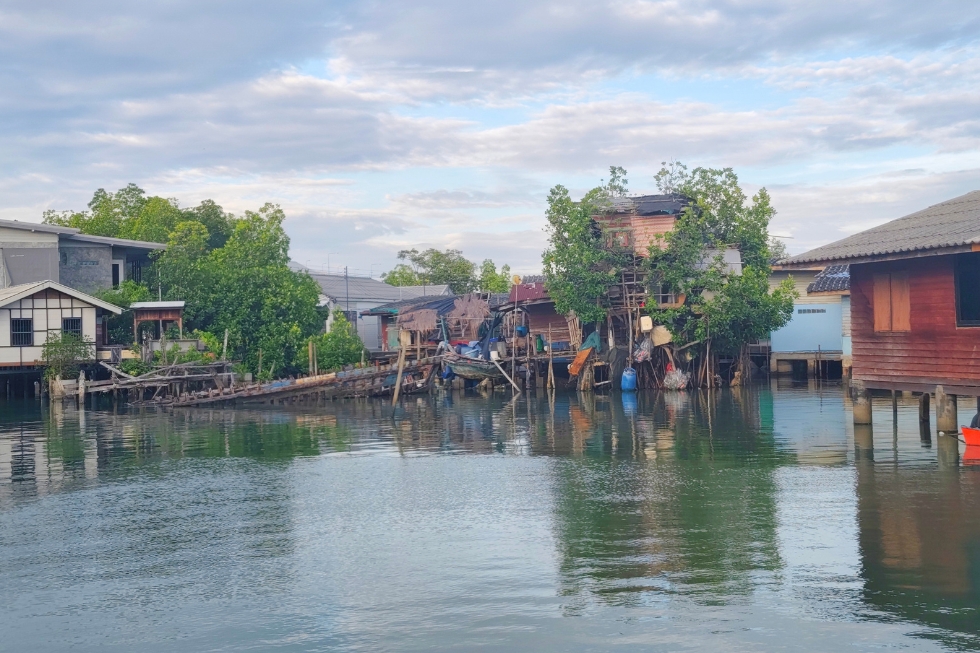



Nepal’s catastrophic flood of August 26, 2026, is first and foremost a human tragedy. By September 2, over 1,100 people had been confirmed dead and thousands missing. The flood, triggered by a massive collapse of rock and ice near Langtang Lirung mountain peak, also destroyed roads, bridges and hydropower facilities across northern and central Nepal.
The disaster serves as a geopolitical stress test. It struck precisely where two of Nepal’s long-running strategic dilemmas intersect: how to preserve autonomy between India and China, and how to turn geography between two major powers from a source of vulnerability into a source of leverage.
Kathmandu has long pursued a policy of strategic diversification. The objective is to widen Nepal’s room for maneuver by cultivating India and China. Successive governments have therefore deepened economic and infrastructure ties with Beijing while preserving the dense relationship with New Delhi.
The flood reveals the limits of that approach. Nepal can balance India and China diplomatically, but it cannot balance geography.
India’s geographic advantage
India’s advantage is structural. Nepal is tied to India through an open border, trade routes, electricity grids, labor mobility and long-standing social links. When the flood interrupted around 431 megawatts of Nepal’s electricity generation, the country halted power exports and again relied on imports from India. India also rapidly supplied specialized rescue and emergency assistance.
This is not simply evidence of Indian diplomatic influence. It demonstrates the depth of physical integration between the two countries. In a crisis, proximity becomes capability. India can move electricity, people, equipment and supplies into Nepal in ways that China, despite its financial and technological resources, cannot easily replicate across the Himalayas.
China’s role shifts to climate security
For Beijing, the picture is more complicated. One promise of closer China–Nepal relations has been to transform Nepal from “landlocked” to “land-linked.” Cross-Himalayan roads, border facilities and the proposed Kerung–Kathmandu railway were intended to improve connectivity and reduce Nepal’s overwhelming dependence on southern routes through India.
The flood exposed the fragility of that vision. The disaster badly affected the Gyirong border area, while northern trade corridors had already faced repeated disruptions. The proposed railway itself must cross some of the world’s most difficult geological terrain; even before the latest disaster, feasibility work highlighted seismic risks, landslides and complex engineering conditions.
Climate change now adds another layer of uncertainty. The issue is no longer simply whether engineers can overcome the Himalayas, but whether the risk assumptions underpinning infrastructure investment remain valid as glaciers retreat and mountain slopes become increasingly unstable.
Yet this does not mean China is becoming less important to Nepal. Its role may instead be changing. The flood underscored Nepal’s dependence on information from the north. Glacial instability, river flows and other hazards originating near or across the Tibetan border can become national-security problems in Nepal within minutes. Satellite imagery, hydrological data, glacier monitoring and transboundary early-warning mechanisms may therefore become as strategically significant as roads and railways.
This points towards a different form of China–Nepal interdependence: less focused exclusively on physical connectivity and more on climate security, data and disaster resilience.
Nepal aims for agency
For Kathmandu, the challenge becomes preventing these different dependencies from eroding strategic autonomy. The Shah government has so far largely retained Nepal’s traditional approach of balanced relations. Foreign Minister Shisir Khanal visited both India and China, while the government has reiterated its one-China policy. At the same time, Kathmandu sent diplomatic protests to both Beijing and New Delhi after India and China moved to resume the Kailash Mansarovar pilgrimage route through Lipulekh, territory administered by India but claimed by Nepal.
That episode illustrates an important point: Nepal does not merely want to play one neighbor against the other. It wants recognition of its own agency, including when India and China reach agreements affecting what Kathmandu considers its sovereign interests.
Reconstruction will test Nepal’s strategic autonomy
The reconstruction after the flood will test that agency. Billions of dollars will be needed for roads, bridges, electricity infrastructure and disaster-resilience systems. India and China will both have opportunities to finance, build and shape this reconstruction. Hydropower will be especially sensitive because India is Nepal’s principal electricity market while Chinese investment remains an important source of infrastructure finance.
The critical variable, however, will be Nepal’s own state capacity. Strategic diversification works only if Kathmandu can set priorities, regulate foreign investment, enforce resilient infrastructure standards and prevent emergency assistance from creating new long-term dependencies.
The flood therefore does not overturn Nepal’s balancing strategy, but exposes the asymmetry beneath it. India remains difficult to substitute because of geography and systemic integration. China remains indispensable in different domains, particularly northern connectivity, technology and increasingly climate-risk information.
Nepal’s strategic challenge after the disaster is to use relations with both to build national resilience without surrendering policy autonomy. In the Himalayas, climate change is making that task harder and turning disaster resilience into a new arena of geopolitics.
[Lee Thompson-Kolar edited this piece.]
The views expressed in this article are the author’s own and do not necessarily reflect Fair Observer’s editorial policy.
Same Warming, Different Disasters: Europe’s Heat, Pakistan’s Floods
Record heat waves are scorching Europe and the US, while Pakistan faces its most punishing monsoon floods in years. These...

A Nation’s Rivers Remember What Was Cut Away: Indonesia’s Flood Crisis
Legal deforestation has stripped Sumatra’s watersheds of natural flood defenses, turning extreme rainfall into a predictable humanitarian disaster. Plantation expansion...
Climate Change, Nightmare Flooding and the Love of Neighbor
Even as climate change leads to dangerous extreme weather events, human compassion steps in to protect the vulnerable.
Great Compassion Shines in Brazil Following Its Horrific Floods
Faced with its largest catastrophe, Brazil is uniting thousands of volunteers to help the devastated southern state of Rio Grande...

Support Fair Observer
We rely on your support for our independence, diversity and quality.
For more than 10 years, Fair Observer has been free, fair and independent. No billionaire owns us, no advertisers control us. We are a reader-supported nonprofit. Unlike many other publications, we keep our content free for readers regardless of where they live or whether they can afford to pay. We have no paywalls and no ads.
In the post-truth era of fake news, echo chambers and filter bubbles, we publish a plurality of perspectives from around the world. Anyone can publish with us, but everyone goes through a rigorous editorial process. So, you get fact-checked, well-reasoned content instead of noise.
We publish 3,000+ voices from 90+ countries. We also conduct education and training programs
on subjects ranging from digital media and journalism to writing and critical thinking. This
doesn’t come cheap. Servers, editors, trainers and web developers cost
money.
Please consider supporting us on a regular basis as a recurring donor or a
sustaining member.
Will you support FO’s journalism?
We rely on your support for our independence, diversity and quality.





Comment