

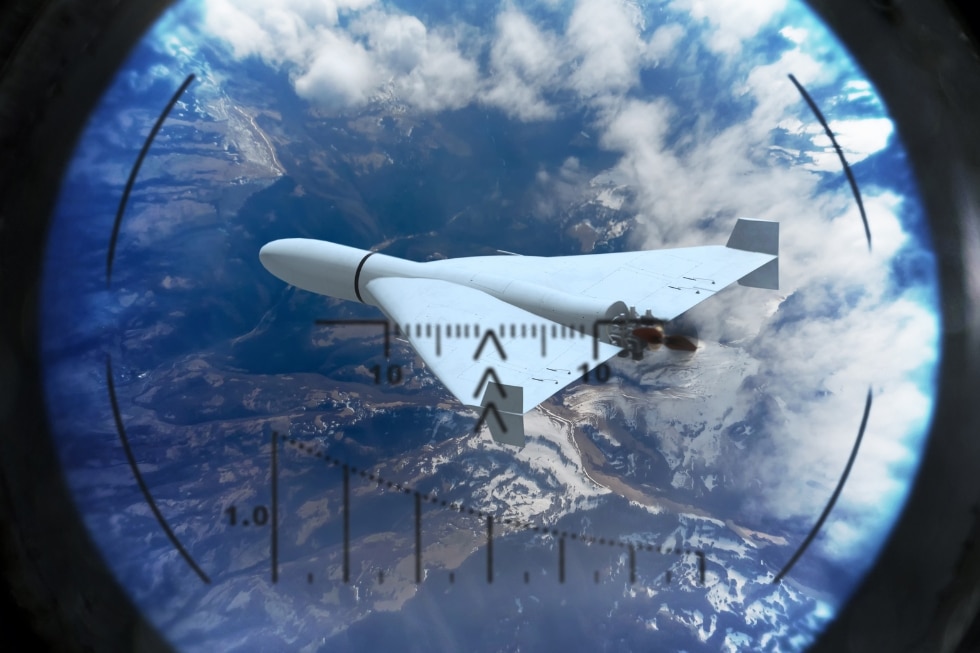



Rapid technological advancements have always outpaced the legal and ethical aspects related to warfare. The strategic bombers used in World War I preceded the laws on civilian targeting. The development and use of the nuclear bomb predated the drafting of the Non-Proliferation Treaty (NPT), which established the principal legal framework for international nuclear non-proliferation. Similarly, armed drones became a routine instrument of US foreign operations in areas such as Afghanistan, Pakistan, Yemen and Somalia. Legal experts continued to debate whether their use outside active war zones could be deemed unlawful. In each case, the deployment of technology established the facts on the ground long before diplomacy could develop legal frameworks, which were ultimately shaped by the states already in power.
The US/Israel war on Iran marked the latest, and perhaps most consequential, instance in that sequence. During the conflict, the US’ use of AI-enabled targeting reportedly enabled 13,000 strikes in the first 38 days alone. Even with this technological development, international law remained stagnant. The formation of a binding international treaty on autonomous weapons, which the UN Secretary-General had called for by 2026, remained stalled due to opposition from the major military powers that have been developing and using this technology.
The US–Iran drone war
On February 28, the US launched Operation Epic Fury — a large-scale military campaign against Iran that featured one of the US’ largest air-naval offensives in the region since the 2003 Iraq War. Aiding this operation was the Pentagon’s Maven Smart System, an AI-based data fusion platform that processes drone footage, satellite imagery and signals-based intelligence to identify and select targets across the battlespace. Within 24 hours, the operation struck over 1,000 targets and assassinated Iranian Supreme Leader Khamenei and several senior officials. The more revealing development, however, was the types of systems this AI supported: cruise missiles and cheap, small drones.
The recently formed US Central Command’s (CENTCOM) Task Force Scorpion Strike, created specifically to accelerate the acquisition and deployment of low-cost drones, flew the Low-cost Uncrewed Combat Attack Systems (LUCAS) into combat for the first time during this war. LUCAS, an inexpensive one-way attack drone, cost the US military approximately $35,000 per munition compared to more than $2.5 million for a single Tomahawk cruise missile. LUCAS represents a future where warfare increasingly employs cheap, mass-produced and AI-guided drones.
Iran responded in kind, countering with its own Shahed-136 swarms targeting the US Fifth Fleet headquarters in Bahrain. Both sides were now fighting with the same category of weapons, but the difference lies in the targeting systems behind them. This advantage was later highlighted by CENTCOM Commander Brad Cooper’s statement, where he credited AI tools as the main factor that allowed the force to “make faster decisions than the enemy.”
The growing role of AI-enabled drones in the future
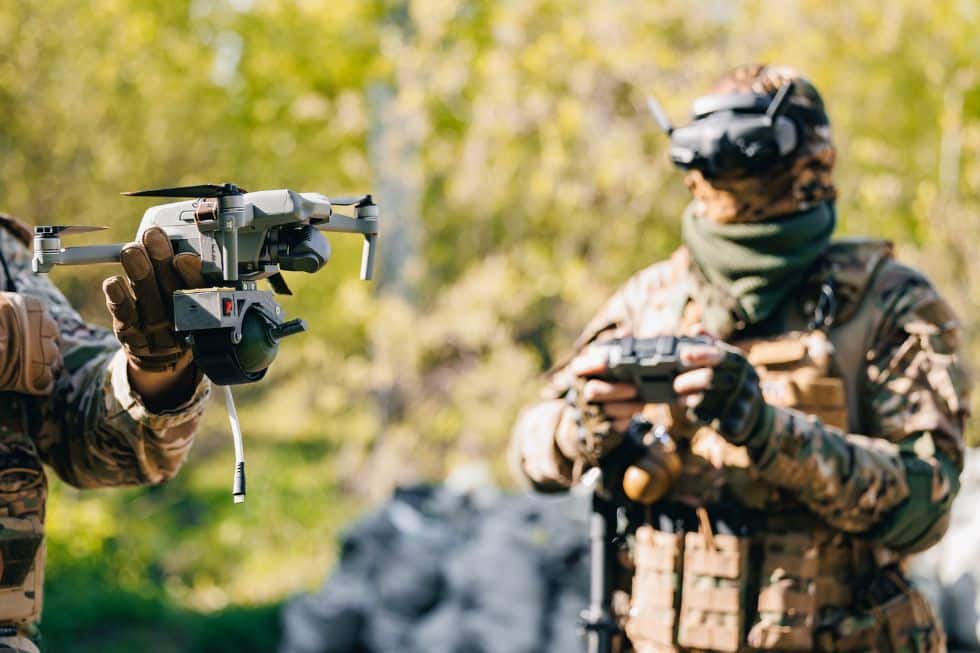
While both missiles and drones can be equipped with the same AI-driven targeting systems, they do not pose equivalent threats. Missiles, such as the US Tomahawk, are both expensive and finite, which is why states may prefer to produce and deploy them in limited quantities. In contrast, drones (with smaller airframes and commercial-grade sensors) are significantly cheaper, easier to produce and quicker to replace. This already makes them highly attractive for modern warfare, with the addition of AI further increasing their appeal.
Given the widespread use of drones by terrorist groups, this combination dramatically raises the risk of AI-enabled systems proliferating to non-state actors. Beyond that, deploying these drone platforms makes complying with International Humanitarian Law (IHL) much more difficult in comparison to missiles.
For instance, loitering munition operations can involve hours of surveillance over highly populated areas, and while AI pattern recognition can greatly aid in target selection, it can also increase the probability of misidentification. This, in turn, can have potentially disastrous consequences as the application of IHL (particularly the principle of distinction) in civilian-dense areas is already fraught with challenges such as the intermingling of combatants and civilians and the close proximity of military objectives to protected infrastructure.
Similarly, AI-enabled swarms can saturate air defenses in ways no single missile ever could, further constricting defenders’ reaction time. Iran’s Shahed barrage used against the Israeli and Gulf air defenses during Operation Epic Fury hinted at this vulnerability. The next generation of these systems could be more difficult to intercept and nearly impossible to attribute once the resulting debris is dispersed across borders.
This issue of escalation can also arise as AI targeting algorithms become more entwined with the strike platform. AI has already shortened decision cycles to seconds and is likely to compress them further. When AI identifies targets faster than operators can verify them, the likelihood of keeping a “human-in-the-loop” becomes slim, at which point following IHL (which assumes actions are both deliberate and traceable) becomes very challenging.
The governance issue and the need for change
It is important to note that the lack of a binding framework for this technology is not coincidental. The UN Convention on Certain Conventional Weapons (CCW) — the main international treaty that bans or restricts conventional weapons deemed to cause unnecessary suffering or indiscriminate harm — has debated autonomous weapons since 2014, but has yet to produce a viable solution due to the lack of consensus among states developing this technology. The same occurred in November 2025 when the UN General Assembly (UNGA) passed a resolution calling for the formation of a binding treaty, and major powers, such as Russia and the US, opposed it.
In order to achieve change, two things must be considered. First, negotiations must move outside the CCW’s consensus veto to prevent individual state interests from blocking regulations. Second, meaningful human oversight must be redefined to include a universal standard rather than relying on the dubious diligence of independent actors. While the ways of warfighting have always outpaced the law, the current gap results from systems deliberately preserved by the leading powers. As conflicts evolve to include even more actors and cheaper systems, the need for regulatory frameworks becomes urgent.
[Christian Audia edited this piece.]
The views expressed in this article are the author’s own and do not necessarily reflect Fair Observer’s editorial policy.






Join the conversation
Share your perspective
Log in to share your thoughts and take part in the discussion.