


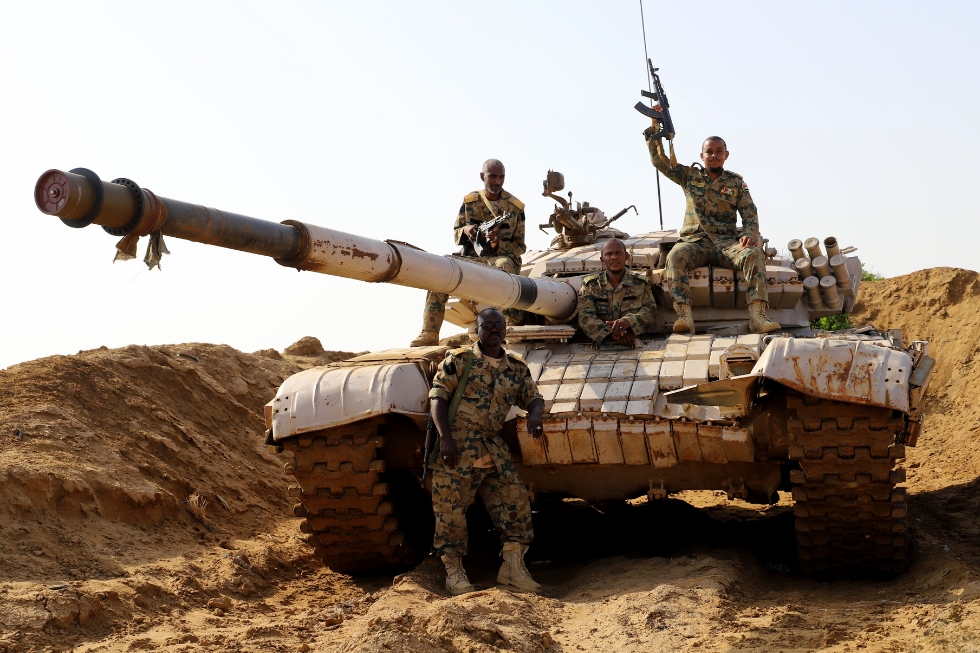



The Sudan war, which has raged since April 2023, may be at a tipping point. Reports suggest the first steps towards a dialogue to end the conflict, which is now one of the bloodiest in the world. “Participants in the consultations have agreed on the need to select a preparatory committee for the dialogue conference, made up of independent, widely accepted figures with specialised expertise,” al Jazeera reports.
“The committee would determine who takes part, the agenda, and the venue and date of the conference, as well as invite international and regional parties to monitor it, according to the political sources.”
Such reports have emerged regularly, but we have reasons to keep a flicker of optimism. For a start, the main rebel movement controlling western Sudan, the Rapid Support Forces (RSF), has suffered recent setbacks in fighting the Sudanese Armed Forces. The Armed Forces managed to hold off successive RSF attempts to take key locations in the Darfur region, the RSF’s main area of occupation.
However, equally important have been the international developments. The Sudanese conflict involves so many foreign actors that it is hard to classify it as a civil war. The Armed Forces receive support from Egypt, Saudi Arabia, Turkey and Eritrea. The RSF gets backing from allies in Chad, the Central African Republic, Ethiopia and — critically — the United Arab Emirates.
The International Crisis Group warns that the Sudanese war could drag the entire region into conflict. “Saudi officials have grown increasingly frustrated at the UAE’s support for the RSF as well as its blanket denials. They worry that civil war will end in Sudan’s disintegration or create a state of persistent conflict that would spill over into neighbouring states of strategic importance to Riyadh.”
For this reason, the Saudis have sent senior envoys to Chad, Ethiopia and South Sudan to convince them to “stand back from the war and stop arms from flowing across their borders to the RSF,” as the Crisis Group puts it. They urgently need this: Some 25 million people are desperately short of food and the death toll is estimated at between 150,000 and 400,000.
The UAE’s critical role
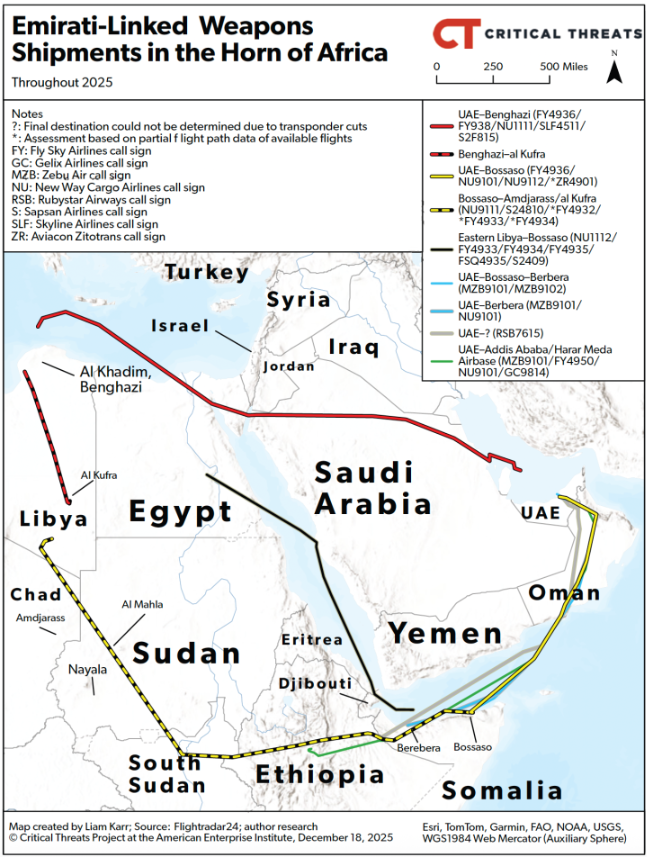
We cannot overstate how important the UAE is to this conflict. The Financial Times reported that when the RSF seized the Sudanese capital, Khartoum, in April 2023, the rebels seized no less than 1.5 tons of gold from the state’s gold refinery and flew to the UAE. This haul alone measured in at $100 million in value, and was by no means the last. Describing this as part of an “Imperial push” into Africa, the FT concluded that, “The UAE is creating a complex system of commercial, industrial and military entanglements that sometimes reinforce but also undermine the sovereignty of fragile states — most notably in war-torn Sudan.”
The RSF’s relationship with the UAE has its leadership, from Mohammad Hamdan Dagalo Mousa (or “Hemedti”) downwards, to establish a series of businesses to diversify and internationalize their interests through holdings in the UAE capital of Abu Dhabi. Some say Hemedti sits at the apex of a “paramilitary-industrial complex,” in charge of both the RSF and a multinational business network, according to an investigation by The Sentry.
The UAE’s supply chain for the RSF involves a complex network of links which flow through Somaliland, Uganda, Chad and the Central African Republic. In recent months, Ethiopia has offered the RSF a base of operations in western Ethiopia.
Reports of the base came over months, but in January, Reuters described it in detail. “Ethiopia is hosting a secret camp to train thousands of fighters for the Rapid Support Forces paramilitary group in neighbouring Sudan, Reuters reporting has found, in the latest sign that one of the world’s deadliest conflicts is sucking in regional powers from Africa and the Middle East.”
The threat of a regional conflict
With so many interests involved, we face a very real threat of Sudan’s war sparking a conflict across the Horn of Africa and the Red Sea. Tensions exist between many of these nations and it is difficult to predict how a war might spread.
For example, Eritrea now points daggers with Ethiopia. This is a complete reversal of the position that existed during the 2020–2022 war in the northern Ethiopian region of Tigray, which saw the Ethiopian capital of Addis Ababa and the Eritrean capital of Asmara united to try to crush the Tigrayans. Some 600,000 died in the fighting. Yet today, the dominant party in Tigray allies itself with Eritrea, and has links with other Ethiopian and Sudanese rebel movements. In the past week, a conflict flared between Tigray and Ethiopia on the border with Sudan. It turned out to be a single clash, but it could have escalated into a regional conflagration.
While these tensions and maneuvers play out, the innocents of Sudan pay the price. Authorities have uncovered mass graves containing women, children and hospital staff that the RSF executed. This is just one of many mass murders; the Armed Forces are also responsible for similar atrocities. For this reason alone, the people desperately need the war to end.
Can the regional powers persuade the warring parties to bury the hatchet? This might be possible, but the Trump administration’s obsession with its war with Iran and attempting to find a solution for Gaza is consuming much of Washington’s attention. It is, of course, possible that Saudi Arabia, with so much at stake in the region, could use the absence of the Americans to take the lead. But this would put the Saudi capital of Riyadh in the spotlight and highlight its difficulties with the UAE. That is an uncomfortable position for Saudi Crown Prince Mohammed bin Salman, but perhaps one he is willing to embrace to be crowned a regional peacemaker.
[Lee Thompson-Kolar edited this piece.]
The views expressed in this article are the author’s own and do not necessarily reflect Fair Observer’s editorial policy.
Riyadh’s Sudan Contradiction: Mediator by Day, Arms Broker by Night
Saudi Arabia’s role in Sudan’s war reveals a stark contradiction: It positions itself as a neutral mediator, while also allegedly...
Sudan’s Shadow War Has a Diplomatic Problem
Last month, the Egyptian, Saudi and Turkish foreign ministers met in Cairo to discuss the ongoing crisis in Sudan. Notably...
The Deadliest War You’re Not Hearing About
The war in Sudan has become the world's largest humanitarian crisis, marked by famine, massive displacement and genocidal violence. Despite...
In Sudan, Millions Cry Out. Silence is Their Answer
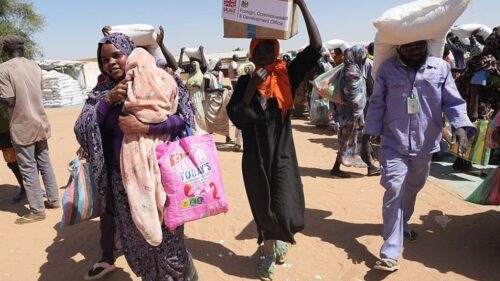
Sudan's civil war has escalated into one of the world's worst humanitarian crises, entering its fourth year with no resolution...
The Sudan War: Why It Cannot Be Resolved
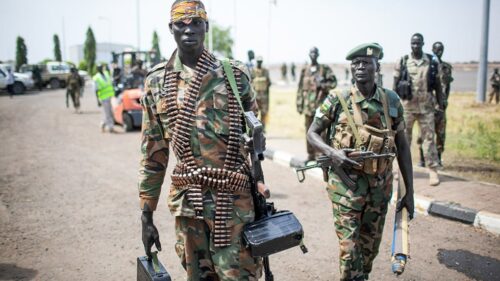
The Sudanese Armed Forces (SAF) and the Rapid Support Forces (RSF) are fighting for power amid deep ethnic and regional...
Support Fair Observer
We rely on your support for our independence, diversity and quality.
For more than 10 years, Fair Observer has been free, fair and independent. No billionaire owns us, no advertisers control us. We are a reader-supported nonprofit. Unlike many other publications, we keep our content free for readers regardless of where they live or whether they can afford to pay. We have no paywalls and no ads.
In the post-truth era of fake news, echo chambers and filter bubbles, we publish a plurality of perspectives from around the world. Anyone can publish with us, but everyone goes through a rigorous editorial process. So, you get fact-checked, well-reasoned content instead of noise.
We publish 3,000+ voices from 90+ countries. We also conduct education and training programs
on subjects ranging from digital media and journalism to writing and critical thinking. This
doesn’t come cheap. Servers, editors, trainers and web developers cost
money.
Please consider supporting us on a regular basis as a recurring donor or a
sustaining member.
Will you support FO’s journalism?
We rely on your support for our independence, diversity and quality.





Comment