

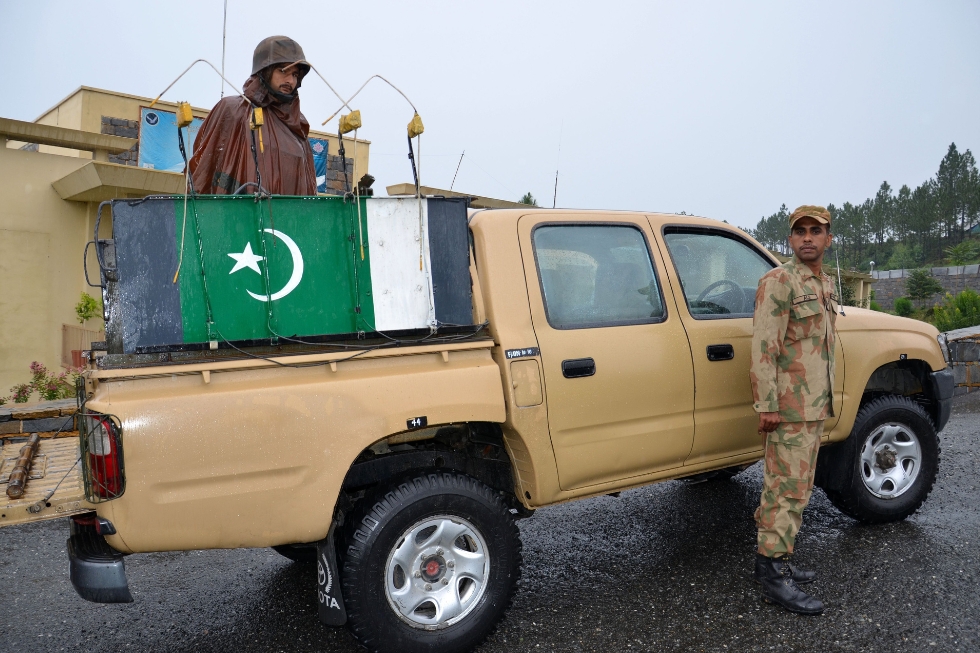



On August 2, 2026, a suicide bomber detonated his explosives at the entrance to the Kabal police station in Pakistan’s Swat Valley. The blast hit a large public protest against renewed militancy in the adjoining square. The latest figures account for 17 dead, seven police officers and ten civilians, and at least 34 people injured. Officials revised those figures several times during the first day of reporting, illustrating the difficulty of establishing even the basic facts in the immediate aftermath of a major attack.
The Tehrik-i-Taliban Pakistan (TTP) claimed responsibility and described the bombing as an attack on the police. Pakistani investigators said the bomber detonated after officers stopped him at the station’s entrance. The identity of the protest’s organizers remains unclear: Reports variously referred to local residents, civil-society organizations and peace activists. What is clear, however, is that the attack struck at the point where state security institutions and civilian mobilization against militancy physically converged.
The bombing has revived a familiar question: Is Swat returning to the insurgency that engulfed the valley between 2007 and 2009?
The available evidence does not support that conclusion. The TTP is not openly administering territory, operating parallel courts or enforcing curfews across Swat. The more significant problem is different. Pakistan defeated the insurgents’ territorial project in 2009, but the transition from military stabilization to durable civilian consolidation stayed incomplete.
To understand why this matters, we must look beyond the conventional explanation that militancy simply spilled into Swat from Afghanistan.
A local crisis before a regional insurgency
The political roots of the Swat insurgency predate both the TTP and the Afghan Taliban’s rise to power. In 1969, the former princely state of Swat’s integration into Pakistan saw its comparatively swift judicial and administrative system dismantled without equally effective civilian institutions rising to replace it.
Swat entered into the Provincially Administered Tribal Areas framework, which restricted the ordinary extension of provincial legislation and judicial authority. Residents who had previously relied on the Wali’s centralized courts increasingly encountered a slower and more distant legal system. Disputes could go unresolved for years. Later reforms, including the administrative restructuring introduced under Pakistani President Pervez Musharraf in the early 2000s, further altered relations among the police, magistracy and local administration.
Militancy did not spring solely from this institutional disruption. Inequality in land ownership, political exclusion and local class conflict also contributed to mobilization. But the failure to provide accessible and credible justice created an opening that Islamist movements could exploit.
The Tehreek-e-Nafaz-e-Shariat-e-Mohammadi (TNSM) emerged in the early 1990s and led an armed uprising in Malakand in 1994, before the Afghan Taliban captured Kabul in 1996. Its demand for the implementation of Islamic law appealed to both ideological supporters and residents frustrated by judicial delay and weak governance.
Afghanistan later transformed this local movement. Militant networks, battlefield experience and the ideological appeal of the Afghan jihad strengthened armed actors in Swat. Under emir Maulana Fazlullah, the TNSM integrated its local infrastructure into the wider Pakistani Taliban insurgency. But the Afghan conflict intersected with an existing crisis of state authority; it did not create that crisis from nothing.
Military success, incomplete consolidation
Between 2007 and early 2009, Pakistan launched three rounds of Operation Rah-e-Haq in an effort to restore control. These operations repeatedly pushed militants back but failed to prevent their return. In February 2009, the provincial government reached the Swat Peace Accord, followed in April by the Nizam-e-Adl Regulation, which introduced a Sharia-based judicial framework in Malakand. The agreement collapsed as militants expanded their presence beyond Swat.
The army then launched Operation Rah-e-Rast in May 2009. The campaign dismantled the militants’ territorial control and restored the state’s physical presence. It also contributed to one of the largest displacement crises in Pakistan’s history: Fighting in northwestern Pakistan displaced up to 2.7 million people that year, United Nations reporting estimates.
Militarily, Rah-e-Rast succeeded. The insurgents could no longer govern Swat openly, and most displaced residents eventually returned. Yet the longer institutional transition proved much slower. The army formally transferred administrative and security responsibility back to civilian authorities only in October 2018, more than a decade after its intervention.
The familiar counterinsurgency formula of “clear, hold, build” therefore captures only part of the experience. Pakistan cleared the valley and held it for years. The unresolved question concerns the “build” phase: whether policing, justice, local administration and political legitimacy became strong enough to prevent militant regeneration without a prolonged military presence.
This does not mean that the state failed to gain legitimacy in 2009. The military campaign’s success required public opposition to Taliban violence. The problem is that legitimacy obtained during an emergency needs the state to sustain it through subsequent civilian performance. Military victory created an opportunity for institutional consolidation; it did not guarantee it.
Coercion without territorial control
The contemporary threat in Swat is not identical to that of 2007–2009. The TTP has not reestablished a visible system of territorial administration. Its present repertoire relies more heavily on attacks against police, selective assassinations, intimidation and coercion directed at people associated with the state.
This is not an entirely new method. Militants targeted alleged informants and members of local defense committees during and after the earlier insurgency. We can best understand the change as one of relative emphasis, not as a complete strategic transformation. Violence against local intermediaries has become more important in an environment where the TTP lacks the capacity — or perhaps the immediate intention — to govern Swat openly.
The distinction matters. An insurgent organization that cannot hold territory may turn to intimidation because it has few alternatives. But repeated attacks on local intermediaries can still produce a strategic effect: They increase the personal cost of cooperating with the state. The 2026 data point to precisely this danger. According to the Pakistan Institute for Conflict and Security Studies, July alone saw 19 members of pro-government peace committees killed, the highest monthly figure in a decade. The organization recorded 32 such deaths during the first seven months of 2026. July also saw 112 security personnel killed, while Pakistani operations reportedly killed 401 militants.
These figures reveal an uncomfortable imbalance. High militant fatalities demonstrate the intensity of Pakistan’s intelligence-led and military operations, including the broader Azm-i-Istehkam counterterrorism campaign launched in 2024. They do not, by themselves, demonstrate that the insurgency is losing its ability to recruit, intimidate or disrupt local cooperation. The Center for Research and Security Studies recorded 475 violence-related deaths in Khyber Pakhtunkhwa during the second quarter of 2026, a 53% increase from the preceding quarter. Tactical pressure on militant networks has therefore coexisted with a worsening security environment.
We must assess the Kabal attack within this wider pattern. The TTP’s own statement framed the police as its target, and there exists insufficient evidence to claim that the organization primarily intended to attack the protest. Yet the timing and location ensured that the bombing would also intimidate residents mobilizing publicly against militancy. The attack’s broader significance lies not in proving a new TTP strategy from a single event, but in showing how attacks on security institutions increasingly threaten the civilian networks surrounding them.
Afghanistan is now part of an interstate conflict
The regional context has also changed sharply. Since the Afghan Taliban returned to power in 2021, Islamabad has accused Kabul of allowing the TTP to retain bases and operational freedom in Afghanistan. The Taliban government denies supporting cross-border attacks.
United Nations monitoring reports have nevertheless described the TTP as one of the largest militant organizations operating from Afghan territory and have reported that it enjoys considerable freedom of movement and access to support. We must treat these assessments cautiously because they rely partly on information supplied by UN member states, including Pakistan. Even so, we can no longer reduce the evidence of a substantial TTP presence in Afghanistan to a simple exchange of Pakistani accusations and Taliban denials.
By late 2025, this dispute had developed into a direct interstate confrontation. Pakistan carried out airstrikes in Kabul in October 2025, reportedly targeting TTP leadership. Border clashes, failed ceasefires and further strikes followed. Pakistan announced Operation Ghazab lil-Haq in February 2026 and expanded attacks inside Afghanistan. On March 16, a Pakistani strike in Kabul caused extensive civilian casualties; the Afghanistan Analysts Network reported that the United Nations had recorded more than 140 deaths.
Afghan sanctuary therefore proves an important enabling condition for the TTP’s resurgence. It is not, however, a complete explanation. Cross-border access cannot by itself explain why militants can intimidate communities, exploit governance gaps or weaken cooperation with the state inside Pakistan. The external and domestic dimensions reinforce one another.
Pakistan’s unfinished war
The Kabal bombing does not show that Taliban rule has returned to Swat. Evidence of openly functioning parallel courts, fixed taxation checkpoints or militant-enforced curfews would support such a conclusion. We do not presently see those indicators.
What the attack demonstrates is more limited but still serious. Fifteen years after the army dismantled the TTP’s territorial control, the Pakistani state is once again struggling to protect both its security personnel and the local actors who publicly oppose militancy.
The central challenge is no longer simply clearing militants from territory. It is preserving the willingness of residents to cooperate with the state when that cooperation makes them targets. Pakistan won the battle for Swat in 2009. Whether it built the civilian institutions required to secure that victory remains an open question. That rather than the simplistic narrative of a Taliban “return” is the unfinished war exposed by the Kabal bombing.
[Lee Thompson-Kolar edited this piece.]
The views expressed in this article are the author’s own and do not necessarily reflect Fair Observer’s editorial policy.






Join the conversation
Share your perspective
Log in to share your thoughts and take part in the discussion.