


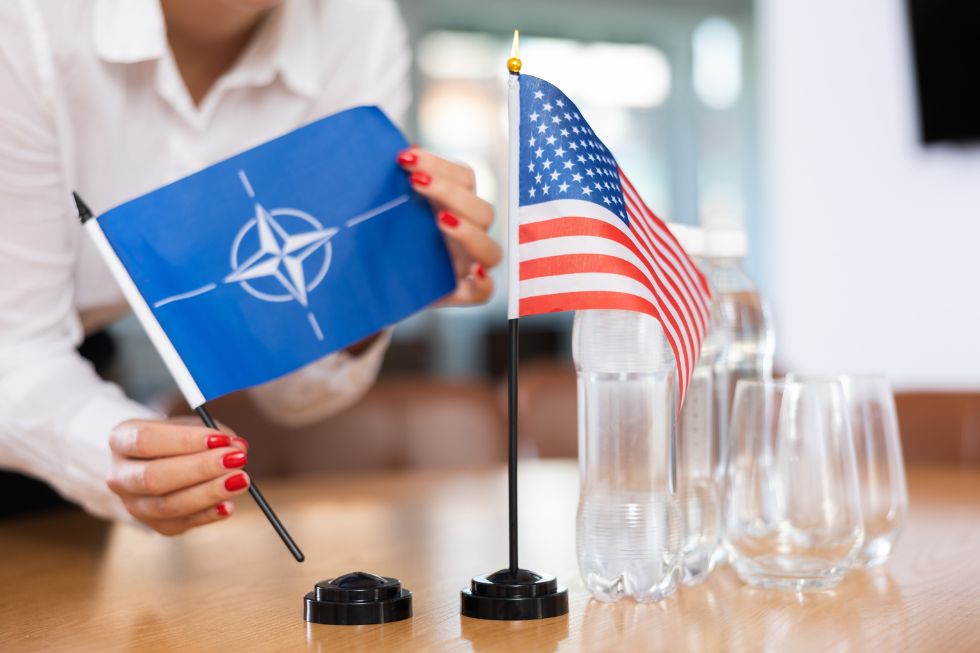



Recent NATO Summit coverage remains focused on trade and spending, but its most crucial outcome is US President Donald Trump’s meeting with Syria’s interim president, former Sunni extremist leader, Ahmed al-Sharaa. The meeting serves as a step towards diplomatic relations with a formerly hostile country, as well as a strategic buffer against Iran following a recent round of mutual strikes.
The consequential meeting also reshapes Turkey’s strategy and checks Erdogan’s pragmatic relations with Iran. Ankara unintentionally faced high pressure to align with its Western allies as the Summit’s host, leaving less space to publicly accommodate the Islamic Regime without undermining its increased stature within NATO.
Trump’s consistent push for Europe to assume more responsibility within NATO was a large point on the agenda, reflecting a general shift away from ambiguous US military commitments in the region as stated in the National Security Strategy released November 2025. The question is no longer whether the US should detach from physically policing the world, but how. A potential reduction of the American military footprint in the Middle East and Europe should not be seen as a retreat, but as an opportunity to replace the cycle of warfare with sustained diplomacy.
Signaling new US–Syria relations
President Trump’s meeting with Syrian representatives serves as a test of this opportunity. The US has maintained a military presence in Syria since the Arab Spring protests over a decade ago, ultimately leading to a chaotic regime change. To avoid repeating the catastrophic mistakes of Afghanistan, a successful military withdrawal and diplomatic transition should be measured by concrete strategic milestones rather than by abstract or symbolic public engagement that generate fleeting headlines.
Diplomacy with Syria’s former jihadist leader should achieve a myriad of objectives, including effective counterterrorism operations, protections for local minorities and sustainable regional stability. These are all factors that are still up in the air since former Syrian President Bashar al-Assad’s defeat in 2024. Secretary of State Marco Rubio also confirmed Trump’s intention of removing Syria’s designation as a state sponsor of terrorism (SST) which would remove present sanctions, citing “formal assurances” from Sharaa while many still remain skeptical.
The SST designation remains as one of the final hurdles in Syria’s reconstruction. Its removal could accelerate the state’s re-entry into the global economy. The US should use this leverage as an economic incentive in exchange for internal democratic rights for all, while opening doors for foreign investment to simultaneously rebuild the country. Trump’s promise to remove Syria from the SST list shows this is likely. However, removal from the SST list largely still depends on Sharaa’s willingness to continue talks and demonstrate tangible change. This can be seen in his appointment of female actress Rozina Lazkani to the People’s Assembly.
The US must pivot towards diplomacy over military power
Sustained global diplomacy can arguably accomplish more than overstaffed military bases and a handful of bombings in the region. Over the last decade, American intervention in the Middle East has contributed to thousands of civilian deaths, infrastructural destruction and societal collapse. Additionally, America’s threat to decrease military resources to NATO has also pushed European countries, like France, to increase their own defense spending, paving the way for other allies to replace the US as its top spender. This type of strategic restraint naturally expands space for diplomacy while reserving military force for clearly defined interests and defensive purposes — a practical application of President Trump’s “peace through strength” mantra.
Strategic diplomacy with Syria beyond the NATO Summit is an opportunity to demonstrate the power of sustained pragmatic dialogue and economic incentive, aside from the over 4,000 global military sites that deplete American resources. If Washington is serious about cutting its NATO spending, it needs to get serious about exercising restraint in global conflicts — rather than permanent military presence — as a primary instrument of power.
[Cheyenne Torres edited this piece.]
The views expressed in this article are the author’s own and do not necessarily reflect Fair Observer’s editorial policy.
Europe’s Alliance Trap: Autonomy Ambitions and NATO Dependence
The war in Iran has emerged as a major challenge for the decades-old transatlantic alliance with European allies resisting Donald...
What The US’ Syria Envoy Got Wrong About Middle East Governance
US Ambassador to Türkiye and Special Envoy to Syria Tom Barrack’s assertion that federalism and decentralization have failed in the...
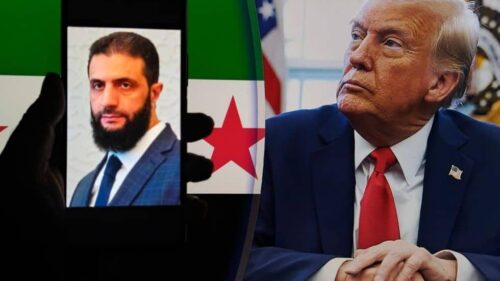
Washington’s Gamble on Ahmed al-Sharaa Could Push Syria Toward a New Authoritarian Era
Washington faces a volatile shift as Syrian President Ahmed al-Sharaa moves from hunted jihadist to accepted partner amid regional pressure....
Support Fair Observer
We rely on your support for our independence, diversity and quality.
For more than 10 years, Fair Observer has been free, fair and independent. No billionaire owns us, no advertisers control us. We are a reader-supported nonprofit. Unlike many other publications, we keep our content free for readers regardless of where they live or whether they can afford to pay. We have no paywalls and no ads.
In the post-truth era of fake news, echo chambers and filter bubbles, we publish a plurality of perspectives from around the world. Anyone can publish with us, but everyone goes through a rigorous editorial process. So, you get fact-checked, well-reasoned content instead of noise.
We publish 3,000+ voices from 90+ countries. We also conduct education and training programs
on subjects ranging from digital media and journalism to writing and critical thinking. This
doesn’t come cheap. Servers, editors, trainers and web developers cost
money.
Please consider supporting us on a regular basis as a recurring donor or a
sustaining member.
Will you support FO’s journalism?
We rely on your support for our independence, diversity and quality.





Comment