





The world today is a complex tapestry, woven with threads of geopolitical tension, economic uncertainty and a relentless flow of information. With so many streams of information flowing at once, how do we, as citizens and thinkers, process institutional narratives and discern truth from carefully constructed realities? This is not merely an intellectual exercise; it is a fundamental requirement for navigating our shared future.
The sheer volume and velocity of information, often contradictory, frequently biased and sometimes deliberately misleading, demands more than just passive consumption. It demands active, disciplined engagement, a form of cognitive fitness that, much like physical fitness, requires consistent training and intentional maintenance. In an era defined by polycrisis and perpetual uncertainty, our ability to think clearly, critically and adaptively is our most valuable asset.
This deluge of information has a profound effect on our mental fitness. Consider the daily onslaught. One moment, we are grappling with the implications of tariffs on global trade, and the next, we are trying to comprehend the intricacies of strategic competition between superpowers. We witness political dramas unfold, from Washington to Caracas, and hear analyses ranging from insightful to inflammatory. Simultaneously, the media itself undergoes a profound transformation, as explored in discussions of Netflix’s role in developments within the film industry and the broader “media war.” Each of these issues, individually, presents a significant cognitive load. Collectively, they threaten to overwhelm our capacity for understanding and considered judgment.
Beyond the headlines: the cognitive load
Our brains are remarkable organs, but they are not infinitely scalable processors. They possess inherent biases, shortcuts and limitations that, while often efficient in simpler environments, can become liabilities in a hyper-complex, information-dense world. When confronted with a constant stream of breaking news, expert opinions, social media debates and partisan rhetoric, our minds tend to revert to familiar patterns: confirmation bias, tribalism, and a preference for simple answers over complex truths.
This isn’t a failure of intelligence; it’s a failure of training. We are, in essence, asking our minds to run a marathon without ever having practiced sprinting, let alone endurance. The result is often mental fatigue, a retreat into echo chambers, or a cynical disengagement from issues that desperately require our attention. We might feel informed because we’re constantly consuming, but true understanding — the ability to synthesize, analyze, and form independent judgments — often eludes us.
The illusion of understanding
The illusion of understanding is particularly dangerous. We read a headline, skim an article, or listen to a soundbite, and believe we grasp the full scope of an issue. Yet, global affairs, economics, and even local politics are rarely reducible to simple narratives. The rise of a multipolar world, for instance, is not a binary shift but a dynamic, multifaceted evolution with historical roots and unpredictable consequences.
When we settle for superficial understanding, we become susceptible to manipulation, whether from state actors, corporate interests, or even well-meaning but ill-informed voices. We lose the capacity to challenge assumptions, question motives, and critically evaluate the frameworks through which information is presented. This cognitive vulnerability undermines democratic processes, fosters division, and hinders our collective ability to address pressing global challenges.
Building a cognitive “mind gym”
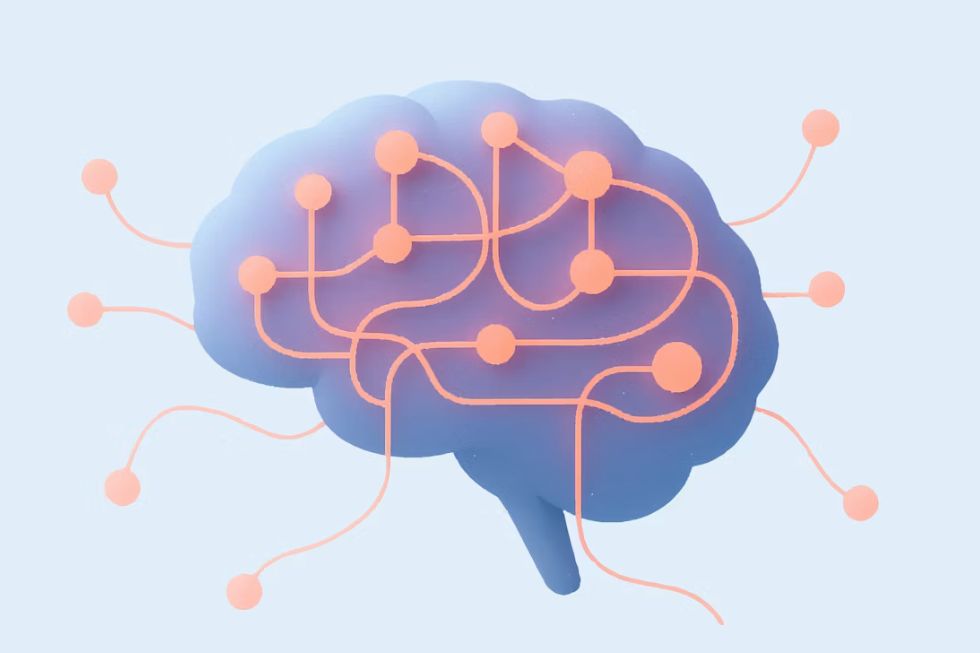
To counter this, we need to actively cultivate what I call a “Cognitive Mind Gym.” This isn’t about becoming an academic or an expert in every field; it’s about developing mental habits and practices that strengthen our intellectual resilience, sharpen our critical faculties, and enable us to navigate complexity with greater clarity and purpose. Just as physical exercise builds muscle and endurance, cognitive exercises build mental agility and robustness.
Exercise 1: critical filtering and information hygiene
The first step is to become a discerning gatekeeper of our mental inputs. This means consciously selecting information sources, prioritizing depth over breadth, and actively seeking out diverse perspectives, even those that challenge our preconceptions.
Scrutinize your sources. Don’t just read what is said, consider who is saying it, why they are saying it, and where they are saying it. Is it a primary source, an analytical piece, or an opinion column? What are the potential biases of the publication or the author? This is particularly vital when examining topics such as the evolution of the multipolar world or narratives surrounding global strategic competition, where perspectives are often deeply entrenched and emotionally charged.
Be an active consumer. Move beyond passive scrolling. Engage with content by asking questions: What is the main argument? What evidence supports it? What is not being said? How does this information connect to what I already know, or contradict it?
Consider your informational diet. Just as we manage our food intake, we must manage our information intake. Limit exposure to sensationalism and endless news feeds. Schedule dedicated time for in-depth reading and reflection, rather than constant, fragmented consumption.
Exercise 2: cultivating cognitive empathy
Understanding complex global issues requires more than just processing facts; it requires understanding motivations, cultures, and historical contexts different from our own. Cognitive empathy is the ability to step into another’s shoes intellectually, to understand their worldview, their fears, and their aspirations, even if we don’t agree with them.
Think beyond an ‘us vs. them’ mentality. When analyzing geopolitical tensions or domestic political divides, resist the urge to immediately label one side as “good” and the other as “bad.” Explore the underlying reasons for actions, the historical grievances, the economic pressures, and the cultural narratives that shape behavior.
Seek alternative perspectives. Actively seek out voices and analyses from different cultural and national backgrounds. Understand that a policy that seems rational from one capital might be viewed as an existential threat from another. This fosters a more nuanced understanding of global dynamics, like the rising global strategic competition Canadian Prime Minister Mark Carney addressed at Davos.
Exercise 3: embracing nuance and complexity
The human mind naturally seeks patterns and simplicity. While useful for survival, this tendency can be a hindrance when dealing with genuinely complex systems. Geopolitics, economics, and societal change are rarely linear or monocausal.
Resist simplifying issues. Be wary of explanations that offer a single cause for a complex problem or a simple solution to a deeply entrenched issue.
Identify interconnections. Understand that issues are interconnected. US tariffs impact global supply chains, which affect local economies, which can fuel political discontent. A crisis in one region can have ripple effects across continents. Train your mind to see these connections rather than isolating problems.
Be more accepting of ambiguity. Learn to be comfortable with not having all the answers, and with the idea that multiple, sometimes contradictory, truths can coexist. The world is often messy, and our understanding of it will always be incomplete. The goal is not certainty, but informed judgment.
Exercise 4: the power of deliberate reflection
In our fast-paced world, reflection is often seen as a luxury. In reality, it is a necessity for cognitive maintenance. Reflection is the process by which we consolidate new information, challenge existing beliefs, and refine our understanding.
Schedule pauses in your routine. Dedicate time each day or week to simply think about what you’ve learned. How does it fit into your existing mental model of the world? Has anything you’ve encountered challenged your previous assumptions?
Express your ideas by journaling or discussing with others. Articulating your thoughts, either in writing or through discussion with trusted, diverse-minded individuals, can clarify your thinking and expose gaps in your understanding. This process forces you to move beyond passive consumption to active synthesis.
Revisit topics and revise your opinions. Our understanding of global affairs is not static. Revisit complex topics periodically, incorporating new information and perspectives. What seemed clear yesterday might appear different today with added context.
Why this matters for global citizens
The cultivation of cognitive fitness is not just a personal endeavor; it is a civic imperative. In a world where information can be weaponized, where narratives compete for dominance, and where global challenges demand collective action, the ability of individuals to think critically and independently is paramount.
When citizens are cognitively fit, they are less susceptible to propaganda, more capable of informed participation in democratic processes, and better equipped to hold power accountable. They can discern genuine threats from manufactured fears and identify opportunities for cooperation amidst conflict.
From personal clarity to collective resilience
By consciously building our Cognitive Mind Gym, we transform from passive recipients of information into active participants in the global dialogue. We move beyond simply reacting to headlines and begin to proactively understand the forces shaping our world.
This collective cognitive resilience is the bedrock upon which a more informed, engaged, and ultimately, more stable global society can be built. It empowers us to not only understand the complex challenges of our time but to contribute meaningfully to their solutions. In an age of unprecedented complexity, the most powerful tool we possess is a well-trained mind. Let us commit to exercising it.
[Charlie Smith edited this piece.]
The views expressed in this article are the author’s own and do not necessarily reflect Fair Observer’s editorial policy.
How to Talk to Young People About AI
The rapid rise of generative AI has upended traditional career paths, leaving young people and educators uncertain about the future...
The Hidden Tax of Financial Misinformation
Online money advice has become a parallel financial system, shaped by incentives that reward certainty, urgency and hype. Studies of...

FO Talks: Why Social Media and Clickbait Are Undermining Journalism
In this episode of FO Talks, Roberta Campani and Esther Wojcicki discuss how social media economics, declining literacy and shrinking...

The Real AI Crisis Is Cultural, Not Technical
My previous piece focused on AI’s hyperreality. Deepfakes are merely a surface phenomenon; the real problem of our relationship with...

Support Fair Observer
We rely on your support for our independence, diversity and quality.
For more than 10 years, Fair Observer has been free, fair and independent. No billionaire owns us, no advertisers control us. We are a reader-supported nonprofit. Unlike many other publications, we keep our content free for readers regardless of where they live or whether they can afford to pay. We have no paywalls and no ads.
In the post-truth era of fake news, echo chambers and filter bubbles, we publish a plurality of perspectives from around the world. Anyone can publish with us, but everyone goes through a rigorous editorial process. So, you get fact-checked, well-reasoned content instead of noise.
We publish 3,000+ voices from 90+ countries. We also conduct education and training programs
on subjects ranging from digital media and journalism to writing and critical thinking. This
doesn’t come cheap. Servers, editors, trainers and web developers cost
money.
Please consider supporting us on a regular basis as a recurring donor or a
sustaining member.
Will you support FO’s journalism?
We rely on your support for our independence, diversity and quality.





Comment