





[Editor’s note: This interview was published on May 27, before Armenia held its June 7 election.]
Fair Observer’s former Video Producer Rohan Khattar Singh speaks with political commentator Appo Jabarian about Armenia’s June 7 parliamentary elections and their significance for the South Caucasus. Jabarian argues that the vote represented a choice between continued foreign-policy diversification under Armenian Prime Minister Nikol Pashinyan and a return to closer alignment with Russia. The discussion ranges from Armenia’s strategic geography and post-Nagorno-Karabakh politics to the interests of regional and global powers who watched the election.
Armenia’s strategic position
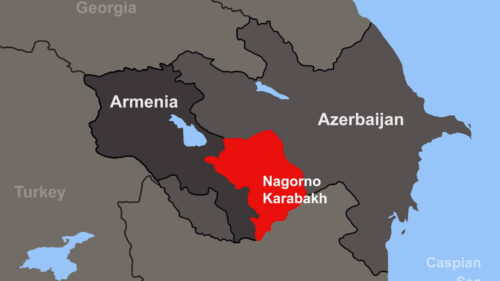
Jabarian begins by explaining why Armenia occupies an outsized place in regional geopolitics despite its small size. Situated at a crossroads linking north and south as well as east and west, Armenia serves as a land bridge connecting multiple regions of Eurasia. The South Caucasus is an area of intense geopolitical competition where major powers seek influence.
The election carried implications beyond Armenia itself. Jabarian frames the country as part of a broader democratic space stretching across Eastern Europe and the South Caucasus. The outcome may determine whether Armenia continues expanding its international partnerships or falls back into a sphere dominated by a single external power.
Two competing visions for Armenia
Khattar Singh asks Jabarian to explain the main political camps that contested the election. Jabarian identifies one camp with former Presidents Robert Kocharyan and Serzh Sargsyan, as well as businessman Samvel Karapetyan. He characterizes this group as representing Armenia’s former political establishment and alleges that it benefits from substantial Russian support.
The opposing camp was led by Pashinyan and his Civil Contract Party. This coalition sought to diversify Armenia’s foreign relations and strengthen ties with Europe and other democratic partners. The objective was not exclusive alignment with the West, but broader integration with what Jabarian calls the global free world, including countries such as India, Japan, South Korea and Singapore.
Responding to criticism that Pashinyan has simply replaced dependence on Russia with dependence on the United States, Jabarian rejects that interpretation. He calls such claims “Kremlin-approved talking points” and points to Armenia’s growing relationship with India as evidence of a more diversified foreign policy.
The legacy of Nagorno-Karabakh
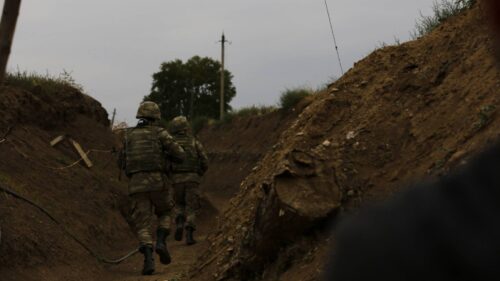
To this day, the loss of the Nagorno-Karabakh region to neighboring Azerbaijan continues to shape Armenian politics. Khattar Singh notes that this was the first parliamentary election cycle taking place after the region’s depopulation and asks how voters were responding at the time.
Jabarian presents a highly contested interpretation of the conflict. He says the events of the 2020 conflict were not a conventional war but “staged terrorist aggression” involving multiple regional actors. He also traces the dispute back to the Soviet period, claiming that Joseph Stalin’s administrative decisions laid the foundations for later conflict.
Jabarian contends that successive Armenian governments failed to achieve a lasting settlement and that Russian influence helped preserve instability in the region. He contrasts what he sees as Russia’s approach of maintaining leverage through regional disputes with the development model offered by democratic states. Throughout the discussion, Khattar Singh challenges several of Jabarian’s assumptions, particularly regarding the role of the US in international affairs.
Pashinyan’s standing with voters
Khattar Singh asks whether Pashinyan remains popular after losing Nagorno-Karabakh, noting that media portrayals range from democratic reformer to national traitor.
Jabarian mentions that the prime minister enjoys substantial support. Many Armenians view Pashinyan not as the architect of the defeat, but as a victim of a broader geopolitical effort involving Russia, Turkey and Azerbaijan. Public pressure after the 2020 conflict encouraged Pashinyan to remain in office rather than resign because many voters feared a return of the previous political elite.
He further alleges that corruption and internal sabotage weakened Armenia during the conflict and contributed to the outcome. As a result, he believes the election was less a referendum on Pashinyan personally than a decision about Armenia’s future geopolitical direction.
Regional and international stakes
In the final part of the conversation, the speakers examine the interests of outside powers. Jabarian argues that Russia, India, Iran, Israel, Turkey and Western countries all closely watched the vote because of Armenia’s strategic location.
He alleges that Russia conducted a large-scale influence campaign involving financial resources, election bribery and hybrid operations, while Armenian authorities attempted to counter such efforts. Jabarian also emphasizes the importance of Armenia’s growing relationship with India and suggests that Iran may pursue broader international engagement in the future.
The discussion concludes with Israel’s ties to Azerbaijan. Jabarian attributes Israel’s support for Azerbaijan largely to energy considerations, particularly oil imports routed through Turkey. Despite current tensions, he expresses confidence that regional relationships will eventually normalize.
For Jabarian, the election determined whether Armenia pursues deeper integration with a broader network of international partners or returns to a more Russia-centered orientation. He argues that the result influences not only Armenia’s future but the wider geopolitical balance in the South Caucasus.
Ultimately, Pashinyan’s Civil Contract Party would win the election with 49.81% of the vote, securing 64 seats in the 105-seat National Assembly, retaining power in Armenia. The Russian-supported opposition parties, Strong Armenia and the Armenia Alliance, received about 23% and 8% of the vote and netted about 29 and 12 seats, respectively.
[Lee Thompson-Kolar edited this piece.]
The views expressed in this article/video are the author’s own and do not necessarily reflect Fair Observer’s editorial policy.

































Comment