


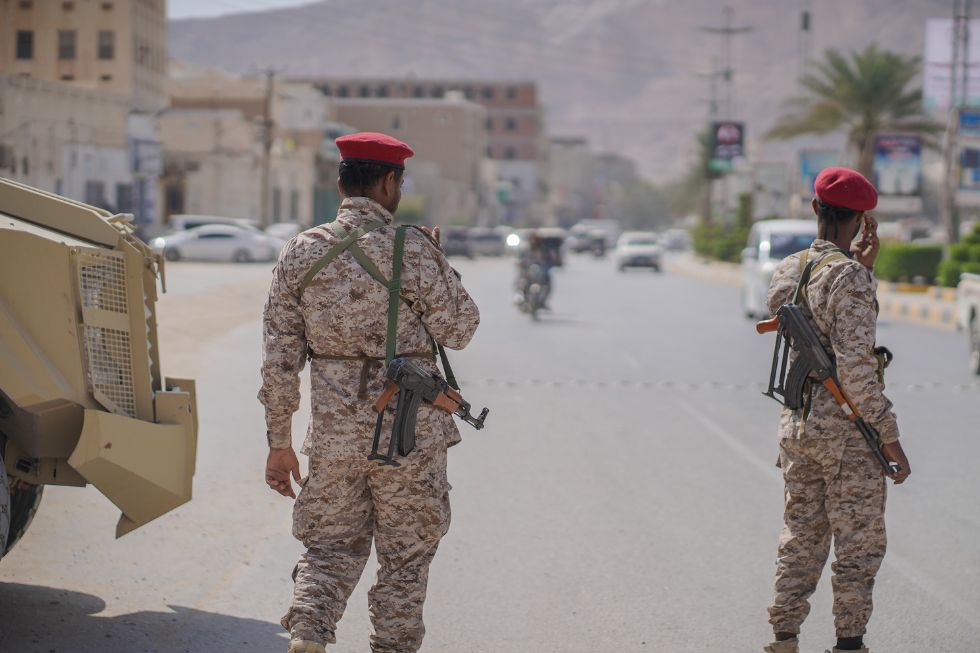



The recent killing of demonstrators in southern Yemen marks a dangerous return to patterns of repression that many believed had receded. Over the past several weeks, protests across Aden, Shabwa and Hadramaut — largely mobilized by supporters of the Southern Transitional Council (STC) — have been met with live ammunition, mass arrests and an increasingly visible willingness by security forces to use lethal force against civilians.
Escalating violence across southern Yemen
According to Human Rights Watch, in a report released on March 17, security forces “used excessive force against largely unarmed protesters,” in some cases firing directly into crowds. The events unfolded over multiple days and locations, pointing not to a single incident but to a pattern.
In February, protests intensified in Shabwa, where at least six demonstrators were killed when security forces opened fire, as also reported by The New Arab. Weeks later, in early March, similar scenes were reported in Hadramaut: In the coastal city of Mukalla, three demonstrators were killed during protests that witnesses insist were peaceful. Aden, too, saw repeated crackdowns throughout late February and early March, with arrests and injuries reported as security forces moved aggressively to disperse gatherings, a pattern reflected in broader coverage by Reuters.
Eyewitness testimony reinforces the findings of human rights observers and reveals the lived reality behind the numbers. One protester in Shabwa described the moment security forces opened fire: “There was no warning. They started shooting live bullets directly at us. People fell immediately. We were running, but they kept firing.” In Mukalla, another witness recalled, “We came out peacefully. We were chanting only. Suddenly, there was shooting — real bullets, not in the air. I saw a man next to me collapse.” In Aden, a resident described how the crackdown extended beyond the protests themselves: “They didn’t just stop the protest — they chased people, arrested many, and made it clear that any gathering would be punished.”
Taken together, these incidents raise serious questions about both the capability and the intent of government forces backed by Saudi Arabia. The repeated use of live ammunition across multiple governorates suggests more than mere weakness in crowd control. It points toward a deliberate strategy of deterrence — one that treats public protest not as a political expression but as a threat to be eliminated. As Human Rights Watch has emphasized in its reporting and in its broader Yemen documentation, the use of lethal force against protesters who do not pose an imminent threat violates international standards, which require restraint and prioritization of non-lethal means.
Political stakes and repression
The political context is crucial. These demonstrations are not isolated acts of unrest but part of a broader and long-standing movement calling for southern independence. The STC remains the most prominent vehicle for these aspirations, and the protests reflect continued popular support despite recent political and military setbacks. The response by authorities — live fire, arbitrary arrests and an expanding security presence — suggests an attempt not only to disperse crowds but to weaken the movement itself. In this sense, the crackdown is not simply about restoring order; it is about reshaping the political landscape of the south.
What is emerging is an atmosphere increasingly reminiscent of a police state, where fear replaces participation and where the cost of dissent may be death or detention. Yet history offers a clear lesson that appears to be ignored. Previous governments in Yemen attempted to suppress southern aspirations through force, detention and intimidation. They failed. The call for independence endured, adapted and re-emerged with renewed strength. There is little reason to believe that the current ruling authorities will succeed where others did not.
The killings in Shabwa, Mukalla and Aden are not just tragic incidents; they are politically consequential acts that risk deepening the very crisis they are meant to contain. Each life lost is not only a human tragedy but also a point of mobilization — fuel for grievance, anger and future resistance. Repression may silence voices temporarily, but it cannot erase the underlying demands that drive people into the streets.
Killing protesters will not restore stability in southern Yemen. It will entrench instability. It will harden positions, widen divisions and push the conflict into more dangerous territory. What is required is not more force, but a serious reckoning with the roots of the crisis — political exclusion, contested legitimacy and the enduring demand for southern self-determination. Until those issues are addressed, no amount of repression will bring lasting control. The previous regime could not crush the independence movement, and this one will not succeed by bullets either.
[Kaitlyn Diana edited this piece.]
The views expressed in this article are the author’s own and do not necessarily reflect Fair Observer’s editorial policy.
Building Bridges in Yemen: A Gulf Opportunity to Stabilize the South
Recent geopolitical shifts in the Middle East are reshaping Yemen’s strategic landscape. This evolving context presents an opportunity for Gulf...
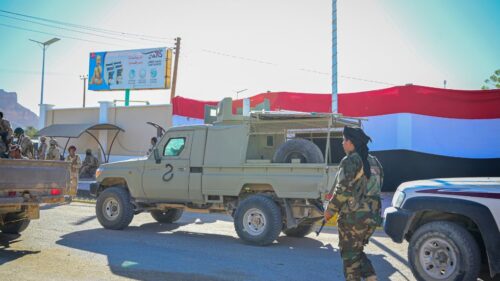
South Yemen at a Crossroads: Saudi Arabia’s Risky Political Gamble
Saudi Arabia’s growing dominance in southern Yemen follows the United Arab Emirates’ withdrawal, sidelining the influential Southern Transitional Council (STC)...
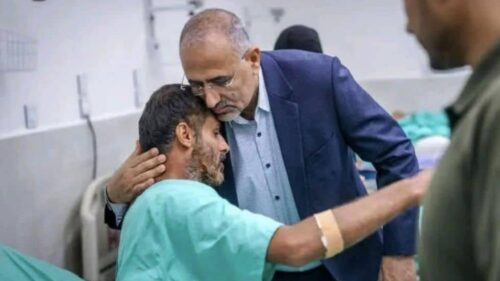
The Houthis’ Southern Ambition: A Threat the International and Regional Community Must Never Ignore
The international push for a unified Yemen risks empowering the Houthis at the expense of southern aspirations and regional stability....
Support Fair Observer
We rely on your support for our independence, diversity and quality.
For more than 10 years, Fair Observer has been free, fair and independent. No billionaire owns us, no advertisers control us. We are a reader-supported nonprofit. Unlike many other publications, we keep our content free for readers regardless of where they live or whether they can afford to pay. We have no paywalls and no ads.
In the post-truth era of fake news, echo chambers and filter bubbles, we publish a plurality of perspectives from around the world. Anyone can publish with us, but everyone goes through a rigorous editorial process. So, you get fact-checked, well-reasoned content instead of noise.
We publish 3,000+ voices from 90+ countries. We also conduct education and training programs
on subjects ranging from digital media and journalism to writing and critical thinking. This
doesn’t come cheap. Servers, editors, trainers and web developers cost
money.
Please consider supporting us on a regular basis as a recurring donor or a
sustaining member.
Will you support FO’s journalism?
We rely on your support for our independence, diversity and quality.





Comment