





On January 1, Germany quietly became a country in which men aged 17 to 45 were formally required to obtain approval before spending more than three months abroad. It took until early April for anyone to notice.
I am 44, German, and have lived and worked in Vienna for over a decade. I found out about this provision the same way most people did: through a social media post. That alone should give pause.
A paragraph hidden in plain sight
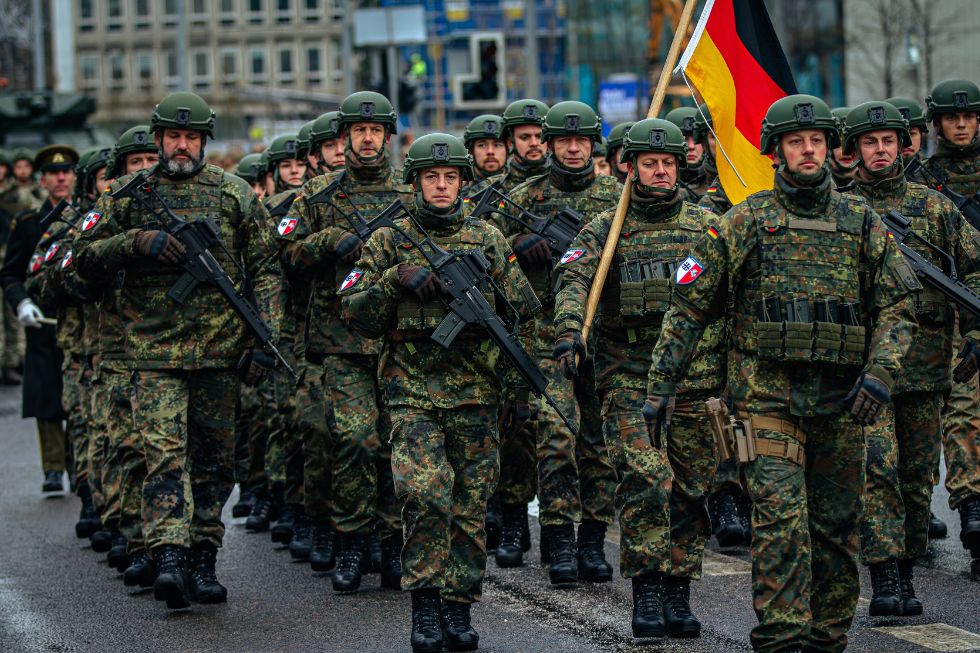
The Military Service Modernisation Act (Wehrdienst-Modernisierungsgesetz [WDModG]) came into force at the start of the year as part of Germany’s broader effort to rebuild its defense capabilities. The policy rationale is straightforward: Germany wants to expand the Bundeswehr (German armed forces) from roughly 184,000 to over 260,000 active personnel by 2035, and it needs to know where its military-age population is in the event of mobilization. Germany is simultaneously sending mandatory service questionnaires to all 18-year-old men this year (voluntary for women), building a clearer picture of available manpower.
The legal mechanism requiring advance approval for extended stays abroad is not new. A similar provision existed in German law since 1986. What changed on January 1 was the trigger: Previously, the rule only activated in a declared state of tension or defense. Now, it applies permanently, even in peacetime.
That is not a minor administrative tweak. It is a fundamental shift in how Germany defines the relationship between the state and citizens in the security domain. And it ended in a communication disaster.
The week that followed
Once the provision came to light, the reaction was swift and politically broad. From the Greens to the Alternative für Deutschland, virtually every party in the Bundestag expressed concern. Some comparisons made — Sahra Wagenknecht Alliance leader invoking the Berlin Wall — were overwrought. This is a democratic government, not an authoritarian one. But the breadth of criticism carried a signal worth taking seriously.
Within days, Defense Minister Boris Pistorius announced that “we are suspending the permission requirement as long as military service is voluntary,” adding that different rules would apply in a crisis or defense situation. What had been presented as a considered legislative measure was effectively reversed under a week of public pressure, without a substantive parliamentary debate.
The real problem is not the policy
Europe is remilitarizing. That sentence would have seemed alarmist five years ago; today it is simply a description of political reality. Estonia, Finland, Poland and Sweden — countries that never lost sight of what security requires — have been joined by a growing number of EU members reconsidering or reinforcing conscription frameworks. Germany, which suspended mandatory military service in 2011, is trying to reconstruct the institutional muscle memory that others never let atrophy. Strategically, the direction is difficult to contest.
What this episode exposed, however, is a governance failure that could prove costly precisely because the direction is right. A provision affecting millions of men entered into force on January 1, generated no public information campaign, produced no application infrastructure and was discovered three months later through a report by the Frankfurter Rundschau. The Federal Ministry of Defence promptly confirmed the finding to the German news agency dpa. When the legal basis for a significant restriction on individual freedom is enacted without public communication or parliamentary spotlight, trust in the very institutions that need public buy-in is eroded before policy can take effect.
A pattern worth watching
This is not uniquely a German problem. Across Europe, the logic of security preparation is outpacing the democratic conversation required to legitimize it. Governments are rebuilding defense frameworks that were deliberately dismantled after the Cold War, doing so at speed and under pressure, often in legislative packages that receive little scrutiny. From a planning perspective, the rationale is coherent. The process frequently is not.
For countries in Central and Southeast Europe — Poland, the Baltic states, the Western Balkans — the rearmament debate carries a different texture. These are societies where the memory of occupation and war, as well as the proximity of threat, have kept collective security in public consciousness. They have been making this argument for years. They were right. But being right about the destination does not make the journey automatic.
Germany’s stumble over a single paragraph of its Military Service Act is a small illustration of a larger risk: that Europe rearms its institutions without renewing the civic compact that makes those institutions legitimate. An army that citizens distrust is a weak army. A security policy that is quietly legislated, reversed under pressure, and poorly communicated rests on fragile foundations.
What should come next
The suspension of the approval requirement is a sensible short-term response. What is needed now is not just a public conversation, but a structured one. First, clarity: Who is affected, under what conditions and through which procedures? Second, visibility: Legal provisions of this scope cannot remain buried in technical legislation. Third, comparability: Germany should actively draw on models from countries where conscription has remained embedded in democratic practice.
The contrast with Austria, where I live and work, is instructive. Vienna never abolished conscription, and its approach to citizens living abroad reflects a different philosophy: notification, not permission. Under section 11 of the Austrian Military Act, men who relocate abroad for more than six months are required to promptly notify their regional military command and register with the nearest Austrian embassy or consulate. Those who permanently reside outside Austria are typically not called upon while abroad, and their obligation becomes relevant again upon return. No advance approval is required. The state stays informed; the citizen retains the presumption of freedom.
That distinction between a system built on notification and one built on permission is precisely what Germany’s critics have been pointing to. It is also what separates an accepted system from one that risks being contested.
Europe’s security challenge is real. Meeting it requires not just legal frameworks and defense budgets, but governments willing to explain, justify and build genuine consent for the obligations they are asking their citizens to accept.
Hiding a paragraph in a 37-page bill is not how you do that.
[Kaitlyn Diana edited this piece.]
The views expressed in this article are the author’s own and do not necessarily reflect Fair Observer’s editorial policy.
Germany’s (Reluctant) Nuclear Arsonists
Germany’s nuclear debate has resurfaced amid transatlantic tensions and US policy shifts, reigniting discussions about national security and deterrence. While...

Trump and German Rearmament: Sowing the Seeds of Upheaval in Europe
After eight decades of continuous peace in Western Europe, US President Donald Trump is actively sowing the seeds of upheaval....

Imagine There’s No NATO: Germany as a New Middle-Sized Military Power in an Anarchic International Order
The fracturing of the Atlantic alliance under US President Donald Trump’s erratic leadership forces Germany to reconsider its security strategy...

Support Fair Observer
We rely on your support for our independence, diversity and quality.
For more than 10 years, Fair Observer has been free, fair and independent. No billionaire owns us, no advertisers control us. We are a reader-supported nonprofit. Unlike many other publications, we keep our content free for readers regardless of where they live or whether they can afford to pay. We have no paywalls and no ads.
In the post-truth era of fake news, echo chambers and filter bubbles, we publish a plurality of perspectives from around the world. Anyone can publish with us, but everyone goes through a rigorous editorial process. So, you get fact-checked, well-reasoned content instead of noise.
We publish 3,000+ voices from 90+ countries. We also conduct education and training programs
on subjects ranging from digital media and journalism to writing and critical thinking. This
doesn’t come cheap. Servers, editors, trainers and web developers cost
money.
Please consider supporting us on a regular basis as a recurring donor or a
sustaining member.
Will you support FO’s journalism?
We rely on your support for our independence, diversity and quality.





Comment