

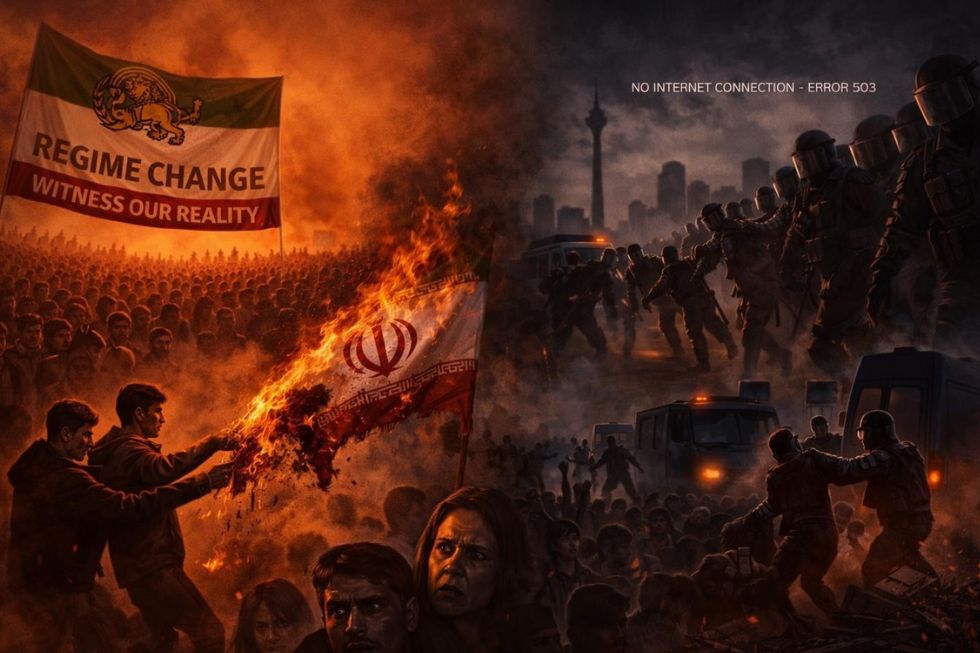



In early January, peaceful protests erupted across Iran, driven by economic collapse, political repression and decades of contempt for a ruling system many citizens believe no longer represents them. Demonstrators called for accountability and an end to the Islamic Republic. Security forces responded with live ammunition and sweeping arrests. Within weeks, protests were violently suppressed, leaving thousands dead and the country in deliberate digital isolation, all while Iranians abroad watched in horror. The country experienced more than a political rupture; it experienced a psychological rupture. Yet the psychological aftermath of the crackdown that preceded the war remains largely unseen.
Ongoing repression and daily fear
Human rights groups and independent monitors report the death toll in the tens of thousands, though precise figures remain difficult to verify amid severe reporting restrictions. Morally and psychologically, the number changes little. Families are shattered. Reports continue to emerge of threats, executions, enforced disappearances, and individuals identified from protest footage later detained or abducted. Demonstrations, including children, were met with overwhelming and often lethal force. Yet beyond headlines and geopolitical analysis, something deeper is unfolding: a nationwide trauma response that almost no one is naming.
Since the beginning of the year, the Islamic Republic has called protestors rioters and stated that they must be put in their place. Iranians have witnessed scenes more often associated with combat zones: live ammunition fired into civilian crowds; citizens attempting to carry away the injured only to be shot themselves; nighttime raids pulling people from their homes; and entire communities severed from one another during prolonged communications blackouts.
Reports from international human rights organizations describe mass arrests, torture in detention and bodies documented under coercive conditions. There have been accounts of marketplaces set ablaze during crackdowns and refrigerated facilities containing victims’ remains damaged by fire under unclear circumstances. Funerals have been prohibited, and families have been charged for the bullets used to kill their loved ones. Medical staff have been reportedly threatened or detained. Journalists have been silenced. Grieving families have been intimidated and arrested. The UN fact-finding mission’s independent investigation has recognized the state of Iranian civilians’ lives to be caught between unprecedented levels that may amount to crimes against humanity.
And these decades-long patterns of repression have not ended. For most Iranians, the atmosphere of fear and coercion continues daily; a reality exacerbated by a catastrophic failure of global health governance that has left civilians without even the most basic protections of international law.
Trauma does not start with one event
The outbreak of the US–Israel–Iran war has brought Iran back into the center of global discussion. Television panels debate escalation, deterrence, and regional alliances. Social media is filled with arguments about sanctions, military strategy and international law. The world is debating Iran while largely overlooking the psychological devastation unfolding inside it.
The uprising that preceded the war and the violence used to suppress it have already begun to fade into the background of geopolitical analysis.
The communications shutdowns and restrictions on reporting are not incidental to the violence; they are part of it. When information is suppressed, uncertainty grows. Families cannot confirm who is alive. Rumors fill the gaps left by silence. In human rights investigations, access to verified information is often the first casualty of repression. But the psychological impact of that uncertainty is profound. It destabilizes trust, not only in institutions but in shared reality itself.
The cumulative psychological impact is unmistakable. As trauma scholars have long observed, prolonged exposure to systemic violence erodes basic assumptions about safety, trust and the predictability of power. When violence becomes chronic and institutional, populations adapt to a worldview in which vulnerability feels constant and authority appears unrestrained. This is how collective shock takes hold.
Iran is not only in a political crisis. Its population is exhibiting signs of collective nervous-system collapse.
Inside the country, people are living under sustained threat. Many describe sleeping in fragments, waking at small sounds, struggling to breathe evenly. Anger surfaces quickly and just as quickly gives way to numbness. These are not abstract political reactions. They are physiological responses to sustained threat. When violence becomes routine, the nervous system does what it is designed to do: It prepares for survival.
The massacre did not land on neutral ground. It struck a population carrying decades of accumulated trauma: a revolution that hardened into theocratic authoritarianism; a devastating war scarred by chemical attacks; sanctions that strained ordinary citizens while consolidating power among elites; and repeated protest movements met with imprisonment and execution.
Collective trauma rarely disappears with time alone. It accumulates, shaping how new events are interpreted and remembered, especially in societies that have experienced repeated cycles of repression.
When a new shock arrives, it reactivates what is already stored. To those living through it, January 2026 did not feel unprecedented. Instead, the militarized response and total digital isolation felt like a grim confirmation of a persistent pattern of repression. The state’s playbook of repression, refined over decades, was being executed once again.
Resilience runs deep in Iran’s cultural memory, but it should not be romanticized. In the context of 2026, this endurance signifies not a lack of harm, but a state of defensive dominance where the nervous system has adapted to a “hum of fear” just to survive.
What is unfolding now is not only grief but destabilization: a constant hum of fear, hypervigilance and a sense that the ground itself is unreliable. When a state deploys overwhelming violence against its own population, trust collapses not only in institutions but also in the future, further intensified by the absence of a meaningful global response. This is what externalized collective trauma can feel like.
The diaspora carries the trauma too
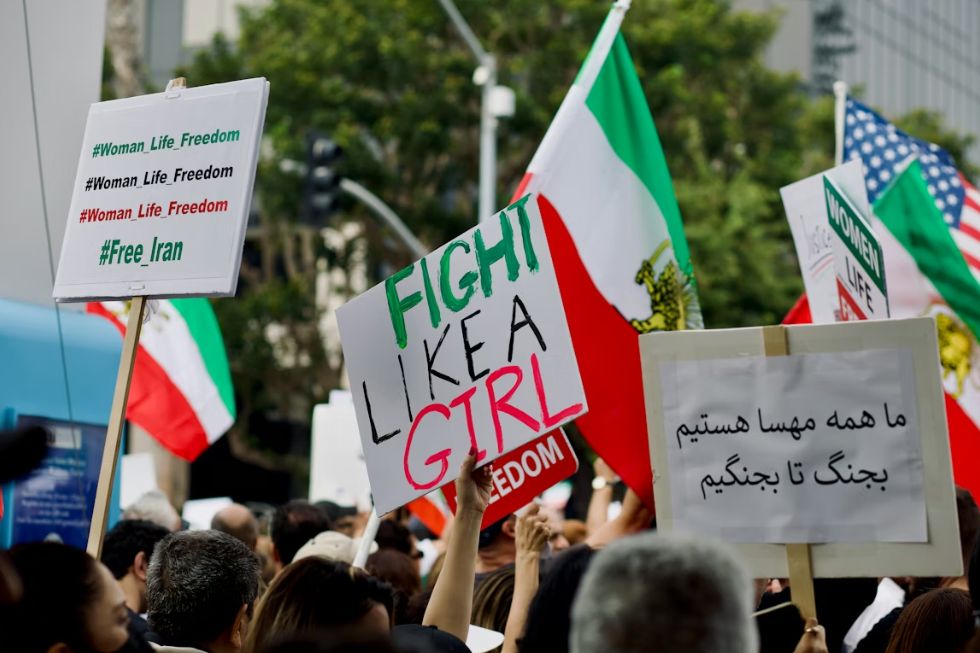
Outside Iran, another layer of trauma is taking shape. Across Europe, North America, Australia and Asia, the diaspora watches in a state of externalized collective trauma. It is a psychological weight that defies geography, where survivor’s guilt collides with moral urgency. This results in a documented paralysis of the collective psyche as the social bonds that connect individuals to their homeland are systematically targeted. It is a state where survivor’s guilt collides with moral urgency, creating a vicarious trauma that is further weaponized by the state’s transnational repression. Many feel compelled to act constantly by posting, organizing and protesting because they feel that rest is a betrayal.
As large demonstrations unfold globally, many continue to experience a painful sense of invisibility. With independent verification restricted, skepticism often replaces empathy from the world. The diaspora experiences a deafening silence as it asks for its collective reality to be witnessed. Casual suggestions that the numbers must be exaggerated, that the footage cannot be trusted or that it is better to stop watching the news, land as a dismissal rather than neutrality.
For the Iranian diaspora whose families remain in Iran, the crisis is not distant geopolitics. It is a daily negotiation between professional life here and fear for relatives there. When global attention shifts and reporting becomes sporadic, that distance deepens. In a democratic society that values civic participation and freedom of expression, the psychological well-being of diasporic communities is not peripheral. It is part of the civic fabric.
What is missed in these exchanges is the psychological cost. For Iranians, this minimization deepens isolation. It signals that their lived histories of repression and brutality are treated as uncertain, exaggerated or politically inconvenient. When suffering is questioned, identity itself feels destabilized.
Online, the temperature rises. Social media rewards outrage and punishes nuance. Political identities harden. Divisions sharpen. In private, there are tears and exhaustion. In public, fury.
This is what collective trauma does. It narrows cognition and collapses complexity. In times of threat, the brain seeks certainty, and black-and-white thinking feels safer than ambiguity. It is also why calls for rescue have intensified. Iranians inside and outside the country openly debate foreign intervention. When you are drowning, you do not ask who designed the life raft. When survival feels uncertain, people reach for whatever promises relief. Desperation reshapes judgment.
Why collective trauma matters politically
Recognizing that psychological reality does not mean endorsing every political conclusion that follows. Trauma can push societies toward extremes, toward savior fantasies, rigid ideologies and the belief that only overwhelming force can end overwhelming force. It also sharpens divisions, reducing complex differences to a binary of friend versus enemy and narrowing the space for democratic thinking.
History offers few simple answers. Peaceful uprisings succeed only when power fractures from within. Foreign interventions rarely unfold as intended , and the lack thereof deepens mistrust. But none of that erases the emotional truth: Iranians feeling abandoned and exhausted, searching for any sign that the nightmare might end. What makes this moment especially dangerous is not only state violence; it is the perception that the world is speaking about the geopolitical entanglement with Iran while rarely speaking about the Iranians themselves.
The January massacre risks being absorbed into the background noise of permanent crisis and another headline in a saturated world. The February 2026 mass arrests and executions of protesters have been largely ignored. But collective trauma does not dissipate when attention shifts. It embeds. It shapes political culture. It alters how communities trust, organize and imagine the future. If this psychological rupture goes unrecognized, its consequences will not remain confined within Iran’s borders. Trauma reverberates across generations and across diasporas. It influences how societies polarize, negotiate power and respond to instability.
A rupture that will last decades
Recognizing collective trauma is not an exercise in sentiment. It is necessary to understand how political behavior shifts under sustained threat. It insists that what is unfolding is not merely strategic conflict but a social reconstruction of meaning and mass psychological injury. Iranians do not need saviors. They need solidarity that respects and empowers their agency. They need humanitarian support that reaches civilians. They need platforms that amplify their voices rather than reduce them to geopolitical talking points.
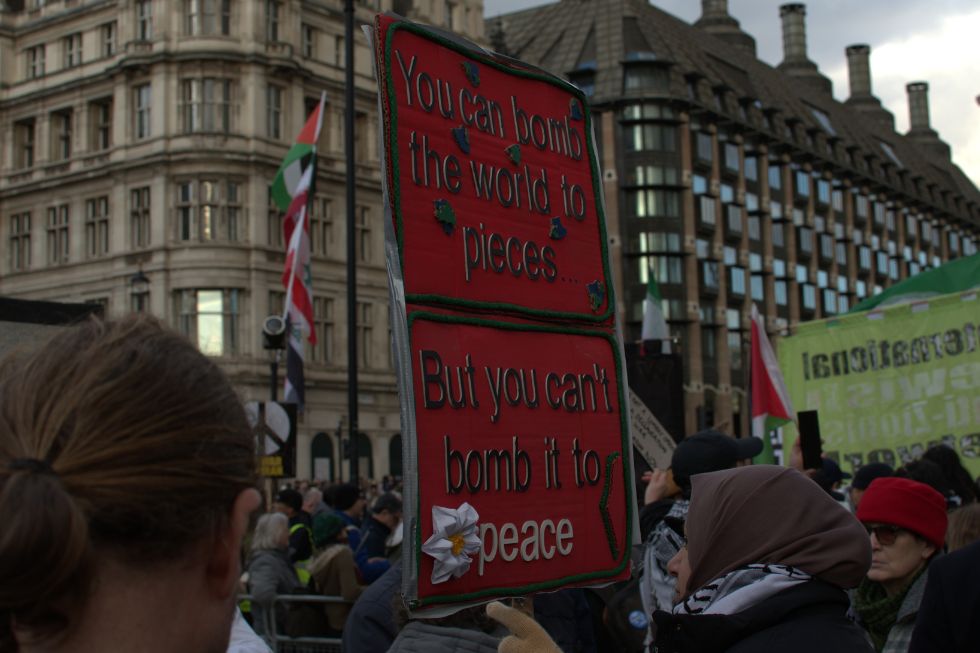
Despite the mass evidence in political science, sociology and historical literature that military interventions rarely lead to effective regime change, a growing number of civilians are now vocalizing a desperate plea for their own country to be bombed. On a human level, intellectualizing the failure of foreign intervention does little to address the immediate agony of those living under the boot. To understand this shift, the world must recognize the societal allostatic load, which is the cumulative and systemic wear and tear that occurs when an entire population is subjected to chronic institutional coercion. When this state of fear becomes unbearable, the collective psyche shifts into a mode of defensive dominance where even catastrophic violence is viewed as a preferable rupture to an agonizing status quo.
When people become desperate enough to call for foreign intervention, it is not ideology speaking but an existential survival mechanism. It reflects a population that feels cornered and recognizes its very existence is under threat. For decades, Iranians have protested through strikes, demonstrations and civil resistance, often at enormous personal cost. Many have lost friends, family members or colleagues to imprisonment or violence. When peaceful protest is met with live ammunition, people are fighting a war without weapons. Thus, their request, which goes against the scholarly evidence, is an emotional response to collective trauma that is not being witnessed. They also need the world to understand that collective trauma, once unleashed at this scale, does not simply disappear and only intensifies.
The Islamic Republic regime’s 2026 massacre of civilians will be remembered for its brutality and for the global silence that followed. It should also be remembered for the courage of millions who risked their lives for freedom, and as the moment a nation’s psychological threshold was breached. Iran is in a political crisis, but it is also living through decades of overlapping chronic threats and a profound psychological rupture that will shape its political future long after the violence fades from headlines.
Collective trauma at this scale does not remain confined within national borders. Through migration, digital networks and transnational families, its psychological consequences travel outward. Democracies that fail to recognize this risk misunderstand both diasporic communities and the long-term political consequences of sustained state violence.
[Kaitlyn Diana edited this piece.]
The views expressed in this article are the author’s own and do not necessarily reflect Fair Observer’s editorial policy.





Join the conversation
Share your perspective
Log in to share your thoughts and take part in the discussion.