


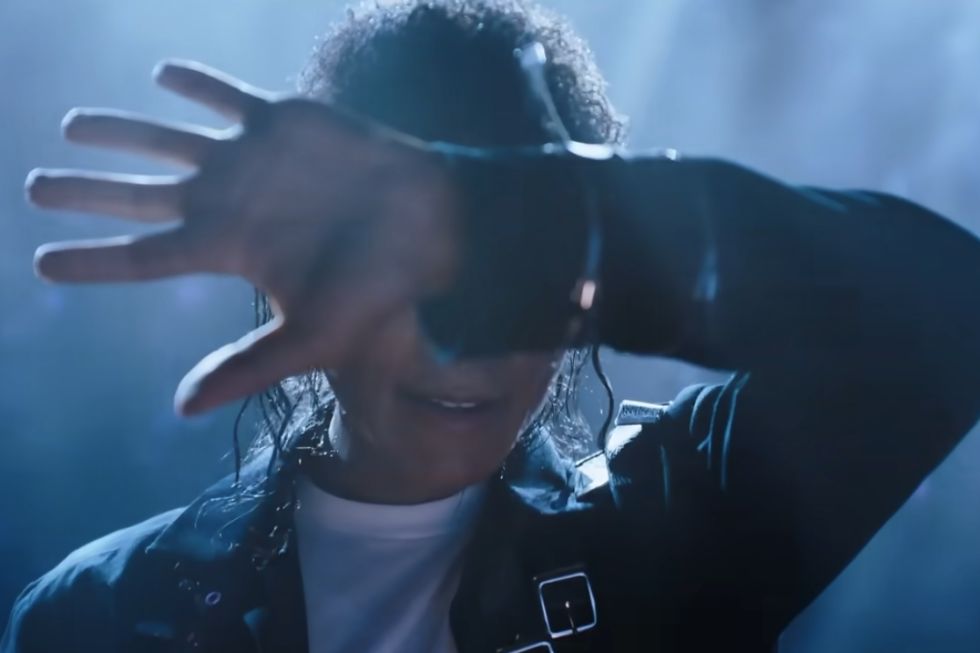


Non omnia quae mortua sunt, mortua manent — not all that is dead remains dead.
Michael Jackson died in 2009, steeped in debt. But he certainly didn’t remain dead; a reinvigorated Jackson was restored to life. His record sales spiked, a movie deal was done and, within a year, Jackson made $275 million — more money than any other musician or actor, dead or alive, over the previous 12 months. Other lucrative events included a Cirque du Soleil production and a hit Broadway show, all of which brought in over $3 billion in earnings.
But the spectral Jackson also had detractors who refused to let the allegations fade, even after Santa Barbara County Superior Court cleared him of sexual molestation charges in 2005. Suspicions of an unwholesome side to Jackson surfaced as early as 1993 when screenwriter Evan Chandler accused him of abusing his son, Jordan Chandler. A legal settlement the following year prevented this from damaging Jackson’s then-flourishing career. (The settlement limited what could be depicted about the issue artistically and, for a while, imperilled the biopic film, Michael — trailer above.)
Head in a lion’s mouth
Less than a year after the allegations and settlement, Jackson married Lisa Marie Presley, daughter of the world-famous musician, Elvis Presley. For years before the marriage, Jackson’s androgynous presentation, high voice, lack of tabloid-documented romantic history and unusually childlike persona had prompted speculation about his sexuality. Gossip columns periodically asked whether he might be gay or asexual. These unsubstantiated rumors circulated widely and gained impetus from the settlement, making the Presley marriage appear as a validation of his heterosexuality.
Jackson and Presley separated in 1996. That same year, only months after finalizing the divorce, Jackson married nurse Debbie Rowe, with whom he had two children. A third child by an unknown mother followed in 2002.
Exactly what was on Jackson’s mind when he agreed to appear in a documentary fronted by journalist Martin Bashir is unclear. If he was trying to improve his public image, it was a catastrophic mistake. Bashir had earlier interviewed Princess Diana and, while it wasn’t clear at the time, used unethical methods to persuade her. By the time he agreed to Bashir’s request to film him, Jackson had spent over 20 years in the unforgiving glare of showbusiness. Any claim to ingenuousness about media exposure was difficult to sustain. Jackson’s decision was rather like starving a lion for a few days and then putting his head in its mouth.
Jackson talked about regularly having sleepovers with children, including a young cancer patient named Gavin Arvizo. Bashir ended the HBO program with his reflections on Jackson’s home, known as Neverland Ranch: “A place where his enormous wealth allowed him to do what he wanted, when he wanted, how he wanted.” The New York Times described Jackson as “creepy, but almost touching in his delusional naïveté.”
The program screened in February 2003. That December, Santa Barbara County District Attorney Tom Sneddon charged Jackson with committing lewd and lascivious acts with a child under the age of 14.
In 2005, Jackson stood trial; the jury heard allegations that he had abused a 13-year-old boy and exposed him to “strange sexual behavior” during visits to Neverland Ranch. But the jurors ultimately concluded the prosecution had not proved its case beyond reasonable doubt. Jackson was exonerated of all charges, walked from court an innocent man and remained legally so for the rest of his life. Innocent, that is, in a legal sense: Rumors persisted up to and beyond his death in 2009.
Where there’s smoke…
On October 5, 2017, The New York Times published a story detailing allegations of sexual harassment against Hollywood film producer Harvey Weinstein. Among those who spoke publicly were actors Rose McGowan and Ashley Judd. The revelations triggered a cascade of accusations against Weinstein that culminated in his arrest and, in February 2020, his conviction for felony sexual assault and a sentence of 23 years’ imprisonment. Weinstein maintained his innocence.
The significance of the case extended far beyond one powerful producer. For decades, stories circulated in Hollywood about men who traded professional opportunities for sexual favors, the notorious “casting couch” becoming shorthand for a system of exploitation long acknowledged but rarely challenged.
More than a decade earlier, in 2006, activist Tarana Burke had begun using the phrase, “me too,” to support survivors of sexual abuse. After the Weinstein revelations, the phrase was repurposed as a global hashtag and rallying cry. What followed was one of the most consequential cultural shifts since the rise of the women’s liberation movement in the 1970s.
Within a year, hundreds of prominent men across politics, entertainment and media faced allegations of sexual misconduct. Some were prosecuted, many were not. Yet formal verdicts often mattered less than public judgment. Careers ended, projects met cancellation and reputations collapsed even in the absence of criminal convictions.
A new principle seemed to have taken hold: Accusations alone could be enough to remove powerful men from positions of influence. The informal tribunal of public opinion proved faster, harsher and often more decisive than the courts. Guilty or innocent no longer seemed to matter. The adage, “where there’s smoke, there’s fire,” became a serviceable rule of thumb.
Not guilty. So?
Now, reimagine the Jackson episodes I described earlier. In the post-Weinstein world, a settlement may still resolve a dispute legally, but it does not always relieve the defendant from blame even when the out-of-court agreement involves no admission of liability.
The most dramatic illustration of this occurred in 2022: then-Prince Andrew’s settlement with trafficking survivor Virginia Giuffre, who had accused him of sexual assault. Andrew paid an undisclosed amount and donated a sum to a charity. He avoided a trial, but invited a blizzard of innuendo. Further investigations into his relationship with the disgraced financier Jeffrey Epstein pushed Andrew into an inescapable corner. King Charles III stripped him of his titles, relieved him of his royal duties and made him an unwilling symbol of privileged depravity.
In 1994, Jackson’s global popularity was comparable with Taylor Swift’s today. His albums Off the Wall, Thriller and Bad had established him in the same class as Elvis and the Beatles. His video, Michael Jackson’s Thriller, remains a classic of its genre. None of the disorienting strangeness of later years had yet appeared and Jackson, like his peer, Madonna, enraptured audiences everywhere.
His prodigious popularity would have been a defense against cynics who suspected the settlement disguised indecent tendencies. Of course, Jackson never had to contend with social media, as he would in the #MeToo world; that in itself could have wrecked his reputation. But, it’s conceivable, even likely, that his immense adoration would have been powerful enough to sustain him. The 2003 charges, however, were unexpected and uncontainable.
Remember: Jackson was eventually acquitted on all seven counts of child sexual abuse and two counts of administering an intoxicating agent. But, as we know, the legal precept “innocent until proven guilty” lost purchase in the wake of the Weinstein case. In 2022, actor Johnny Depp won $10 million in damages from his former wife, actress Amber Heard, who had accused him of domestic abuse. But he lost his role in Disney’s Pirates of the Caribbean franchise (at that time) and, as an on-screen actor, has only appeared in 2023’s Jeanne du Barry since. Actor Kevin Spacey was first accused of sexual assault in 2017 and found not guilty of sexual offences at a criminal trial in 2023, and has recently settled a separate case. In these cases, the actors were accused wrongly, but offers for dramatic roles dried up.
The probability is that Jackson too would have been canceled, his legal innocence overridden by a verdict reached in the less formal but far more potent tribunal of culture. In 2005, when he was cleared, the shadow of the allegations were troubling but not fatal. Of more immediate concern was his extravagant lifestyle, which left him with colossal debts — estimated at his death to be more than “more than half a billion dollars.”
Reissues of earlier albums kept public interest alive, but Jackson himself became a recluse. So, when in 2009, he announced his first live concerts in 15 years, it seemed to confirm he needed money. A two-month residency at London’s O2 Arena was thought to be worth $400 million. When the concerts sold out and tickets were sold online for $10,000, more dates were added. At 50, Jackson seemed to be on the verge of making an improbable but spectacular comeback. In preparation, he threw himself into an exhausting rehearsal schedule. But as we now know, the concerts never took place.
Within three months of the announcement, Jackson was found dead at his Los Angeles home. The death was ruled a homicide and his personal physician, Conrad Murray, was convicted of involuntary manslaughter in 2011. He had given Jackson a lethal dose of propofol, a powerful anaesthetic. Jackson, the public soon found, was also a habitual user of painkillers such as OxyContin and Demerol.
In 2019, an HBO documentary, Leaving Neverland, featured graphic testimony by two men, Wade Robson and James Safechuck, who alleged Jackson abused them as children. A less publicized claim followed when five members of the Cascio family, longtime friends of Jackson, alleged that Jackson groomed and abused them over decades, beginning when they were children. Jackson’s estate quietly paid the accusers $2.5 million.
Would a middle-aged Jackson, apparently scarred by the unproven accusation, beleaguered by debt and at least 12 years past his peak, be offered a lucrative assignment in London and sell out? It’s not unthinkable, but fanciful just the same. Like film producers, concert promoters would tend to treat even lightly-soiled A-listers with caution. AEG Live, the prospective promoters of the London “This Is It!” concerts, as they were called, would probably not have taken the gamble; in the event the promoters were well insured.
Would Jackson have lived?
Paradoxically, the #MeToo environment could have saved Jackson’s life. Were promoters disinclined to book him and record labels reluctant to offer contracts, he would have been forced to adjust his profligacy and restructure his debts. He still had income from his valuable investments in music publishing.
Perhaps he would have yearned for the buzz of live music and the entertainment industry in which he had been involved since he was six. Yet he would have had the support and comfort of his three children, growing into adolescence, around him (all three children are now in their 20s). He might still have relied on pharmaceuticals to get a night’s sleep, but not the intravenously administered nightly cocktail that ultimately killed him.
So, would Jackson have survived in the #MeToo climate? In a professional sense, no. He would have been quietly ushered toward showbiz oblivion, living — probably to the present day, when he’d be 67 — and remembered as a great but seriously flawed megastar. But he would have remained alive. The memory of the scandals would surely have receded, the music endured and the image of the prodigy turned global icon might gradually have eclipsed lingering suspicions.
Instead, his unexpected death froze the argument in place. Neither vindicated nor condemned, Jackson remains suspended between genius and tormentor, a figure whose legend is inseparable from the perhaps unanswerable questions that still surround him.
[Ellis Cashmore is the author of The Destruction and Creation of Michael Jackson.]
[Lee Thompson-Kolar edited this piece.]
The views expressed in this article are the author’s own and do not necessarily reflect Fair Observer’s editorial policy.
Sexual Exploitation — Why Leaving Is Not So Simple
A woman was coerced into sexual exploitation for over 30 years through invisible captivity that eroded her agency without physical...
Why Hasn’t Michael Jackson Been Canceled?
Michael Jackson is still with us, shows no signs of going away and most decidedly has not been canceled. Why...
The Afterlife of Michael Jackson
The king of pop died 12 years ago, but there has been plenty of life after death.
Has Johnny Depp Lost His Mind?
Depp must have known that the lawsuit would either liberate him from sordid hearsay or condemn him.
Are There Still Safe Passages Left for Men?
#MeToo is challenging men to navigate a safe passage across waters that have been charted but are now roiled by...

Support Fair Observer
We rely on your support for our independence, diversity and quality.
For more than 10 years, Fair Observer has been free, fair and independent. No billionaire owns us, no advertisers control us. We are a reader-supported nonprofit. Unlike many other publications, we keep our content free for readers regardless of where they live or whether they can afford to pay. We have no paywalls and no ads.
In the post-truth era of fake news, echo chambers and filter bubbles, we publish a plurality of perspectives from around the world. Anyone can publish with us, but everyone goes through a rigorous editorial process. So, you get fact-checked, well-reasoned content instead of noise.
We publish 3,000+ voices from 90+ countries. We also conduct education and training programs
on subjects ranging from digital media and journalism to writing and critical thinking. This
doesn’t come cheap. Servers, editors, trainers and web developers cost
money.
Please consider supporting us on a regular basis as a recurring donor or a
sustaining member.
Will you support FO’s journalism?
We rely on your support for our independence, diversity and quality.





Comment