




On February 28, before the first explosion was visible over Tehran, the decisive phase of the conflict had already unfolded.
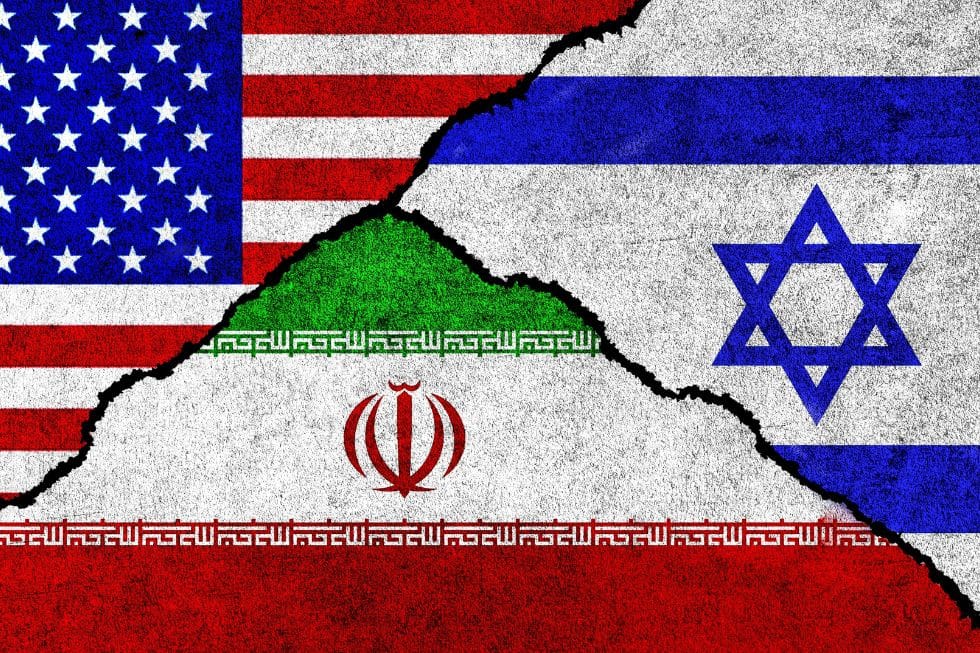
The strikes that followed were dramatic and politically consequential: Leadership compounds were hit; command nodes were disrupted; retaliatory missile exchanges expanded across the Gulf; regional air defenses were activated from the Levant to the Arabian Peninsula. Yet the visible destruction risks obscuring the more consequential development: The opening of this conflict demonstrated the operational maturity of a model of war in which the first hour is no longer a prelude — it is the outcome.
What occurred was not merely a coordinated air campaign. It was a compressed, multidomain operation designed to fracture coherence before the defender could meaningfully respond. The war did not begin with impact; it began with integration.
Architecture before ordnance
Modern high-end conflict increasingly opens with degradation rather than detonation.
Long before kinetic strikes reached their targets, the battle space appears to have been shaped across multiple domains. Electronic interference, cyber pressure, signal distortion, decoy saturation and intelligence preparation of the environment reportedly preceded physical engagement. Military planners have long studied this model of integrated operations within what NATO calls multidomain operations, which emphasize synchronized effects across cyber, space, maritime and air capabilities.
Whether achieved through airborne electronic warfare platforms, cyber access, space-enabled coordination or maritime stand-off positioning, the operational effect was similar. Defensive clarity was eroded before command authority could synchronize response.
In previous eras, suppression of enemy air defenses unfolded sequentially: Aircraft struck radar installations; follow-on waves targeted missile batteries. Air superiority was achieved in stages. For example, the 1991 Gulf War required weeks of methodical dismantling before deep penetration became routine.
February 28 reflected a different logic. Degradation and strike were not staged in phases; they were layered.
Carrier strike groups positioned in the Arabian Sea and Eastern Mediterranean extended operational reach and redundancy. Long-range precision munitions provided stand-off pressure. Stealth aircraft reportedly functioned as networked data nodes within a broader ecosystem rather than as isolated strike platforms. Maritime assets contributed cruise missile salvos synchronized with airborne delivery systems. Tankers sustained persistence and flexibility. Intelligence and surveillance platforms integrated targeting flows across air, sea, space and cyber domains.
The result was not simply a simultaneous impact. It was simultaneous disorientation.
The decisive achievement was not the destruction of hardened infrastructure alone. It was the compression of the defender’s decision cycle. By the time kinetic effects became visible, the architecture that enabled coherent response had already been stressed.
Recent reports suggest that this architecture increasingly incorporates artificial intelligence systems capable of accelerating data synthesis across the battle space. AI models developed by companies such as Anthropic and other advanced machine learning platforms are now being tested in military analytical environments to process satellite imagery, electronic signatures and intelligence feeds in near real time. While these systems do not replace human command authority, they significantly compress the time required to identify patterns, detect anomalies and generate operational options.
This reflects a central shift in contemporary warfare. The objective is no longer gradual attrition through sequential dominance. It is temporal dominance through integration.
What distinguishes February 28 is not merely the targets struck, but the scale at which multidomain integration was executed in a live state confrontation. Elements that had previously been demonstrated in fragments, such as cyber intrusion, electronic warfare, stealth penetration, maritime stand-off strike and networked targeting, were fused into a single operational cycle. That fusion suggests that hybrid warfare has moved from theory to mature practice.
Time compression and systemic shock
Military planners have long relied on time-on-target calculations to synchronize weapons launched from different platforms so that they arrive simultaneously. On February 28, that principle appears to have been elevated from tactical coordination to strategic design.
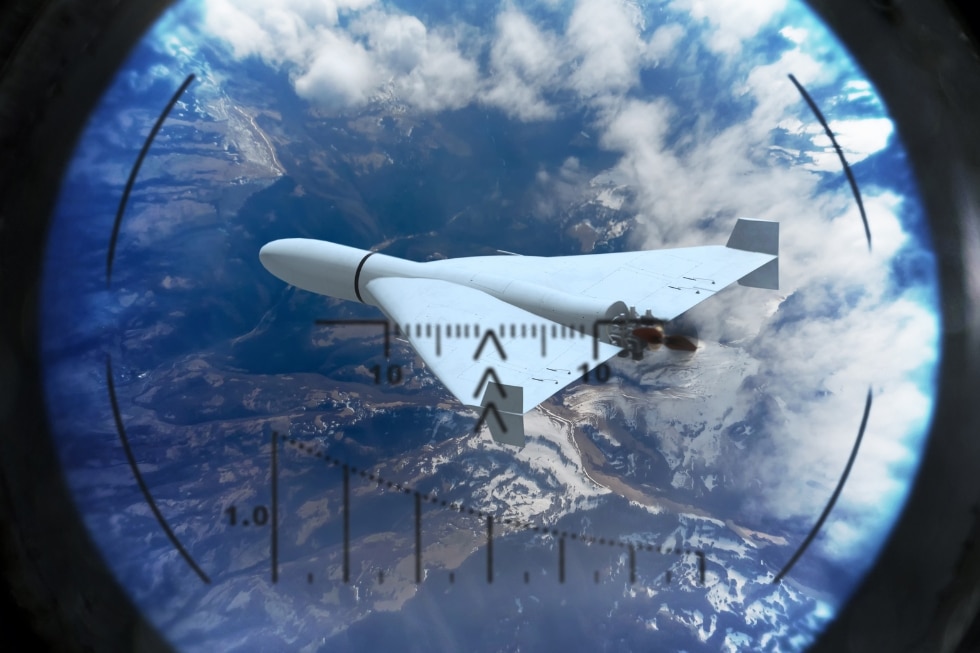
Cruise missiles launched from maritime platforms, air-delivered precision munitions and follow-on suppression measures converged within tightly compressed windows. Simultaneity denies defenders the opportunity to triage threats. It complicates prioritization and fragments command flow. It compresses political decision time.
Hybrid war amplifies this dynamic by attacking not only physical infrastructure but cognitive bandwidth.
When radar inputs are distorted, communications are strained and decoys saturate detection grids, defenders confront uncertainty before they confront impact. The first-order effect is confusion. The second is paralysis. The third is delayed retaliation.
The leadership strikes in Tehran must be understood within this framework. Whatever their political consequences, the operational objective was clear. Collapse coherence before counterforce can mobilize. Reduce the adversary’s ability to transition from shock to organized response.
Increasingly, the compression of this decision space is also being reinforced by algorithmic assistance. AI-supported analysis platforms can process large volumes of battlefield data far faster than traditional intelligence cycles allowed. Satellite imagery, radar signatures, communications intercepts and open-source information can be fused into a rapidly updated operational picture. In such an environment, the tempo of conflict becomes shaped not only by weapons systems but by the speed at which data can be interpreted and translated into operational decisions.
This model reflects a broader transformation in high-end warfare. Space-based sensing, cyber operations, electronic warfare, stealth penetration, maritime precision strike and networked data flows increasingly function as a single operational ecosystem. Analysts have described this convergence as a defining feature of next-generation conflict, in which networked command systems integrate targeting and intelligence across domains. The visible explosion is the final expression of an architecture that may have been positioned and calibrated weeks earlier.
Hybrid war, in this sense, is not irregular warfare; it is not proxy competition; it is an integrated state-on-state conflict across domains executed at compressed speed.
The strategic consequences of the first hour
The ongoing escalation across the region underscores the paradox embedded in this architecture.
Missile exchanges have reached or threatened the Gulf states. Air defense systems across multiple capitals have been activated in layered formations. Civil aviation corridors have narrowed. Energy markets have responded to uncertainty around maritime chokepoints, particularly the Strait of Hormuz, through which roughly one-fifth of global oil consumption passes. Financial centers once considered insulated from direct confrontation have entered the strategic perimeter.
Recent maritime incidents in the Gulf further demonstrate how quickly hybrid conflict can expand into economic and logistical domains. Commercial shipping routes have experienced intermittent disruption, insurance costs for tankers have risen and naval patrols across the Strait of Hormuz have intensified. These developments illustrate how hybrid warfare blurs the boundary between military operations and systemic economic pressure. This is the structural tension of hybrid war. The architecture that enables surgical systemic shock can also accelerate escalation once activated.
By compressing the first hour, integrated operations force adversaries to reassess survivability. States observing these events will draw their own conclusions about resilience, redundancy and deterrence. Hardened infrastructure, distributed command systems, autonomous defensive layers and rapid decision protocols will become central to strategic planning.
The implications extend beyond the Middle East. In an era of renewed great power competition, first-hour survivability may determine campaign trajectories. The side that maintains coherent command and control under simultaneous multidomain pressure gains a disproportionate advantage. The side that loses situational clarity may find that retaliation becomes reactive rather than strategic.
This reality reshapes deterrence theory. Traditional deterrence assumed time for signaling, mobilization and escalation control. Compressed warfare reduces that time. Decision-makers may face irreversible outcomes before full information is available.
The February 28 operation, therefore, signals not only technological maturity but doctrinal adaptation. It reveals a confidence in the ability to integrate domains at speed and scale. It also reveals the vulnerability of centralized command structures to synchronized shock.
If conflict continues, analysts may ultimately study this opening less for the targets struck than for the lesson transmitted: War at the high end is no longer sequential; it is concurrent. Air superiority, cyber disruption, electronic suppression, precision strike and maritime maneuver now unfold as layered expressions of a single architecture. The most consequential battlefield may no longer be geographic, but rather temporal.
In previous eras, states prepared for long campaigns. They anticipated weeks of maneuver before decisive outcomes emerged. In this era, they must prepare for the first 60 minutes. Resilience must be engineered not only into physical infrastructure but into decision-making structures themselves.
The strikes over Tehran did not simply mark an escalation in a regional rivalry. They signaled that the decisive phase of modern conflict may occur before the public recognizes that war has begun. The first hour is no longer a threshold. It is a verdict.
As the conflict now expands toward maritime corridors and energy chokepoints, the logic of the first hour remains central. The architecture that compressed decision time at the outset may shape how escalation unfolds across domains. What began as systemic shock over Tehran now tests resilience from the Gulf’s airspace to its shipping lanes. Recent reports that AI-assisted analytical systems are being used to process battlefield intelligence further illustrate how the speed of decision-making is becoming as strategically decisive as the weapons themselves.
States that fail to protect that decision space may find that the war is effectively lost before it is formally declared.
[Kaitlyn Diana edited this piece.]
The views expressed in this article are the author’s own and do not necessarily reflect Fair Observer’s editorial policy.







Join the conversation
Share your perspective
Log in to share your thoughts and take part in the discussion.