

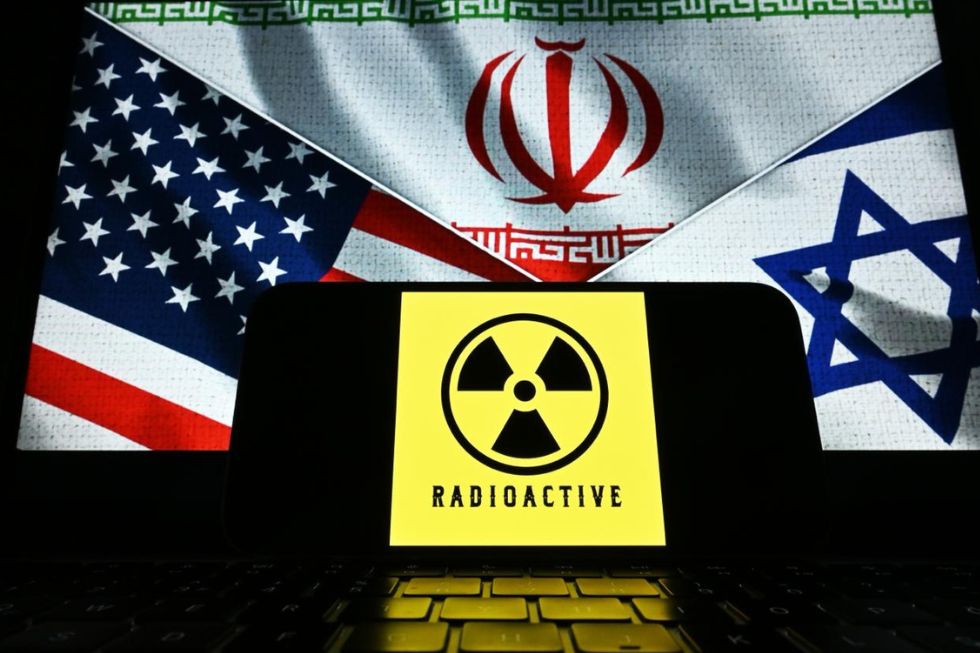



Israeli and Western strategic circles have arguably reached their most pivotal point since the Iranian Islamic Revolution of 1979. Following the 12-Day War of June 2025, during which the US and Israel executed precision strikes on Iranian nuclear sites Isfahan and Natanz, the follow-up US-Israeli joint operation in early 2026 shattered the regime’s spine. The confirmed deaths of Supreme Leader Ali Khamenei and the entire upper echelon of the IRGC command in a precision decapitation strike have plunged Tehran into a terminal existential crisis. The sudden evaporation of the Velayat-e Faqih has left a 1.6 million square-kilometer power vacuum, triggering a frantic debate in Washington and Jerusalem: should the West oversee a controlled transition, or allow the ancient Persian state to fracture into its constituent parts?
In the vacuum of this post-regime reality, a tempting but dangerous narrative has surfaced again from the archives of strategic thinking from the 1980s. This is the belief that the long-term security interests of the State of Israel, the United States and the larger Western alliance are served by the balkanization of the Iranian state, or its breakup into its component ethnic and sectarian micro-states. This reasoning is dangerously counterproductive and lacking, as Israel should fear a balkanized Iran more than it wants such a dissolution.
The fragmentation strategy, famously articulated by Oded Yinon in 1982, represents a catastrophic misreading of the 2026 security environment. While the dismantling of a hostile central government might remove a unitary threat, the resulting vacuum would not yield a collection of benign, manageable statelets. Instead, it would detonate a geopolitical dirty bomb that no amount of missile defense or border walls could contain.
The hard realities of 2026 dictate that a fragmented Iran would birth a constellation of nuclear warlords operating outside the logic of deterrence. It will also open a super-highway that enables a resurgent Islamic State of Khorasan (ISIS-K) and Al-Qaeda to reach the Mediterranean. Fragmentation will destabilize the crucial NATO anchor of Turkey through unmanageable refugee waves, and hand the strategic coastline of the Indian Ocean to the People’s Republic of China via a vassalized Baluchistan. Furthermore, the operational paradigm of the Israel Defense Forces (IDF), which relies on “intelligence dominance” over a centralized adversary, would be rendered obsolete in a chaotic landscape of fifty warring militias.
Consequently, the only viable pathway to regional stability is not the passive observation of a state collapse, but a coordinated US-Israeli Smart Intervention. This is a strategy predicated on the reality that the Iranian regime must change to prevent the catastrophic alternative of a failed, balkanized state. Unlike the Blood Borders model of fragmentation, that is, drawing borders along ethnic or religious lines, a Smart Intervention utilizes absolute air superiority, digital paralysis of the IRGC’s repressive apparatus and legal snapback isolation to facilitate a transition that preserves Iran’s historical and institutional integrity. A unified, secular Iran is a prerequisite for the Cyrus Accords model — a framework of strategic cooperation that transforms a former adversary into a regional anchor of stability. The opportunity cost of trading a potential future ally for a guaranteed failed state is a miscalculation that would haunt global security for the next century.
Yinon Paradigm is strategic anachronism in 2026
The Yinon Paradigm comes directly from Oded Yinon’s February 1982 article, “A Strategy for Israel in the 1980s.” Yinon, a former Israeli Foreign Ministry official, argued that Middle Eastern states were fragile — glued together only by repression — and that breaking them down into smaller ethnic and religious states was the only way to guarantee Israel’s survival. The logic was simple: A neighborhood busy fighting its own civil wars is too distracted to threaten you.
But trying to paste a theory from 1982 onto the reality of 2026 is a massive mistake. The region hasn’t just changed; it operates on completely different rules now. Yinon assumed that breaking up big states would create weak, contained micro-states that couldn’t hurt anyone. Recent history proved the exact opposite. When central authority collapsed in Iraq after 2003, we didn’t get a quiet partition; we got ISIS erasing borders. When Syria fragmented in 2011, it didn’t create a safe buffer for Israel. Instead, it created a chaotic vacuum that the IRGC used to park advanced missiles right on the edge of the Golan Heights. In 2026, chaos doesn’t contain threats — it incubates them.
The biggest mistake in applying Yinon’s logic to Iran is treating it like an artificial state, similar to Iraq or Syria. Iraq and Syria were modern creations, glued together by colonial powers from different Ottoman pieces. When they fell apart after 2003 and 2011, they cracked along lines that dictators had merely covered up. Iran is different. It is a civilizational state with thousands of years of shared history.
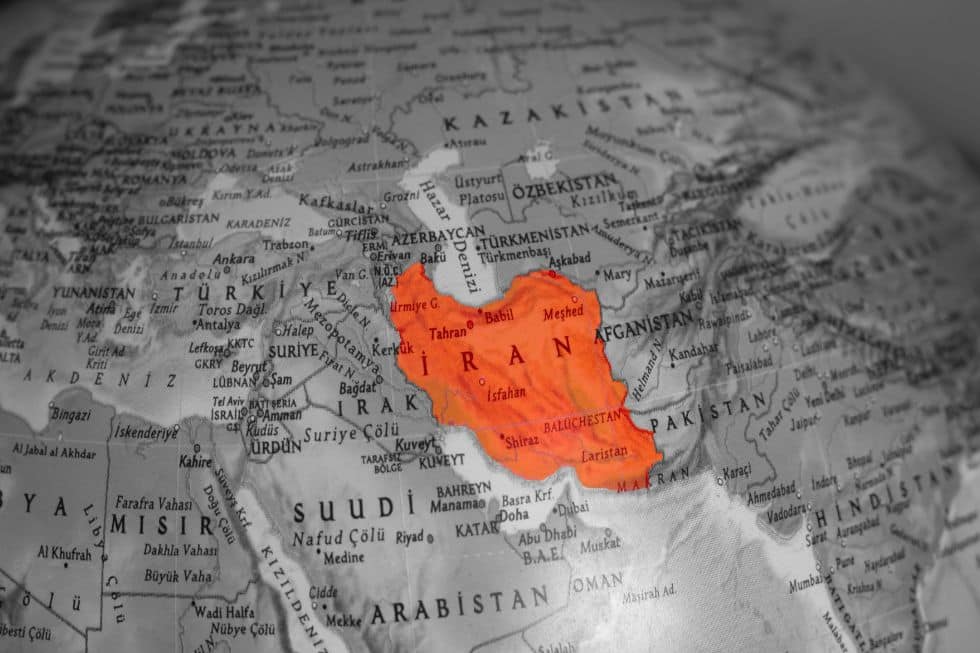
Despite having many ethnic groups — Persians, Azeris, Kurds, Arabs, Baluch, Lurs — the concept of Iran-zamin (the Land of Iran) creates a loyalty that runs deeper than ethnic differences. Western strategists often underestimate this “rally around the flag” effect. Trying to push separatism from the outside usually backfires; it just hands the regime a perfect excuse to claim foreigners want to carve up the motherland. During the protests in 2025–2026 across Tehran, Isfahan and Tabriz, chants of “We are all together” drowned out any separatist voices. Even with the economy in ruins and political repression high, Iranians want to reclaim their country, not dissolve it.
Why fragmentation hampers Israel
The Yinon Plan was conceived in an era of conventional state-on-state warfare, where the primary threat was a massed Arab armored column crossing the border. In that context, breaking a large army into smaller, feuding militias made sense. Warfare in 2026, however, is defined by precision intelligence, cyber dominance and integrated air defense. Israel’s “Momentum” and subsequent defense plans rely on precise, data-driven targeting of enemy centers of gravity. As Israeli defense analysts have noted, the IDF’s superiority is maximized against a state actor with assets to lose and a hierarchy to target.
Dealing with “50 militias” in a balkanized territory removes the targets. There is no central server to hack, no commander-in-chief to deter and no economy to sanction. The enemy becomes hydra-headed, invisible and immune to the pressure points that Israel has spent decades mastering. The 1980s strategy assumed that chaos targets the enemy; the 2026 reality is that chaos targets the global order, energy markets and non-proliferation regimes upon which the West depends.
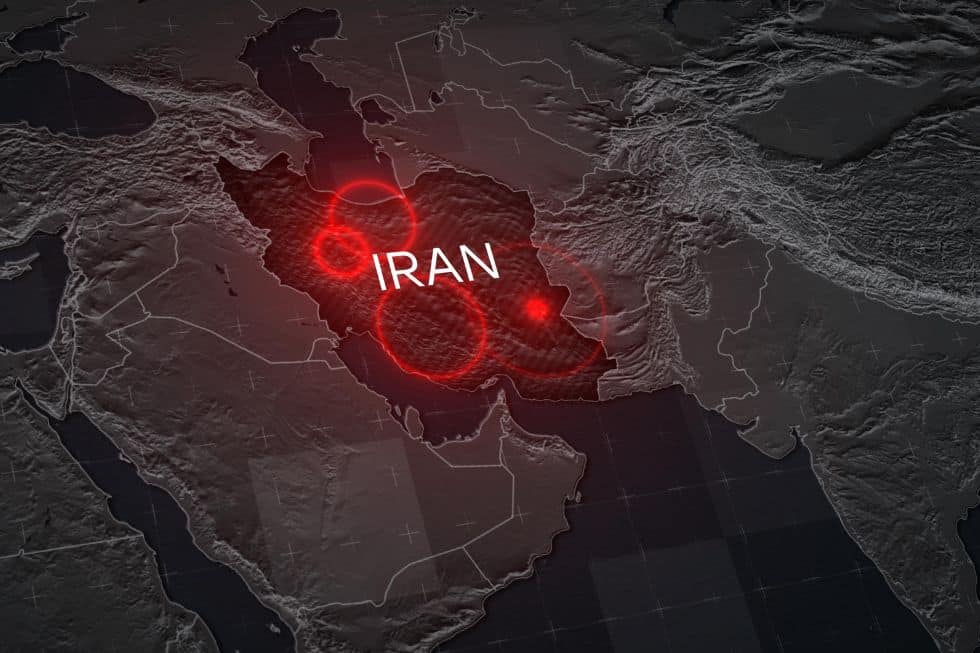
The most terrifying variable in the equation of Iranian fragmentation is the status of its nuclear program. Unlike the denuclearized Libya or the nascent programs of the past, Iran in 2026 possesses a mature, dispersed and deeply hardened nuclear infrastructure. Following the 12-Day War in June 2025, Israeli and US strikes degraded parts of this infrastructure but failed to obliterate the technical knowledge or the entirety of the fissile stockpile. The International Atomic Energy Agency (IAEA) has reported a critical loss of “continuity of knowledge” regarding Iran’s production of centrifuges and enriched uranium inventories.
In a scenario where the central government in Tehran collapses, command and control over these strategic assets would evaporate. The resulting danger is the “Nuclear Warlord” scenario: local commanders, factional IRGC leaders or separatist militias seizing control of nuclear sites like Natanz, Fordow or Esfahan to use as leverage or a source of revenue. Graham Allison, a leading scholar on nuclear terrorism, has long warned that the “loose nukes” problem — the theft or sale of weapons-usable material — is the “ultimate preventable catastrophe.” In a fragmented Iran, the barriers to such theft would be nonexistent.
A fragmented Iran would leave critical nuclear sites in contested territory or under the control of local warlords who view these assets as the ultimate insurance policy or a source of immense wealth. The following table details the specific risks associated with key facilities in a fragmentation scenario:
| Facility | Location | Function | Risk in Fragmentation Scenario | Potential Consequences |
| Natanz (FEP) | Central Iran | Uranium Enrichment (IR-6 Centrifuges) | High | Theft of advanced centrifuges; looting of LEU/HEU stockpiles for black market sale. |
| Fordow (FFEP) | Qom (North-Central) | Deep Underground Enrichment | Extreme | Hardened site could become a “bunker state” for a rogue faction to pursue independent breakout. |
| Esfahan (UCF) | Central Iran | Uranium Conversion (Yellowcake to UF6) | Moderate | Large volumes of raw material (UF6) susceptible to theft and transport to other rogue actors. |
| Bushehr | Gulf Coast | Light Water Reactor | High | Radiological sabotage (“dirty bomb” source); environmental threat to Gulf states. |
| Parchin | Near Tehran | Weaponization R&D | Critical | Proliferation of warhead designs and detonation technology to terrorist groups. |
The collapse of the Soviet Union provides a chilling historical parallel, yet the Iranian scenario of 2026 presents unique dangers. The Soviet collapse occurred in a context of cooperative threat reduction with the United States; an Iranian collapse would likely occur amidst civil war and fierce anti-Western sentiment. Rogue IRGC elements, facing the loss of their state privileges, would have a massive financial incentive to sell enriched uranium or weapon designs to the highest bidder — be it a terrorist organization like Al-Qaeda or a state actor seeking a shortcut to the bomb.
David Albright of the Institute for Science and International Security notes that in a state of internal chaos, the government loses the ability to protect nuclear assets. Theoretically, this creates a possibility of non-state actors manufacturing crude nuclear devices. The compartmentalized nature of Iran’s program, designed to survive airstrikes, ironically makes it harder to secure during a civil collapse. There is no central “switch” to disable the program. Instead, a balkanized Iran creates multiple nuclear threshold entities. Israel would effectively trade one nuclear-threshold state for five or six unpredictable entities possessing nuclear materials, none of whom can be deterred by traditional diplomatic or military threats. Furthermore, the IAEA’s monitoring relies on the cooperation of a sovereign host government. Without that legal and logistical framework, the international community would be blind.
Intelligence dominance vs. the chaos of militias
Israel’s security architecture in the mid-2020s has evolved to prioritize intelligence dominance — the ability to deeply penetrate the digital and communications networks of its adversaries. This doctrine was vindicated during the 2025 conflict, where Israel successfully executed decapitation strikes against Hezbollah leadership and targeted key Iranian logistics hubs. Operations like the assassination of Hamas leaders in Iran or the disruption of IRGC networks rely on the adversary having a structure: a digital backbone to hack, a hierarchy to map and a chain of command to disrupt.
A unified Iran, for all its hostility, is a known entity with a centralized nervous system. The IDF’s Unit 8200 and the Mossad excel at infiltrating these centralized systems. They can monitor the orders flowing from Tehran to proxies in Lebanon or Syria. Deterrence is possible because there is an address for the return mail; when Iran threatens Tel Aviv, the regime understands the cost. Strategic deterrence relies on the concept of a “return address.” When the Iranian regime acts — via a missile test or a proxy attack — Israel knows where to send the message, whether diplomatic or kinetic. The survival instinct of the regime in Tehran provides a lever for deterrence; the leadership values its hold on power, its economy and its strategic assets.
Balkanization shatters this advantage. Replacing one centralized regime with fifty competing militias, warlords and ethnic separatist groups creates an intelligence environment characterized by “noise” and opacity. Hacking a state’s Ministry of Defense is a fundamentally different challenge than tracking the handheld radios and encrypted messaging apps of dozens of independent militia leaders in the Zagros Mountains.
In a civil war scenario, intelligence collection suffers a severe loss of signal-to-noise ratio. As the volume of threats multiplies, the quality of intelligence degrades, making it exceedingly difficult to distinguish valid threats from background chatter. This chaos exacerbates the “address” problem, undermining a deterrence theory that relies on a rational actor who values their survival and holds assets at risk. Because a militia leader in a fractured Baluchistan or Kurdistan may not value infrastructure or stability in the same way a state does, Israel cannot effectively deter a group that has nothing to lose.
Consequently, this dynamic creates an overwhelming resource drain, requiring immense operational bandwidth to monitor a fragmented Iran. Instead of focusing on a single nuclear program or a specific Quds Force general, Israeli intelligence would be forced to track simultaneous threats from multiple vectors — including loose nukes, cross-border raids, refugee flows and new proxy alliances.
The argument that Israel benefits from “weak” neighbors is a relic of conventional warfare. In the era of hybrid warfare and asymmetric terror, weak neighbors create safe havens for groups that are far harder to defeat than standing armies. The chaos in post-Gaddafi Libya, which destabilized the entire Sahel region, serves as a stark warning. Israel’s strategic interest lies in a demilitarized, non-nuclear, but a secular and functional Iran — not a Somalia on the Caspian Sea.
Turkey, NATO and the refugee weapon
For Turkey, a critical NATO ally and the gatekeeper of Europe’s southeastern flank, the prospect of Iranian fragmentation is viewed not as an opportunity but as an existential threat. In 2026, Turkey is already hosting approximately 3.3 million Syrian refugees, a demographic reality that has strained its social fabric, economy and political stability. The Turkish economy, while showing signs of recovery with inflation dipping to around 30% in early 2026, remains fragile and highly sensitive to external shocks.
A collapse of the Iranian state would trigger a refugee wave of biblical proportions. Iran has a population of over 90 million. The destabilization of its urban centers — Tehran, Mashhad, Isfahan — would send millions fleeing westward toward the Turkish border. Turkish intelligence agencies and the National Intelligence Academy have identified this potential influx as a top-tier national security risk. Unlike the Syrian crisis, which was managed with significant international aid and a gradual buildup, an Iranian collapse could be sudden and overwhelming. The cost of integrating or managing millions of new refugees would shatter Turkey’s economic recovery. Housing inflation, job competition and social services strain would likely lead to severe civil unrest within Turkey itself.
Beyond migration, the fragmentation of Iran would inevitably reignite the “Kurdish Question” with explosive intensity. An independent or autonomous Iranian Kurdistan (Rojhelat) would be viewed by Ankara as an intolerable threat to its territorial integrity, fearing it would embolden the PKK and separatist movements within Turkey’s own borders.
Historical precedents suggest Turkey would not remain passive. The Turkish military would likely launch cross-border interventions to establish “buffer zones” or dismantle Kurdish statelets, similar to its operations in Northern Syria and Iraq. This would place a NATO member army in direct conflict with various Iranian factions and Kurdish groups. Such a conflict would be a diplomatic nightmare for the NATO alliance. It would divert Turkish military resources away from the Black Sea and Mediterranean, weaken the alliance’s southern cohesion and potentially draw the US into a complex peacekeeping quagmire to prevent a war between its Kurds and its treaty partner (Turkey). The stability of the Turkish-Iranian border — which has remained largely unchanged since the Treaty of Zuhab in 1639 — is a pillar of regional order. Removing it invites chaos that NATO is ill-equipped to manage.
The vacuum and the terrorist resurgence
The maxim “nature abhors a vacuum” is nowhere more applicable than in the landscape of transnational terrorism. The collapse of central authority in Iran would create a power vacuum spanning from the Zagros to the Hindu Kush, a vast ungoverned space ideally suited for the resurgence of jihadist groups. As of 2026, ISIS-K has already demonstrated its growing lethality and ambition. Attacks such as the Kerman bombing in early 2024 and subsequent strikes in Shiraz have highlighted the group’s ability to penetrate deep into Iranian territory.
The IRGC and Iranian intelligence services do not act out of a commitment to global security. Rather, they engage in calculated suppression of rival extremist networks like ISIS-K to protect their own hegemony. Their activity along the Afghan border and within Salafist cells is less about counter-terrorism and more about monopolizing regional militancy. While the regime portrays these operations as a service to global interests, they are fundamentally interterrorist rivalries — a “turf war” between the regime’s state-sponsored proxies and ISIS-K.
ISIS-K propaganda already frames the Iranian regime as apostate rivals. Consequently, a fragmented Iran would be exploited as a “divine victory” to absorb existing radicalized networks. A foothold in eastern Iran would simply swap one terror architect for another, bringing ISIS-K geographically closer to the Arabian Peninsula and Europe, utilizing the very logistical hubs the Iranian regime has spent decades perfecting for its own global export of terror.
Similarly, Al-Qaeda leadership, much of which has been sheltered or contained under house arrest in Iran, would be unleashed. A chaotic Iran would provide a land bridge connecting jihadist theaters in South Asia (Afghanistan/Pakistan) with the Levant (Syria/Iraq). This “Jihadist Highway” would facilitate the movement of fighters, funds and expertise. The 2025 Homeland Threat Assessment by the US Department of Homeland Security (DHS) and other intelligence reports warn that the threat from these groups remains dynamic and persistent. A balkanized Iran would not be a localized humanitarian disaster. It would be a global security incubator for the next generation of transnational terror, necessitating renewed Western military intervention in a theater larger and more complex than Afghanistan and Iraq combined.
The Baluchistan corridor and the Chinese vassal state
One of the specific fragmentation scenarios often touted by proponents of balkanization is the independence of Baluchistan — a vast, resource-rich yet sparsely populated region spanning southeastern Iran and southwestern Pakistan. The argument posits that an independent Baluchistan could be a pro-Western ally that checks Iranian power. In reality, the geopolitical dynamics of 2026 suggest that an independent Baluchistan would inevitably drift into the orbit of the People’s Republic of China, becoming a strategic vassal rather than a Western outpost.
China’s Belt and Road Initiative (BRI) hinges critically on the China-Pakistan Economic Corridor (CPEC), the crown jewel of which is the port of Gwadar in Pakistani Baluchistan. Beijing has invested tens of billions of dollars into infrastructure in this region to secure a direct energy lifeline from the Persian Gulf to Western China, bypassing the vulnerable Strait of Malacca. In the event of Baluch independence (unifying Iranian and Pakistani Baluch territories), the new state would be economically destitute and desperate for patronage. The West, geographically distant and politically hesitant to engage with a likely unstable tribal confederation, would be outmaneuvered by Beijing. China, with its existing infrastructure on the ground and deep pockets, would step in as the primary patron.
China, utilizing “debt trap diplomacy,” would likely secure long-term leases on ports and mineral rights in exchange for immediate economic stabilization. The secession of Baluchistan would likely catalyze the total disintegration of the Pakistani state, which remains fundamentally dependent on the province’s vast gas and mineral wealth for its survival. A collapse of this magnitude—involving a nuclear-armed nation of 240 million people — creates a security vacuum that dwarfs existing regional threats and invites unchecked Chinese opportunism.
The People’s Liberation Army Navy (PLAN), under the guise of stabilizing a new state, would likely secure a permanent naval base on the Indian Ocean, effectively encircling India and placing a direct stranglehold on vital Western shipping lanes. Furthermore, this geopolitical shift would grant Chinese industry exclusive control over the region’s massive copper, gold and gas reserves. This will systematically lock Western interests out of a critical global supply chain and cement a new era of resource hegemony.
Hormuz and the global energy pulse
The Strait of Hormuz remains the world’s most critical energy chokepoint with approximately 20% of global petroleum liquids consumption passing through its narrow waters daily. The current state of the Strait of Hormuz is not one of “security,” but rather a precarious regional hostage crisis maintained by the Iranian regime. The IRGC Navy does not “harass” shipping out of a standard naval doctrine. It engages in state-sanctioned maritime terrorism and extortion, utilizing its proximity to the strait as a primary tool of geopolitical blackmail. While the IRGC operates within a hierarchy, its actions are not “rational” in a defensive sense. Rather, they are the aggressive probes of a predatory actor that weaponizes global energy supply chains to ensure its own regime’s survival.
In a fragmented Iran, the northern coast of the Strait — the entire strategic coastline — would fall under the control of competing local warlords or pirate enterprises. The “Somalization” of the Strait of Hormuz would be an economic catastrophe for the West and the global economy.
Without a state navy to enforce order (or at least provide a singular point of accountability), piracy and extortion would become the primary economic model for coastal militias. Beyond the immediate physical danger, the economic and strategic costs of a lawless Persian Gulf would manifest as a permanent, crippling tax on the global economy. The collapse of a centralized — albeit predatory — security apparatus would cause war risk insurance premiums to skyrocket from their standard rates to prohibitive levels, dwarfing the jumps to 0.5% seen during previous periods of volatility.
This institutionalized instability would inject a massive, permanent risk premium into energy markets, potentially driving oil prices above $150 per barrel and triggering global recessionary pressures on par with the 1970s oil shocks. Consequently, the United States and its allies would be locked into a perpetual, resource-draining military commitment. To prevent total maritime anarchy, Western navies would have to maintain a high-tempo presence to counter relentless swarms of suicide boats and drone strikes launched from an ungoverned coastline. This “endless constabulary mission” would not only deplete Western treasuries but also critically overextend naval resources, diverting vital assets away from the Indo-Pacific theater and other strategic priorities.
The opportunity cost of peace
The alternative to this dystopian landscape of fragmentation is the “Cyrus Accords” — a strategic vision proposed by exiled Iranian leadership and supported by various opposition groups for a transition to a secular, democratic and unified Iran. This roadmap fundamentally rejects the premise that Iran is naturally hostile to the West or Israel. It posits that the hostility is a function of the regime, not the nation.
The Cyrus Accords propose:
- Immediate Recognition of Israel. A post-theocratic Iran would normalize relations with Israel, building on the pre-1979 history of cooperation.
- Expansion of the Abraham Accords. This includes the integration of Iran into the emerging regional security architecture alongside Saudi Arabia, the UAE and Israel.
- End of Nuclear Military Ambitions. A democratic Iran would return to full compliance with non-proliferation norms in exchange for economic reintegration and access to civilian nuclear technology.
- Energy Stability. Iran would resume its role as a reliable energy supplier to Europe and the West. This will diminish Russian leverage over global energy markets.
A unified, democratic Iran serves Western interests in ways a fragmented one never could. The Periphery Doctrine could be reborn. Historically, Israel’s security was bolstered by ties with non-Arab regional powers (Turkey, Iran). Restoring this axis would fundamentally shift the balance of power in the Middle East, isolating radical Arab rejectionist fronts and creating a formidable bloc against extremism. A capable Iranian state army, purged of ideological elements, would be the most effective bulwark against ISIS-K and drug trafficking from Afghanistan. Furthermore, the reconstruction of Iran — estimated costs range from $400 million to up to $500 billion based on the 12-Day War — would be the largest economic opportunity in the region, driving growth for Western contracting, technology and energy firms. A balkanized Iran offers no such market, only humanitarian aid bills.
[Cheyenne Torres edited this piece.]
The views expressed in this article are the author’s own and do not necessarily reflect Fair Observer’s editorial policy.






Join the conversation
Share your perspective
Log in to share your thoughts and take part in the discussion.