


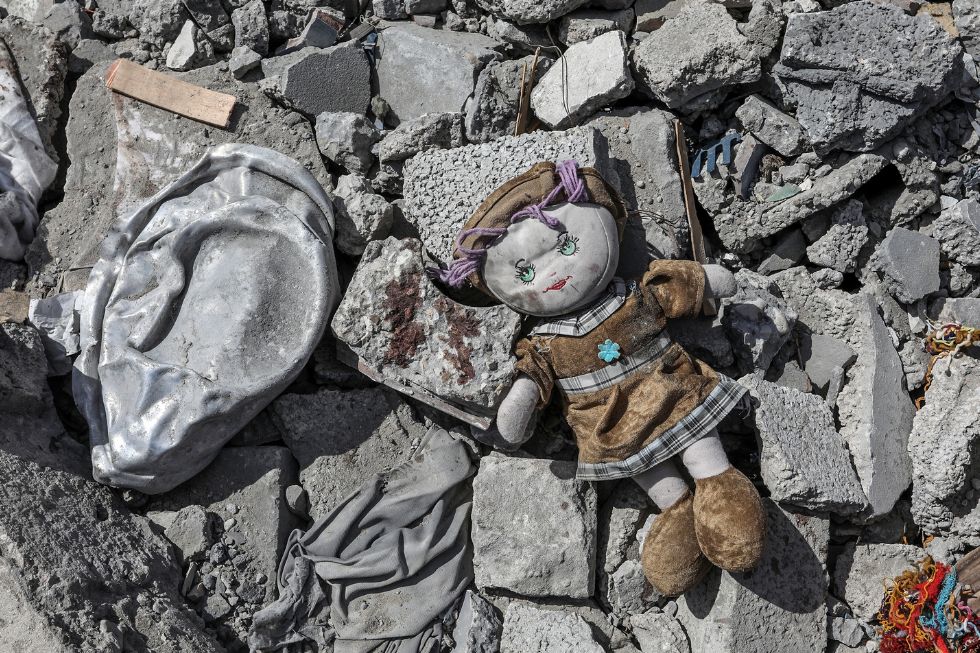



Moved by the unfair, severe and extended plight of the Palestinian people, I try to support their cause in whatever ways possible. But as a retired, colored woman, without fame or fortune or power, with only heart, I often feel there is little I can do in the face of this tragic situation. I can keep abreast of the news. I can donate to organizations working on the ground. I can march in the street with fellow sympathizers. And I can watch Palestinian movies and documentaries. What began as an act of support has turned into the privilege of seeing some truly outstanding films.
Palestinian films over the years
Palestinian films are no doubt difficult to make and hard to come by. As one can imagine, they don’t have big budgets. Instead, their richness lies in the simple, moving, real stories of the daily challenging lives of ordinary Palestinians. Despite their quiet presentation, their impact on the world stage is growing louder.
The first one I saw was Israeli filmmaker Eran Riklis’s The Lemon Tree. This 2008 film portrays the true story of a Palestinian widow’s legal and emotional struggle when her lemon grove is threatened by the security concerns of her neighbor — the then Israeli defense minister. The film won awards in Europe and Australia.
British-Palestinian filmmaker Farah Nabulsi’s The Present (2020) follows a Palestinian father and daughter as they navigate West Bank checkpoints to buy an anniversary gift, showing quiet resilience under occupation. The film won many awards — including the Academy Award for Best Live Action Short Film and the British Academy of Film and Television Arts Award for Best Short Film.
Another film by Nabulsi, The Teacher (2023), depicts a Palestinian schoolteacher struggling to balance his commitment to political resistance, his role as a father figure to his students and his newly forming relationship with a volunteer worker. The film won a long list of awards (best film, best actor, audience award, best music) at a variety of film festivals (including Belgrade, Brooklyn, Red Sea, Galway, Trondheim and San Francisco).
Happy Holidays (2024), written and directed by Israeli-Palestinian Scandar Copti, follows interconnected Palestinian families whose secrets and strained relationships surface during the festive season, revealing tensions around love, duty and societal expectations. The film won awards in Hamburg, Marrakech, Thessaloniki, Tromso and Venice.
The year 2024 also delivered a brilliant documentary — No Other Land, the directorial debut of Basel Adra, Hamdan Ballal, Yuval Abraham and Rachel Szor — that shows the destruction of a Palestinian community in the West Bank, alongside the development of an alliance between a Palestinian activist and an Israeli journalist. Despite winning a long string of accolades at numerous film festivals (including Berlin, Chicago, Asia Pacific, Toronto, Vancouver, Washington, DC, Los Angeles and London) and even the Academy Award for Best Documentary Feature Film, it had difficulty finding a US distributor.
Palestinian films of 2025
This past year has gifted us three amazing works. This, in spite of the ongoing Israeli killings in Gaza and violence in the West Bank — or perhaps because of.
Written, directed and produced by Palestinian-American Cherien Dabis, All That’s Left of You (2025) traces a Palestinian family’s multigenerational journey, linking love, loss and memory as personal lives unfold against decades of displacement and political upheaval. Since receiving rave reviews and awards at global film festivals, actors Javier Bardem and Mark Ruffalo have thrown their weight behind the film. It was supposed to be filmed in Palestine, but the Gaza War necessitated a shift to neighboring countries, so the film is officially Jordan’s entry for this year’s Academy Awards in the International Feature Film category.
Palestine 36 (written and directed by Palestinian filmmaker Annemarie Jacir) dramatizes the 1936–39 Arab Revolt through the intertwined lives of Palestinians, showing how colonial rule, resistance and sacrifice reshape a society. It received a 20-minute standing ovation at the Toronto International Film Festival. It was Palestine’s official submission to the Academy, where it was shortlisted but not nominated — despite support from Hollywood stalwarts such as Susan Sarandon, Mira Nair and Julie Delpy. Israeli Police prohibited screening of the film in Israel, saying that it was promoting terrorism.
And one I am dreading to see: The Voice of Hind Rajab:
January 29, 2024. Red Crescent volunteers receive an emergency call. A 6-year-old girl is trapped in a car under fire in Gaza, pleading for rescue. While trying to keep her on the line, they do everything they can to get an ambulance to her. Her name was Hind Rajab.
Tunisian filmmaker Kaouther Ben Hania brings us this powerful true story, blending actual audio recordings and investigative reporting to examine civilian suffering, accountability and the very human and inhumane cost of war.
Since its premiere, several eminent personalities of the film world have thrown their weight behind the film — including Brad Pitt, Joaquin Phoenix, Rooney Mara, Spike Lee, Jonathan Glazer and Alfonso Cuarón.
The Voice of Hind Rajab is Tunisia’s official entry to the Academy — but in essence, it is the world’s entry for justice and compassion. In Ben Hania’s statement at the Venice Film Festival — where The Voice of Hind Rajab won practically every award given — she explains how she came to make the film. But her words regarding why are even more striking: “I cannot accept a world where a child calls for help and no one comes. That pain, that failure, belongs to all of us. This story is not just about Gaza. It speaks to a universal grief.”
The nominees are…
The Voice of Hind Rajab has been nominated for this year’s Academy Awards under the Best International Feature Film category.
The four other nominations under this category are no doubt noteworthy: Norway’s entry, Sentimental Value (situated in Norway, the story follows two adult sisters in their reunion with their estranged father); Spain’s entry, Sirat (situated in the deserts of Morocco, it focuses on rave culture, regional conflicts and the sudden tragic vagaries of life); France’s entry, It Was Just An Accident (a group of former Iranian political prisoners struggle with whether to exact revenge on a man they believe may been their tormentor in jail); and Brazil’s entry, The Secret Agent (situated in 1977, a former professor joins other political dissidents to resist the military dictatorship).
But for me, The Voice of Hind Rajab stands alone in its impact. Perhaps it’s because I’ve seen the plight of Palestinian children over the years; some 1.7 million are listed by the UN Relief and Works Agency as refugees. Perhaps it’s because I’ve read the statistics that some 64,000 children are estimated to have been killed or maimed in the most recent war. Perhaps it’s because, as a mother and a grandmother, I can imagine one of my own children when young or one of my grandchildren now as Hind Rajab: alone, terrified, hopelessly trapped in an unnecessary, cruel, tragic situation. Perhaps it’s because the story is true and the voice we hear is indeed that of six-year-old Hind Rajab.
And the winner is…
Since the beginning of the most recent war in October 2023, more than 70,000 Palestinians — including more than 20,000 children — have been killed in Gaza. During that same period, in the West Bank — where there is no official war — some 1,055 Palestinians have been killed, including 230 children.
And despite the apparent ceasefire, the persecution of the Palestinian people continues. Since October 2025, “611 Palestinians have been killed, and 1630 injured.” There is still a food shortage: 77% of the population faces food insecurity, and over 200,000 children face acute malnutrition in 2026. Israel continues to restrict medical evacuations of the critically ill (including children) from Gaza. Some 20,000 Palestinians want to cross the Rafah border from Gaza into Egypt to access medical treatment; Israel has only allowed some 200 to do so. The comprehensive air, land and sea blockade that Israel imposed on Gaza in 2007 continues.
In the face of corrupt and immoral powers, it seems as if there is nothing we can do to stop the ongoing oppression, starvation, killing and, indeed, slow extermination of the Palestinian people. The least we can do is hear their voices before they die — or in this case, as they die.
Whether the Academy will hear Hind Rajab’s voice, we’ll know on March 16.
[Kaitlyn Diana edited this piece.]
The views expressed in this article are the author’s own and do not necessarily reflect Fair Observer’s editorial policy.
FO° Podcasts: Enemy of the Sun — How Palestinian Poetry Became a Weapon of Resistance
In this episode of FO° Podcasts, Atul Singh and Edmund Ghareeb trace the unlikely journey of the Palestinian poetry anthology...

Stories Are Powerful. Take Palestine to the Silver Screen.
Film and television determine what we think about, what we talk about and what we think about it. It is...

Support Fair Observer
We rely on your support for our independence, diversity and quality.
For more than 10 years, Fair Observer has been free, fair and independent. No billionaire owns us, no advertisers control us. We are a reader-supported nonprofit. Unlike many other publications, we keep our content free for readers regardless of where they live or whether they can afford to pay. We have no paywalls and no ads.
In the post-truth era of fake news, echo chambers and filter bubbles, we publish a plurality of perspectives from around the world. Anyone can publish with us, but everyone goes through a rigorous editorial process. So, you get fact-checked, well-reasoned content instead of noise.
We publish 3,000+ voices from 90+ countries. We also conduct education and training programs
on subjects ranging from digital media and journalism to writing and critical thinking. This
doesn’t come cheap. Servers, editors, trainers and web developers cost
money.
Please consider supporting us on a regular basis as a recurring donor or a
sustaining member.
Will you support FO’s journalism?
We rely on your support for our independence, diversity and quality.





Comment