

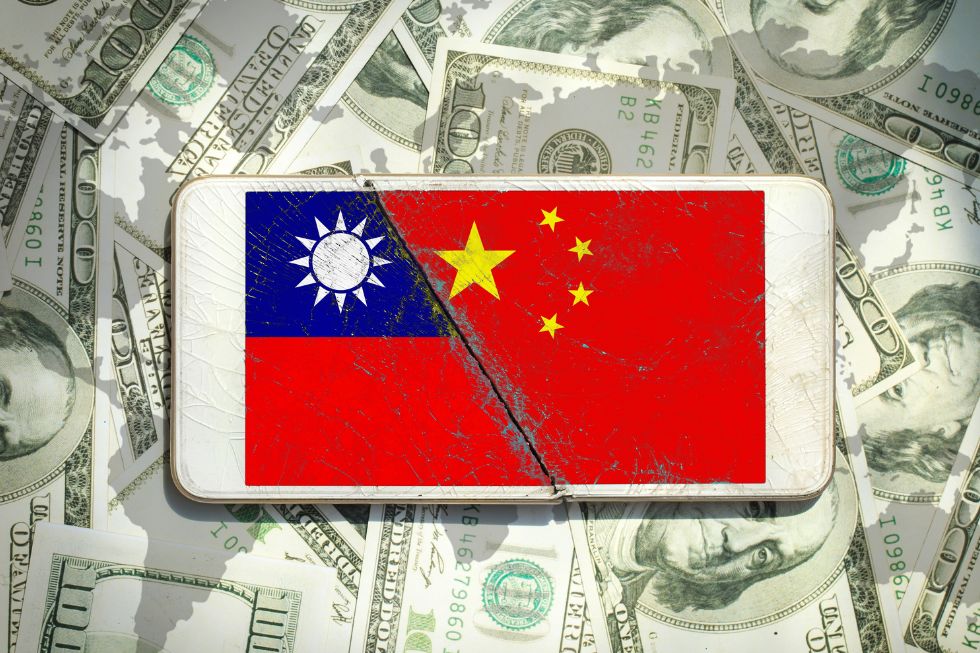



Tensions across the Taiwan Strait have intensified in recent years, prompting renewed debate over deterrence, military preparedness and great-power competition. The Pentagon has forecasted that China seeks to acquire by force or invade Taiwan by 2027. Policy simulations conducted by institutions such as the Center for Strategic and International Studies outline a range of contingencies, including large-scale amphibious operations and “gray zone” coercive measures, such as quarantine scenarios designed to pressure Taiwan without triggering full-scale war.
Increasing Taiwan’s defense
Against this backdrop, Taiwanese President Lai Ching-te has advanced proposals to enhance Taiwan’s defense capabilities. He has advocated for a special military budget of approximately $40 billion, which is roughly 3% of GDP, with a longer-term objective of increasing defense spending to 5% of GDP by 2030.
The proposed expansion emphasizes asymmetric capabilities, force modernization — the ongoing process of upgrading military equipment and technology to maintain combat superiority against future threats — and closer security coordination with the United States. Although Washington and the Taiwanese capital of Taipei lack formal diplomatic relations, US policy, guided by domestic legislation and longstanding strategic commitments, continues to prioritize Taiwan’s defense resilience.
In February 2026, members of the US Congress reportedly communicated with Taiwan’s Legislative Yuan, encouraging support for increased defense allocations in light of mounting security pressures. Nonetheless, domestic political contestation remains significant. Opposition parties, including the right-wing Kuomintang and the center-left Taiwan People’s Party, have resisted the scale of the proposed budget. Together, they hold a legislative majority.
The parties have offered an alternative package of approximately $12.7 billion, citing fiscal prudence, cross-strait stability and broader political considerations. Taiwanese Minister of National Defense Wellington Koo has warned that legislative obstruction could impede military development and weaken deterrence at a critical juncture.
From a strategic perspective, enhanced defense capabilities serve as a core component of deterrence. By raising the anticipated costs of aggression, Taiwan seeks to complicate China’s operational planning and strategic calculus as Chinese President Xi Jinping’s hopes. Effective deterrence, however, requires more than declaratory policy; it depends upon credible readiness, force survivability and sustained political commitment. Taiwan’s geographic constraints, economic interdependence and limited strategic depth underscore the importance of asymmetric defense investments and external security partnerships.
The US’s support and participation is one of China’s main reasons to invade Taiwan. It not only strengthens its presence in East Asia, but also undermines China to become Sino-centric. Consequently, Taiwan is being perceived as persistent. US President Donald Trump’s hawkish view on China sent a signal to Taiwan. Last year, the US was in the process of approving an $11.1 billion arms package for Taiwan, consisting of an artillery system, antitank and antiship missiles, and spare parts for helicopters.
Deterring Chinese aggression
Despite triggering China’s fury, it would strengthen Taiwan from China’s provocation. Since 2017, China has deployed over a hundred activities and military units around Taiwan, circling the islands for political reasons. Xi has been serious and ambitious about reunification. On January 1, 2026, he promised that reunification was an unstoppable goal of China’s long-term interest, and Taiwan was an inseparable part of the motherland. Additionally, the Chinese government has categorized Taiwan as a “separatist group” and warned other countries, including the US, not to meddle its internal affairs.
As reported by Taiwan’s Ministry of National Defense in December 2025, China operated over 100 aircrafts, 13 warships and 14 official ships around Taiwan. In addition to circling the islands, China also fired 27 rockets from Fujian province, signaling its military posture. Furthermore, the Chinese government issued an increase to its military budget from 2024, which valued ¥1.77 trillion ($11.5 billion) or increased 7.2%. China is planning to build a wartime command complex or the Beijing military city, which equates to the size of 50 Pentagons.
Unlike the tensions between the US and the Soviet Union during the Cold War, cross-strait tensions do not operate as a simple tit-for-tat dynamic. Rather, they reflect a complex interplay of deterrence, domestic politics, national identity and great-power rivalry. Communication channels between Lai and Xi remain limited, and mutual distrust constrains diplomatic engagement.
In this environment, Taiwan’s strategic posture hinges on credible deterrence, institutional cohesion and sustained international support. For a geographically constrained and diplomatically isolated polity, defense preparedness constitutes not merely a military imperative but a central pillar of political survival and strategic autonomy.
[Lee Thompson-Kolar edited this piece.]
The views expressed in this article are the author’s own and do not necessarily reflect Fair Observer’s editorial policy.






Join the conversation
Share your perspective
Log in to share your thoughts and take part in the discussion.