






|
||||||||
|
||||||||
|
||||||||
|
Dear FO° Reader,
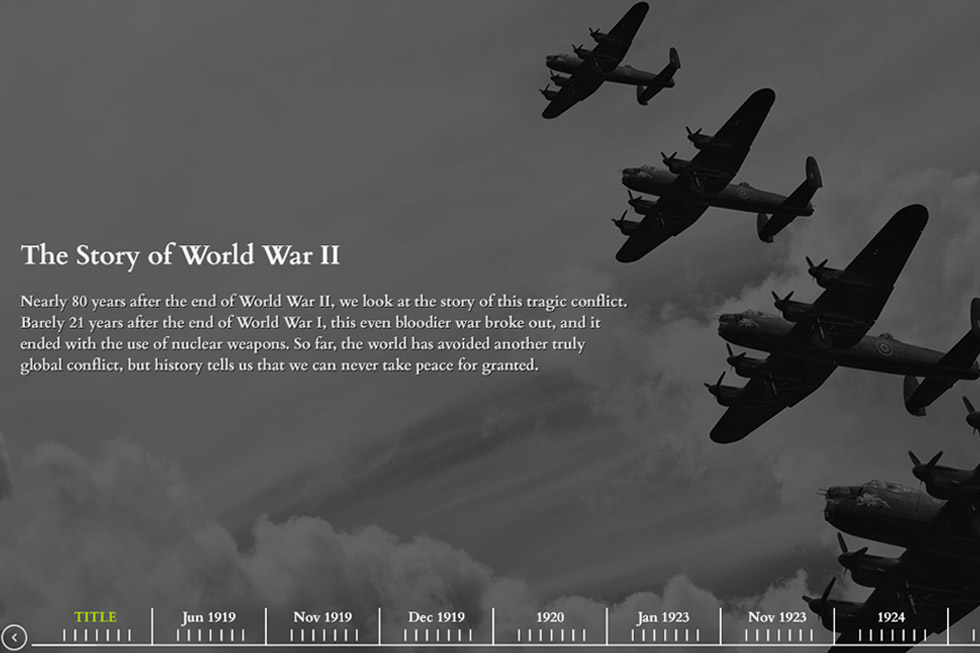
If you’ve scrolled down our homepage recently, you’ve likely run across our piece, “The Indian Subcontinent’s Hindu–Muslim Divide.” I’m proud to say that this interactive timeline was one of my first assignments at Fair Observer, all the way back in August 2023. Our then-Chief of Staff, Anton Schauble, informed me that this opportunity was rarely bequeathed to an assistant editor; interns back then were only assigned traditional articles to edit. For such a major project so early in my career, I knew my work must not disappoint! Initially, I was daunted by the sheer scale of the timeline. At over 100 slides, the project was a behemoth to undertake on a Friday evening. Fortunately, the slides were articulate and thoughtful, as one can expect from Atul Singh’s writing. The assignment encapsulated my internship’s core goal: learning a diversity of information about a topic I hadn’t otherwise explored and gaining editorial experience through committed labor. My effort paid off, impressing our editor-in-chief and netting me numerous timeline projects over the years. Chief among these was “The Story of World War II,” a deep dive into the origins, maneuvers and ramifications of our planet’s darkest conflict. It was the top piece produced before my tenure — so good, in fact, Atul tells me it was used to educate military cadets and trainee diplomats. In 2025, I was given the honor of contributing to a complete revision of the timeline. Anton, Atul and I added a cavalcade of new slides, information, images and videos. Our mission was to improve the piece’s thoroughness, and our updates certainly accomplished that. But you might be thinking: Why do these pieces need to be timelines? Why do we slave away over spreadsheets and royalty-free image sites, assembling them bit by bit, when producing an article would be so much faster? Well, timelines bring something to the table that traditional articles, both digital and physical, don’t. Why we write timelines
First, our timelines educate readers in a practical way. The format aids the flow of information on complex and multifaceted events. An account of Operation Hot Pursuit — a single-day mission by the Indian army into Myanmar in 2015 — is enough to cover over four pages with 11-point Arial text, broken into six sections. No interested reader should find it too brain-taxing or time-consuming to digest that much content in one sitting when it is presented this way. However, a grand-scale war involving dozens of nations would be too astronomically vast to chronicle beat by beat in an article. No reader would pay attention to the entirety of that colossal piece. A timeline, on the other hand, can easily explain dozens of subjects one after another without accumulating into a monolith of text. This breakup of topics even allows the piece to convey the events from multiple angles, making the various players’ viewpoints more understandable. Additionally, the slides’ images and videos offer further context and help retain the reader’s interest.
Second, a chronological order of events proves vital for informing newcomers of a major story. Journalism isn’t only the news of the day, but of human experience across time. The past informs the present; to understand our world, we must learn its history. Many young people today are ignorant in this field, sadly. Others have a skewed perception based on geography. For example, did you know that for two years in the 1970s, India’s prime minister suspended democracy, declared a nationwide dictatorship and imprisoned all opposition? Being an American, I had forgotten this South Asian episode until recently. Vikram M. Malkani’s personal reflection jogged my memory, but our recent timeline, “Understanding the 1975 Autocratic ‘Emergency’ in India,” helped me see the big picture and comprehend the horrors that occurred. Timelines excel at opening one’s eyes. Third, the Internet and social media have made textbooks far less preferable to much of the population. The best way to educate the masses is not to bring them to the library, but to bring the library to them. Young socialites may not peruse the shelves, itching to find the juicy details on the creation of Pakistan, but an engaging timeline that identifies the important aspects may entice them. Making history accessible to a distractible crowd is crucial to keeping the past alive. I hope you’ll take some time to study these timelines or others. Read a story foreign to you or discover a new perspective on one you know. It will push you to see our world in a new light. Broadening your mind is always a valuable endeavor. Read on, Lee Thompson-Kolar Associate Editor Related Reading
|
||||||||
|
We are an independent nonprofit organization. We do not have a paywall or ads. We believe news
must
be free for everyone from Detroit to Dakar. Yet servers, images, newsletters, web developers and
editors cost money.
So, please become a recurring donor to keep Fair Observer free, fair and independent. 
|
||||||||
|
||||||||
| About Publish with FO° FAQ Privacy Policy Terms of Use Contact |





Explore More FO° Reflections


Support Fair Observer
We rely on your support for our independence, diversity and quality.
For more than 10 years, Fair Observer has been free, fair and independent. No billionaire owns us, no advertisers control us. We are a reader-supported nonprofit. Unlike many other publications, we keep our content free for readers regardless of where they live or whether they can afford to pay. We have no paywalls and no ads.
In the post-truth era of fake news, echo chambers and filter bubbles, we publish a plurality of perspectives from around the world. Anyone can publish with us, but everyone goes through a rigorous editorial process. So, you get fact-checked, well-reasoned content instead of noise.
We publish 3,000+ voices from 90+ countries. We also conduct education and training programs
on subjects ranging from digital media and journalism to writing and critical thinking. This
doesn’t come cheap. Servers, editors, trainers and web developers cost
money.
Please consider supporting us on a regular basis as a recurring donor or a
sustaining member.
Will you support FO’s journalism?
We rely on your support for our independence, diversity and quality.





Comment