

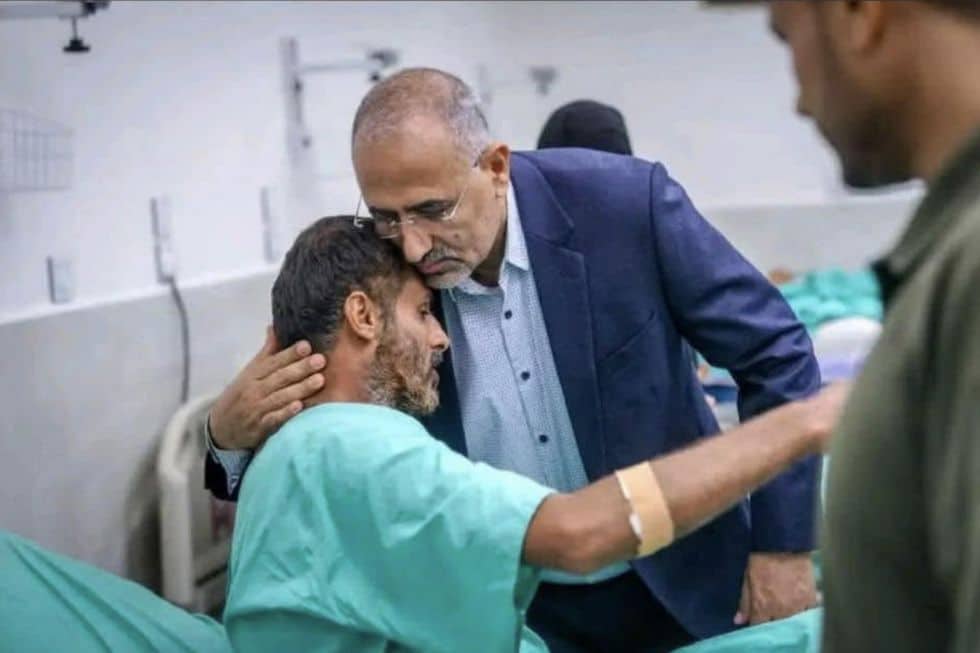



Recent events in Yemen’s south reveal a rapidly shifting political and security landscape shaped by external intervention, internal mobilization and deep uncertainty over southern governance. At the center of these changes stands Saudi Arabia, which has increasingly taken the political initiative in the south — a role previously shared with the United Arab Emirates (UAE).
Add subheading
With the UAE withdrawing its forces and influence, Riyadh now faces the challenge of managing southern dynamics alone — and possibly misreading the consequences. The Southern Transitional Council (STC), long a potent southern political and military force, lost its most significant external backer after Abu Dhabi withdrew support following clashes and strategic disagreements with Saudi Arabia.
Earlier STC gains in Hadramaut and al-Mahra enjoyed notable local support and expanded its territorial control. Riyadh viewed these advances as a direct threat to its security interests and responded with airpower and political pressure to compel a withdrawal.
Saudi Arabia then sought to “organize” southern political forces via a conference in Riyadh, presenting the exercise as an inclusive platform for southern voices. On paper, this was a bid to consolidate representation under a Saudi-managed umbrella. On the ground, however, it exposed the limitations of externally driven political engineering. Allegations that STC delegates were pressured — on foreign soil — to dissolve their own movement provoked widespread outrage in Aden and other southern centers. Large demonstrations underscored deep grassroots support for the STC and its leader, Aidarous al-Zubaidi, whose whereabouts remain ambiguous amid conflicting reports.
Despite claims from Saudi-backed elements that the STC “dissolved,” the council’s institutions — and popular base — remain potent political realities that cannot be erased by declarations signed abroad.
The security consequences of sidelining the STC are already emerging. Reports indicate rising activity by extremist groups such as Al-Qaeda in the Arabian Peninsula (AQAP) and other insurgent networks in parts of Aden and Abyan — areas where local STC-aligned forces had helped enforce relative stability. This dynamic raises critical questions about the wisdom of undermining actors who, despite political differences with Riyadh, have played significant roles in local security management.
Complicating all of this is the broader political context: The Presidential Leadership Council (PLC) recently dismissed key southern figures — including al-Zubaidi — effectively strengthening northern dominance within the state apparatus. Such moves fuel southern perceptions of marginalization and deepen distrust of both the PLC and Saudi intentions.
Western powers have largely been silent
Across Western capitals — particularly Washington and Brussels — there has been remarkably muted public engagement on these unfolding events. While major media outlets like The Guardian and The New York Times have covered the deepening Yemen crisis and the fracturing of the Saudi-UAE axis, there has been little visible Western diplomatic pressure on Riyadh regarding the southern question.
This quiet allows Saudi Arabia to take the Yemen file with limited external accountability, even as its decisions have potentially destabilizing consequences: exacerbating guerrillaization in the south, enlarging the humanitarian footprint and creating political vacuums that extremist actors can exploit. The relative lack of assertive Western diplomacy — beyond routine calls for restraint — suggests a strategic tolerance of Riyadh’s approach, even where it may undermine broader peace efforts.
A strategic misstep at a strategic juncture
South Yemen now stands at a crossroads — caught between external political engineering, internal mobilization and the persistent threat of militant resurgence. Saudi Arabia’s attempt to marginalize the STC risks hollowing out local structures that had provided essential stability and governance. At the same time, the lack of robust Western engagement has handed Riyadh a freer hand to shape Yemen’s trajectory without meaningful checks or balanced mediation.
In light of these complexities, it is essential to develop a strategic approach that addresses the multifaceted challenges facing South Yemen. By recognizing the delicate balance between external influences and local dynamics, policymakers can craft effective interventions that foster stability and promote sustainable governance. In order to do this, the different parties must follow these policy recommendations:
- Re-engage the STC as an essential stakeholder: Riyadh should recognize that any sustainable political arrangement in the south must include the STC as a legitimate representative of popular aspirations, not as a delegitimized remnant. Political dialogue should be internal to Yemen and free from the perception of external coercion.
- Mobilize multilateral diplomatic pressure: Western powers — especially the United States, United Kingdom and EU member states — must move beyond rhetorical calls for restraint and actively encourage inclusive negotiations that include both southern and northern actors. Overt backing of Riyadh without balanced engagement risks deeper fragmentation.
- Support local security architectures: Undermining southern security forces without a viable alternative creates vacuums that extremist groups can exploit. International partners should prioritize stabilization incentives tied to accountability and community protection, not just broad foreign policy aims.
- Condition aid and political support on inclusive governance: Humanitarian and development assistance — currently under strain due to funding cuts — should be conditioned on progress toward inclusive political dialogue that respects southern voices and enhances civilian protection.
Saudi Arabia’s efforts to shape the future of Yemen’s south will not succeed if they undercut the very actors needed to maintain order and legitimacy. Without course correction — and without balanced Western diplomatic pressure — Yemen’s south may face increasingly entrenched instability, further humanitarian erosion and a broader regional spill over whose costs will extend far beyond its borders.
[Kaitlyn Diana edited this piece.]
The views expressed in this article are the author’s own and do not necessarily reflect Fair Observer’s editorial policy.







Join the conversation
Share your perspective
Log in to share your thoughts and take part in the discussion.