






|
||||
|
||||
|
||||
|
What follows is not a pitch. It’s a scene. It’s a story. Dear FO° Readers,
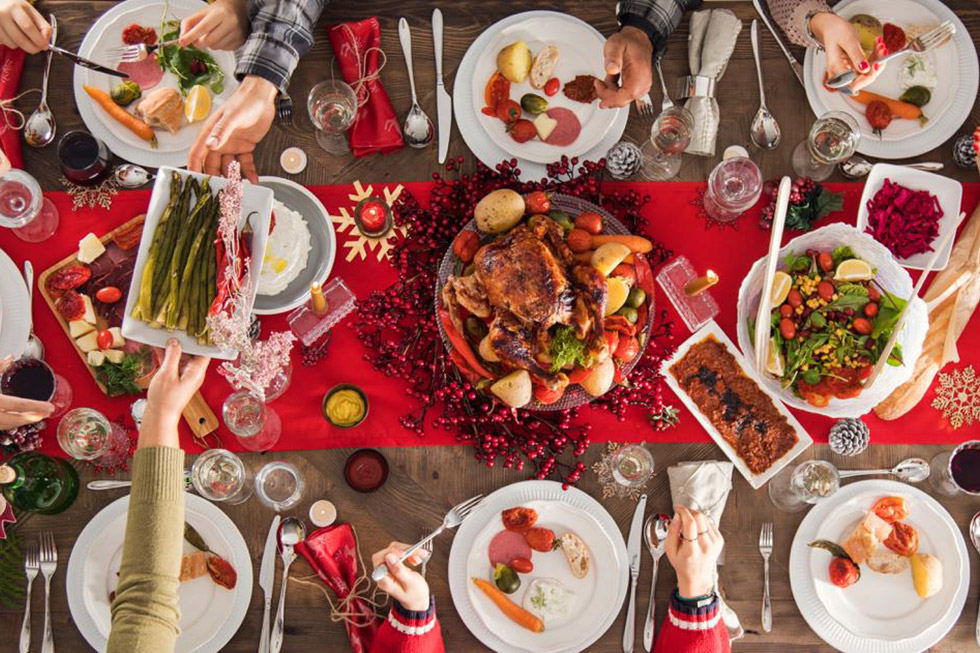
The kitchen is too small for all these people, but here we are anyway. Uncle Cauliflower shuffles past in socks that keep sliding down, his wallet poking through a hole in his back pocket. Aunt TurkeySandwich’s hair looUks like it’s never met a comb, but her hands move with absolute certainty as she reaches for the hot pan — and somehow you’ve already shifted it toward her before she asks. Magic? Grampa isn’t really a grandfather. He’s the neighbor who brings vegetables whenever he has more than he needs. No one has ever asked why he doesn’t spend holidays with his own family; everyone wonders. We just know the weight of his presence at the cutting board, the steady rhythm of his knife, the speed of his axe when he chops down wood for the winter. He’s a human machine, as generous and as secret as humans can get. Cousin Clove worries so much about what goes into his body that he eats cloves and raw garlic to prevent illness. Every year, he tells us that the last diet fad is already old and completely wrong. The scent of spices, garlic and herbs follows him everywhere. Somehow, inexplicably, he makes a living with his art — something the rest of us can’t quite figure out. He lives without a smartphone — only a landline — and a network of friends we’ll probably never meet. The Farmers — husband and wife with a distinctly eastern-sounding last name — move in perfect synchronization, judging the rest of us gently from their moral high ground. They don’t need words. Forty years of shared labor have built something the rest of us are still learning. I should call them the twins, perhaps, or the clones.
In a space this tight, a kitchen meant for two retired people, you learn things about people that no conversation could teach you. You learn to read Uncle Cauliflower’s slight backward lean — he needs more room at the counter. You feel Cousin Clove’s nervous energy before he speaks. After three hours of chopping, stirring, negotiating hot pans and sharp knives, your body has absorbed their rhythms, their hesitations, the way they take up space, including that of Sister Turnip, who hates — and I mean truly hates — cooking, won’t help with it, but will clean everything after everyone passes out with their bellies too full. There are awkward moments. There are funny moments. Someone always almost drops something. Someone always says the wrong thing. And, some repeat the stories they’ve told over the previous ten years. But we’re learning to fit and function together. Of course, the kids play outside and storm in when we say the table is ready. As they grow, they usually want to join in the kitchen, but things have changed in the past few years. The divide (but we stay)
By the time we sit down, the conversation drifts where it always does — politics. We discuss the state of things, who’s responsible for what’s broken. Uncle Cauliflower voted “wrong,” at least according to half the table. The Farmers believe everyone else has gone soft, lost discipline. Cousin Clove doesn’t vote at all because “the system is rigged.” Aunt TurkeySandwich argues back. Grampa listens with that impossible-to-read expression. This is the moment when phones could come out. Someone could retreat into scrolling. Someone could storm off. But no one does. Maybe it’s because we’ve just spent half a day in sensory conversation — the smell of garlic on shared hands, the rhythm of collaborative chopping, dozens of micronegotiations that required us to actually see one another. It’s harder to walk away when your hands still remember the weight of the bowl you passed to Uncle Cauliflower, when you’ve felt the warmth of Grampa standing beside you, even giving you tips on some dish preparation. You can’t reduce someone to a voting choice when you’ve just watched their concentration as they season the soup. So we stay. Not because we agree. But because our nervous systems have been reminded that these people are real — complex, embodied, more than their opinions. Are the old folks giving the young good advice
There are those who keep pounding the table and saying, “That’s just reality.” And then there are the young, trying to assemble a worldview from fragments — screens on one side, warnings on the other. We tell them: work hard, be disciplined, focus on your career. But the numbers tell another story. Nearly 60% of young people aged 16–25 said they were very or extremely worried about climate change, and more than 45% reported that this worry negatively affected their daily life and functioning in a global survey of 10,000 participants.PubMed A majority of young people say the future frightens them. Most of them believe that adults have failed to take care of the planet. Nearly half report that climate anxiety interferes with daily life. This isn’t abstract fear — it’s lived, embodied dread. Three-quarters of young people in the study reported thinking the future is frightening, and 83% said adults have failed to take care of the planet. PubMed At the same time, social mobility is shrinking. Assets are increasingly concentrated in the hands of billionaires and their heirs. A “normal” job — pastry chef, woodworker, care worker — often no longer pays for rent, health insurance and the basics. We keep insisting on a script that no longer matches the stage. “Research suggests that parents’ income determines about half of their children’s economic outcomes, with two-thirds of the differences between low- and higher-income families persisting into the next generation — showing how deeply social mobility is shaped by family background today.” Equitable Growth And we’re surprised when young people disengage. Why vote? Why join a party? Yet young people have not entirely signed off. Many reject party labels altogether while still participating civically in other ways — organizing, volunteering, creating, questioning. They haven’t lost interest in the world. They’ve lost faith in institutions that speak at them rather than with them. How do we learn to listen and pay attention? Add to this a quieter crisis: we are losing the muscle memory for being and spending time together. Screen time dominates waking hours. Loneliness is rising across all generations, but especially among the young. High-bandwidth human interaction — the kind that builds trust through presence, timing, shared effort — is becoming rare. Which brings us back to the kitchen. New traditions, old skills
What if young and old joined forces to invent new traditions? How about no screens for a day or two? How about doing something that makes sense because it will be remembered tomorrow — and five years from now. Perhaps, play a board game, cards or petanque. Care to learn to build a stone wall? Plant a row of berry bushes. A chestnut tree. A walnut. Offer soup and cake to people around you. Invite the lonely neighbor instead of splurging on champagne and imported wild salmon — Cousin Clove insists that farmed salmon is the worst; it comes with pesticides. Or do both. Re-learn presence. Quiet presence. The kind that doesn’t need to perform, interrupt or sparkle. The kind that listens to the old uncle tell the same story for the nth time. The kind that learns without announcing that it has learned, at least after a certain age. This is slower than scrolling. Less efficient than outrage. And infinitely harder to monetize. Which is why it needs protection. Fair Observer functions in the same way as our kitchen. We recognize complexity requires space, patience and a willingness to engage even when we disagree. If you’ve been here before — if you’ve read more than three articles this year and felt something shift — consider supporting this work not as charity, but as stewardship. At Fair Observer, four generations work together. The age range of our team spans from 16 to 85. You have heard us say repeatedly that we work across four continents. Rarely do we get to meet in person or spend time together in the same room, but we meet via video calls often and work on the same article, timeline or document together. As in my kitchen, we disagree on many things, but we can work through our disagreements. Just as many generations work together, authors and editors from different countries and different ages also work closely. Editors sharpen the arguments of authors and produce a finished product. They listen to the voices of authors and remain true to those voices even when editors disagree with what they are editing. Agreeing to disagree is the sign of a healthy mind and a sane society. Dialogue is the need of the hour, across political or cultural divides and across generations. So, enjoy your family get-togethers at the table and enjoy Fair Observer. Wishing you a very merry Christmas! Roberta Campani Communications and Outreach
|
||||
|
We are an independent nonprofit organization. We do not have a paywall or ads. We believe news
must
be free for everyone from Detroit to Dakar. Yet servers, images, newsletters, web developers and
editors cost money.
So, please become a recurring donor to keep Fair Observer free, fair and independent. 
|
||||
|
||||
| About Publish with FO° FAQ Privacy Policy Terms of Use Contact |





Explore More FO° Reflections

Support Fair Observer
We rely on your support for our independence, diversity and quality.
For more than 10 years, Fair Observer has been free, fair and independent. No billionaire owns us, no advertisers control us. We are a reader-supported nonprofit. Unlike many other publications, we keep our content free for readers regardless of where they live or whether they can afford to pay. We have no paywalls and no ads.
In the post-truth era of fake news, echo chambers and filter bubbles, we publish a plurality of perspectives from around the world. Anyone can publish with us, but everyone goes through a rigorous editorial process. So, you get fact-checked, well-reasoned content instead of noise.
We publish 3,000+ voices from 90+ countries. We also conduct education and training programs
on subjects ranging from digital media and journalism to writing and critical thinking. This
doesn’t come cheap. Servers, editors, trainers and web developers cost
money.
Please consider supporting us on a regular basis as a recurring donor or a
sustaining member.
Will you support FO’s journalism?
We rely on your support for our independence, diversity and quality.





Comment