








 | ||
| ||
| ||
Dear FO° Reader, Greetings from California, the East Coast and Switzerland, as the Holidays draw close, geopolitical shifts don’t give us any respite, so here we are trying to make sense of the latest “bit thing.”
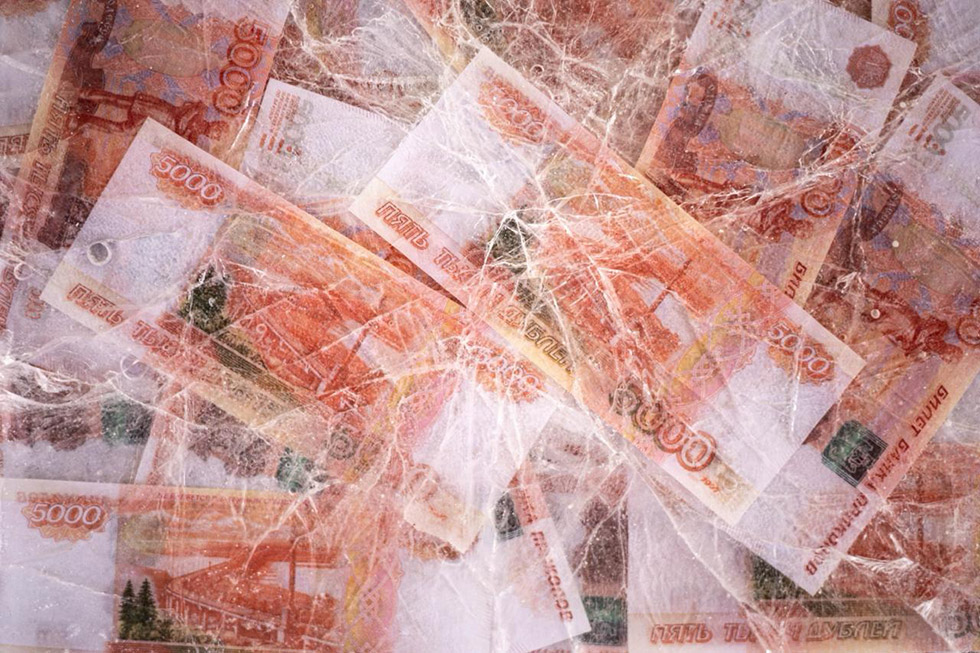
frozen rubles How did we get here? What has the US done? On Friday, December 12, the European Union decided to freeze Russian central bank assets indefinitely. This decision is the result of a process that started right after Russia launched its full-scale invasion of Ukraine back in February 2022. In the immediate aftermath of the invasion, Western governments acted quickly, freezing about $300 billion in Russian government reserves held overseas. Most of that — about $246 billion — is held in Europe, mainly at Euroclear, the Belgium-based financial firm that settles cross-border securities. Freezing the funds proved relatively straightforward; determining their long-term status did not. At first, Europe played it safe. Legally, they had to renew the sanctions every six months. There was a reluctance to block a country’s central bank reserves permanently — these assets have always seemed to be almost untouchable. European officials expressed concern that moving beyond a temporary freeze could unsettle markets, weaken confidence in the euro or expose European institutions to legal and financial risk. But the war waged on. In February 2025, the United Nations estimated Ukraine’s reconstruction costs in the hundreds of billions of dollars. European Council President António Costa later recalled a commitment by EU leaders to keep the assets immobilized until Russia ends its war of aggression and compensates Ukraine for the damage inflicted. This week, EU officials removed the requirement that sanctions be renewed every six months; the freeze is now indefinite. Europe has sent a strong signal to Russia and the rest of the world, signaling it is now ready to accept legal and diplomatic risks to maintain control of the funds. This decision comes even as Moscow continues to threaten Euroclear and other European financial institutions. The US has had its own role in all this. The Biden administration imposed tough financial sanctions on Russia and kept reiterating that Russia should pay for Ukraine’s recovery. That position diverged from a reported 28-point peace plan later advanced by President Donald Trump’s administration officials and Russian envoys. Their proposal would have taken control of the frozen assets away from Europe and handed most of the money to a US-run investment scheme. European governments rejected the plan. By making the freeze indefinite, they kept the assets under EU control and ditched the old system of time-limited renewals. Whether the funds are used to support Ukraine’s recovery or remain tied to a future settlement remains unresolved, but Europe has now made clear that the assets will not automatically return once the war ends. EU to freeze €210bn in Russian assets indefinitely Frozen Russian Assets And The Moment Of Truth For The World Order EU indefinitely freezes Russian assets so Hungary and Slovakia can’t veto their use for Ukraine What we know about leaked US draft plan to end Russia’s Ukraine war What are the reactions? Responses to this new freeze have been varied. Russia, as one would expect, is vehemently against the move, saying it undermines peace efforts and that the EU’s leaders are hiding the fact that EU citizens will be paying a price for this. Moscow has filed suit against Euroclear, seeking $230 billion in damages. Ukraine, of course, supports the action, as any blow against Russia supports their cause and their own badly depleted coffers need filling. However, things have taken a step further. The EU has begun talks to use the frozen money to directly fund Ukraine by sending €90 billion ($105 billion) to the war-torn nation. As of December 19, 2025, leaders have still failed to agree on and use the frozen Russian assets. This proposal comes at a time when the US says it will host a peace summit with Russia in Florida. The Trump administration has been pressuring the EU to back off on this new proposal, according to several officials from Ukraine and within the EU. This is not the first time the EU has floated such an action, but it is the next logical step to discuss. Among leaders, a number of countries have said they want Russia to pay for the damage it has caused, but several key members oppose the move. Sources: US ‘pressuring’ EU not to use frozen Russian assets for Kyiv, Ukraine official says | France 24 The EU’s problem isn’t Belgium — it’s Trump | POLITICO EU’s decision to freeze assets undermines Ukraine peace efforts: Russia | Business Standard Russia’s frozen assets — everything you need to know | DW EU aims to boost Ukraine aid with seized Russian asset plan | DW Russia seeks $230 billion in damages from Euroclear over seized assets | Reuters In particular, Belgium opposes the action due to the fact that Euroclear is based in the country. Brussels fears that such a dramatic act could have serious financial consequences, particularly if Russia genuinely pursues legal action against Belgium if the asset transfer is approved. There are also fears of scaring off future investors, as China has said that it does not approve of the move. Furthermore, complex domestic politics among other major players is also a concern. Italy opposes the plan, despite the ruling coalition’s stance against Russia. Smaller countries like Hungary and Slovakia also have a much more friendly relationship with Moscow, and are pushing against the plan. Hungary and Slovakia threatened to veto any EU measures on the frozen-asset/Ukraine loan, but both were blocked from exercising a veto when the EU moved to freeze Russian assets indefinitely, removing their ability to stop the plan. They subsequently agreed not to block. Amongst the public of major EU countries and Britain, polls show a wide range of support for these actions. Britain reports 60% support and 20% opposition, while on the other end of the spectrum, Italy is split at 39% support and 38% opposition. Public opinion varies from country to country, but a majority of citizens seem to support the move. Sources: EU heavyweight Italy joins Belgium in opposing Russian frozen assets plan | POLITICO Do Europeans support using frozen Russian money to back Ukraine? | Euronews Belgium shoots down EU offer to unblock Russian assets stalemate EU will be ‘severely damaged for years’ if assets plan fails, says Germany’s Merz – POLITICO What sentiment does Europe want to project? What about the future? Europe must decide whether to be perceived as a trustworthy financial hub or as a geopolitical weapon. By choosing to indefinitely freeze Russian-seized funds, Europe sets a precedent. It is deciding whether law is a shield or a tool, whether exceptions remain exceptional and whether Europe wants to be feared or trusted — or both. Belgium strongly opposes confiscating the principal $228 billion (€194 billion), fearing damage to Euroclear, capital flight from non-Western countries and long-term harm to the euro’s credibility as a reserve currency. Euroclear is not “just a bank,” it is part of the invisible plumbing of global finance. It doesn’t lend money; it holds and settles securities for central banks, pension funds and states. It holds $49 trillion (€42.5 trillion) in assets. If trust in Euroclear collapses, European capital markets seize up. Not a crash in the dramatic sense, but a systemic blockage. Liquidity dries up, settlement and clearing stop working smoothly, investors pull back, hesitate or exit, markets become illiquid, gridlocked or dysfunctional. Sources:
The war in 2025: ongoing conflict with limited peace progress The war continues with Russia making steady territorial gains — Russian forces captured an average of 176 square miles per month throughout 2025, bringing Russia’s total control to approximately 20% of Ukrainian territory. Russia’s systematic strikes on Ukraine’s energy infrastructure have left thousands without power for days, with some regions facing up to 16 hours daily without electricity. Trump’s diplomatic efforts have intensified: after a US-Russia summit in Alaska in August 2025, Putin claimed he “practically agreed” to Trump’s proposals, though Russia refused to drop its demand that Ukraine completely withdraw from eastern Donetsk and Luhansk regions. Trump stated talks are “getting close to something” as envoys plan weekend meetings with a Russian delegation in Miami, but experts note that fundamental disagreements between Russia and Ukraine remain as wide as ever — Russia seeks to subjugate Ukraine while Ukraine demands full sovereignty. Meanwhile, Ukraine faces a €45-50 billion foreign aid shortfall in 2026, making the discussion of frozen assets increasingly urgent. Sources: Al Jazeera – Russia-Ukraine War Day 1,394 Russia Matters – War Report Card Dec. 17, 2025 Harvard Gazette – Expert Analysis Can the same institutions play different roles? Can they be both arbiters of justice and neutral? The Russian frozen assets are the scandalon of the international order, the stumbling stone, but also a litmus test for these very institutions that were created to protect democratic values and a certain idea of the economy. Perhaps the roles of these institutions are evolving. Will this evolution strengthen or fracture the global financial system? This will depend on whether other nations see the choice to indefinitely freeze Russian assets as a choice of principled accountability or instead an example of weaponized finance. There are no clear answers; Belgium’s fears about Euroclear are as legitimate as Ukraine’s need for reconstruction funding. BRICS diversification is both a geopolitical challenge and a rational response to perceived risk. The Trump administration’s pressure campaigns and the EU’s resistance both contain elements of strategic logic. What matters now is that we resist the false comfort of simplicity and refuse to reduce a multidimensional crisis to heroes and villains. Fair Observer exists precisely for this kind of inquiry: to slow the rush to slogans, to bring together voices from different countries, perspectives and intellectual traditions, and to hold space for complexity in an age that increasingly demands certainty. Because if we lose the ability to think clearly about hard questions, the decisions will still be made — just without us. Wishing you a thoughtful week, Roberta CampaniCommunications & Outreach | ||
We are an independent nonprofit organization. We do not have a paywall or ads. We believe news
must
be free for everyone from Detroit to Dakar. Yet servers, images, newsletters, web developers and
editors cost money.
So, please become a recurring donor to keep Fair Observer free, fair and independent. 
| ||
| ||
| About Publish with FO° FAQ Privacy Policy Terms of Use Contact |





Explore More FO° Spotlight
Support Fair Observer
We rely on your support for our independence, diversity and quality.
For more than 10 years, Fair Observer has been free, fair and independent. No billionaire owns us, no advertisers control us. We are a reader-supported nonprofit. Unlike many other publications, we keep our content free for readers regardless of where they live or whether they can afford to pay. We have no paywalls and no ads.
In the post-truth era of fake news, echo chambers and filter bubbles, we publish a plurality of perspectives from around the world. Anyone can publish with us, but everyone goes through a rigorous editorial process. So, you get fact-checked, well-reasoned content instead of noise.
We publish 3,000+ voices from 90+ countries. We also conduct education and training programs
on subjects ranging from digital media and journalism to writing and critical thinking. This
doesn’t come cheap. Servers, editors, trainers and web developers cost
money.
Please consider supporting us on a regular basis as a recurring donor or a
sustaining member.
Will you support FO’s journalism?
We rely on your support for our independence, diversity and quality.





Comment