






|
||
|
||
|
||
|
Dear FO° Reader,
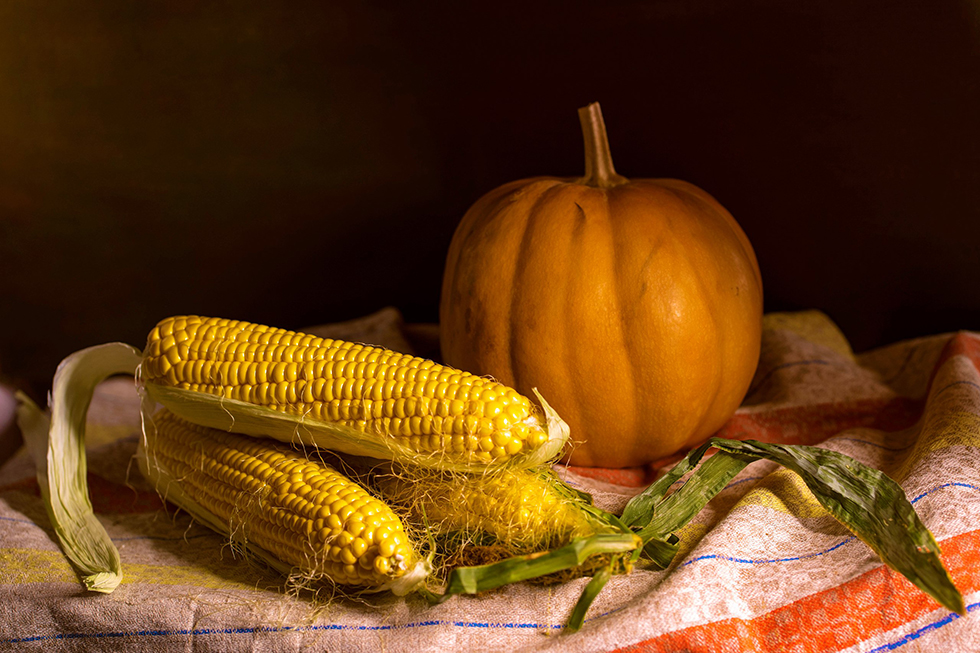
In 1987, I celebrated my very first Thanksgiving in Santa Fe, New Mexico, with my host family and friends. I was a Swiss exchange student with AFS, fresh from my tiny Alpine village of Airolo, dropped straight into the Santa Fe Indian School (SFIS) — the home of the Braves, and a boarding school. Stepping onto an entirely new continent at 16 wasn’t just travel; it was stepping into a new world where I quickly learned that home is less a place and more a feeling. But before I could fully embrace this holiday of welcome and gratitude, I first had to confront its contradictions. A few weeks before that first feast, a group of students tried to bar me from class on Columbus Day. All these kids — who were my age — were from First Nations in the Four Corners area, Navajo, Hopi, Pueblo, Zuni, Mescalero and White Mountain Apache. They stood their ground, and a few teachers had to negotiate my entry. I was stunned, clearly wasn’t expecting anything like that. I grew up in Switzerland, a place with no real wars for many centuries. It was naive of me. The students linked my Italian background to the conqueror Columbus — seeing an “Italian-speaking” student as a living reminder of the figure (Christopher Columbus, who was from Genoa) who brought disease, firearms, exclusion and catastrophic destruction to their communities. This confrontation sent me searching for answers. What I discovered in history class was a story far more complex than the holiday’s cheerful narrative suggests. However beautiful, it is a standard, idealized narrative In history class, we learned that in 1621, the Wampanoag people shared a harvest feast with English colonists in Plymouth, Massachusetts, an event now remembered as the “First Thanksgiving.” The Wampanoag’s help was crucial for the Pilgrims’ survival, as they taught them how to cultivate corn and other crops and assisted them after a harsh winter. This feast marked a brief period of peaceful coexistence. Now, though, the United American Indians of New England (UAINE), since 1970, also observe a National Day of Mourning (NDOM) to remember the losses and injustices they suffered. The holiday itself became official much later — President Abraham Lincoln declared it in 1863 to unite a war-torn nation, and Congress fixed it to the fourth Thursday in November in 1941, conveniently timing it as the starter pistol for Christmas shopping. And, if you want to learn more, you can read historians like James W. Loewen (Lies My Teacher Told Me, 1995) and Roxanne Dunbar-Ortiz (An Indigenous Peoples’ History of the United States, 2014), who focus on stripping away the “feel-good history” of the holiday to reveal the complex, often tragic, historical reality. First Nations People have been marginalized, to say the least. Exclusion and historical wounds
That moment, when I was excluded from the school on Columbus Day, the commitment of my peers made me feel the sting of being linked to centuries of colonial damage — it was a crucial lesson in Bildung (“education”). Unresolved historical wounds will come to the surface again and again. Thankfully, there are now initiatives such as the NDOM, which are essential counterpoints to the traditional Thanksgiving myth, but how many Americans know about it? Organized annually since 1970 by the UAINE. It takes place at Cole’s Hill in Plymouth, Massachusetts, directly overlooking Plymouth Rock. The narratives we inherit shape everything: how we welcome strangers, and, critically, how we treat the land that sustains us.
National Day of Mourning, Plaque, Wikipedia What we celebrate — and what we choose to forget — shapes far more than our sense of national belonging. The story of Thanksgiving also determines our relationship to the land itself. A myth built on harmony allows us to overlook both the violence inflicted on Indigenous nations and the violence inflicted on the ecosystems they cared for over millennia. The ways we remember this holiday shape the moral foundation of how we harvest, cultivate, extract and imagine abundance. In other words, the narrative of Thanksgiving does not just guide how we treat one another; it guides how we treat the soil beneath our feet. These parallel narratives — celebration and mourning, welcome and exclusion — aren’t just historical artifacts. They continue to shape how we inhabit this land today, particularly in how we grow our food. And, amid the noise of modern political divides, one truth remains unchanged: the land that nourished the first peoples still bears the heaviest weight of our choices. Land stewardship and welcoming strangers
The irony of Thanksgiving cuts deep: the Wampanoag welcomed strangers and shared their harvest wisdom, yet those strangers took the land and imposed an agricultural system that now threatens the soil itself. The story we tell about Thanksgiving shapes not only our moral relationship to Indigenous nations, but also our material relationship to the land itself.
via Shutterstock Where does the food on the Thanksgiving table come from? The food on the modern Thanksgiving table — turkey, mass-produced sides, frozen cranberries — is a product of this industrial, struggling food system. We should indeed be grateful today to US farmers who are enduring hard times and still feed the people, even as more and more food is imported at competitive prices. Many of them are in debt because of a complex cluster of factors, which include trade wars, the difficulties of monocultures and the pressure of large and largest agribusiness. The vicious cycle of subsidies and monocultures Let’s take corn or potatoes — Thanksgiving staples that the federal government heavily subsidizes. These subsidies, originally meant as a safety net, now trap farmers in a destructive cycle. They incentivize vast monocultures of corn, soy and wheat — single crops planted across endless acres. This depletes soil rapidly, forcing farmers to buy expensive synthetic fertilizers and pesticides that kill bees and birds while driving up debt. Meanwhile, the entire food supply becomes vulnerable to climate shocks and market volatility. Small and mid-sized family farms bear the crushing economic pressure of this system, struggling to compete while the soil beneath them dies. To break this cycle, we need to shift from subsidizing commodities to subsidizing stewardship — investing in regenerative agriculture and permaculture that prioritize soil health, biodiversity and local food security. By supporting farmers who grow diverse crops and use techniques like cover cropping and no-till farming, we can move toward genuine resilience. We could start by converting the greatest monoculture of all: the 40–50 million acres Americans dedicate to lawns — the largest continuously irrigated crop in America.
3000-year-old solutions to modern problems | Lyla June | TEDxKC Shifting to regenerative practices
While speaking with regeneration and permaculture expert Rob Avis of 5thWorld, I learned that the path out of our dependence on destructive monocultures and debt-fueled farming is possible. It most likely lies in a radical re-embracing of the land’s natural processes. In other words, moving toward regenerative agriculture and permaculture offers a viable solution. Instead of fighting nature with costly chemical inputs, these practices prioritize healing the soil, sequestering carbon and building local resilience. As Avis succinctly puts it, the solution requires a fundamental shift in perspective: “The main difference between conventional and regenerative design is that conventional design maximizes efficiency and regenerative design maximizes resilience.” This shift is not merely agricultural; it is a cultural necessity that requires recognizing that the abundance celebrated at Thanksgiving will only be truly sustainable when we move away from maximizing short-term yields towards maximizing the long-term resilience of our land, our farmers and our communities. So, it turns out that Thanksgiving is not just a dinner; it’s an annual mirror reflecting the core conflicts of American identity: the ideal of abundance versus the reality of injustice and an unsustainable food future. The only way to truly honor the original act of welcoming is to move the Thanksgiving table from a symbol of historical debt and industrial monoculture to one of sustainable, regenerative abundance. Happy Celebrations, whichever you choose, Roberta Campani Communications and Outreach |
||
|
We are an independent nonprofit organization. We do not have a paywall or ads. We believe news
must
be free for everyone from Detroit to Dakar. Yet servers, images, newsletters, web developers and
editors cost money.
So, please become a recurring donor to keep Fair Observer free, fair and independent. 
|
||
|
||
| About Publish with FO° FAQ Privacy Policy Terms of Use Contact |





Explore More FO° Reflections
Support Fair Observer
We rely on your support for our independence, diversity and quality.
For more than 10 years, Fair Observer has been free, fair and independent. No billionaire owns us, no advertisers control us. We are a reader-supported nonprofit. Unlike many other publications, we keep our content free for readers regardless of where they live or whether they can afford to pay. We have no paywalls and no ads.
In the post-truth era of fake news, echo chambers and filter bubbles, we publish a plurality of perspectives from around the world. Anyone can publish with us, but everyone goes through a rigorous editorial process. So, you get fact-checked, well-reasoned content instead of noise.
We publish 3,000+ voices from 90+ countries. We also conduct education and training programs
on subjects ranging from digital media and journalism to writing and critical thinking. This
doesn’t come cheap. Servers, editors, trainers and web developers cost
money.
Please consider supporting us on a regular basis as a recurring donor or a
sustaining member.
Will you support FO’s journalism?
We rely on your support for our independence, diversity and quality.





Comment