


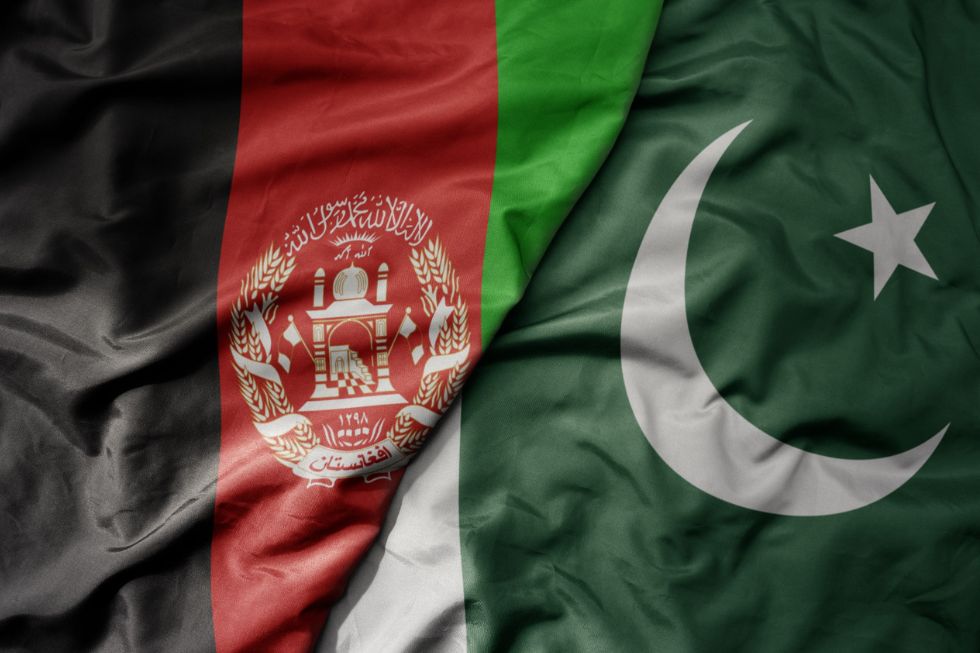



Decades ago, Pakistan made the argument that Afghan soil was misused as a terrorism hub. Such warnings were often dismissed as political propaganda or efforts to cover up domestic follies. However, recent reports by multiple independent agencies have now confirmed Pakistan’s long-time concerns to be valid. A recent UN report revealed that over a dozen terrorist groups, including the Tehrik-i-Taliban Pakistan (TTP), have been based on Afghan soil and are using it to cross boundaries and terrorize global communities.
Rise of Afghanistan as a base for transnational and proxy terrorism
The findings of the UN rely on multilateral verification, rather than mere claims made by Pakistan. More importantly, this fact has even been backed up by respected voices in Afghanistan. Ahmad Masood, leader of the National Resistance Front, and Sami Sadat, ex-commander of Afghan special operations forces and former director of military intelligence, have both stated publicly that Afghanistan has turned into a breeding ground of extremist networks that are involved in cross-border attacks inside Pakistan. The facts become impossible to deny when credible international institutions, along with Afghan insiders, come to the same conclusion.
What complicates the situation further is the reported proxy dimension. Afghan informers have reported that TTP violence is being financed by Indian money that passes through Afghan Taliban networks. Assuming this to be true would imply that Afghanistan is not only a passive host but is serving as a frontline in regional proxy warfare. To India, these kinds of tactics would appear to undermine Pakistan in the short term, but in the long term, the consequences are threatening.
Sponsorship of terror by states to destabilize international norms cultivates retaliatory circles and reinforces the extremist ecosystems that ignore national boundaries. It is clear through rational 1800 ulema analysis that these kinds of strategies will ultimately prove to be self-defeating.
Afghanistan’s silence met with Pakistan’s resistance to cross-border terror
The fact that the Taliban is in power contributes to the issue. Kabul can claim that it cannot withstand these terrorist organizations, but avoiding effective measures raises questions over Kabul’s approach and seriousness. Whether it is ideological symbiosis or a political calculus, the result is the same. The Afghan territory has been transformed into a haven for militants, undermining Afghanistan’s credibility as a responsible state.
Sovereignty implies responsibility; the government that proclaims its right to rule the territory should also assume the burden of making sure that its soil is not utilized in cross-border aggression. Inactivity will just widen the distance between Afghanistan and its developmental prospects.
The recent infiltration attempt of TTP Islamic terrorists, through the Afghan soil, across Gangi Khel Shawal in the Pakistan-Afghanistan border, was thwarted as Pakistani forces neutralized 10–12 Terrorists on August 30, averting a major cross-border assault. The losses were confirmed through videos by the terrorists themselves.
Previously, in April 2025, 71 terrorists were killed over a period of three days, and on August 7, 33 terrorists were killed in Zhob, a province of Balochistan in Pakistan. Hence, the TTP is no longer a hypothetical danger but an actual threat to the security of Pakistan. The defensive measures taken by Islamabad indicate that it is determined to safeguard its population and land, and to invalidate any allegations that it overestimates the danger posed by Afghanistan.
The regional spread of TTP and its toll on Afghanistan’s progress
The involvement of fighters is not just limited to Afghanistan but has extended beyond its neighboring borders. This is a threat to regional security. The capture of two Bangladeshi citizens associated with the TTP proves that the networks of this organization are now developing in the region. History bears multiple testimonies that terrorist movements, when left unchecked, almost always refuse to stay within the borders of only one geography. In the same way Al-Qaeda and the Islamic State of Iraq and Syria (ISIS) developed into global franchises out of local insurgencies, the TTP is becoming a transnational threat.
Such a path also contravenes the possibility of Afghanistan acting as a point of contact among the regions. Pakistan, China and Afghanistan have been trying to develop structures of trade and development, which terrorism renders impractical. Investors will not risk working in unstable environments, connectivity projects will fail and populations will not receive the benefits of economic integration. Allowing the unchecked use of its territory, Afghanistan is setting up its own economic grave and making sure that it will be viewed as a threat to the region, rather than a contributor to the regional development.
The alternative to Afghanistan is clear-cut. It may move decisively to destroy terrorist havens, and thus become part of regional collaboration and enjoy economic payoffs, or remain idle and risk more isolation. Pakistan has displayed determination as well as sacrifice in tackling this menace. The global society needs to learn that terrorism in Afghanistan is a threat not only to Pakistan but to the rest of the region, and needs to support its words with actions. They need to be sanctioned, diplomatically pressured and monitored.
It is no longer disputed that Afghanistan is a terrorist haven. The facts are too many, the risks are rising and the consequences are international. Not a single argument can reach another conclusion than that, unless Kabul and the international community move swiftly, the TTP and its affiliates will become a transnational franchise and destabilize South and Central Asia. Not only Pakistan but the whole region will pay the price of inaction, and ultimately the entire world.
The views expressed in this article are the author’s own and do not necessarily reflect Fair Observer’s editorial policy.
Security in South Asia: Shifting Ways of the Islamic State
A top official of the Islamic State Khorasan Province was killed, signaling shifting dynamics within the organization. After years of...


The Pashtun-led Taliban Could Break Apart Both Afghanistan and Pakistan
Victory against the US, ethnic conflict within Afghanistan and disappointment with Islamabad could lead the Taliban to create a new...

Support Fair Observer
We rely on your support for our independence, diversity and quality.
For more than 10 years, Fair Observer has been free, fair and independent. No billionaire owns us, no advertisers control us. We are a reader-supported nonprofit. Unlike many other publications, we keep our content free for readers regardless of where they live or whether they can afford to pay. We have no paywalls and no ads.
In the post-truth era of fake news, echo chambers and filter bubbles, we publish a plurality of perspectives from around the world. Anyone can publish with us, but everyone goes through a rigorous editorial process. So, you get fact-checked, well-reasoned content instead of noise.
We publish 3,000+ voices from 90+ countries. We also conduct education and training programs
on subjects ranging from digital media and journalism to writing and critical thinking. This
doesn’t come cheap. Servers, editors, trainers and web developers cost
money.
Please consider supporting us on a regular basis as a recurring donor or a
sustaining member.
Will you support FO’s journalism?
We rely on your support for our independence, diversity and quality.





Comment