





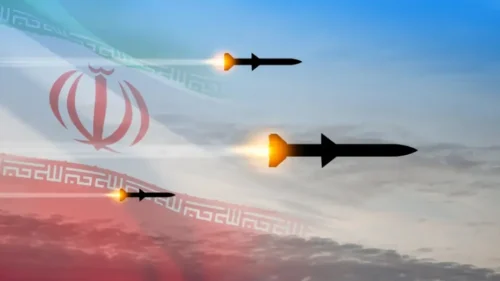
On April 1, Israel conducted an airstrike against the Iranian consulate in Damascus, Syria. The strike killed seven members of the Islamic Revolutionary Guard Corps (IRGC). Two of them were top commanders. Iran called the attack a violation of their diplomatic territory. Their response came in the form of 330 missiles and drones launched into Israeli territory. Although 99% of the incoming weapons were shot down, this was the first direct attack by Iran on Israeli soil. So, the situation in the Middle East has become even more explosive.
Israel’s counter-response hit Natanz, in Iran’s central Esfahan province. However, both sides seem to be dialing down the rhetoric for now. Iran declared Israel’s strikes as ineffective and said it saw no reason for a second retaliation. While the tit-for-tat exchange between Iran and Israel may have let off enough steam to prevent an all-out war, the situation remains dangerous. Deep undercurrents drive the current turmoil and have heavy ramifications.
Regional politics are on a dangerous precipice
After suffering negative headlines for months, Israel has won back some international sympathy due to the Iranian attack. However, the Israeli political system is now fundamentally unstable. Prime Minister Benjamin (Bibi) Netanyahu’s war leadership has proved ineffective, and his political position is precarious.
Though the administration is in paralysis, the Israel Defense Forces (IDF) are still the top dogs in the region. Their attack on Damascus almost eliminated the entire leadership of the IRGC. In addition, the Arab Sunni states surrounding Israel helped shoot down Iran’s missiles and drones.
Iran’s attack shows both their strengths and limitations. They have indeed hit Israel. Though international media were quick to report that 99% of the missiles and drones were destroyed, most of these were outdated tech that Iran used as decoys. The 1% that made it through included serious missiles that successfully struck their targets. However, this capability alone will do Iran little good. The Islamic Republic has no allies in the region except for non-state entities like Hezbollah, the Houthis and Hamas. Not one Arab state supported their attack on Israel.
However, the attack is useful for domestic purposes. Iran’s mullahs use the Israel–Hamas war as a tool to increase their public support. Handily, this saber-rattling against Israel also wins Iran greater popularity on the Arab street and boosts its power in the Middle East.
This anti-Israel sentiment makes the region more volatile. It comes at a time when the Israeli political system is weak and the IDF, their much-vaunted prowess, have been unable to achieve either of their war goals: rescuing the hostages and destroying Hamas.
Although support for Bibi has dipped, the majority of Israelis is still in favor of the current military operation. At the same time, brutality by IDF soldiers in the West Bank has actually increased the popularity of Hamas in that moth-eaten Palestinian territory. In Gaza, Hamas is still in charge. There’s no sign the violence that began thanks to the terrible terrorist attacks of October 7 will decrease any time soon.
Things could very easily get a lot worse
The ramifications of the region’s political unrest have reached the US. Mass protests have erupted in college campuses over President Joe Biden’s support for Israel. Young people believe that Israel is conducting genocide and the US is complicit in this crime. So, they are up in arms against Biden.
Related Reading

If public opinion has turned against Israel in American college campuses, imagine what it must be like in Arab countries. Many Western observers rejoice at the fact that Arab countries oppose Iran and tacitly, though not overtly, support Israel. Yet there is a fly in the ointment. The Arab palace and the Arab street do not see eye to eye on Israel.
In fact, many Arabs see their rulers as traitors who are selling out like Judas for the proverbial thirty pieces of silver. There is a real risk of a second Arab uprising. Should Arab mullahs gain power like their Iranian counterparts in the not-too-distant future, Israel would find governments arguably even more hostile than Iran’s in their near neighborhood. It goes without saying that this would inflame tensions in the Middle East even further.
[Cheyenne Torres wrote the first draft of this piece.]
The views expressed in this article/video are the author’s own and do not necessarily reflect Fair Observer’s editorial policy.











































Comment